Culture

The invisible boundaries of everyday life

Norman Shrapnel, the wise and kindly parliamentary correspondent of the Guardian back in the day when it was a readable newspaper, tried never to give a book a bad review. He liked to say that anyone who had taken the time and trouble to write about anything at length deserved to be given the benefit of the doubt, and so he generally dipped his reviewer’s pen in honey rather than vinegar. I must say that on picking up Maxim Samson’s Invisible Lines, I felt quite otherwise. I wanted at first (an important caveat) to paint my laptop’s entire screen with vitriol. Within two pages I’d begun to loathe the author’s use of ‘foreground’ as a verb (technically he is not wholly wrong, just wanting in style).

The death of royalty

The cohorts of Hamas have invaded my neighbourhood. I was walking my dog, Maxi, in the afterglow of a shower that had lit the pavements with a pearlescence you normally see only in the piazzas of Syracuse, when I paused to look at the posters of kidnapped Israelis that someone had hung opposite Gail’s. I was thinking that I should have brought flowers, when they were upon us. Two women, their faces slack with the stupidity of hate, started tearing at the sad tributes with their carmine fingernails, screaming obscenities about Israel and the Jews. I didn’t know what the etiquette was on occasions like these, so I picked up Maxi, whose ears were back, and shouted obscenities at the women as they disappeared into the night like monstrous beetles.

The glory of Paris has long past

Gstaad A reader’s inquiry as to why I think Paris belongs to yesterday (12 August) has me remembering times past. When did the party end? According to many night owls it was when the ‘Queen of the Night’, Regine, shut down her club New Jimmy’z and moved to London in the 1970s, where she flopped. Others believe it was ‘les événements de soixante-huit’, the student-worker revolt against De Gaulle that did Paris in. Certainly, any way one looks at it, the events of 1968 did signal that the party was over; and it has stayed over ever since. Mind you, the high jinks had been waning for some time. I first arrived in Paris as a tennis player in 1957, but moved permanently to the City of Light on November 11 1958, Poppy Day. The place was jumping.

Stop trying to make high culture funky

Clive Myrie, now probably the top face of the BBC, and host of their television coverage of the Proms, had a strange one on Twitter this weekend. A fan gushed at him that ‘[the Proms are] completely accessible – no formal dress code and you can buy a Prom ticket on the day for the price of a pint! To hear some of the world’s best performers. What’s not to love?’ To which Myrie replied, ‘We’ve to keep pushing on that. This is music for everyone, not a select few who know their crotchets from their quavers!! That’s boring and naff!!’ The people who take these ‘vital’ and ‘important’ stands against phantoms enjoy the cost-free thrill of demanding an immediate end to something that nobody is actually doing What a strange exchange.

Milan Kundera’s ‘transcendental buffoonery’

From our US edition

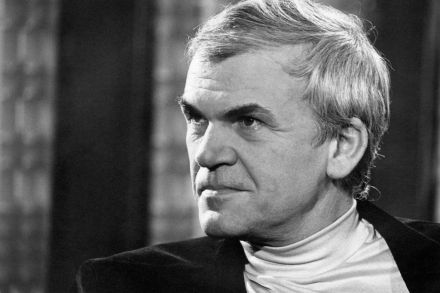
I was just leaving France when I got the news that that the Czech novelist Milan Kundera had died, aged ninety-four. He had emigrated to Paris in 1975, when he was forty-six, a refugee from the crackdown in Prague following the Russian obliteration of the Prague Spring in 1968. He died in his adopted city on July 11, full of honors but also, or so it seems to me, largely forgotten.  I had not been following Kundera’s work for many years. But there was a moment, in the 1980s, when he was the talk of the posh, intellectual literary town. I wrote a longish essay about him for the New Criterion in 1986. I draw on that work here.  Kundera was in his late thirties when he published his first novel, The Joke, in Prague in 1967.

milan kundera
car

The sad demise of American car culture

From our US edition

Today’s youth get a bad rap for being boring: they don’t join clubs, volunteer, pursue hobbies, or invent anything. Their sartorial style is a sad mishmash of tired trends, their movies unimaginative remakes (there are nine Spider-Man movies now), and their music is largely stoned hip-hop artists talk-singing to the same hypnotic beat. There are many forces at work in the dulling of the current generation, but one of the simplest reasons youngins may not feel inclined to go anywhere or do anything is because getting there is such an exercise in meh. When was the last time you sat in the driver’s seat of a new car, gripped the steering wheel and felt one iota of excitement?

Who’s killing Australia Day?

Australia Day was once a big deal Down Under, but in recent years the annual celebration has been somewhat muted. Take the Australian Open, currently running in Melbourne. The organisers have dedicated days throughout the tournament for a range of causes: there has been a Pride day and a day celebrating indigenous art and culture. But although the semi-finals are being played today, on Australia Day itself, there will be no recognition of the country’s national day. ‘We are mindful there are differing views, and at the Australian Open we are inclusive and respectful of all,’ Tennis Australia said in a statement. Tennis fans aren’t the only ones missing out: Victoria’s state government has quietly axed Melbourne’s Australia Day parade.

Joe Lycett and the trouble with wokescreening

The word ‘wokescreen’ is (like its naughty older sibling, the carelessly carbon-producing smokescreen), an alibi which hides the truth about a nefarious action. But what marks it out from old-fashioned hypocrisy is that – rather than being a mere rogue – the wokescreener poses as a social justice hero, looking down from a great height at the great unwoked. From the Sussexes’ private planes to Justin Trudeau’s blackface antics, the wokescreen is a fine example of modern Magical Thinking – if you identify as good, you can then be bad to your sanctimonious little heart’s content.

What conservatives lack

From our US edition

A famous passage in the preface to Lionel Trilling’s book The Liberal Imagination is widely quoted and just as widely misunderstood. Trilling, a Columbia University professor and literary critic, wrote that at the time — this was 1950 — that there was no articulate conservative or reactionary thought in America, only conservative or reactionary “impulses” expressed “in action or in irritable mental gestures which seek to resemble ideas.” Trilling’s point was not to criticize conservatism but to set up an argument for his work as a literary critic. Liberals, Trilling argued, needed to be challenged; they had grown complacent in the absence of a vigorous conservatism to spotlight liberalism’s deficiencies.

Why ‘pop’ is popping up everywhere

The Guardian kindly tells us that green is a colour whose time has come: ‘A blazer or a cotton shirt in Wimbledon grass-court green as a pop of saturated colour against white jeans and chunky flat boots is very Copenhagen Fashion Week.’ For the Express, it’s nails: ‘With polish costing from as little as £1, you can add a pop of colour to an outfit for next to nothing.’ This is the sassiest usage just at the moment of that vastly productive word pop. Yet in the papers, the predominant references by far are still to pop stars or (heaven help us) pop culture. That kind of pop simply comes from the abbreviated popular. Yet I suspect it props up etymologically unconnected uses of pop in, pop-up (restaurants), eye-popping or popping out.

How the travel industry convinced us we needed holidays

In September 2019, Thomas Cook filed for compulsory liquidation, leaving 600,000 customers stranded abroad. It was a sorry end to a company that had lasted 178 years and survived both world wars. Founded by a Baptist preacher who began organising railway trips to Midland cities for local temperance societies, the company grew into one of the largest travel agencies in the world, thanks to the transformation of tourism from an activity for the idle rich to an experience open to all. This opening up of travel is the story Lucy Lethbridge tells in Tourists, taking the reader from the last years of the Grand Tour to the first years of the package holiday.

Walking Hanoi

From our US edition

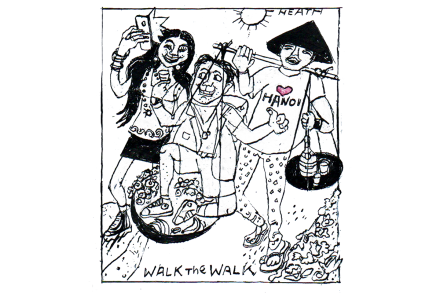
I let the roosters wake me at 4:30 a.m., since it’s already 88 degrees out, will be 100 by noon and I want to get in my full fifteen-mile walk without suffering heat stroke. My intended route is from my small rented apartment in southwest Hanoi, due east to the banks of the Red River, then back again, or maybe something else entirely. My plans are always rough, the daily walks changing depending on what I see, who I meet and what strikes me. That is why I walk, rather than drive or bike: so I can change stuff up on the fly — and let events, people and things I find along the way determine where I go. The only things that stay constant are aiming for between ten and twenty miles a day, and never using cabs.

hanoi

Is Miami really on the rise?

From our US edition

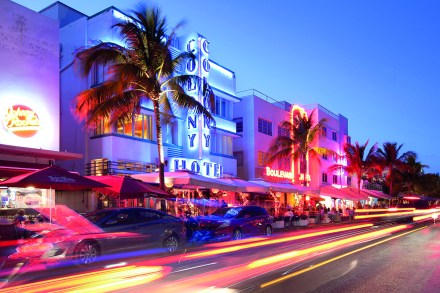
My lunch spot in suburban Miami-Dade County, El Palacio de los Jugos — the Palace of the Juices — is the kind of Cuban joint that specializes in monstrous portions served up by some of the finest mamacitas on the planet. The black beans and rice can be overly greasy and the tropical jugos sickeningly sweet, but one frequents the palace for the only-in-Miami atmosphere; the food is incidental. On any given day there, you’ll run into a construction worker chatting up the gals from the Asian massage parlor next door. Young bros roll up in souped-up Hondas and scarf half a dozen empanadas before rushing off to cook up their next low-level con. The Cuban old-timers sit around, as they’ve done for decades, slamming cafecitos and denouncing los comunistas.

Miami
upgrade

The decline and fall of eating out

From our US edition

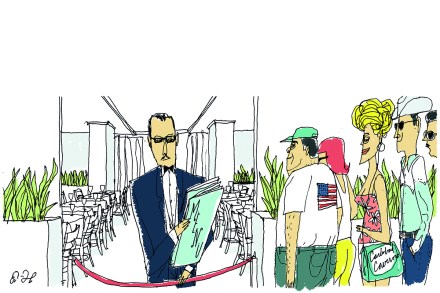
"Upgrade” is a term I associate with flying and getting a seat in the front cabin that you don’t pay for — except perhaps with “miles” and “points,” our version of Green Stamps. Upgrade’s predecessor from the era of rail travel was “step-up,” the term used by the Pullman Company when a passenger wished a better accommodation and space was available. You paid the conductor the step-up charge (in cash), and the porter dutifully toted your bags to your new compartment. Nowadays, it is no longer necessary to travel to upgrade. Just step out for lunch and add some “protein” to your salad. Upgrade! Marketing gibberish in the restaurant world is nothing new, but today it signifies the accelerating downgrade (sorry, no refund) of the whole business.

clubs

Members’ clubs are having a moment

From our US edition

One lunchtime in May, the sixth floor of a restored warehouse on Manhattan’s Ninth Avenue buzzed with the sound of lingering lunch dates, pandemic-postponed reunions and the erratic clatter of computer keyboards beneath the inspired fingertips of creatives and those moonlighting as such. Just beyond the reception desk a gaggle of bespectacled, chino-clad men congregated. In suede sneakers and made-to-look-worn corduroy jackets, they clutched Scandi-chic satchels and laptop bags, poised to pounce on the next available artfully upholstered chair. Even one of the sumptuous velvet sofas would do. Next door, in the dining area, waiters weaved in and among patrons like figure skaters, determined not to risk their precious tips by spilling a drop of Bloody Mary or chai latte.

Mowing the lawn is underrated

From our US edition

I struggle to enjoy summer. So each year, when the last frost drifts away to Australia, or wherever it goes, I grit my teeth and remind myself of the most “hot girl summer” moment I’ve ever had, and look forward to reliving the pleasure of lawn mowing that brought it about: I was house-sitting for my parents at our old farmstead in rural Pennsylvania. One of the responsibilities of this job is to put the trash out for the trashmen every week, because more than a decade ago, a little black bear got into the refuse and scattered it from our house to Kingdom Come. The trash shed has been guarded by a thin piece of electrified barbed wire that has deterred both bruin and garbage collector with equal efficacy ever since.

lawn

The dangerous rise of academic diversity quotas

From our US edition

Who should be the custodians of science? For centuries, scientists themselves have been. Now, their custodianship is under threat. Science has long operated as a sort of guild, with the guild managing its own practice and traditions. This holds for the guild’s continuity: admission of aspiring members to the guild is controlled by the guild itself. For the sciences, aspiring members must clear a competitive series of hurdles: apprenticeship (graduate school), journeyman (post-doctoral fellow and assistant professor), then full membership (tenured professor). For the past few decades, science’s stewardship has been shifting into the hands of an arriviste managerial class with no idea what science is or any real respect for it.

Ain’t that good news

From our US edition

A few Fridays ago, I met Tablet magazine’s incomparable Liel Leibovitz for breakfast. Over inedible gluten-free banana bread, we caught up on everything from Covid to religion, politics and pop culture. The conversation took a depressing turn, as so many seem to these days. I asked Liel if he had seen some recent ridiculous news — now too distant and unremarkable to even remember — but which highlighted the extreme hypocrisy and self-defeating brokenness of our society. He said that he had, and added: “Isn’t it great?” “Great?” I asked. “Great,” he said. “Just terrific. Things like this make me giddily optimistic.” Liel shared his philosophy with me while we walked to the Upper East Side’s premier kosher butcher — Park East.

good

An inspirational teacher: Elizabeth Finch, by Julian Barnes, reviewed

‘Whenever you see a character in a novel, let alone a biography or history book, reduced and neatened into three adjectives, always distrust that description.’ So says the protagonist of Julian Barnes’s latest novel, the poised, droll, epigrammatic Elizabeth Finch, who is loosely modelled on his late friend and fellow Booker Prize-winner Anita Brookner. A lecturer delivering an adult education course on Culture and Civilisation, an exercise she considers ‘rigorous fun’, she introduces her students to figures such as Goethe and Epictetus.

America’s rural population is shrinking

From our US edition

A new report finds that for the first time since these things have been kept track of, rural America’s population has shrunk. This trend is a shame for all Americans (except for a few of us who inhabit rural America and enjoy the solitude). The University of New Hampshire Carsey School of Public Policy findings are based on Census data from April 2010-April 2020, pre-dating the Covid outbreak and its dubious effects on people’s migratory habits (a Pew Research survey suggests that reports of a mass urban exodus during the height of the pandemic were overblown).