Culture

The Spectator’s accidental all-women cover

Just before The Spectator went to press yesterday, my colleague Emily Hill pointed out that I’d just taken away the only male name away from the cover: all seven of our coverlines were stories written by women. Did I really want that? I hadn’t thought about it until then, and for a while I did consider engaging in tokenism and slapping a man on for the sake of it. But why bother? Spectator readers don't really care about gender, just good writing. The result is Ariane Sherine, who writes our cover story,  hails as the first all-woman cover in The Spectator’s 188-year history. But this wasn’t a patronising attempt at a 'wimmin’s issue' or some similar wheeze. Our all-women cover wasn’t deliberate, it was just the way the cards fell.

The gender pay gap isn’t just about sexism

'More work needs to be done,' is what people say whenever some unachievable social goal is shown to be another 200 years away. And it was said a lot this week after it emerged that women still earn 18 per cent less than men on average. As the Guardian reported: The Institute for Fiscal Studies (IFS) also found that the gap balloons after women have children, raising the prospect that mothers are missing out on pay rises and promotions. That was echoed by a separate report yesterday suggesting that male managers are 40 per cent more likely than female managers to be promoted.

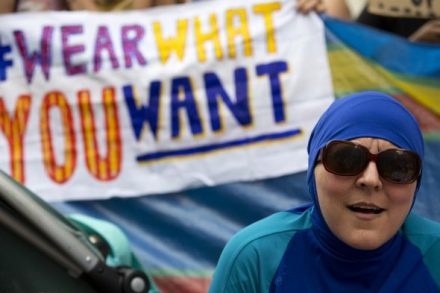
The burkini ban is a political ruse

Private Eye used to run a column called the ‘Neo-philes’, listing some of the endless cases of hacks saying ‘X is the new Y’ (‘This season green is the new black’ and so on). So let me put in an early entry for the return of any such column by announcing here that ‘The Burkini is the new Hizb ut-Tahrir’. After 18 months of terrorist attacks across the continent, this summer French and now German politicians are falling over each other to call for a ban on a new Islamic swimwear garment called the ‘burkini’. This is nonsense piled on top of nonsense. Though I do not doubt he spent some time thinking about it, the inventor of Islam had very little to say about women’s beachwear.

The Sunday roast is dying – and the Tories are to blame

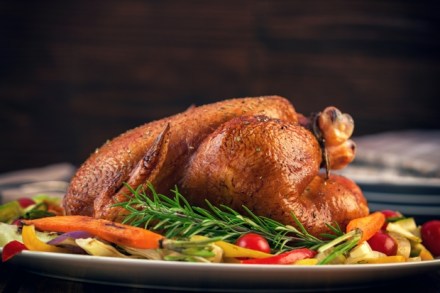
It is fair to say that I am never one to take the Polly Toynbee approach to things - or indeed, that of this magazine’s cover article this week - that in the sunlit uplands of secular liberalism, Things Have Never Been Better. But some news strikes me with greater force than most as being proof that we’ve arrived at the end of the world as we knew it. So it was when I found out today that the tradition of families eating a Sunday roast dinner – well, if not antique, it has been around for a century or so – is in freefall. There have been fifteen million fewer roast dinners – or lunch, if you prefer – in the last year, while the number of weekday and Saturday roasts has gone up. So what, you may say.

Unconditional love is a dangerous delusion

When I think about love, that old line by William Goldman about Hollywood comes back to me: Nobody knows anything. It seems that as we grow franker about sex (witness the Naked Attraction TV show, recently described as ‘Blind Date in a brothel’) love reveals less of its mysteries. Just as we’ve all now seen on screen 1001 ways to kill someone and yet know nothing about death, we now know 69 ways to screw someone - once more, often seen on screen for the less adventurous amongst us - and nothing about love. Not even the most basic stuff - how to avoid falling in love with someone we shouldn’t, or how to stay in love with someone we should.

Why is the RSPB picking on grouse moors?

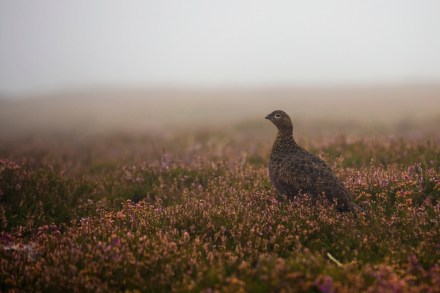
The Twelfth of August was heralded for me by an email from the RSPB. ‘RSPB warns driven grouse does not have a future without change’. Jeff Knott, the head of the society’s nature policy, goes on to say that ‘The illegal killing of birds of prey like the hen harrier must end, and sadly this tars the reputation of every grouse moor estate and every shooter.’ It would be wearisome (not least because Matt Ridley’s piece last week set it all out so well) to go through how most such accusations about the killing of hen harriers are false, how hen harriers do better on kept moors than on unkept ones, and how grouse moors do a great service to upland species diversity.

In praise of bisexuality

I've never seen a National Treasure whose head I didn’t have a strong urge to shove down the nearest toilet. So when I read that Christopher Biggins had entered the latest Celebrity Big Brother house for a rumoured £150,000 - far, far less than what I was offered, to put it mildly - I fair hugged myself with glee at how cheap they’d got him. I had every reason to dislike him already; many years ago, when I was showing off about what I’d be like if I was a gay man - ‘Rupert Everett, probably, or Oscar Wilde, or Arthur Rimbaud’ - my husband fixed me with a cold glare (for he dislikes bragging, which often makes me wonder why he married me) and said ‘No - you’d be like Christopher Biggins.

Why a record number of university places might not be a good thing

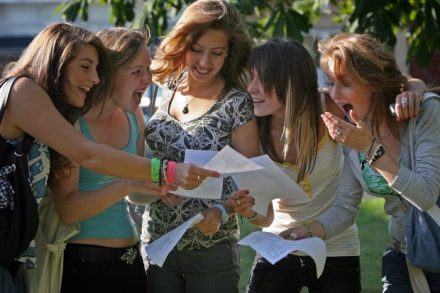
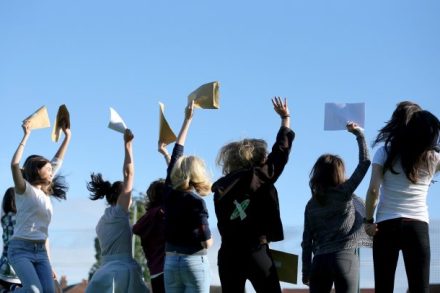
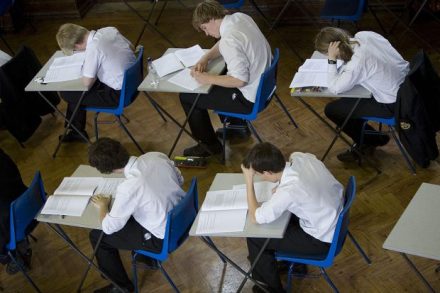
A-Level results are announced today, and with it the happy news that a record number of university places have been offered. About 42 per cent of 18-year-olds in England will go to university, but we're still some way behind the world's leader, South Korea, where two-thirds of young people achieve a degree. And how's that going? Seongho Lee, a professor of education at Chung-Ang University, criticizes what he calls 'college education inflation'. Not all students are suited for college, he says, and across institutions, their experience can be inconsistent. 'It’s not higher education anymore,' he says. 'It’s just an extension of high school.' And sub-par institutions leave graduates ill-prepared for the job market.

The dull piety of the new Tate Modern

I happen to like the new Tate Modern building. The content’s the problem. The art currently on show there sums up some of the worst defects of the art world. Just when it should be exuberant and joyous it is pious, timid, cold - like a sparky young woman who goes all bluestocking on you. This isn’t a whinge about modern art - I love the stuff most of the time. But it can be overtaken by nervous self-consciousness. Called to boldness, it plays it safe. The new space currently focuses on performance. But there was no performance - no little burst of arty theatre to amuse or challenge us. Just lots of video, and lots of reports of past performances (many of which had an earnest political feel).

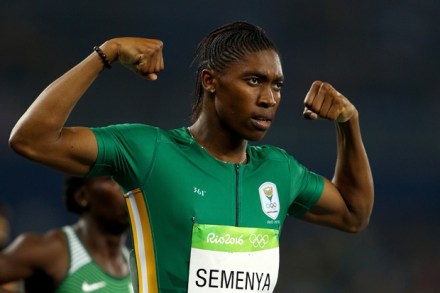
Equestrianism brings gender equality to the Olympics

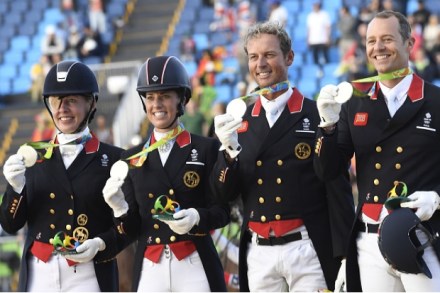
Team GB are currently resting in second position in the Olympic medals tables, with a total of 41 medals and 16 golds. This year, our team is made up of more women than ever before; the 164 women make up almost 45 per cent of the whole team. It’s strange but true, however, that apart from the mixed tennis doubles, the equestrian events are the only time you will see men and women on the same winners' podium at the Olympics. Last Wednesday the medal ceremony for the team eventing competition took place. On that podium were the French team, made up of four men, the German team, made up of three women and one man, and the Australian team, made up of four men.

Wedding rings should be kept away from the Olympics

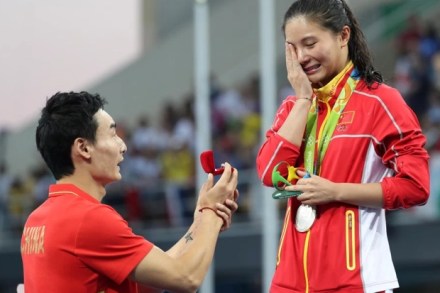
I felt rather sorry for Chinese Olympian He Zi yesterday. Having picked up the silver gong in a women’s diving competition, her boyfriend decided then was the perfect time to propose. Without a thought for Ms Gold and Bronze, he jumped onto the podium and professed his love to his tearful girlfriend. The media claimed Zi was crying out of happiness, but part of me wondered if she was thinking: 'Darling, couldn’t this have waited for an Italian restaurant?' The diver is not the first woman to be proposed to at the Olympics - and she won't be the last. On Tuesday it was the turn of Brazilian rugby player Isadora Cerullo, whose girlfriend popped the question after her match. It's understandable why people want to propose at the Olympics.

The return of football marks the return of normality

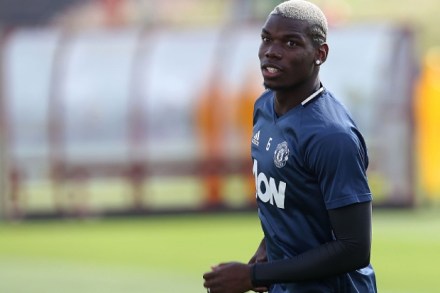
With parliament in recess, silly season is in full swing. In fact, silly season would be an apt name for the transitional period between the dying days of the previous Premier League season, and the Bacchanalia that greets the opening weekend of the next one. Football’s silly season is a time when Slovenian journalists can sentence Jose Mourinho to three years in jail, when Wales can become (arguably) the third best team in Europe, and when Manchester United can decide that a player – any player – is worth €100 million. That last, silliest of silly season traditions, is the essential contradiction that greets the start of a new season. The return of football has a quotidian significance, like the re-rising of the sun every morning.

New grammars won’t do more for social mobility than comprehensives. But there is a third way

One of David Cameron’s last acts as Prime Minister was to approve an application by Ashlawn School in Rugby to set up a new free school in the city. It’s not surprising that Ashlawn’s application was approved. Not only has it been ranked ‘Outstanding’ by Ofsted, but last year 74 per cent of its pupils got five GCSEs at grade C or above, including English and maths (a metric known as '5A*–CEM'). Even more impressive, 65 per cent of its pupils from disadvantaged backgrounds met that same target. However, before Ashlawn can open its new school in 2017 it has to overcome an obstacle. Ashlawn is one of England’s three dozen or so partially selective schools.

Lagoons: the new technology better than Hinkley Point

Let’s turn our attention to ‘tidal lagoons’: you may have heard that phrase in discussion of alternatives to Hinkley Point and wondered what it means. It refers to a £1 billion project, awaiting ministerial approval, to build a walled lagoon in Swansea Bay that would generate (through largely British-built turbines) electricity on the ebb and flood of every tide, 14 hours a day for a project lifetime of 120 years. It could be brought into operation within five years — but to make that happen it requires subsidy at levels comparable to offshore wind or new nuclear generation; it also requires millions of tonnes of concrete and aggregates from quarries in Cornwall and elsewhere, and will radically alter the local environment for sea life and wading birds.

Pokémon Go is a symbol of Generation Y’s worst trait

Pokémon Go makes me wonder about Generation Y, which will surely be remembered as one of the most childish collectives of all time. I am part of this contingent of people born in the 1980s and 1990s - the offspring of the baby boomers - characterised as a digitally-savvy cohort, among other things. We have been an incredibly lucky lot, thrust into a technological renaissance of sorts - where computing breakthroughs take place all the time. But in spite of this evolution, young people have slowed down. We have become self-indulgent, silly and reluctant to grow up. We are the Peter Pan Generation. At least, that’s what the mobile game Pokémon Go suggests to me, which invites people to trawl the streets with their phones for imaginary characters.

Why Hillary Clinton’s mix of celebrities and politics could backfire

Politicians, it seems, aren’t so dissimilar from the rest of us in their obsession with celebrities. Indeed, not even Hillary Clinton can resist the allure of Snoop Dogg, who's set to perform at the Democratic National Convention in Philadelphia this week. Forget the Oscars, this event has become the hot ticket for the A listers. Alicia Keys, Lady Gaga and Katy Perry will be just some of the stars gracing the blue carpet; trying to convince others that Clinton is both cool and credible. Clinton has even welcomed Sanders supporters into her club, with comedian Sarah Silverman taking to the stage on Tuesday to tell others: Bernie's the past, Hillary's the future. Celebrities can sell a lot of things, whether it’s Botox, clothes or fitness routines.

Sam Allardyce is to football what Theresa May is to politics

They call him Big Sam. At 6’3 that’s not an unlikely nickname, especially when you’ve spent most of your professional career crunching through opposition centre-forwards. But the mythology of Big Sam goes beyond mere volume. Sam Allardyce has just been appointed to the role of England football manager. The great poisoned chalice of international sport, Allardyce succeeds Roy Hodgson, a man whose own affectionate moniker was extracted from his speech impediment. But there was nothing big about Woy. Allardyce is taking over at a time of crisis.

The hounding of Leslie Jones: anti-PC gone mad

The alt-right, those anti-PC, bedroom-bound fans of Trump and strangers to sexual intercourse, have finally lost the plot. Consider their hounding of Leslie Jones. Jones is a very funny African-American comedian and the only good thing in the otherwise flat, weird and mirth-free Ghostbusters reboot. Yet for the past 48 hours she has been subjected to vile racist abuse by alt-right tweeters and gamers and other assorted saddos for her part in what they view as the feministic crime of remaking Ghostbusters with a female cast. She has left Twitter. This might mark the moment when the alt-right went full racist, full berserk, full unhinged.

Is racism really on the rise in Britain?

It keeps being said that racist ‘hate crime’ has increased as a result of the referendum. One must bear in mind how the public authorities define these things, as confirmed this week by Alison Saunders, the Director of Public Prosecutions. The Macpherson report on Stephen Lawrence set the current rule. It defined a racist incident as ‘any incident which is perceived to be racist by the victim or any other person’. The police are instructed to log all such incidents as racist incidents. So you only have to have more people reporting what they see as racist incidents for an exactly corresponding rise in the number of recorded racist incidents.

The Spectator’s two podcasts both hit iTunes top ten

The Spectator's podcasts - our weekly one, and our ad-hoc Coffee House shots, are now both in the iTunes Top Ten. We're rather proud of this: many of our rivals have things like studios and producers. We don't: we have a few microphones, iPhones and boundless enthusiasm. If a major story breaks, you can expect proper analysis on Coffee House Shots within the hour. You can subscribe to the podcasts for free: click here to sign up to the weekly Spectator Podcast, and click here to sign up to Coffee House shots. And our rivals? A list below.