Culture

New grammars won’t do more for social mobility than comprehensives. But there is a third way

One of David Cameron’s last acts as Prime Minister was to approve an application by Ashlawn School in Rugby to set up a new free school in the city. It’s not surprising that Ashlawn’s application was approved. Not only has it been ranked ‘Outstanding’ by Ofsted, but last year 74 per cent of its pupils got five GCSEs at grade C or above, including English and maths (a metric known as ‘5A*–CEM’). Even more impressive, 65 per cent of its pupils from disadvantaged backgrounds met that same target. However, before Ashlawn can open its new school in 2017 it has to overcome an obstacle. Ashlawn is one of England’s three

Lagoons: the new technology better than Hinkley Point

Let’s turn our attention to ‘tidal lagoons’: you may have heard that phrase in discussion of alternatives to Hinkley Point and wondered what it means. It refers to a £1 billion project, awaiting ministerial approval, to build a walled lagoon in Swansea Bay that would generate (through largely British-built turbines) electricity on the ebb and flood of every tide, 14 hours a day for a project lifetime of 120 years. It could be brought into operation within five years — but to make that happen it requires subsidy at levels comparable to offshore wind or new nuclear generation; it also requires millions of tonnes of concrete and aggregates from quarries

Pokémon Go is a symbol of Generation Y’s worst trait

Pokémon Go makes me wonder about Generation Y, which will surely be remembered as one of the most childish collectives of all time. I am part of this contingent of people born in the 1980s and 1990s – the offspring of the baby boomers – characterised as a digitally-savvy cohort, among other things. We have been an incredibly lucky lot, thrust into a technological renaissance of sorts – where computing breakthroughs take place all the time. But in spite of this evolution, young people have slowed down. We have become self-indulgent, silly and reluctant to grow up. We are the Peter Pan Generation. At least, that’s what the mobile game Pokémon Go

Why Hillary Clinton’s mix of celebrities and politics could backfire

Politicians, it seems, aren’t so dissimilar from the rest of us in their obsession with celebrities. Indeed, not even Hillary Clinton can resist the allure of Snoop Dogg, who’s set to perform at the Democratic National Convention in Philadelphia this week. Forget the Oscars, this event has become the hot ticket for the A listers. Alicia Keys, Lady Gaga and Katy Perry will be just some of the stars gracing the blue carpet; trying to convince others that Clinton is both cool and credible. Clinton has even welcomed Sanders supporters into her club, with comedian Sarah Silverman taking to the stage on Tuesday to tell others: Bernie’s the past, Hillary’s

Sam Allardyce is to football what Theresa May is to politics

They call him Big Sam. At 6’3 that’s not an unlikely nickname, especially when you’ve spent most of your professional career crunching through opposition centre-forwards. But the mythology of Big Sam goes beyond mere volume. Sam Allardyce has just been appointed to the role of England football manager. The great poisoned chalice of international sport, Allardyce succeeds Roy Hodgson, a man whose own affectionate moniker was extracted from his speech impediment. But there was nothing big about Woy. Allardyce is taking over at a time of crisis. If it hadn’t been for the success of Wales (and relative success of Northern Ireland) at the Euros, far more Brexit jokes would’ve

The hounding of Leslie Jones: anti-PC gone mad

The alt-right, those anti-PC, bedroom-bound fans of Trump and strangers to sexual intercourse, have finally lost the plot. Consider their hounding of Leslie Jones. Jones is a very funny African-American comedian and the only good thing in the otherwise flat, weird and mirth-free Ghostbusters reboot. Yet for the past 48 hours she has been subjected to vile racist abuse by alt-right tweeters and gamers and other assorted saddos for her part in what they view as the feministic crime of remaking Ghostbusters with a female cast. She has left Twitter. This might mark the moment when the alt-right went full racist, full berserk, full unhinged. The alt-right angries, convinced the

Is racism really on the rise in Britain?

It keeps being said that racist ‘hate crime’ has increased as a result of the referendum. One must bear in mind how the public authorities define these things, as confirmed this week by Alison Saunders, the Director of Public Prosecutions. The Macpherson report on Stephen Lawrence set the current rule. It defined a racist incident as ‘any incident which is perceived to be racist by the victim or any other person’. The police are instructed to log all such incidents as racist incidents. So you only have to have more people reporting what they see as racist incidents for an exactly corresponding rise in the number of recorded racist incidents.

The Spectator’s two podcasts both hit iTunes top ten

The Spectator’s podcasts – our weekly one, and our ad-hoc Coffee House shots, are now both in the iTunes Top Ten. We’re rather proud of this: many of our rivals have things like studios and producers. We don’t: we have a few microphones, iPhones and boundless enthusiasm. If a major story breaks, you can expect proper analysis on Coffee House Shots within the hour. You can subscribe to the podcasts for free: click here to sign up to the weekly Spectator Podcast, and click here to sign up to Coffee House shots. And our rivals? A list below. PS Keep at it, Seb, you’ll get there one day 😉  

We’re all curators now

In January 1980 Isaac Asimov, writer of ‘hard science fiction’, professor of bio-chemistry and vice-president of Mensa International, penned a column for Newsweek magazine in which he addressed a prevailing ‘cult of ignorance’ in America. ‘The strain of anti-intellectualism has been a constant thread winding its way through our political and cultural life,’ he wrote, ‘nurtured by the false notion that democracy means that “my ignorance is just as good as your knowledge”.’ Thirty-six years later, what Asimov attacked as a false notion was accepted as a fact of life by Michael Gove when he declared during the referendum campaign, ‘I think people in this country have had enough of

Theresa May’s Ottolenghi revelation is gobsmacking

Forget footwear. The most telling thing about Theresa May, as suggested in interview with Robert Peston, is her cookbook collection – she has 100. Her remarks about her cookery writer of choice was an extraordinary exercise in character signalling. ‘Delia is very precise,’ she said, ‘and I like a bit of… throw a bit here and a bit there, and Ottolenghi is really interesting in the stuff that he does. Right. Unless you’re a member of the smirking liberal metropolitan elite – or, like me, a cookbook reviewer – or Theresa May, you may not be familiar with Yotam Ottolenghi, but this is as clear an indicator as you can

Femocracy – welcome to the benign new world of female governance

Call it femocracy or gynocracy (my preference), or, a new age of women, as Justine Greening has it, the excited consensus is that we’re in for a benign new world of female governance. Hillary in the US, Theresa May over here, Ruth Davidson and Nicola Sturgeon in Scotland, Angela Merkel in Germany…what could be more lovely? Except possibly the addition of Marine Le Pen at the helm in France, though oddly enough feminists rarely bring her into the new scheme of things… she’s up there with Sarah Palin as an female unmentionable. Oh and let’s not forget Angela Eagle as potential Labour leader, whose tearfulness as she knifed Jeremy Corbyn

A bitter culture war has begun in Britain

I wrote a while back that the UK referendum wouldn’t be at all bitter or divisive, and I think it’s fair to say I was utterly, utterly wrong. I just hope whoever wins shows a spirit of magnanimity and conciliation, and tries to steer the country to the most moderate course available. Perhaps it was obvious that this debate would turn into a sort of British culture war, one that divided the country heavily over the issue of globalisation. As James Bartholomew points out in this week’s issue of The Spectator, the referendum has exposed a huge rift between the metropolitan elite and the rest. Although there is a very

The cultural hodgepodge that is Europe

If Geert Hofstede’s name is familiar to you, it might be from pop-science articles explaining a spate of Korean airliner crashes in the 1990s. A widely held theory placed some of the blame on the hierarchical nature of Korean culture; this made the junior pilot reluctant to mention any mistakes made by his superior. If he noticed the captain heading for a hillside, he might summon up the courage to mutter, ‘Perhaps, honoured sir, you might like to pay particular attention to the interesting terrain.’ This contrasts with low ‘power distance’ cultures: New Zealand, say, or Ireland. On Aer Lingus, a stewardess could jab the pilot in the ribs and

Sadiq Khan’s advert ban shows he is an illiberal censor at heart

Six weeks ago I was one of the 1.3 million Londoners who voted for Sadiq Khan as mayor. Boy do I regret it now. Because he’s just shown what he really thinks of us inhabitants of the capital: that we’re so mentally fragile, so pathetic, so vulnerable to the wicked charms of advertisers, that he must censor allegedly sexist ads on our behalf and protect us from offence. In proposing a blanket ban on bus and Tube ads that make people feel bad about their bodies, Sadiq has revealed his authoritarian, paternalistic contempt for the people who swept him to power. I’m amazed there isn’t more fury about his extraordinary

Homophobia is now met with the same silence given to anti-Semitism

Rolling news does not give its participants the option of shutting their mouths and biting their tongues, even when shutting and biting are the best available options. Silence is the producer’s greatest fear. The supposedly contrarian presenter has to keep talking. The supposedly tough-minded pundit has to show she is nobody’s fool. Better that than a hushed studio. Last night, Owen Jones of the Guardian made the rather obvious point to Mark Longhurst, a Sky News presenter, and the Telegraph’s Julia Hartley Brewer, that a terrorist who slaughters LGBT people in a gay club hates homosexuality. The biggest single homophobic killing in the West since the fall of the Nazis

Today, we grieve for the Orlando victims. Tomorrow, the politics will begin

I’m sitting in a gay café in Washington DC. Opposite me, a lesbian couple are hugging and kissing, trying to console each other about the massacre of 53 people in a gay club in Orlando last night — the biggest terrorist attack since 9/11. This weekend was supposed to be a big gay carnival. There was a huge gay pride march along this street yesterday, with thousands of people waving rainbow flags, bringing their children. President Obama repeatedly endorsed the ‘Love is Love’ campaign. And now, in Florida, a American Muslim maniac kills 53 people — and why? Might it be connected to what his father says: that he saw

Why do we indulge the crimes of the Left?

What a strange human being the historian Eric Hobsbawm was. I was reminded of this the other day while reading a new report by the New Culture Forum on attitudes to Communism almost a century after the Russian Revolution. It includes this exchange between Michael Ignatieff and Professor Hobsbawm: Ignatieff: In 1934 … millions of people are dying in the Soviet experiment. If you had known that, would it have made a difference to you at that time? To your commitment? To being a communist? Hobsbawm: … Probably not. Ignatieff: Why? Hobsbawm: Because in a period in which, as you might say, mass murder and mass suffering are absolutely universal,

Is Lewisham really so ’orrible?

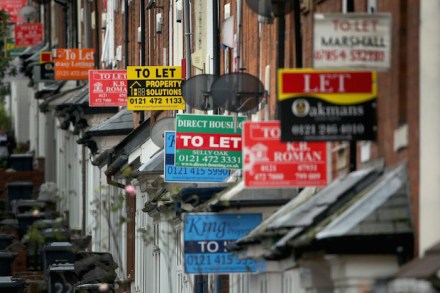
When we said we were thinking of moving to Lewisham four years ago, the locals in our pub in Bethnal Green thought we were mad. ‘It’s fuckin’ ’orrible,’ one of them said. Coming from people who’d lived all their lives in the East End, this was worrying. Nevertheless, swayed by a cheap ex-council flat, we moved to a hill that runs between Blackheath and Lewisham station. A good way to imagine Lewisham town centre is as the village in Asterix, surrounded on all sides by the forces of gentrification. Hither Green, Ladywell, Forest Hill and Brockley have delicatessens and artisan bakeries. Deptford has hipsters whereas Blackheath is proper posh, the

Alain de Botton offers Freudian bleakness to the Facebook generation

Alain de Botton, to judge from his new novel The Course of Love, is trying to be the Freud for our day, the Facebookers’ Freud. For a book that presents itself as an affirmation of married love, it is rather bleak. And the bleakness echoes that of the Viennese know-it-all. Freud, remember, said that our sex drive makes life basically tragic. To have orderly lives, we must renounce our desire for promiscuous fun. To be mentally healthy, we must be honest about this; we must admit the force of our primal instinct, and not deny it or suppress it too rigidly, or we go neurotic. But we must suppress it. The

Why would I want to lose weight? Being lazy and fat is far more fun

Let me start by putting my podgy little hand up – the one not ferreting fervently through a big box of Belgian chocs, that is. Starting out positively sylph-like, I’ve reached a size 18 at the age of 56 solely through lack of discipline and love of pleasure. I have no time for people (except those with proven medical conditions) who pretend that it is generally otherwise. Nevertheless, I’m not attached to my flab in any way but the most obvious.  I despise the Righteous Fat. (The Righteous Thin are bad enough, all that running around, sweating and smelling, and somehow believing that it means something.) Though I could afford any