Culture

Western values are more Christian than classical

There is an important article in this week’s New Statesman. It addresses the big (embarrassingly big) issue of what our most fundamental values are in the West. The historian Tom Holland explains that his study of the classical world has made him realise that a huge gulf exists between the values of that era and modern Western assumptions – especially the assumption that all human lives matter. Classical culture has huge allure for modern intellectuals, but in reality its values were never far from fascist. And it was Christianity that put new values on the table – a fact that Enlightenment thinkers massively downplayed, due to their sneering dismissal of ‘superstition’.

The revolt against ‘liberalism’ is shortsighted

There are two articles in yesterday's Guardian that are critical of something called ‘liberalism’. Giles Fraser vents his irritation at an advertisement for a hotel chain, aimed the global business elite. It celebrates the idea of the individual’s freedom from boundaries, constraints – be a ‘beautiful nomad’ it urges. This epitomises the worst sort of ‘liberalism’, he says. And Martin Kettle suggests that we are seeing the demise, or at least the failure, of the two versions of liberalism that have dominated national life for decades: the social liberalism of the 60s and economic liberalism of the 80s. Brexit was in part a protest against both, he says.

The ‘cultural appropriation’ brigade can’t even cope with fiction

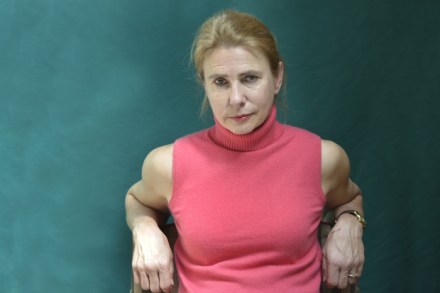
Here is one of those stories that matters even though it preoccupies the Guardian.  Last week the celebrated novelist Lionel Shriver gave an address at the Brisbane book festival.  It was heralded as being about ‘community and belonging’ but ended up being about ‘fiction and identity politics’.  In particular Shriver (the author, most famously, of We Need to Talk About Kevin) addressed the issue of ‘cultural appropriation’.  As well as being a condemnatory term for wearing a sombrero or eating Thai food, this is also the current term for ‘making things up’ and ‘using your imagination’.  Surely this is something novelists ought to do, you ask? Apparently not.

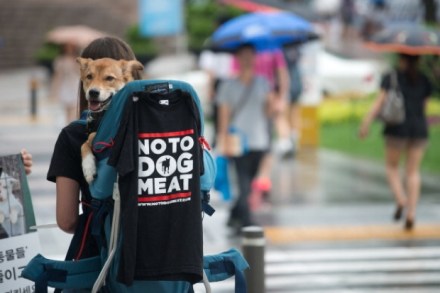
Why shouldn’t the South Koreans eat dog?

We are, of course, a nation committed to celebrating cultural diversity.    Except, that is, when a foreigner sits down to tuck into a plate of dog meat.   Then, we start to behave like the Taliban, believing that we have the right to dictate standards to the entire world. On Monday, MPs staged a bizarre debate in Westminster Hall on the subject of what should and what should not be served in restaurants in South Korea.

By making misogyny a crime, we are sleepwalking into tyranny

Should it be a crime to hate women? This unfortunate question is thrown up by the news that misogyny might soon become a hate crime across England and Wales. Two months ago, Nottingham Police launched a trial ‘crackdown on sexism’, investigating cases of, among other things, ‘verbal harassment’ and ‘unwanted advances’ towards women. Now top coppers from across the country are looking into criminalising misogyny elsewhere. I find this terrifying.

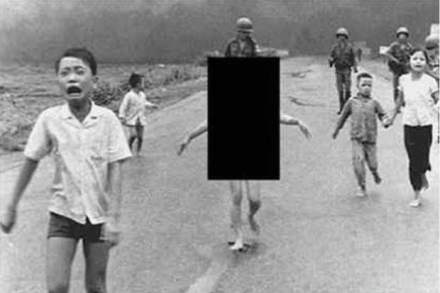
Where should the line be drawn over the famous Kim Phuc photograph?

Can you imagine, in the wake of a terror attack in London, a tabloid, or any other kind of media outlet, publishing a photograph of a naked and distressed child caught up in the melee? It isn’t hard to answer the question. Of course they wouldn’t publish it. It would break every rule in the book. It is bizarre, then, to see Facebook accused of censorship for coming to exactly the same conclusion: that it wasn’t right to carry an image of naked and distressed child. It is even weirder to see Facebook attacked from a corner – the Guardian – which would normally be among the first to damn tabloid intrusion. The difference is that the photograph in question was not taken in London and was not taken in the recent past.

Imagine there’s no countries… and therefore no museums

I'm not a great optimist about the whole Brexit thing, although my colleagues would mostly disagree. It's as if we were expecting a storm and we're now cheering because it's gone quiet. Strangely, eerily quiet. Anyway, like with climate change, I hope I'm wrong, and whenever I have my doubts about the whole thing, I think about the 'Remain' protests led by Eddie Izzard. Let's hope these obviously counter-productive demonstrations continue for the next five years. However, one disaster that doesn't seem to have materialised yet is the warning that Brexit would lead to a brain drain.

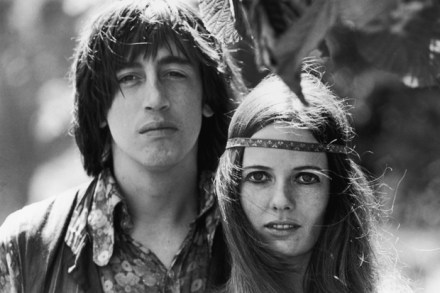
The Swinging Sixties should be renamed the Seedy Sixties

You know you’re getting old not when the policemen start looking young, but when a public figure dies and you say ‘O, I thought they were dead already!’ So it was for me when I heard that the Australian writer Richard Neville had died of dementia at the age of seventy four last week. Neville was never any sort of hero of mine - I was too busy promising my soul to Satan for a quick lick of Marc Bolan. But when I was thirteen and at the peak of my shoplifting prowess, I nicked his book Play Power on exactly the same robbing rampage that saw me take proud possession of The Female Eunuch, the half-mad masterpiece of Neville’s contrary contemporary Germaine Greer.

Young people’s ‘yolo’ spending is a symptom of a much bigger problem

'You’ve got to stop eating those croissants,' my parents tell me. I know they’re right, but have they seen the croissants? As crisp as a Hilton bed sheet and golden like the sun. They caution that they’re a waste of money, and I get it. In the early stages of my addiction I forked out £1.50 apiece; then the coffee shop grew hungry for more. £1.75 they demanded. That’s £8.75 a working week. Think of a month’s worth. (You do the maths - because I can’t). I try not to think about the cost. I stuff the pastry into my mouth and close my eyes, the pain crumbling away. Just like all the things I spend money on. I purchase stuff I don’t need all the time.

Bureaucracy is destroying the fabric of London’s nightlife

London’s nightlife is under attack. That became obvious this morning with the news that the popular club Fabric has closed for good. After a series of drug-related deaths at the venue, Islington Borough Council has decided the risk of keeping it open is too great. It’s come as a shock to many that Fabric is finished. Indeed, a petition to keep it alive reached over 148,000 signatures - and many celebrity backers, such as Annie Mac and the Chemical Brothers pleaded with the public: save the rave. But it was too little, too late. Another London nightclub has been forced to close. Fabric is just a small part of a much bigger problem; our party scene is in crisis, with clubs in the city declining by a third between 2005 and 2015.

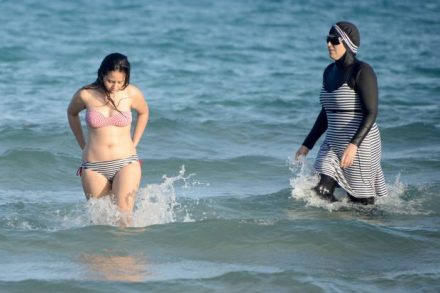
Podcast: Is it wrong to ban the burkini?

For about a year now, James Delingpole and I have been doing a regular podcast for Ricochet, the American website dedicated to conservative news and commentary. It’s called 'London Calling' and you can hear the latest one here. Among the many topics covered on this episode are the French burkini ban, Robert Tombs’s 'The English and Their History', my appearance on Any Questions last week and James’s appearance this week (alongside Diane Abbott). We also talk about the West London Free School and what we did on our holidays.

Hey Black Lives Matter UK: here’s some perspective on Glastonbury vs Notting Hill Carnival

Here’s a thing. Shortly after my column for this week’s magazine appeared online, Black Lives Matter UK put out the following tweet: https://twitter.com/ukblm/status/771000305639165953 Rather than answer this sliver of delusional idiocy myself, I’ll leave it to Ken Marsh, chairman of the Police Federation: ‘Last year we had an officer stabbed. This year colleagues were assaulted, abused and spat at. How can that be right? It's completely and utterly unacceptable. ‘The Glastonbury music festival had 40 arrests this year. Notting Hill had 10 times that amount. 'Year after year there are such high levels of violence against police officers and the public at the carnival. And yet year after year nothing changes. Something needs to be done.' Thank you, Ken.

Transfer deadline day is a countdown to zero and that’s what makes it great

For football fans, today is a special day: it's Transfer Deadline Day – a branded, almost to Hallmark levels, moniker. It's a day of bathos and unfulfilment. Your club will miss out on a top target, sign some underwhelming alternative, and clog up social media with pictures of them holding a shirt in a car park. Transfer Deadline Day is the great dance of performative capitalism for the working classes. We call it a ‘window’ because it is supposed to be a ‘window of opportunity’ for clubs and fans, but there is also a voyeuristic element. We spend the summer hidden in the bushes, watching the attractive Athletico Madrid winger or Bayer Leverkusen centre-half preening in front of the mirror.

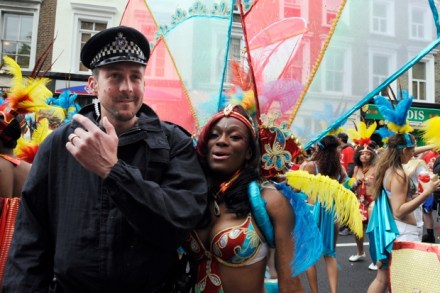
Why don’t Black Lives Matter want to ban the Notting Hill Carnival?

I do not get out very much these days, but the glorious weekend weather persuaded me that I should spend a pleasant afternoon watching people stabbing each other at our annual celebration of stabbing, the Notting Hill Carnival. I go most years and enjoy the street food, the music and the sight of white police officers with fixed rictus grins ‘getting down’ with some vast-mammaried semi-clad mama, their helmets askew and rivulets of sweat running down each crisp white shirt. And of course the violence, the violence. I am delighted to say that in this regard 2016 did not disappoint, with more than 400 people arrested and five stabbed — and all for the very reasonable cost of just £7 million to the taxpayer.

The National Trust is on a mission to Disney-fy Britain

The latest National Trust row highlights a depressing truth: the Trust is rapidly becoming a mammoth eco-warrior, rather than the preserver of historic houses and beautiful landscapes it is meant to be. It's just paid £200,000 over the guide price to buy land at Thorneythwaite Farm, Borrowdale in the Lake District, without buying the old farmhouse that went with it. Bang go the chances of a sheep-farmer buying the land and the farmhouse. And now the 300 acres of land enter into the National Trust's Disney-fied version of the countryside, where the eco-religion holds sway - at the expense of the farming practices that have carved out our exceptionally beautiful landscape. Chief among the eco-warriors is the National Trust's director-general, Dame Helen Ghosh.

Imperial or metric? Why can’t we have both?

I was in the Netherlands over the weekend, which is always nice; it's a bit like England, but just better. I've always wanted my country to be a bit more like our neighbours, especially Germany and Holland, and that includes standardisation with European norms when they clearly make more sense. Driving on the left, for example, when the entire continent drives on the right, is just annoying, and must make our cars more expensive and cost a handful of lives each year. And if you don't have anyone in a passenger seat you have to get out whenever dealing with any sort of parking or toll machine; as I get older this is one of those things that just get more annoying, like having to tie shoelaces.

The Olympics proves it: we are not all equal

An almost worldwide survey on penis length — the sort of thing I always read with a sense of trepidation and inadequacy — suggested that the countries boasting the largest of these flawed and devious appendages are all located in Africa. Especially West Africa, from the DRC down to the humid and still pristine jungles of Gabon. This suggests to me one of two things — either that the old racist cliché is absolutely true, or that Africans tell bigger lies than anyone else on the planet. Either or both of these explanations are likely to get me into trouble, so I suppose I’d better stop digging. Thing is, I can’t fathom another answer.

France’s burkini ban was an own goal for secularism

I’ve always hated the beach. The water? Great. The sunshine? Terrible. It starts with the hot trek across the sands to find a square of free ground – loaded up with factor 60, several books, a comedy floppy hat, two towels, three bottles of water and the rusty family parasol. Then there’s the bodily anxiety. Find me a woman who doesn’t fret about her body on the beach, and I’ll find you a liar. Just over a year ago, I wrote a post for The Spectator about my own fraught history with my body on the beach. I still don’t understand how it ever became acceptable to wear an itsy bitsy bikini around one’s dad. And even in a one-piece, if I don’t draw attention to my thickening waist, my mother will.

Britain is ready for a mature immigration debate. Is Theresa May?

You can’t fool all of the people all of the time, said Abraham Lincoln. Theresa May faces a different question: for how long can you string along an entire electorate? She has been a defender of the pledge to cut net migration below 100,000 – a pledge that was adopted in a different era, before the Great Migration got underway. Cameron more or less got away with this – until he didn’t. During the referendum campaign, news that net migration hit 333,000 changed the debate and embodied the point under discussion. Cameron was haunted with this pledge throughout the campaign: how he’ll have regretted not dropping it when he had the chance. But will Mrs May? I look at this in my Daily Telegraph column today.

In praise of free schools

Congratulations to all those free schools who got their GCSE results this morning. We don’t yet have the full picture, but early reports are good. Top marks to Tauheedul Islam Boys' High School in Blackburn, a free school that opened in 2012. Ninety-five per cent of its pupils achieved five A* to C grades in their GCSEs, including English and maths, a metric known as '5A*–CEM'. To put this in context, last year’s 5A*–CEM national average was 56.1 per cent. Another school that has done well is Dixons Kings Academy in Bradford. It was one of the first 24 free schools to open in 2011 – it was originally called King Science Academy – and was taken over by the Dixons Academy chain after financial irregularities were brought to light by a whistleblower.