Cuba

Visit Cuba – it’s the perfect holiday destination for poverty fetishists

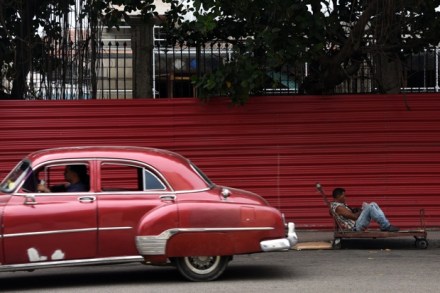
Since last December, when officials from Cuba and the United States announced that the two countries, locked in a Cold War stand-off for 54 years, would seek to normalise relations, the tourist industry has been admonishing us to travel to Cuba ‘before it changes’. Despite Cuba’s listless youth being well-versed in American culture - be it the latest fashions, pop songs or movies - on the surface Cuba remains stuck in a time warp. For tourists, the museum piece aspect of Cuba is a big part of the appeal. Thus visitors to Havana can go for a ride in a Cadillac, take in the neo-classical architecture (along with the smoke from a good cigar) and sip a mojito at Ernest Hemingway’s old drinking spot.

From ambrosia to zabaglione

Should sugar be taxed? Some of the contributors to The Oxford Companion to Sugar and Sweets seem to think so. Sugar certainly appears less appealing than it used to. Its negative effect on our teeth is undeniable, and it now takes the rap for many of the ills we formerly blamed on fats, such as obesity, high blood pressure and diabetes. But sugar is also now bound up with politics, because of its historical connection with slavery. Our awareness of this we owe to the groundbreaking, imaginative scholarship of Sidney Mintz, whose 1985 Sweetness and Power: The Place of Sugar in Modern History is easily the most frequently referenced work by the 265 contributors to this massive volume.

Portrait of the week | 14 May 2015

Home David Cameron, the Prime Minister, soon got used to the surprise of the Conservatives being returned in the general election with a majority of 12. He retained George Osborne as Chancellor of the Exchequer and made him First Secretary of State too. Theresa May, Philip Hammond, Michael Fallon and Iain Duncan Smith also stayed put, but Chris Grayling replaced William Hague, who had left the Commons, as Leader of the House, to be replaced as justice secretary by Michael Gove, who was replaced as chief whip by Mark Harper. Amber Rudd became Energy Secretary. John Whittingdale became Culture Secretary in place of Sajid Javid, who became Business Secretary. Boris Johnson was to attend weekly political cabinets.

Letter from Cuba: The tourists are coming – but don’t expect Walmart just yet

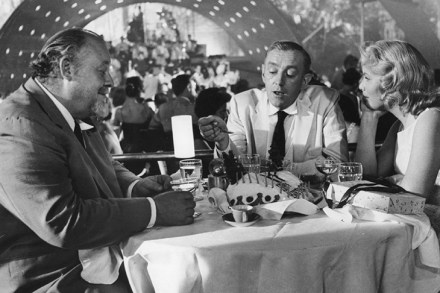
Sloppy Joe’s — which starred in the film of Graham Greene’s Our Man in Havana — was always likely to wither on the post-revolution vine. As the decadent hangout of unsavoury ‘imperialists’ whom Fidel Castro despised, it never stood much of a chance. Frank Sinatra, John Wayne and local hero Ernest Hemingway all used to call in from time to time, slaking their thirst at the 65ft-long mahogany bar. It closed in 1960 and no one expected to see mojitos and daiquiris being poured here again, at least not until Fidel and his brother Raúl were gone. But needs must. Double measures and double standards keep Cuba alive.

Both Belgium and the United States should be called to account for the death of Patrice Lumumba

For decades, all the outside world knew was that Patrice Lumumba, the Congolese independence leader, had been done away with. Like so much connected with the Congo, details were lost in the murk of Africa’s magnificent but broken giant. He had been fed to Katangan pigs, drowned in the river — or was perhaps even still alive and being held hostage in the Ituri rain-forest. So radiotrottoir assured me variously in January 2001 when I made my first visit to Kinshasa around the 40th anniversary of Lumumba’s disappearance. The reason for my trip felt darkly familiar: one of Lumumba’s successors as national leader, Laurent Kabila, had himself just been assassinated by a ‘turned’ bodyguard.

Restoring diplomatic ties with Cuba? What’s with all this eruption of sanity in Washington?

The conventional wisdom, at least in Britain, seems to be that Barack Obama's presidency has been a desperate disappointment. That is partly a reflection of the extravagant - impossibly so - expectation that accompanied him to the White House and partly, of course, a simple reminder of political reality. And yet it seems to me that you can make a persuasive case that he's been a better President than his predecessor (a dismally low bar, granted) but also a better President than Bill Clinton. This, true, reflects the gravity of the times. Clinton complained in his autobiography that he'd been deprived the chance of tackling the kind of challenges that secure a place in the history books. His years in office were too sunny, too fat, for that.

What a lost prison manuscript reveals about the real Nelson Mandela

This is a story about Nelson Mandela, and it begins on Robben Island in 1974. Prisoner number 466/64 is writing up his life story, working all night and sleeping all day.  Finished pages go to trusted comrades who write comments and queries in the margins. The text is then passed to one Laloo Chiba, who transcribes it in ‘microscopic’ letters on to sheets of paper which are later inserted into the binding of notebooks and carried off the island by Mac Maharaj when he is released in 1976. Outside, the intrepid Mac turns the microscopic text into a typescript and sends it to London, where it becomes the Higgs boson of literary properties, known to exist but not seen since it passed into the hands of the South African Communist Party, or SACP, in 1977.

Alexander Chancellor: The Chinese must save the cigar from extinction

In Dorchester during the Christmas holiday I bought a two-slice electric toaster at Currys. It was a nice little toaster that worked very well when I got it home. And it cost only £4.50, which turned out to be little more than half the price of a packet of Marlboro cigarettes. It’s some years since I gave up smoking; but at my peak I smoked three packets of Marlboros a day, which now would cost the same as more than five two-slice electric toasters. Or, put another way, with the money I have saved from giving up smoking I could buy nearly 2,000 electric toasters a year. I could by now be running a successful electric toaster shop.

Venezuela: a shining example of how not to help the poor

No serious person today views the Cuban Revolution as anything other than an impoverished tyranny – up to and including the leaders of that Revolution, who have been hastily turning toward capitalism since learning in 2009 that the island was on the brink of insolvency. It remains much easier to find useful idiots willing to defend Venezuela’s so-called ‘Bolivarian revolution’, however, which until recently was supposed to promise something better than its ossified Caribbean neighbour. Not for much longer, perhaps; for Venezuela is on the brink of a social explosion after 15 years of economic incompetence by Islington’s favourite petrocrat. It was reported this week that, absurdly, the most oil rich country in the world is facing food shortages.

Carlos Acosta, the great dancer, should be a full-time novelist

Carlos Acosta, the greatest dancer of his generation, grew up in Havana as the youngest of 11 black children. Money was tight, but Carlos won a place at ballet school, and before long he was enthralling audiences at Covent Garden as a half Jagger, half Nureyev figure with a twist of the moon-walking Jackson in the mix. Now Acosta is about to leap into the world of literature with a debut novel, Pig’s Foot, written over a period of four years during rehearsal breaks. For all its manifest debt to Latin American so-called ‘magic realists’ (Marquez, Borges, Vargas Llosa), the novel stands triumphantly on its own. In pages of salty-sweetprose, it traces five generations of a black family through Cuba’s tumultuous recent history.

May Day, May Day

There was a sense of urgency, even emergency, in many countries on May 1 this year. The goings-on in the UK were muted in comparison: France Presidential incumbent Nicolas Sarkozy staged a rally in front of the Eiffel Tower called ‘The Feast of Real Work’, to counter the traditional show of heft by the left. ‘Put down the red flag and serve France!’ he shouted to the unions. His campaign claims a turnout of 200,000. The left was irritated by Sarkozy’s hijack of their celebration, and his insinuation that they don’t understand what work is. The far right, led by a scornful Marine Le Pen fresh from rejecting an overture from Sarkozy, made their usual walk to the statue of Joan of Arc.

Working-Class People Can Like Opera Too, You Know

Brother Korski is right to draw attention to Rachel Sylvester's interview (£) with Unite's Len McCluskey and right too to note that his defence of Castro's island gulag* is indefensible. But there's more that's wrong with it than that and not all of that is McCluskey's fault. Consider these lines: He would choose tea and scones at Fortnum and Mason over beer and sandwiches in a smoke-filled room. He is a fan of the romantic poets — “I love Byron, Keats and Shelley, I’m a romantic at heart” — and takes a feminist interpretation of Christina Rossetti.

Unite chief blames MI5 for protest violence

Sometimes, just when you think that the craziest left-wing ideologues have gone off to tend to their gardens, up one pops. Meet Len McCluskey, the head of Unite, who tells The Times's Rachel Sylvester (£) that Fidel Castro has been a "heroic" leader of his people. That would be the same Cuban dictator who jails journalists and trade unionists. Odd choice of hero. But it gets better. McCluskey seems to think that MI5 encouraged violence at the last anti-cuts protest. I kid you not: "Mr McCluskey believes that the secret services, in particular MI5, may have been working under cover to encourage the violence as part of a conspiracy to undermine the peaceful message of the march.

Citizen Castro rains on Comrade Hattie’s last parade

There was praise for Fidel Castro – of all people – at PMQs today. That the tribute came from a Tory MP must make this a unique event in the annals of parliament. Castro’s recent admission that Cuba’s state monopolies might profit from a little nibbling around the edges gave Priti Patel, (Con, Witham), a bright idea. She asked the prime minister if the Marxist cigar-enthusiast might visit the TUC Conference to share his economic vision with the brothers. The PM, who seemed calm, fresh and genially bullish today, caught the joke and ran with it. He offered his own tribute to the semi-retired dictator. ‘Even Comrade Castro is on the same planet as the rest of us. Now we just need to get Labour and the unions across as well.

Will the TUC Condemn Castro?

Obviously this is one of John Rentoul's Questions to which the Answer is No. Nevertheless, given that the TUC is fond of congratulating* the Castro regime for its great achievements and humanity and all the rest of it one does wonder if the Congress will want to regret the Castros apparent, if unusual, embrace of economic reality. To wit, massive public sector cuts: Cuba has announced radical plans to lay off huge numbers of state employees, to help revive the communist country's struggling economy. The Cuban labour federation said more than a million workers would lose their jobs - half of them by March next year. Those laid off will be encouraged to become self-employed or join new private enterprises, on which some of the current restrictions will be eased.

Exotic Cuban underworld

Before the revolución of 1959, Havana was, effectively, a mafia fleshpot and colony of Las Vegas. Before the revolución of 1959, Havana was, effectively, a mafia fleshpot and colony of Las Vegas. Graham Greene first visited in 1954, when the dancing girls wore spangled headdresses. The Batista regime was then at its height, and tourists flocked to the Cuban capital for its promise of tropical oblivion. George Greene, the ‘GG’ of the title of this novella, is an English holidaymaker on the prowl in pre-communist Havana. Castro’s revolution is less than four years away — it is the summer of 1955 — and George hurls himself promiscuously into Batista’s grimy sex industry.

The ghost of an egoist

Very long books appear at intervals about Fidel Castro and Che Guevara. Rarely do they contain anything both significant and new, and they get longer and longer. This one too is a long book, though it is mercifully an abridgement of the original Spanish edition, which ran to over 1,400 pages. Anything in it both significant and new has escaped me. Most of it is about Castro’s childhood, youth, the overthrow of Batista and the early years of the revolution: Castro gave up smoking many years ago, but here he is still puffing away. All the same, it provokes thoughts. The first is that it confirms the view that history or biography is best written straight, and that funny business should always be avoided.

Cuba: The Last Refuge of Excuse-Making Scoundrels

I suppose one ought not to be surprised that there remain some folk for whom the Cuban revolutionaries remain unblemished heroes. Equally, there is, alas, no great reason to be too astonished that the Guardian still publishes panegyrics saluting the brilliance and ineffable wisdom of Castro and Guevara. Nevertheless, Simon Reid-Henry's* article today may take the biscuit in terms of recent contributions to the genre: After the war, what had begun as little more than an association of convenience developed into one of the most intriguing of all political partnerships. Their different working styles and approaches to revolution helped the Cuban leadership negotiate the hazardous switch from American to Soviet patronage.

The Che Chronicles

How many people really think of Che Guevara as a romantic, if occasionally headstrong, revolutionary? Outside Latin America, I mean. Perhaps it's a generational thing, but does anyone under the age of 35 really give even half a damn about Che Guevara? Certainly, the anti-Che forces continue to write as though he remained a clear, present, danger to all things good and holy. Here's John J Miller at The Corner, for instance:I have no objection to a movie about the life of Che Guevara. At least in theory. Yet it's probably impossible for Hollywood to make an honest film about this awful man — case in point being the new one from director Steven Soderbergh and starring Benicio Del Toro. Even the NYT sees the problem clearly, based on a screening at Cannes...

Parliament of Fools

Further to this and this, I see, thanks to Mr Worstall, that no fewer than 72 Members of Parliament have put their name to this Early Day Motion: EDM 982 FIDEL CASTRO 20.02.