Crypto

For true Brits, air con is as foreign as a bidet

A quartet of news stories all point in the same troubling direction. First, easyJet is about to become the latest notable name to leave the London Stock Exchange, following last month’s takeover of Tate & Lyle by a US buyer. The FTSE 250-listed low-cost airline is keen to accept a £5.5 billion offer from Castlelake, a private equity firm that’s also – you’ve guessed it – from the US. Inherent volatility in the aviation business combined with the presence of founder Stelios Haji-Ioannou as a minority shareholder has made easyJet a turbulent long-haul flight for investors. The shares have rocketed since Castlelake came into the picture, so cashing out looks rational – but the predation of our public market by foreign bargain-hunters goes on and on.

The ‘Trump sleaze factor’ grows and grows

From our US edition

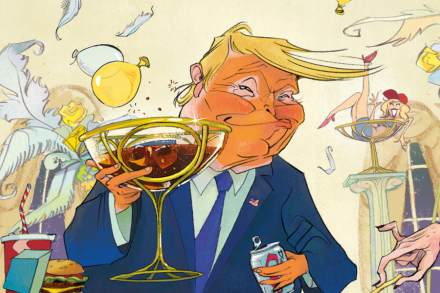
Earlier this month, I wrote a cover story for The Spectator warning that Donald Trump’s increasingly brazen flouting of ethical standards portended a political disaster for Republicans in the midterms. Since then, the corruption news has only gotten worse.   Just this week, the financial disclosure form Trump quietly filed for the first quarter of 2026 revealed his personal account had made an eye popping 3,600 stock trades valued at between $220 million and $750 million (his corporate holdings aren’t subject to disclosure).

Are AI stocks about to crash?

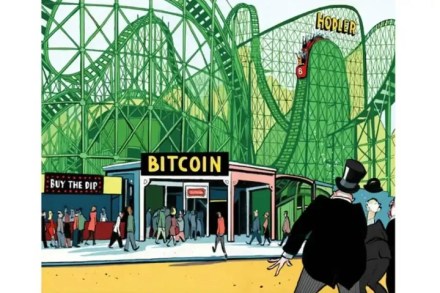
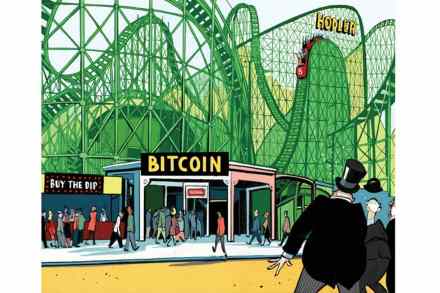
Bitcoin has lost almost a quarter of its value. The tech-heavy NASDAQ index on Wall Street has started to fall. And even leaders of the industry, such as the Google CEO Sundar Pichai, have started to warn about valuations getting out of control. We already knew that AI was driving a boom in investment. But this week there are worrying signs the market is about to crack. The only real question is whether that turns into a full scale crash. Bitcoin, as so often, is leading the market rout. More than $1 trillion has been wiped off the value of the crypto market over the last six weeks, with Bitcoin itself down by 28 percent since its peak.

AI

Can stablecoins make America the crypto capital of the world?

From our US edition

“I will make sure the US is the crypto capital of the world,” Donald Trump vowed earlier this year. In July, he signed the Guiding and Establishing National Innovation for US Stablecoins (Genius) Act. The Act creates federal guardrails for dollar-pegged stablecoins and regulates who can issue and redeem them. Concerns from law enforcement are also addressed, by making sure anti-money laundering and consumer regulation applies. But what are stablecoins? They are digital tokens built to stay at a stable price, usually one dollar. They sit on the blockchain – the computer protocol that makes crypto work – but what’s underpinning their value are real-world assets, usually cash or government bonds.

crypto

Trump brothers go mining

From our US edition

After a day where the very alive President Trump bombed a Venezuelan drugs boat, moved Space Force headquarters out of Colorado because that state has mail-in voting, declared he was sending federal troops into Chicago and claimed that AI generated a video of someone throwing a plastic bag of construction debris out of the window of the White House, it became clear that the real action was going on outside the White House walls, with Trump’s very rich sons. As Cockburn reported yesterday in The Spectator, the Trump Brothers, Don Jr, Eric, and the true genius behind the operations, Barron, had somehow amassed $5 billion in paper wealth thanks to savvy investments, based in no way on shady insider information, in WLFI, the family’s nascent cryptocurrency venture.

Bitcoin

How Donald Trump will be impeached

From our US edition

From the election in November to the presidential inauguration in January, media commentators took turns to pronounce the Trump “Resistance” dead. I know I did. The line was too tempting. As Trump stormed back into the White House, his power looked irresistible. His enemies seemed so broken and defeated. We all spoke too soon. “NeverTrumpism” is a reaction to Trumpism, as natural as magnetic repulsion and the urge to defy and destroy his presidency hasn’t vanished. In fact, look closely and you can see a “Resistance 2.0” gathering momentum in response to the second Trump administration.

impeached

Who is funding Trump’s billion-dollar crypto empire?

From our US edition

By one recent estimate, Trump’s foray into crypto has made his family almost $3 billion in six months and now accounts for up to 40 percent of his wealth.At the same time, his administration has been quietly dismantling guardrails around the crypto industry. Trump has slashed funding for key Treasury initiatives, scrapped proposed anti-fraud rules, and even pardoned crypto felons. Much of the hype – and money – comes from $TRUMP and $MELANIA, two so-called meme coins: cryptocurrencies driven by branding, jokes, or online fandom rather than real-world use. Yet despite having little practical function, the pair has already generated over $140 million in trading volume in just four months.

Crypto

Tales from the crypto

From our US edition

I don’t gamble. But in October 2016, I made a bet. It was obvious Trump didn’t just have skeletons in his closet but a walk-in necropolis. As we stumbled toward November, the question wasn’t whether one of these skeletons would break free, but just how bad the October Surprise would be. It was supposed to be a polling-shifting, election-sealing, reputational nuclear bomb. And if you read the press, that’s what the “Pussy-Grabbing Tape” was. But to me, it was just another example of Trump being vulgar. And Trump had always been vulgar. And voters liked that he was vulgar, or didn’t care that he was vulgar, or liked that he was so unlike other politicians that he could be vulgar.

crypto

Has crypto finally had its day?

If you run an organisation, there are some reporters you definitely don’t want around: Ronan Farrow asking for comment; Madison Marriage or Dan McCrum with a couple of questions; Michael Wolff hanging out on a sofa taking notes. Michael Lewis is not one of those reporters. If he wants to spend time with you, you are about to be lionised as a decent person who sees just a bit more clearly than the fools who run the system of which you are a part, which will make you wildly rich (unless you’re an academic or a public servant) and famous. When Michael Lewis calls, people answer. Lewis raises enough questions for one to finish the book less sure of Bankman-Fried’s guilt than at the start When Zeke Faux calls, they often don’t.

The UK is right to keep faith in crypto

It will be a charter for fraudsters. It will usher in an open-season mindset for money launderers and criminals. And it will drag down the reputation of the City. There will be plenty of critics of today’s government decision to push forward with a regulated cryptocurrency market in London. In the wake of the FTX scandal, one of the largest in corporate history, many would rather see it banned completely. But crypto is more resilient than that – and the UK, if moves quickly, it can carve out a lucrative space as its leading hub.  No one could accuse Rishi Sunak or Jeremy Hunt of taking any risks with the British economy. Nor have the Prime Minister or Chancellor shown much interest in boldly re-inventing the country’s business model.

Crypto keeps bouncing back

This time it was surely all over. As inflation started to rise towards a 40-year high, as central banks started raising interest rates for the first time in more than a decade, and as the monetary printing presses finally stopped running, the cryptocurrencies crashed.  What a crash it was. Bitcoin, the best-known crypto, fell all the way from $61,000 last November to less than $19,000 in June, a spectacular drop of more than two thirds. Ethereum, Solana and other, frailer ‘coins’ – as well as the even flimsier digital collectors’ items known as NFTs – all tanked. This appeared finally to confirm what the doubters had said all along.

Crypto is dead

When Britain voted for Brexit, Macron boasted that Paris would eat the City of London’s lunch. It didn’t quite work out that way, with most league tables continuing to put London as the number one or two financial centre, with not a single EU city in the top ten. Emmanuel Macron's government has now announced that it has invited Binance, a crypto exchange site, to set up a European HQ in Paris. You have to ask: has Macron leapt on a bandwagon which has already started to lose its wheels?  The warning sign for cryptocurrencies is not so much that they have crashed – Bitcoin is down 50 per cent from its peak last November – but that they have become boring.

Rishi Sunak’s NFT gimmick is a step too far

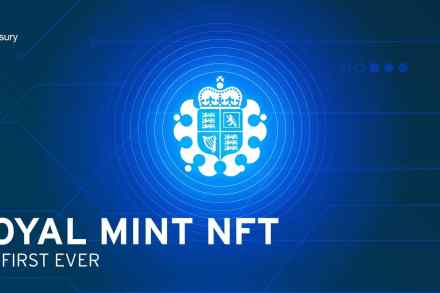
We had got used to the expensive trainers. The carefully curated hoodies were just about acceptable. The Twitter feed was starting to grate on people’s nerves, and so were the stage-managed photo ops, such as filling up a borrowed Kia Rio at Sainsbury’s right after cutting fuel duty, but they were part of the package. But the Chancellor Rishi Sunak may finally have come up with a gimmick too far with the launch of the Treasury’s very own digital token. Sunak’s addiction to gimmicks is starting to undermine his credibility The Chancellor, between figuring out how to control inflation, pay for public services and reboot the economy found some time this week to launch the British government’s first NFT.

Will our future lives be like a video game?

A few years ago, the software company Owlchemy Labs released a computer game called Job Simulator. Its premise was simple. Players find themselves in a future world, roughly 30 years from now, in which super-efficient robots have snaffled up all the jobs. No longer needed for work, humans entertain themselves instead by donning virtual reality headsets and reenacting 'the glory days' — simulating what it was once like to be an office clerk, chef, or shopkeeper. The gameplay, therefore, consists entirely of, well, yeah… carrying out endless mundane tasks: virtual photocopying, virtual cooking, virtual newspaper sales. Job Simulator is pretty tongue-in-cheek, crammed full of dry, self-referential jokes.

What Bitcoin’s crypto critics get wrong

What's the truth about Bitcoin? Critics couldn't be clearer: it's a fad that can’t decide whether it’s a currency or a speculative investment. 'You’re betting, essentially, on being the last person holding the bomb before it goes off,' wrote Sam Leith on Coffee House. Many others agree. But Bitcoin's critics are wrong: there's nothing faddish about it. Bitcoin is a monetary revolution and is here to stay. Perhaps it's no surprise that Bitcoin has attracted its sceptics. Understanding what it's about isn't easy. In short, Bitcoin is a monetary network, an incorruptible ledger, with the money supply fixed by code (there will only ever be 21 million Bitcoin).

The free speech row tearing apart the tech community

Donald Trump’s Twitter suspension after the riot at the US Capitol made headlines around the world. What was less reported, however, was that as the then-President was suspended, so too were tens of thousands of right-wing accounts. Their social media refuge was Parler, another micro-blogging platform. Parler markets itself as a ‘free speech-focused and unbiased alternative to mainstream social networks’. Whatever its intentions, in recent years the platform has become a cesspit of extremist content. So extreme, in fact, that Amazon banned Parler from its hosting services earlier this month. The case is now going through the courts, after Parler launched a lawsuit.