Cricket

How to rescue English cricket

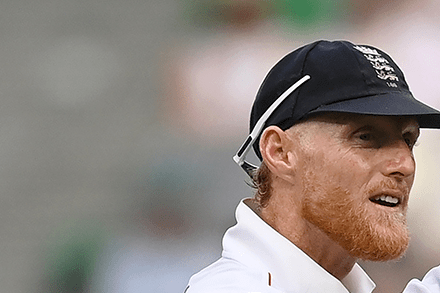
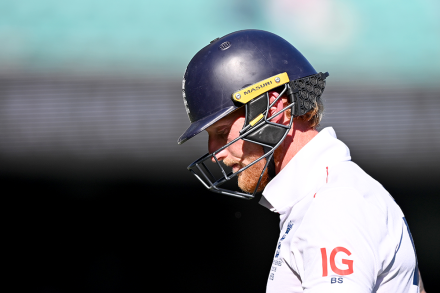
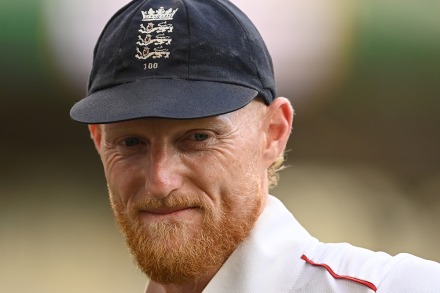
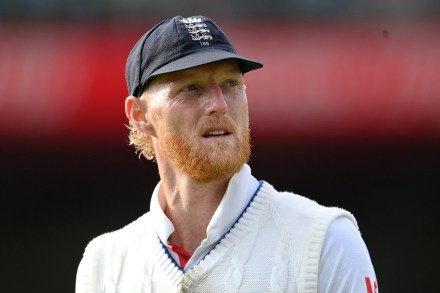
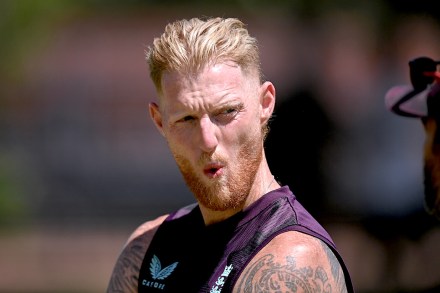
There was always something of John Cleese’s Sir Lancelot about Ben Stokes, ever eager for a flamboyant rescue mission in his own particular, as Lancelot puts it, idiom. Leave no chandelier unswung, no buckle unswashed. He would charge in, gung-holier than thou, and work out the damage later. ‘When I’m in this idiom, I sort of get carried away,’ Lancelot apologises after massacring all the guests at a wedding.  At times, it was glorious. But often, increasingly so in the second half of his England captaincy, ghastly. ‘Incredible highs and pretty low lows’ was Stokes’s own assessment – and we will always be grateful for the highs. But as England rebuild, they need to consider the manner of those lows and how many were self-inflicted.

Why are the Belgians so bad at football?

Whisper it if you must, but it looks as if Gianni (‘Today I feel gay…’) Infantino might have got it right with Fifa’s jumbo-busting World Cup, all 48 teams, 104 games and 39 days of it. Just look at some of the results: forget the Norwegians ‘Viking row’, Messi’s relentless brilliance, magnificent Mbappé, even wise Emma Hayes and her kitchen chalkboard. Look at tiny Cape Verde. With a population of 530,000, about the size of Bristol, it’s one-fifth the size of Jamaica, half that of Mauritius and one-third less than Gran Canaria. But they have been handling football’s aristocrats with the fervour of a French revolutionary execution party.

Who cares if cricketers drink?

Cricketers Have Beer, Shock: well, who knew! This wretched incident in some joint in Chelsea involving Ben Stokes and Gus Atkinson in a dust-up with some extremely large young Saracens rugby players is hardly world war three, but its ramifications are sending shudders through the cricket establishment. At the time of writing the full details are not entirely clear, though it seems that an England Cricket Board (ECB) security guard might have been accidentally thumped before a full-blown ruckus ensued. Nothing good ever happens after midnight – a sentiment readers will doubtless be familiar with Whether a well-known and widely admired 35-year-old international sportsman should have been out in a nightclub in the early hours of Monday morning is for others to judge.

How Rupert Murdoch destroyed the innocent enjoyment of watching sport

In July 2000, Rupert Murdoch’s Sky acquired an obscure online gambling brand called Surrey Sports. It was little remarked upon at the time but this deal would change football forever. Two years later, Surrey Sports had become Sky Bet and, by 2004, people watching football on Sky Sports could bet on the game via their remote. And why not? After all, as the Sky Bet tagline reminded viewers: ‘It matters more when there’s money on it.’ For football fans, nothing was ever quite the same again. ‘It’s difficult to overstate what the slogan did for the normalisation of gambling in football,’ writes Darragh McGee in his impressive study of how our national sport, seduced by profit, surrendered to the gambling industry.

My miracle match against the Vatican’s cricket team

Many have come to Rome seeking spiritual guidance: Thomas à Becket, Lord Byron, Lionel Richie. I came for a different purpose: to defend a papal cricket trophy. I am not Catholic. And until last year I had never played cricket before. It all started, as many great British stories do, with a pub: the Three Stags in Kennington. My friend Tom had invited me to what he described as a ‘Cricket Club Party’. As I headed upstairs, the barman’s quizzical look when I mentioned I was there for ‘the party’ should have given me cause for concern. As I came in through the doors, I was greeted by what appeared to be the end of a Sunday lunch and a collection of six individuals for whom the collective age would have been a record-setting Test score.

The inner secrets of Rory McIlroy

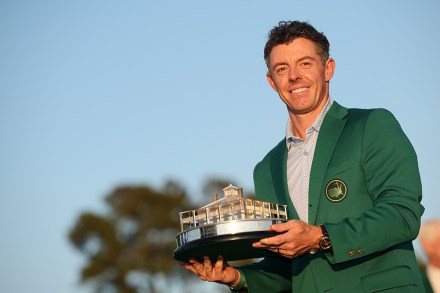
It’s easy to be sceptical about top sportsmen turning to psychologists for help. A bit precious, no? After all, what’s wrong with the good old Fergie hairdryer treatment to unmuddle the thinking of some bewildered player? But when you hear Rory McIlroy extolling the virtues of the man who gets inside his cranium you start to think a little differently. Dr Bob Rotella, a craggy sports shrink from Vermont, is, it turns out, one of the key members of McIlroy’s team and they have been working together for years. McIlroy paid a very handsome tribute to Rotella after his second successive Masters victory.

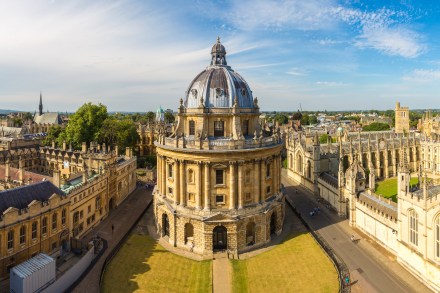
The rise of the Oxbridge AI admissions cheat

‘This is the future, my wife says./ We are already there, and it’s the same/ as the present.’ So begins Ciaran O’Driscoll’s poem ‘Please Hold’, about a husband talking to a telephone robot and becoming ever more frustrated at the mind-numbing automation of modern-day life. There’s a lot of ‘Your call is important to us’ and Eine Kleine Nachtmusik and ‘We appreciate your patience’, until eventually the speaker resigns himself to the fate of growing old while on hold. This same reluctant acquiescence can be seen with AI: this is the future, and we are already there. Except instead of asking us to hold, it’s always asking us how it can help, how it can further infiltrate our lives. AI has already transformed how students learn and schools evaluate.

Australia’s cricket was just too good

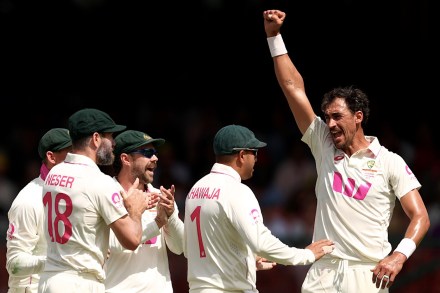
The longest postscript in sport is finally over. On the eve of the first Ashes test, which began on 21 November, English pundits were talking up their team’s best chance of winning down under in 30 years. Australia were old, slow and injured. Mark Wood, Jofra Archer and Josh Tongue would rough up the hosts with genuinely quick bowling. And Bazball, the only-good-vibes philosophy that had underpinned the team’s singular focus on the Ashes for the past two and a half years, would prevail. Such predictions proved as wild as Brydon Carse’s new-ball bowling. Australia mathematically retained the urn before Christmas. But in reality the Ashes were won on 22 November, the day after the series began.

Don’t blame Ben Stokes

So what was the best bit of this dispiriting Ashes series? Lucky you if you’ve found one, but for me – at the time of writing, before Jacob Bethell was belatedly allowed to unfurl his brilliance – it was the moving homage to the heroes of the Bondi massacre at the start of the Sydney Test. It was flawlessly executed, unlike a great deal of the cricket: a group of first responders, including paramedics, lifeguards, police and Ahmed al-Ahmed, the shopkeeper who disarmed one of the terrorists, were given a guard of honour as applause and cheers flooded the ground. If it didn’t bring a tear to the eye, check your pulse. Otherwise, what have we learned?

An obituary for Bazball

Any account of the third test match, in Adelaide, inevitably becomes an obituary notice on England’s abortive attempt to wrestle the Ashes from Australia’s iron grip. There can be no doubt that trying to win the Ashes in Australia is the hardest task in the world of cricket – if further proof was needed.  The conditions, the ruthless determination of Australia’s cricketers and their huge and intensely patriotic crowds who believe that permanent possession of the Ashes is their God-given right, all help to make it the seemingly impossible task that faced Ben Stokes’s much heralded side. It has been a long time since English cricket and its supporters have experienced quite such a sense of let-down.

My advice to Ben Stokes

In preparation for the 2005 Ashes series, the late Graham Thorpe, a man I looked up to enormously, turned to me and uttered the immortal words: ‘Straussy, there is Test cricket and Ashes cricket. They are completely different things.’ Never has a truer sentence been spoken. The Ashes breaks out of the normal cricket bubble. It means more than cricket: this is a biennial arm-wrestle with the respective sporting reputations of two enormously proud nations on the line. The prize is a little urn but also bragging rights for the next two years. The result of the Ashes, whether positive or negative, invokes an intense emotional response. It makes people feel. That is why it is so important.

Ben Stokes’s run-in with Aggers

There’s tetchy, and then there’s Ben Stokes ‘tetchy’ – pulling out his mic and stomping off cursing, or so I’m told, after Jonathan Agnew asked a disobliging question. Admittedly it’s hard not to feel some sympathy for Stokes, an inspirational leader on the pitch who had just seen his team skewered in two days in Perth in one of the most brutal (and thrilling) Ashes Tests in history, and then had to do a live BBC interview. But this was the ever-courteous Aggers, for heaven’s sake, the nearest thing to a secular saint for TMS.  There’s no need for a four-letter outburst.

Ben Stokes will go down as the greatest captain of modern times

And so it begins, as Donald Trump likes to say, though not usually about cricket. He was offering his thoughts on the New York mayoral elections, which is not as much fun as the Ashes. Pleasingly, the goading is reaching volcanic levels as the Perth Test gets ever closer. Who needs Trump? The West Australian is not a paper many readers will be familiar with but its pages have been plastered with pictures of English players making their way through arrivals at Perth airport.

Why I’d take a close Ashes defeat over an easy victory

The Ashes start this week. If, as an England supporter, you were given the following two choices, which would you pick? First: England win the series 5-0. Second: the series ebbs and flows, the teams arrive in Sydney locked at 2-2, the match goes down to the final hour of the final day, and England lose. If you went for the second option, you’re my kind of fan. I’ve always preferred to see my team (or player) lose narrowly than win easily. Sport is there to entertain us. This is the supporter equivalent of ‘It’s not the winning, it’s the taking part that counts’. As a fan, you get excited by the process rather than the result. Nowhere is this truer than in Test cricket.

England will win the Ashes

The build-up to any Ashes series in Australia provides great entertainment all of its own. This time, as the first test in Perth draws nearer, the contributions from former players in both camps have been unsurprising and surely unnecessary, and also a trifle shrill and irritating. These criticisms can hardly help with preparations for the toughest series of all. Why do old players feel it beholden upon themselves to do this? These ‘has-beens’, as Ben Stokes has pointedly called them, have effectively been saying ‘things ain’t what they used to be.’ They seldom are and these oldies should move with the times. Ian Botham and Graham Gooch have both said England is not preparing enough, with the team having only one three-day in-house practice game.

The maverick magnificence of Henry Pollock

‘Gosh he seems full of himself’ was how my friend’s wife reacted when she came in to see Henry Pollock celebrating his stunning try against the Aussies at the weekend. And she was spot on too: 20-year-old Pollock, England rugby’s latest prodigy, whips up emotions, not least the desire from anyone who has played against him – and plenty who haven’t – to give him a good belting. He’s swaggering, confident, brash, with rockstar charisma and a bleached blond mop, and he can wind up opponents until they need a bomb disposal expert to calm them down. Referees might soon want to tell him to rein it in. That’s youth for you: who gives a damn?

How long does it take to build a runway?

Flight path How long does it take to build a runway? — 33 years (at least) in the case of Heathrow’s third runway, first consulted on by Gordon Brown’s government in 2007, but which is not expected to be open until 2040 at the earliest. — 17 years in the case of Gatwick’s second operational runway, which involves the current emergency runway being moved 40ft to the north. Proposed in 2013 by Gatwick airport and approved by the government this week, it could be in service by 2030. — 90 days in the case of Tegel airport, Berlin, work on which started 5 August 1948, during the Berlin Airlift. It was open for operations on 5 November. Put to the Test Harold ‘Dickie’ Bird, who has died aged 92, was a fixture of the English summer between 1970 and 1996.

My new show with Andrew Lloyd Webber

The week of my cricket team’s annual tour of Cornwall. I formed Heartaches CC in 1973 and 765 games later it is still going strong. Not that I am a key component of the side these days, if I ever was, despite my seven wickets against Mullion in 1991. When I suffered my fourth injury in three of the past four seasons (and one of them occurred when I was minding my own business umpiring) I saw the writing on the scoreboard. I just hope I’m not injured as a spectator this year. For some reason 2025 has been an extraordinarily hectic year, musicals wise. Annoyingly hectic in fact. I know I should be grateful for continued interest in past work but, in my 81st year, I should have spent more days at Lord’s or the Oval than in theatres.

Why three is the magic number in these Ashes

And so it begins, the Great Debate: no, not who will be deputy leader of the Labour party but the infinitely more important – and certainly more interesting – matter of who will be trudging out at No. 3 to bat for England in the first Ashes Test at Perth, which is now ominously close. Almost as close as the moment the first bars of Slade’s ‘Merry Xmas Everybody’ starts plinking round the supermarket. For some, the choice of Ollie Pope or Jacob Bethell is like saying whether you’d rather be buried or cremated. And sure, the days of Jonathan Trott, Ian Bell and the great Nasser Hussain might be long gone. But No. 3 could be the key position in these Ashes.

The joy of school cricket

Few presidents can claim such an immediate success. At the end of June, I became president of my school’s alumni association and then, just five days later, the First XI won their first match at the annual Royal Grammar Schools’ Cricket Festival since 2017. A coincidence? Well, obviously. But I’d like to think that Colchester’s youth drew confidence from me having a net at the school field on Old Colcestrians’ Day and getting hit on the bonce by the first ball I faced from the sixty something head of Year 12. If this is how poorly the alumni play, they will have thought, we can’t be all that bad. I was never any good at cricket, much as I loved it. One presidential duty was to unveil a plaque on a new scoreboard.