

In July 2000, Rupert Murdoch’s Sky acquired an obscure online gambling brand called Surrey Sports. It was little remarked upon at the time but this deal would change association football forever. Two years later, Surrey Sports had become Sky Bet and, by 2004, people watching football on Sky Sports could bet on the game via their remote. And why not? After all, as the Sky Bet tagline reminded viewers: “It matters more when there’s money on it.”
For football fans, nothing was ever quite the same again. “It’s difficult to overstate what the slogan did for the normalization of gambling in football,” writes Darragh McGee in his impressive study of how our national sport, seduced by profit, surrendered to the gambling industry. Having a bet, previously something working men did in dingy high street bookmakers, was suddenly “an adrenaline-pumping add-on that amplified how a new generation consumed live sport.” You didn’t even have to leave the sofa.
Two decades on, gambling’s grip on football – and its fans – across the world is iron-clad. It is simply not possible to watch a game, live or on the television, without being encouraged to bet. Billboards and half-time adverts featuring star players and celebrities all carry the same essential message: come on, lads, have a go. The marketing tactics have at times been outrageous. One Paddy Power advert featured old ladies crossing the road as a truck hurtled toward them. Come and have a bet on which one survives. “Let’s make things more interesting,” screamed the tagline.
But as McGee, an academic at the University of Bath, points out, the gambling companies were only ever pushing at an open door: “Sport had a hand in its own hijacking, having become a marketplace engineered around the extraction of value from every edifice.” By 2016/17, half of all Premier League clubs, including Crystal Palace and West Ham United, had shirts sponsored by gambling brands. That was also the season when Stoke City renamed their ground: the Britannia Stadium became the Bet365 Stadium. No prizes for guessing which gambling company owns a majority stake in the club.
So, yes, greed is one part of this dispiriting story; New Labour’s rushed gambling deregulation is another. But the most profound, and certainly the most interesting, part is the advent of “in-play” betting, which welded sport and gambling together. In 2006, Bet365 launched a livestreaming service, allowing visitors to their website to watch – and gamble on – sport every second of the day. Football, cricket, cycling, squash, even surfing: it was all there. Added to this, and more insidious still, fans now had the opportunity to bet not only on the outcome of a fixture but on what McGee describes as “microevents.” Which team will win the next corner kick? Bet. Which bowler will take the next wicket? Bet.
Here for the first time was the “casinofication” of sport. “The gambling industry wants people to be able to bet, get a quick outcome and have any winnings available to play again and again,” Matt Gaskell, a consultant psychologist at the NHS Northern Gambling Service, tells McGee. “What they want to avoid is people having time to reflect on what they’re doing or to go out and get some fresh air. Just like the casinos, they want them locked in.” Naturally, every other major bookmaker followed Bet365’s lead. And then there are the “free bet” and “enhanced odds” offers designed to reel in new customers. McGee recalls being tempted by an advert on social media offering odds of 50/1 on Paris Saint-Germain to win the Champions League final. “Predictably,” he writes, “there were strings attached.” A closer inspection of the small print revealed a maximum cash payout of 68 pence.
It’s now impossible to watch football, live or on television, without being encouraged to bet
The consequences of all this are hard to untangle and McGee occasionally overplays his hand. He leans too often on stories of desperate young people gripped by addiction which, while powerful in isolation, do not necessarily reflect a broader health crisis. One NHS Health Survey showed that the rate of problem gambling had dropped to 0.4 percent of the population in 2023, from 0.5 percent in 2018. But a different survey, published by the Gambling Commission in 2024, estimated the scale of harm could be eight times higher. We simply do not know if there is a gambling epidemic in the UK.
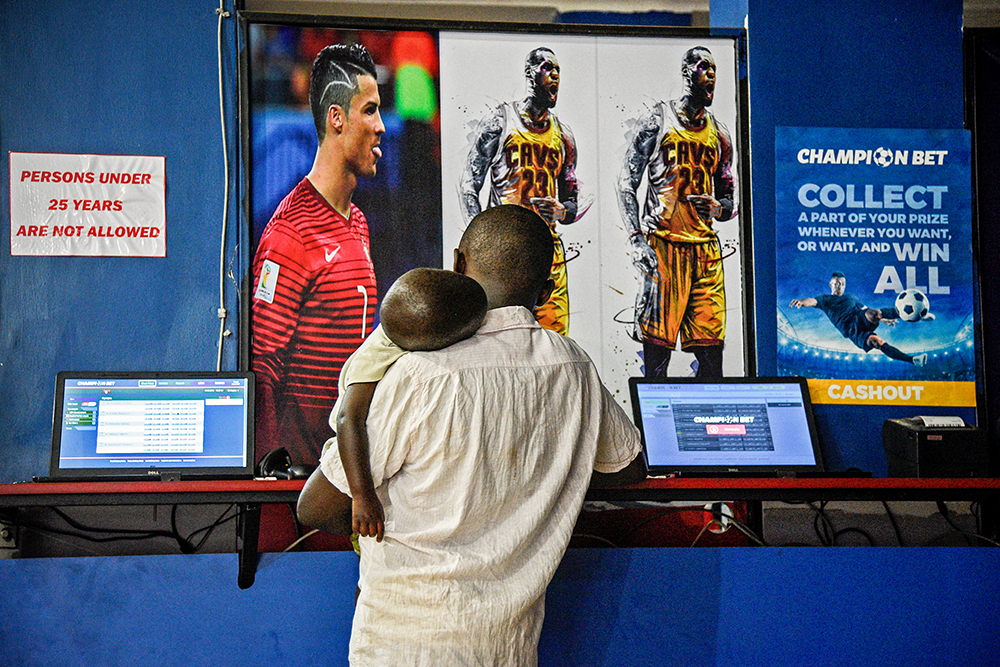
McGee is on surer ground when he laments the loss of innocence in watching sport. Your team winning was once enough; now, we are told by the gambling industry again and again, it doesn’t really matter if you haven’t had a bet. This playbook has been copied around the world. In one of the best sections of Imitation Games, McGee travels to football-obsessed Ghana, where nearly seven million people live in extreme poverty, to watch Liverpool play Chelsea in the 2022 FA Cup final.
Before kickoff, an advert for BetKing, which featured the former Nigeria captain Jay-Jay Okocha, is broadcast to a packed bar, with the aspirational message: “BetKing – the playground for kings.” That can’t be right.





Comments