Cost of living

Why the Tories must face the truth about energy bills

One influential figure on the centre-left told me recently that he isn’t bothered about who wins the Tory leadership contest. He argued that the tsunami of problems waiting to hit the new leader – rising energy prices, inflation and a creaking NHS, to name but a few – means the Tories will be in trouble regardless of whether it’s Liz Truss or Rishi Sunak who triumphs. These issues are enough to sink any government, but especially one that has been in power for 12 years. Given how Boris Johnson dominated politics, whoever succeeds him will to some extent feel like a fresh start. But they won’t be able to pull off his trick of presenting their administration as entirely new.

The surprising tricks that can cut your energy bills

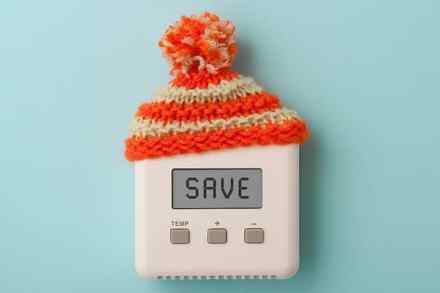
We are all facing months of rising bills, with warnings that there may even be blackouts ahead. But all is not lost. Here are ten ways you can cut your energy consumption – and some of them will surprise you… Change your lightbulbs – even the 'energy saving' ones. If you still have old-style incandescent lightbulbs in your home – or even the original, fluorescent energy-saving bulbs – you are wasting a fortune. A five-watt LED lightbulb produces as much light as an old-style 60-watt lightbulb does. Lighting constitutes the single biggest proportion of most energy bills on account of how often we have the lights on – so this single change can make a significant difference.

The irrational cruelty of the SNP’s nationalism

They can't build a ferry, organise a census or keep the railways operating, but when it comes to organising a grievance campaign, nobody does it better than the SNP. This week saw perhaps the most impressive effort yet from team grievance as the SNP tried to turn the Chancellor's announcement of a windfall tax on big oil companies into a Scotland-versus-the-rest-of-the-UK bun fight. Speaking on Sunday, SNP MP Kirsty Blackman complained:  It feels very unfair that Scotland is having to pay for the entirety of the UK. If Scotland was an independent country, the windfall tax would generate £1,800 for every household in Scotland.

There’s never been a better time to ditch the net zero agenda

The cost of living crisis is confronting Westminster elites with the stark reality of some of the dubious policy choices they’ve recently made. Last week, the government was forced to postpone its ban on buy one get one free deals on ‘junk food’. The foolishness of outlawing cheap food – a policy Boris Johnson adopted after his spell in intensive care – has been laid bare now that inflation has risen to a 40-year high. Soaring energy bills ought to give proponents of eco-austerity similar pause for thought. Dozens of retail energy companies have gone bust in recent months. We are shipping fracked gas from the US while banning the technology here.

Life in an age of hyperinflation

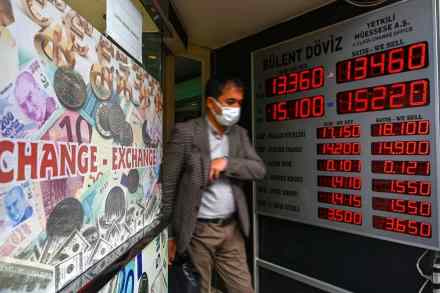
Istanbul, Turkey On Saturday mornings, Istanbul’s markets and greengrocers are packed with housewives in search of a bargain. Anxious women compare cabbages while chefs haggle over bunches of parsley, passing across thick wads of ten Lira notes – equivalent to about £5 a decade ago, now worth just 50 pence. The rising cost of food has become a national obsession in Turkey. Menemen, a staple breakfast dish of scrambled eggs with tomato, onion and fried green peppers, has seen the cost of its basic ingredients shoot up by 132 per cent in a year. Some shops in the big cities have invested in digital price tags – those little grey electronic screens you see in continental supermarkets that can be updated with the click of a mouse.

Tinkering with the energy price cap won’t fix it

In principle, the UK’s energy price cap is supposed to provide a buffer for consumers who might otherwise see their energy bills go through the roof. But governments can’t control international energy prices: a lesson that has been learned the hard way over the past six months, as dozens of energy companies have gone bust, unable to raise prices for customers to reflect increasing wholesale costs. Meanwhile the cap has not stopped bills from skyrocketing: Ofgem’s last price cap went up by 54 per cent, taking the total cost for an average household to just under £2,000 per year.

The cruelty really is the point

From our US edition

Earlier this week, Politico ran a piece called “Inflation’s biting. Roe’s fraying. Dems are still trying to connect with voters.” The crux of the article is that while congressional Democrats have plans to counter rising inflation, they are having a hard time selling their command of the situation to voters. It’s no wonder. The star of the piece is Representative Katie Porter. Porter, a member of her party’s progressive wing, is portrayed as more aware of the impacts of inflation than her colleagues. The story describes an instance in which Porter had to put a package of bacon back on the shelf because, to her surprise, it was up to $9.99 per pound.

How controversial was Basic Instinct?

Stone me Boris Johnson threatened to unleash the ‘terrors of the Earth’ on an unidentified Tory MP who claimed that Labour’s deputy leader, Angela Rayner, deliberately crossed and uncrossed her legs to distract the Prime Minister at the dispatch box – in the manner of Sharon Stone in Basic Instinct. But that was just one way in which the 1992 film caused offence. It was also accused of glorifying violence, portraying negative stereotypes of gay people, making smoking glamorous and exploiting Sharon Stone, who later claimed that she had been tricked into removing her knickers for the offending scene. Let us pay How is the cost of living crisis beginning to bite?

Boris Johnson’s cost of living gamble

What can the government do to ease the cost of living crisis? The Chancellor drew criticism in his spring statement for not doing enough – yet there are ministers, such as Kit Malthouse, who take the view the government has already spent too much. At a recent cabinet meeting Malthouse suggested Johnson and Sunak reopen the spending review and make cuts in the face of rising inflation. Cost of living is now viewed as the number one issue in government – as deputy chief of staff David Canzini has briefed aides. Today Boris Johnson is attempting to show he is on the front foot by chairing a cabinet in which he has asked ministers to come forward with cost of living solutions.

The surprising middle-class gadget that cuts energy bills

If there’s one company that’s a kind of stock market indicator of the condition of the British middle classes, it’s Lakeland. It specialises in very good household stuff – cleaning and cookware and any number of ingenious gadgets (the catalogues are, I have to say, addictive) – and it has an uncanny knack of registering where popular tastes are going. Its annual Trends report is seized on as an indicator of what normal families are up to, and so it’s proved, on everything from passing trends like the spiraliser (courgette pasta, anyone?) to the inexorable move to recyclables. So, what’s the Lakeland index suggesting now about the British consumer? She and he are trying to do something about the bills, chiefly the energy bills.

How I finally learned to love my eco-home

Nine years ago, when I invested every-thing I had in a part-rent, part-buy, one-bedroom, government-backed eco-home which proved to be a boiling box in summer, my first instinct was to throw myself out of a window – but I couldn’t because they opened only ten centimetres. My second was to complain about it in The Spectator. Now, I return to update you on my energy bills. Prepare to turn green with envy. Friends who live successful sorts of lives – involving houses, spouses and gardens – exclaim ‘Oh, so you weren’t joking about living in a J.G. Ballard novel?’ when they come around for the book launches I host in my living room, before asking if I can open a window. ‘I can actually,’ I boast.

What Rishi Sunak could learn from George Osborne

I was walking last week from Canary Wharf tube station to my flat in east London – not far, little more than a mile, and the walk follows the Thames on the north side, away from traffic: lovely. But as I headed for the river, I saw trouble. A thick curtain of rain had descended over Blackheath across the Thames, and the wind was blowing strongly from that direction. The storm had not yet reached Greenwich, still clear, but the curtain was moving. After Greenwich the rainstorm would cross the river – and hit me. Umbrella-less, I quickened my pace. Few others seemed to have noticed. People were ambling around, some sitting at outside tables at restaurants, some chatting on park benches.

Which foods are seeing the biggest price rises?

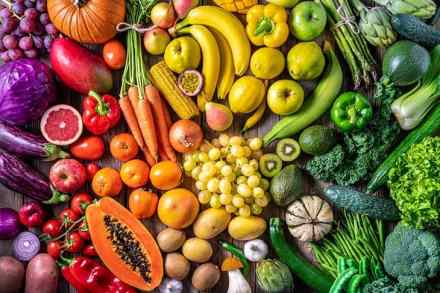
Palm substitutes Palm Sunday was so-called because of the palm fronds thrown before Jesus on his entry into Jerusalem. But that caused problems for people trying to hold ceremonies to re-enact the occasion in countries where palm trees do not grow. Some other names by which the day is, or has been, called: In England: Yew Sunday; Branch Sunday; Blossom Sunday; Sallow Sunday; Sunday of Willow Boughs; Flowers Sunday; Flowering Sunday And elsewhere in the world: Pussy Willow Sunday (Latvia); Hosana (Egypt); Oshana (Syria) Eat up The National Farmers’ Union claimed the price of a pint of milk could rise by 50 per cent over the next few months. Which foods are rising in price the most at the moment? Price increase in year to February Oils and fats 6.

No. 10 prepares decades-long energy plan

The government's delayed energy strategy is finally due to be released this week. The Prime Minister is due to unveil his plans on Thursday, which will supposedly ensure that the UK is self-reliant on energy supply after Russia's invasion of Ukraine. Not that the proposals will lead to much change overnight. Instead, they are focussed on ensuring self-reliance in the long term – with many of the plans likely to take decades to come to fruition.  So, what's on the agenda? Part of the reason the energy strategy has been delayed several times is a difference of opinion between the Department for Business, Energy & Industrial Strategy, No. 10 and the Treasury.

How to avoid heating your house

Spring commonly augers a quickening warmth, but for Britons this year the season coincides with a chilling marker: a 54 per cent rise in the energy price cap, bringing the average annual bill to nearly £2,000. By the next increase this autumn, that average will soar to £3,000. Thus what was, until recently, my annoying eccentricity could soon become standard practice: refusal to switch on the heating. Our gas-fired combi boiler functions pretty much as a water heater only. Above our thermometer downstairs I’ve taped a snipped-out Evening Standard headline, ‘Couple die in freezing home’. The joke wore off long ago. My husband is a moderate, civilised person. This perverse policy of turning the thermostat not down but off is all my fault.

Rising energy bills are a price worth paying to stop Putin

Nato countries are being careful not to do anything that Russia could claim is an act of war. Just look at the reluctance from the US to provide Ukraine with Polish fighter jets. Yet Britain and other Nato members are involved in a huge effort to break Vladimir Putin’s war machine through supplying Ukraine with weapons and imposing financial pressure on Moscow. Russia, a G20 country, has been severed from the world economy. It has now surpassed Iran as the most sanctioned country on Earth and it is beginning to occupy a similar economic position. The speed with which Russia has been hit by these economic measures has been a display of the West’s financial power. Yet western politicians now have to rally their publics to accept the cost of the sanctions.

Is Boris in denial about the looming economic crisis?

The priority for the UK and other rich democracies is to protect the people of Ukraine from the depredations of Putin's forces. A close second should be protecting the poorest people in our countries and vital public services from the cancerous impact of soaring inflation, made much worse by the West's economic warfare against Putin's Russia. The most basic costs of living are soaring. And that means a devastating recession that has already begun for all those but the richest. This blow to living standards will be the worst in living memory, more pernicious than the impact of either the banking crisis or Covid. Talking to ministers and MPs, it is clear to me that they as yet fail to appreciate the scale of the economic shock that is upon us.

Britain’s cost of living crisis worsens

If Boris Johnson manages to cling on to his job, he’ll have much more than the parties of lockdowns past to worry about. Britain’s cost of living crisis is worsening still, with CPI inflation rising by 5.4 per cent in the 12 months leading up to December last year. This has, once again, outpaced consensus, surging even further past the Bank of England’s most recent official forecast. There’s little doubt left that heavy government spending is playing a significant role in the inflation we’re experiencing now Inflation is now at a 30-year high. And it’s still rising. Capital Economics now estimates a peak of 7 per cent around April, and there is once again increasing speculation that December’s interest rate rise to 0.

The cost of living – not Covid – could bring Boris down

Two and a half years into his premiership, Boris Johnson has enjoyed no more than a month of that time unencumbered either by Brexit negotiations or the public health emergency. Once Britain is through the worst of the Omicron wave, it would be understandable if the Prime Minister wanted to pursue some kind of political vision. The danger is that, as normality returns, his premiership will be further imperilled by the cost of living. An economic crisis is expected to hit households in April. In that month, National Insurance contributions (NICs) will go up by 1.25 per cent, a direct violation of Johnson’s manifesto pledge to protect voters from tax rises. The price cap on energy bills will also be raised, possibly doubling some customers’ costs as they come off fixed rates.

Energy bills are Johnson’s next big battle

Keir Starmer is not a lucky politician. He has again been forced into self isolation after testing positive for Covid, which means he misses the first PMQs of the year. This is the Labour leader’s sixth period of self-isolation. So, instead it will be Rayner versus Johnson at PMQs at the later time of 3 p.m. this afternoon. These contests are normally more hammer and tongs than the Johnson–Starmer ones. Rayner’s style is more direct than Starmer’s; and is often more effective in rattling Johnson.  The obvious area for her to go on today is cutting VAT on household energy bills. Labour is already in favour of this and Tory MPs are getting increasingly agitated about the issue.