Conservative party

How to save our churches 

Easter is being celebrated by millions of families across our country. It’s one of those moments when we should come together, pause and remember what really matters. As a mother with a very busy job, I value this time with my children more and more each year. It is a time for faith, family and fun. Britain is a Christian country. Our values, our customs and many of our greatest institutions were shaped by Christianity. That is why, for so many people, going to church at Easter still matters. I teach my children that it is not just a ritual. It is part of who we are. That is why

Conservative radicalism: who should the Tories target? with Jack Rankin MP

27 min listen

Can the Conservatives win back voters’ support through a new kind of ‘conservative radicalism’? Jack Rankin, Conservative MP for Windsor, joins James Heale to explain why he believes a focus on aspiration and wealth creation, paired with political courage to combat ‘short-termism and stakeholderism’, would enhance the Party’s appeal and energise its supporter base. Jack argues that Conservative politicians need to be more honest about the country’s problems, including with immigration and integration – where the expectation of a minimum level of British values should be set. He doesn’t shy away from discussing the Tories’ challenging record too, reflecting on political unity, the need for party reform and the flaws

Conservative radicalism: who should the Tories target? with Jack Rankin MP

Badenoch can show Polanski what a real green party looks like

Freed from the burden of choosing a prospective government, by-elections are an opportunity for voters to tell the political class how they really feel. It is therefore no great surprise that the people of Gorton and Denton, until now a solid Labour heartland, have called on the uber-left Greens to give the status quo a kicking, with Reform coming in second. For the Conservatives, the more interesting story is not the Greens’ success in outer Manchester, but what the Green surge at the national level says about the voters who have been drifting into Zack Polanski’s orbit. The Greens have previously benefited from the agreeable vagueness of their brand. Green

What Poilievre can (and can’t) teach the British Right

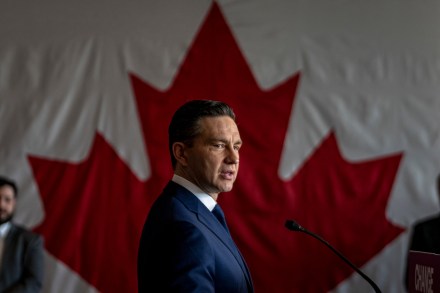
Over the last week, I have been stalking Pierre Poilievre. The leader of the Canadian Conservative Party has been in Westminster to renew the bonds of Anglospheric amity; consequently, I had the pleasure of watching him speak on two successive evenings. The arc of history is long, but it bends towards Robert Jenrick Until a year or so ago, Poilievre was the Prince Across the Atlantic – a punchy and pugnacious Conservative would who had united his party around a popular and populist message of more housebuilding, tackling inflation and championing those working-class voters that Canada’s Liberals had taken for granted for too long. He built a hefty lead over

Does British politics reward traitors or faithfuls?

22 min listen

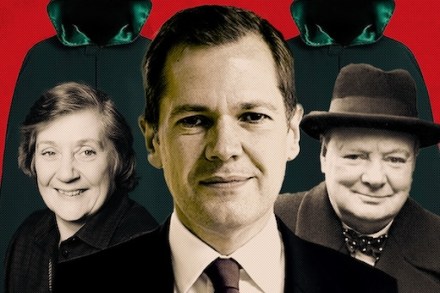
With the Conservatives on watch for further defectors, academic Richard Johnson and Conservative peer Danny Finkelstein join James Heale to discuss whether British politics rewards traitors or faithfuls. Richard points out that often personal success is dependent on whether the party goes on to be a major or minor player in British politics; Winston Churchill and Shaun Woodward fared better, while Shirley Williams and Mark Reckless had less success. Danny – whose political career began with the SDP in the 1980s – also takes us through his personal experience and the challenges of defecting, from ideology and demography to the perception of betrayal. How fundamental is the shift taking place

The Tories and Reform should present a united front

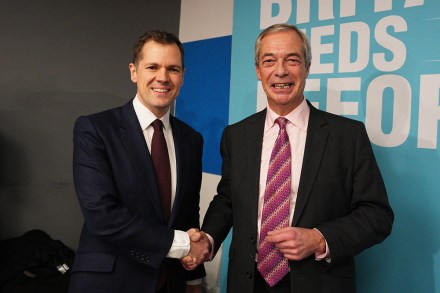
In the summer of 1643, as the dispute between Charles I and parliament raged on, Sir William Waller wrote to his friend Ralph Hopton to lament with ‘what a perfect hatred’ he detested ‘this war without an enemy’. The hardening of hearts between the Conservatives and Reform UK resembles a similarly self-defeating civil war – a family dispute more public and bitter even than the Fall of the House of Beckham. Just over a year ago, Robert Jenrick narrowly lost the Tory leadership contest to Kemi Badenoch. For some, his defection to Nigel Farage’s party was the overdue exit of a shameless careerist who never accepted coming second. But for

The allure of Reform

Kemi Badenoch’s travails with Nigel Farage’s Reform UK party have taken me back to the politics of the 1980s and the Social Democratic party’s challenge to Labour at the time. Like Reform now, the SDP sought to replace one of the main incumbent parties of British politics, but the SDP’s case went beyond finishing off Labour. Like Farage now, they argued that the whole two-party system was ailing, that neither was capable of providing a political home for millions of voters who felt unrepresented by them, and that each was, in their own way, so stuck in their furrows that only a new party could give Britain the leadership it

Reform’s real race problem

I think it was Zadie Smith who I first heard point out that race is in America what class is in Britain: the conversation underneath every conversation. When I first heard that remark I slightly baulked. Not least because one had rather hoped that class would be less of a thing in Britain in the 21st century. I suppose it is, although you do still meet people who treat the English language as though it is a minefield in which one incorrect vowel will suddenly take them out. But if the class stuff still lingers in Britain, the good news is that we now have the American race obsession too.

Jack Rankin: No to Reform

No to Reform Sir: Perhaps because I have been candid about the Conservative party’s failures in office, I am mooted as being of interest to Reform by your political editor (‘14 questions for 2026’, 3 January). But acknowledging failures is not a prelude to defection; it is the necessary starting point of renewal. When Reform speaks of a ‘uniparty’, it implies that swapping politicians is enough. It is not. The crisis of the British state runs far deeper. Governments are in office, not power, because of the pernicious shift we have seen over the past 30 years from a political constitutionalism to a legal one. On immigration, human rights, energy

The 14 questions that will define British politics in 2026

Contemplating a new year always raises questions. Was there a Third Protocol? What was wrong with Oral-A? Can Keir Starmer survive 2026 as prime minister? It is the biggest question in politics this year and the fact that it does not have an easy answer illustrates the mess Starmer has got himself into over the past 18 months. A few days before Christmas, a senior figure in No. 10 outlined how Labour’s high command still believes the winds will change for the party in 2026: a ‘virtuous circle’ of falling interest rates and inflation, more investment, growth, and rising confidence in the government among the public and the Parliamentary Labour

Alaa Abd el-Fattah and our misplaced priorities

What would you like the priorities of His Majesty’s government to be? I have quite a long list. Sorting out the economy would certainly be up there, as would closing the border. But I imagine the government has had to put such things on the backburner because it turns out that one of its actual top priorities has been ensuring that Alaa Abd el-Fattah can come to the UK. Who, I hear you ask? El-Fattah turns out to be an Egyptian ‘activist’ who has lately spent a certain amount of time in the prisons of General Sisi. In 2021 he gained British citizenship through his mother, who lives in the

From Porn Britannia to Political Chaos: The Spectator’s Year in Review

31 min listen

The Spectator’s senior editorial team – Michael Gove, Freddy Gray, Lara Prendergast and William Moore – sit down to reflect on 2025. From Trump’s inauguration to the calamitous year for Labour, a new Pope and a new Archbishop of Canterbury, and the ongoing wars in Gaza and Ukraine, the year has not been short of things to write about. The team take us through their favourite political and cultural topics highlighted in the magazine this year, from the Assisted Dying debate, the ongoing feud over Your Party and Reform’s plan for power, to Scuzz Nation, Broke Britain – and Porn Britannia. Produced by Patrick Gibbons.  

Has Badenoch bounced back?

Much like Alan Partridge, Kemi Badenoch hopes to have bounced back. After an unsure start to her first year as Tory leader – hopeless interviews and PMQs showings, and a local election shellacking – she now seems to be on a roll. Her two recent set piece speeches at conference and responding to the Budget were successes, her parliamentary performances have been more assured, and she can now get through an interview without declaring war on her ethnic enemies. The Conservatives are no longer spiralling towards fourth; her personal ratings have ticked up to the dizzying heights of -14. For the first time since Badenoch became leader, I feel a

Why Britain needs to wake up to extremism

16 min listen

As the world reacts to the attacks on Bondi Beach in Australia, Conservative peer Paul Goodman joins Tim Shipman and James Heale to discuss the failure of successive British governments to properly tackle extremism – especially Islamist extremism – over the past two decades. In the post ‘War On Terror’ era, there was a reluctance by some to discuss the problem openly as it got tied up in other polarising topics like immigration. Though that reluctance appears to be fading, Paul argues that there is a ‘communalist air of voting’ in British politics now, and he warns of the dangers that face British politics if fragmentation becomes entrenched in party

Kemi wins PMQs

12 min listen

Kemi Badenoch’s good form continues at Prime Minister’s Questions. The Tory leader was once more visibly enjoying herself today as she feasted on Labour misfortune, and she did a good job in covering the breadth of problems in the government. She used her six questions to ask about different departments and how they were faring: an approach that can often risk diluting the overall attack. But today, Badenoch had an overarching theme to those questions, which was that the Prime Minister and his colleagues are failing to meet their own promises.  To discuss, James Heale is joined by Tim Shipman and Michael Simmons.

The meaning of Lord Offord’s defection

Malcolm Offord has today quit Kemi Badenoch’s Conservatives to join Reform UK. The peer was unveiled at a press conference today in Falkirk, as Nigel Farage’s party ramp up their campaigning ahead of the Holyrood elections next year. Offord, a former minister, becomes the second sitting frontbencher to quit the Conservatives in recent months, following Danny Kruger’s departure in September. It means that Reform UK now boast their first peer in the House of Lords. Offord will stand down from the Upper House if he is elected to the Scottish Parliament in May. It is worth remembering that Offord enthusiastically backed Kemi Badenoch for leader Offord cited his Unionism as

Britain’s expensive energy problem – with Claire Coutinho

16 min listen

Britain has an energy problem – while we produce some of the cleanest in the world, it’s also the most expensive, and that’s the case for almost every avenue of energy. On the day the Spectator hosts its Energy Summit in Westminster, a report commissioned by the Prime Minister has found that the UK is the most expensive place to produce nuclear energy. This is important for so many avenues of government – from future proofing for climate change, to reducing the burden households are facing through the cost-of-living crisis. Claire Coutinho, shadow secretary of state for energy, and political editor Tim Shipman join economics editor Michael Simmons to talk

Reeves prepares the public for tax hikes

11 min listen

It is three weeks until the Budget – and Rachel Reeves wants to get her narrative out there. The Chancellor held an early morning press conference today to, in her words, ‘set out the circumstances and the principles’ guiding her thinking on 26 November. Her speech followed a familiar pattern. First, there was the evisceration of the ‘austerity’, ‘reckless borrowing’ and ‘stop go of public investment’ which characterised the last 14 years. In her 25-minute speech in Downing Street, one line in particular stood out: ‘If we are to build the future of Britain together’, Reeves said, ‘we will all have to contribute to that effort. Each of us must

The gym, the hairdresser, the campaign trail: the inside story of Kemi’s first year

On the day of the local elections in May, when the Tories suffered a historic setback, Kemi Badenoch went to the gym and got her hair done. A screenshot of the Tory leader’s diary, leaked by a disgruntled Conservative, shows she planned a Harley Street dental appointment at 9 a.m., followed by 90 minutes at a boutique pilates gym at 11 a.m., followed by an hour-long visit to the hairdresser at 1 p.m. Plenty of politicians take it easy on election day, but the leak is significant because it shows someone still wants to wound her. For her internal enemies, she remains on probation. ‘Thousands of loyal Conservative party activists went out

Why Sheridan Westlake is the Tories’ best weapon

Who is responsible for Labour’s recent woes? For some Conservatives, the answer is obvious – Sheridan Westlake. He is that rarest of beasts: an effective Tory operator who has served every leader since John Major. Flaxen-haired with an impish grin, he is spoken of by colleagues as part myth, part political mastermind. Yet ask him what he does, and the stock answer is modest: ‘I simply do the photocopying.’ ‘He just likes getting up in the morning and kicking socialists. He’s in it for the love of the game’ The resignation of Angela Rayner last month is widely attributed within Conservative Campaign Headquarters (CCHQ) to an effective campaign by the