Conservation

Why would anyone live in a listed building?

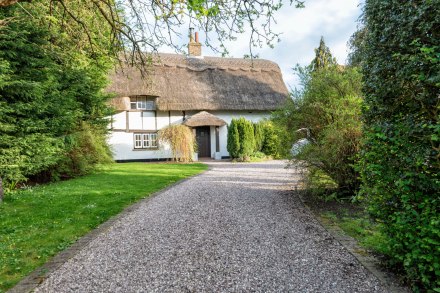
When Zoë Cave Hawkins bought a run-down townhouse in the heart of the cathedral city of Winchester, she was fully aware that getting permission to update the Grade II-listed property was going to be a bit of a hassle. But the reality was far worse than she could have imagined. As fast as her architects could draw up plans, a phalanx of planning officers, listed building officers and conservation officers would descend to rip them up.  A proposal to build a terrace above the new flat-roofed kitchen extension was nixed because it would mean replacing a series of original windows on the first floor with modern French doors. A new door to an en suite bathroom was vetoed because it meant taking out a section of batten and horsehair wall.

Franken-Wildlife: will cloned game destroy hunting?

From our US edition

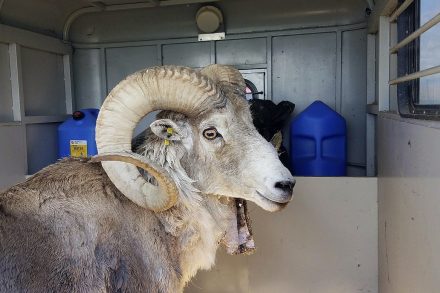
In October 2024, a Montana rancher was sentenced to federal prison time and charged a hefty fine for illegally cloning a giant hybrid sheep, afterwards referred to as the “Montana Mountain King.” Using testicles and other tissues illegally imported to the United States from an argali Marco Polo (Ovis ammon polii) sheep hunted in Kyrgyzstan, the rancher contracted a laboratory to create cloned embryos which he then implanted to ewes on his ranch, eventually resulting in an impressive male specimen tailored for the captive trophy hunting industry. He then worked with co-conspirators to use semen from the cloned animal to impregnate various other sheep and create hybrid specimens of large body and horn size for illegal sale to captive hunting facilities in various other states.

Cloning

A road to healthier forests

From our US edition

The US Department of Agriculture rescinded the 2001 Roadless Rule last week, a regulation that restricted road building and timber extraction in about 30 percent of land managed by the National Forest System. Judging the pushback from environmentalists, you might think that President Trump was selling Yosemite to a logging company. But the red-tape cutting actually increases public recreation access and opens neglected forests to fire-mitigation projects. Conservationists should be celebrating. On paper, the Roadless Rule preserved America’s most beautiful landscapes. In practice, the regulation proved burdensome and ecologically counterproductive. For instance, some 2,400 Tinglit Native Alaskans reside on islands in the Tongass National Forest.

forests road

Robert Macfarlane: Is a river alive?

40 min listen

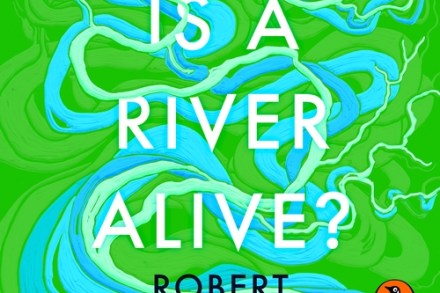
Sam Leith's guest on this week’s Book Club podcast is Robert Macfarlane. In his new book Is A River Alive? he travels from the cloud forests of Ecuador to the pollution-choked rivers of Chennai and the threatened waterways of eastern Canada. He tells Sam what he learned along the journey – and why we need to reconceptualise our relationship with the natural world.

First came the dire wolf – the wooly mammoth is next

From our US edition

With all the insane news this week surrounding President Trump’s tariff and trade drama, only one non-political story was significant enough to break through the news cycle: a Texas-based company called Colossal Biosciences has bred three dire wolves and is currently keeping them in a secret 2,000-acre natural habitat somewhere in the United States. That’s right: dire wolves. An extinct species. A beast so mythical that we only really know of it from Game of Thrones. In fact, as we learned in an interview with a comic book magazine, Game of Thrones creator George R.R. Martin has even visited the dire wolf reserve. There is a non-AI-generated photo of him online cradling a dire wolf pup and weeping tears of joy.  Immediately, skepticism blew up online.

The National Trust’s plans for Clandon Park are a travesty

In April 2015, a fire raged through Clandon Park, destroying much of the 18th-century Palladian mansion’s prized interiors. Contrary to all expectations, the National Trust, its custodian, announced plans to keep the Grade I-listed building ‘as a ruin’. Architects Allies and Morrison would ‘creatively curate’ the celebrated property as ‘a country house laid bare’, adding a modern roof and walkways, but otherwise leaving the interior in its half-charred form. Last month, Guildford Council waved through the plans unanimously. It was a landmark decision. Without any fanfare, a sweeping precedent was set for how we restore damaged buildings – one that throws out the lauded example set by Windsor and Notre-Dame – with incendiary implications for our architectural heritage.

Beware the bat police

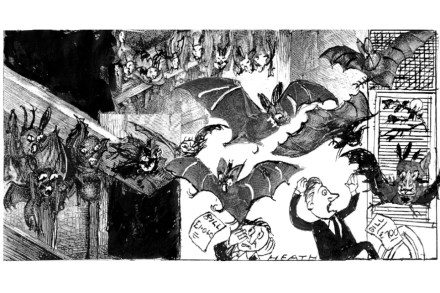
My friend Andrew is angry. He has just had the bat people round to look at his building project in Swanage. There was no evidence of bats that they could find, but that didn’t mean there weren’t any. A full survey would be required. In total the non-existent bats in our village hall cost the parish more than £2,500 I advised him to pay up and not dwell on the madness, but his ire reminded me of my own recent experience with the bat fuzz. From 2018 until this June, I chaired the committee responsible for refurbishing a village hall deep in rural Somerset. As law-abiding and nature-loving people, we followed our surveyor’s stern instruction and did all the bat-friendly things we needed to do before starting the work.

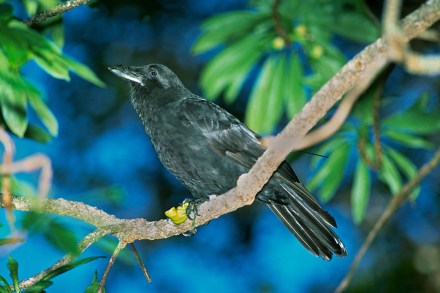
The sad history of the Hawaiian crow

Over a 40-year career, Sophie Osborn has evolved from a greenhorn volunteer for nature, doing mundane tasks in the wilds of Wyoming, to the manager of a captive-release programme for California condors in Arizona. This post placed her at the heart of perhaps the most sophisticated operation for a threatened bird anywhere in the world. Yet Osborn was as passionate in her first role as in her later one. She describes her professional arc in Feather Trails, using three bird species as separate motifs to order her story as a play in three acts. The structure not only offers a way of organising an autobiography; it supplies a sequence of lenses through which to explore the challenges faced by all those acting for birds.

Rewilding the world

From our US edition

I recently found myself scrolling World Cement Weekly in search of news of a massive rewilding project in northern Mexico, created and funded by the cement giant Cemex. The growing success of the rewilding movement is strangely little known — though there are now places that are wilder, more vibrant, more teeming with life than they have been for centuries, few outside the movement know anything about them. Two decades ago, a nature-loving chief executive of Cemex decided that the company would acquire 346,000 acres of degraded land on Mexico’s border with America, an area larger than Los Angeles, renamed the El Carmen Nature Reserve.

rewilding

The good old ways: nature’s best chance of recovery

Britain is one of the most nature-depleted places on Earth. The consequences for human wellbeing and resilience, as well as for non-human life, are grave. Conservationists and others say it doesn’t have to be this way. But when it comes to recovery, what should we aim for? How much can we know about what was once present? How much is it practicable or sensible to restore? What does recovery, let alone ‘rewilding’, really mean in a rapidly heating world? Sophie Yeo does not have the answers to all of these questions. Nobody does. What she does offer in Nature’s Ghosts are insights that could help shape a better informed and more constructive debate.

The craft renaissance

As long ago as the 1960s, the poet Edward James was worried that traditional crafts were dying out. Having frittered much of the family fortune he had inherited, aged five, on supporting struggling surrealists (he commissioned the Mae West lips sofa and lobster telephone from a scuffling Dali) and on backing shows starring his actress girlfriends (‘very wealth-consuming,’ he admitted, ‘because invariably they flopped’) then creating an 80-acre sculpture garden in the Sierra Gorda mountains of Mexico, the man described as ‘the last of the great eccentrics’ decided in his late fifties to invest his remaining money in something more sensible.

Roger Deakin – at ease in the countryside as a poacher with deep pockets

Few authors have left such an immediate legacy as Roger Deakin. When he died of a sudden illness in 2007, aged 63, he had written just two books: Waterlog, which set off the wild swimming craze, and the even more influential Wildwood, which helped kickstart the publishing phenomenon of nature writing. Yet both books only really became well known after his death. During his lifetime he was, at best, a cult taste. When I approached the BBC 20 years ago with the idea that he should present a televisual version of Waterlog in which he swam ‘across’ England, through its ponds, lakes and rivers, I was told no one was interested in wild swimming – and who was Roger Deakin anyway? Patrick Barkham has set out to answer that question.

The Galápagos evolution even Darwin didn’t foresee

From our US edition

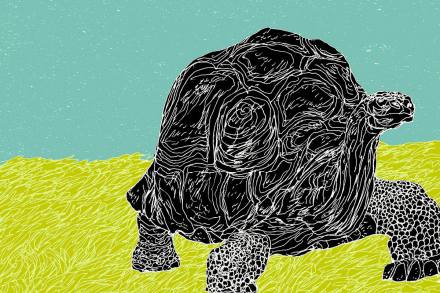
Lonesome George, a Pinta Island giant tortoise, spent the latter half of his hundred years munching on cacti and roaming around the Charles Darwin Research Station on the Galápagos island of Santa Cruz. He borrowed his name from the 1950s American comedian and actor George Gobel and one of the three B-52 Stratofortresses that completed the first non-stop jet circumnavigation of the world in 1957. But the name was ultimately more fitting for the tortoise who was the last of a million-year-old species. In 1959, fishermen introduced three goats to Lonesome George’s home of Pinta Island, one of the smallest islands of the Galápagos archipelago. Just ten years later, they had multiplied to around 40,000.

Galápagos

Bringing back rhinos in Pakistan

From our US edition

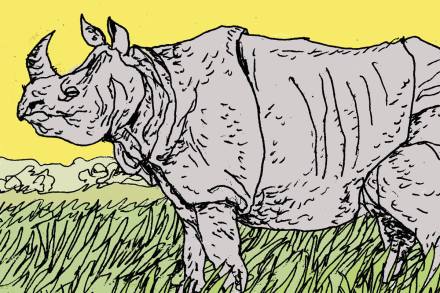
The drive from Islamabad to Multan takes about eight hours. We passed through fields of citrus fruit and farmers tending weed-burning fires. Boys carried giant bunches of twigs over their heads or zipped by on old Honda 70s, balancing water tubs. All had early-Beatles haircuts and wore the shalwar kameez, the Punjabi suit of lightweight trousers and a tunic. Multanis, distinguished by their good looks and their own musical dialect, are called meethi churiyans by other Punjabis, meaning “sweet knives.” They are charming and generous, serving up piles of warm chapati and mutton chops, before stinging you with a hefty bill.

rhinos

How game ranching protects endangered species

From our US edition

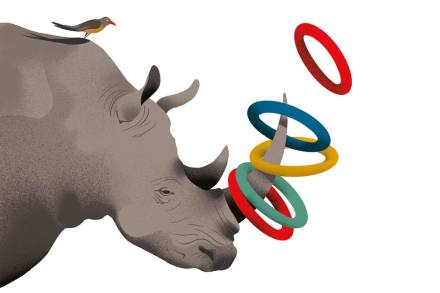
Game ranching in Africa is big business, farming wild animals that unlike regular livestock have evolved there and don’t need much care. What they do need is space. South Africa’s most famous reserve, Kruger National Park, is an 8,000-square-mile chunk of wilderness on the border with Mozambique, but private land stocked with wildlife covers almost ten times that area. Ranchers stock their property at game auctions where animals are sold to ranchers who either want to introduce a species or add a new bloodline. In 2019, American cattle breeders were delighted when an Angus bull sold in North Dakota for a record $1.51 million. But in 2016, the winning bid for a stud buffalo in South Africa was close to $10 million.

game
goose

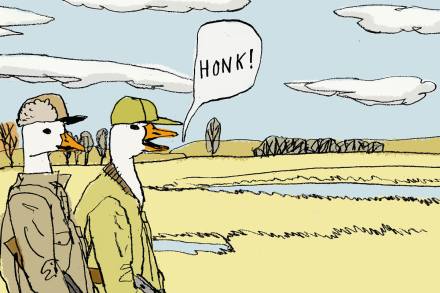
My first family goose hunt

From our US edition

It's a slow Sunday in Paducah, Kentucky, the day before our snow goose hunt. Morning Mass down the road, where the priest quizzingly asked where we were from. Brunch with my husband’s family at a cozy café. Chocolate cake with that crackly boiled icing and fresh coffee in the late afternoon at his aunt and uncle’s house. It isn’t until close to dinnertime that we pack up our bags and hit the road for the bootheel of Missouri, where we will hope to catch a few hours of sleep at our hotel before we meet our local hunting guide. About halfway through our drive, the phone rings with bad news. Our guide, Scooter, spent the day scouting and could find no signs of geese at his usual spots.

Do we really want to bring back the wolf?

Near our house on the Derbyshire-Staffordshire border is a place called Wolf Edge. It is a raven-haunted slope set to the sounds of curlew song in high spring and I visit it regularly, not least because I imagine that within the deep peat soil there is some remembrance of the site’s eponymous predator, and the thought thrills me. A similar emotion appears to have gripped Derek Gow, and has led him to locate, over several decades, as many references to British and Irish wolves as possible.

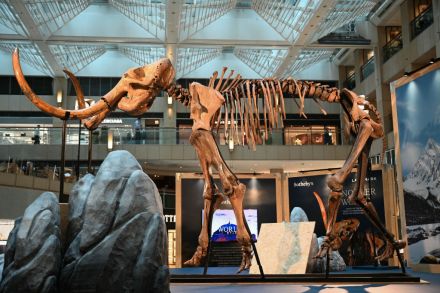
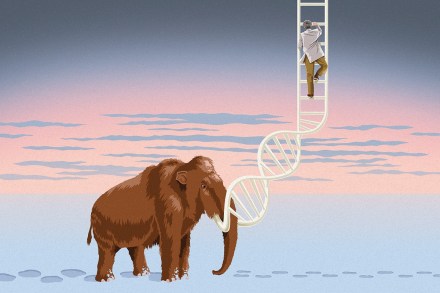
Meet the men who want to bring back the woolly mammoth

From our US edition

A few minutes into celebrated Harvard geneticist Dr. George Church’s appearance on The Colbert Report, Stephen Colbert motioned towards him conspiratorially. “How do you think your work will eventually destroy all mankind?” asked the comedian, peering meaningfully over his glasses and tapping the table. “It’s a couple of options. Do you think it’s going to be like a killer virus? Or more like a giant, mutant, killer-squid-man, who arises from the Pacific, between Easter Island and Chile, and feasts on our flesh?” Colbert’s probing was tongue-in-cheek, of course. But the joke worked because it touched on real concerns. Dr. Church, sixty-eight, has had a long and storied career, including helping to launch the Human Genome Project in 1984.

mammoth

Stop ignoring the real environmentalists

From our US edition

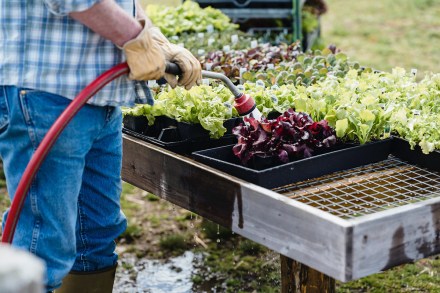
What does throwing soup on a piece of art have to do with the environment? When we hear the word environmentalist, what comes to mind is something like an Extinction Rebellion or JustStopOil activist: young, urban, progressive, with an expressly political agenda. But what if there are other categories of environmentalists that are expressly ignored, that may have the insights we need to solve the very real environmental problems we face? In my PhD research, I spoke with people who produced a significant amount of food for their own consumption in and around Chicago. Many of them were were disaffected by the focus on climate change and the obsession with consumption as activism.

environmentalists

Among the green conservatives

From our US edition

The American Conservation Coalition last week held its first official summit, hosting a vibrant crowd of over 250 people. The organization boasted speakers such as Michigan congressman Peter Meijer, New Hampshire governor Chris Sununu and conservative radio host Jason Rantz. Cockburn was lucky to attend — and even luckier to partake in the open bar. The many speakers held talks and panels on topics such as China as a player in the clean energy arms race, nuclear power as an alternative to fossil fuels, and the deregulation of free market economies. While it is still far from the mainstream attitude in conservative thought, the ACC represents a growing minority of people who recognize climate change as a threat, only without the left's “doom and gloom.