Communism

A Pole’s view of the Czechs. Who cares? You will

When this extraordinary book was about to come out in French four years ago its author was told by his editor that it was likely to fail miserably. As Mariusz Szczgieł explains, the doubts were reasonable. No one was sure if anybody in the west would be interested in what a Pole had to say about the Czechs: ‘A representative of one marginal nation writing about another marginal nation is unlikely to be a success.’ But in 2009 Gottland won the European Book Prize (a serious award; the late Tony Judt’s Postwar won it the previous year) and it has been well received throughout the continent.

Humans hunger for the sacred. Why can’t the new atheists understand that?

Does the world have a purpose? The new atheists regard the question as absurd. Purposes emerge in the course of evolution, they tell us; to suppose that they could exist before any organism can gain a reproductive advantage from possessing them is to unlearn the lesson of Darwin. With the theory of evolution firmly established, therefore, there is no room in the scientific worldview for an original purpose, and therefore no room for God. Today’s evangelical atheists go further, and tell us that history has shown religion to be so toxic that we should do our best to extinguish it. Such writers describe the loss of religion as a moral gain — even though, for most ordinary believers, it looks like the loss of all that they most seriously value.

Talking to the ghosts of Tiananmen Square

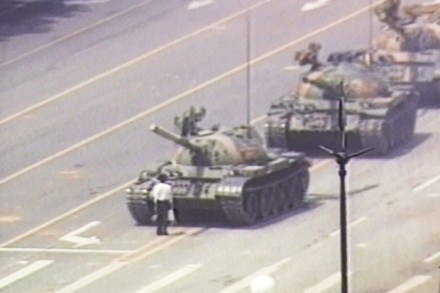
Twenty-five years ago, Rowena Xiaoqing He, then a schoolgirl, was participating in the Tiananmen-supporting demonstrations in Canton. Far from the capital, this was one of several hundred cities that rose up during that Chinese spring. Following the Tiananmen killings on 3–4 June 1989, she was warned by her teacher to remove the black mourning band she wore on her sleeve. After some years working in Canton she moved to Canada, where she secured advanced degrees; she now teaches an undergraduate course on Tiananmen at Harvard. Tiananmen Exiles is a brave book. It concentrates on the testimonies of three of the student leaders in Beijing and Canton, two of whom are still barred from their homeland.

Julian Mitchell on Another Country: ‘I based it on my fury and anger and I wrote it fast and it flowed’

Today’s top public schools are plush country clubs with superb facilities, lovely food, first-class teaching, no fagging, no beating and, one imagines, minimal sexual interference from the staff. Most even have things called girls. While excellent at turning out world-class actors, the public schools these days are far too nice and unbrutal to be of any use as dramatic material for a play. Julian Mitchell’s play Another Country (1981) belongs to another era. It is a tale of sadistic, crumpet-munching prefects lording it over traumatised fags; homosexuality is rife and there’s brutal jockeying for position among the prefects — all good training for the cabinet jobs these teenagers one day expect to enjoy.

The many attempts to assassinate Trotsky

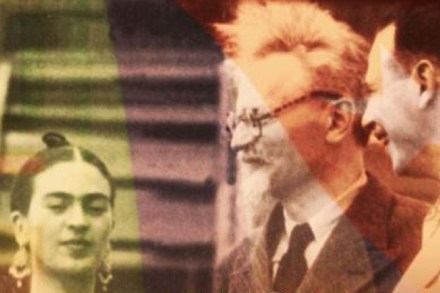
Leon Trotsky’s grandson, Esteban Volkov, is a retired chemist in his early eighties. I met him not long ago in the house in Mexico City where his grandfather was murdered in 1940 with an ice-pick. Volkov had grown up in that house surrounded by 20-foot garden walls and watchtowers with slits in them for machine-guns. The protection was no defence against Trotsky’s eventual assassin, the Spanish-born Stalinist Ramón Mercader, who very ably infiltrated Trotsky’s Mexico circle and, on 20 August, struck the revolutionary on the front of his head with that gruesome weapon. Trotsky bellowed in pain but managed to fend off his assailant before collapsing. His bodyguards hurried in and beat off the intruder; Trotsky was rushed to hospital, where he died the following day.

Secrets of the Kremlin

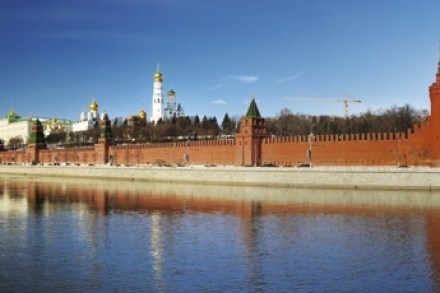
A building bearing testimony to the power of eternal Russia; a timeless symbol of the Russian state; a monument to Russian sovereignty. To the modern eye, the Kremlin fortress seems as if it had always been there, as if it had never changed and never will. All of which is utter nonsense, as Catherine Merridale’s fascinating history reveals: the story of this famous compound is not one of continuity, but of construction, destruction and reconstruction. Every reincarnation of the Russian state over the centuries — and there have been many — has been accompanied by a corresponding reincarnation of the Kremlin. Its history is thus a metaphorical history of Russia, as Merridale understands very well.

What did you do in the struggle, daddy? The real story of Nelson Mandela and the communists

Reading the obituaries last Friday, one was left with impression that Nelson Mandela’s only flaws were fastidiousness and a tendency to flirt with every pretty girl he met. Otherwise, he was exemplary in every respect, and of course a human right activist in the exactly the sense that Western liberals find winsome and cuddly. 'Flawless,' said Archbishop Tutu. 'One of the true giants,' said Blair.  Even the Tory Cameron could barely contain himself, describing Mandela as 'the embodiment of grace.'  You had to have sharp ears to hear the discordant note struck by Johannesburg’s Business Day, which a ran a front-page story headlined, 'South African Communist Party admits Mandela was a member'. Better late than never, I suppose.

Where Boris was right on inequality

Hold the front page, Conservative Mayor of London Boris Johnson has made a startling confession: he’s not a communist. Well not quite, but almost. Boris in fact said in a speech to the Centre for Policy Studies yesterday that he does not believe economic equality is achievable, and that natural differences will always result in some people rising to the top of society ahead of others. So yes, in other words we can ascertain that the Tory Mayor of London is not a Marxist-Leninist. Judging by much of the reaction to his comments, though, some were apparently under the impression that he was. According to the Guardian, Boris 'invoked the spirit of Thatcher' and delivered a 'greed is good speech'.

Venezuela: a shining example of how not to help the poor

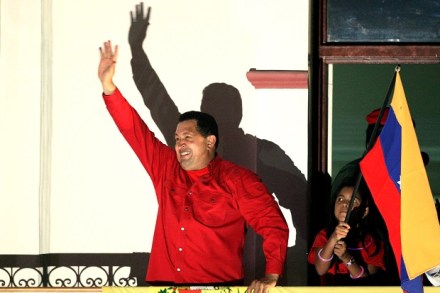
No serious person today views the Cuban Revolution as anything other than an impoverished tyranny – up to and including the leaders of that Revolution, who have been hastily turning toward capitalism since learning in 2009 that the island was on the brink of insolvency. It remains much easier to find useful idiots willing to defend Venezuela’s so-called ‘Bolivarian revolution’, however, which until recently was supposed to promise something better than its ossified Caribbean neighbour. Not for much longer, perhaps; for Venezuela is on the brink of a social explosion after 15 years of economic incompetence by Islington’s favourite petrocrat. It was reported this week that, absurdly, the most oil rich country in the world is facing food shortages.

Malala – the girl who hates Britain

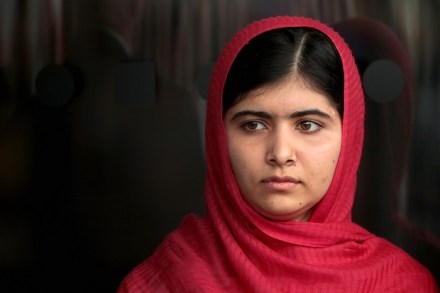
Before a mob turns up at my house and someone starts dragging up that unfortunate picture of my grandfather with Hitler, the headline is a joke, but I do wonder if the media has given a rather misleading idea of Malala Yousafzai. For example, the Pakistani International Marxist Tendency claim that the schoolgirl sent a message to their 32nd congress stating: ‘I am convinced Socialism is the only answer and I urge all comrades to take this struggle to a victorious conclusion. Only this will free us from the chains of bigotry and exploitation.

The Lady on Lenin

A delightful anecdote in Jonathan Aitken's new biography of Margaret Thatcher, which is out today. Visiting the French estate of the late Jimmy Goldsmith in 1997, with Denis and Bill and Biddy Cash, Lady T posed for a photograph in front of the giant statue of Lenin that resides in the woodland of Montjeu. ‘I just want to show him we won,’ declared the late PM. History is written by the victors.

George Orwell’s doublethink

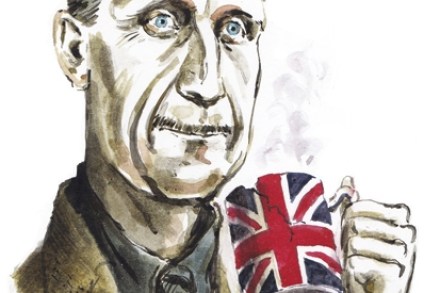
This is the most sensible and systematic interpretation of George Orwell’s books that I have ever read. It generously acknowledges the true stature of the great works — most notably, Animal Farm, Down and Out in Paris and London and The Road to Wigan Pier. It rightly sees the second world war as having brought forth some of Orwell’s finest writing. Yet it does not deify him, and it acknowledges that this strange, drawling, gawky Etonian, who wore common sense like a carapace, was occasionally as capable as the next journalist of writing undiluted tosh. Witness his claim in an article of 1940 that if he thought a victory in the present war would mean a new lease of life for British imperialism, he would be inclined to ‘side with Russia and Germany’.

I was Ralph Miliband’s research assistant, and this is what he was like

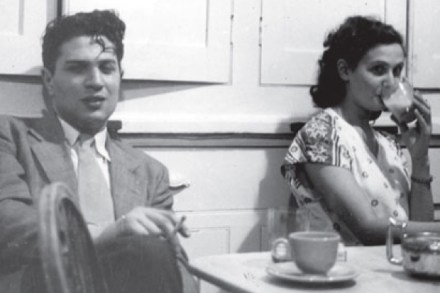
‘You can work as research assistant to Ralph Miliband.’ Thus my tutor at the London School of Economics gave me the news that he had found a way for me to finance my first year of study for an intended PhD on the Labour party’s housing policy between the world wars. The idea was that for twelve months between 1964 and 1965 I would help analyse the changing occupational structure of the British workforce by comparing statistics contained in the 1851 census with those in the 1951 census. As a first step, my new boss took me for a drink in the coffee bar next door to the main entrance of the LSE. Our discussion about the intended project went well. We were both enthusiasts for demographic statistical analysis.

Sorry, Ed Miliband, your dad hated Britain

It doesn’t matter how much Ed Miliband’s lip quivers, his dad was, as The Daily Mail suggested, a far left wing intellectual whose gratitude to the country which took him in extended only to wishing it might be dismantled, root and branch. That Ralph Miliband was also an urbane north London émigré does not alter, either, the fact that he was, like so many academics, seduced by Marxism. Our universities are virtually the only places in the civilised world where this absurd and discredited creed continues to prosper; much of it today is simply attitudinalising nonsense; when Miliband began his work, under the tutelage of the horrible Harold Laski, it was a potent threat to our way of life.

One Night in Winter, by Simon Sebag Montefiore – review

Simon Sebag Montefiore’s One Night in Winter begins in the hours immediately following the solemn victory parade that marked the Soviet Union’s victory over Nazi Germany — probably the high point of Stalinism. Two teenagers, dressed in 19th- century costume and members of a secret literary club called, aptly as it turns out, the Fatal Romantics, have chosen this moment, of all moments, to re-enact a duel from Pushkin’s Onegin on a bridge beneath the very walls of the Kremlin. Needless to say, when the duel goes fatally wrong and the dead boy and girl are revealed to be the offspring of members of the Soviet leader’s inner circle, we know there will be consequences for the families and friends they’ve left behind.

Isaac & Isaiah, by David Caute – review

The scene is the common room of All Souls College, Oxford, in the first week of March 1963. It is the idle half-hour after lunch when fellows slump into armchairs and gaze out of the window at the sparrows in the Fellows’ Garden. David Caute, a young first-class mind in his mid-twenties, is buttonholed by the revered figure of Sir Isaiah Berlin. What did Caute think of Isaac Deustcher? Did he admire him, as so many young scholars on the left did? Well, Caute replied cautiously, he knew Deutscher’s book on Stalin and his trilogy on Trotsky.  ‘Quite sufficient.’ And Berlin bounded off into one of his rapid-fire bombardments: there were Marxist historians such as Eric Hobsbawm and E.H.

Extremists and the mainstream: the case of Comrade Newman

The Chippenham Labour Party has decided that its candidate to contest the 2015 general election will be one Andy Newman. As the anti-totalitarian blogs Howie’s Corner and Harry’s Place have already argued he is almost certain to be the worst politician to stand for a mainstream party. An innocent observer, who believes the British Left’s protestations that it is for workers’ rights and against sexism, racism and homophobia, could go further wonder how such a man could get close to the Labour Party – let alone close enough to run on a Labour ticket. Newman manages the laughably named “Socialist Unity" website: laughable, not just because it engages in vicious factionalism, but because it indulges the religious strain of far-right thinking.

Review: In Times of Fading Light by Eugen Ruge – a tale of rebellion and conformity

In Times of Fading Light’s seven narrators exist in an almost permanent state of bewildered disappointment. Given that the narrators are various generations of the same family, what we’re shown is youthful hope turning recurrently to despair. The story begins in Berlin with Alexander, who is dying, visiting his now demented father, Kurt. This is 2001 and Kurt is at the end of his life, speechless and largely uncomprehending. Alexander, meanwhile, plans to elope to Mexico where his grandparents lived in exile almost 50 years previously.

Roger Scruton’s diary: Finding Scrutopia in the Czech Republic

Hay-making was easy this year, and over in good time for a holiday. I am opposed to holidays, having worked all my life to build a sovereign territory from which departure will be a guaranteed disappointment. However, the children have yet to be convinced of the futility of human hopes, and therefore must be taken for a week or so to places that renew their trust in Scrutopia, as the only reliable refuge from an alien world. As always we choose the Czech Republic; and as always it disproves my point. I don’t know what it is about Brno, but I am as home there as I can be anywhere. And Sophie and the children feel the same. We borrow the old cottage in the Moravian Sudetenland from which to explore a landscape wiped away by war.

China’s War with Japan, by Rana Mitter – review

The Sino-Japanese struggle that began in 1937, two years before the rest of the world plunged into war, is not as unknown as Rana Mitter, a professor of Chinese history and politics at Oxford, contends in this comprehensive new book. His copious notes, after all, display how well that conflict has been studied by many scholars. But in the sense that few Westerners under the age of 80 can string more than two sentences together about those terrible eight years, he is right. It is a big story, and for the most part Mitter tells it well. The scene — China — is vast. Two competing leaders, Chiang Kai-shek and Mao Zedong, dominate it.