Communism

Poland, 1968: the last pogrom

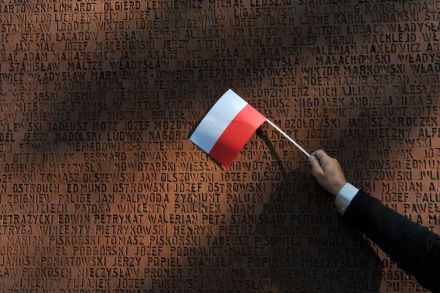
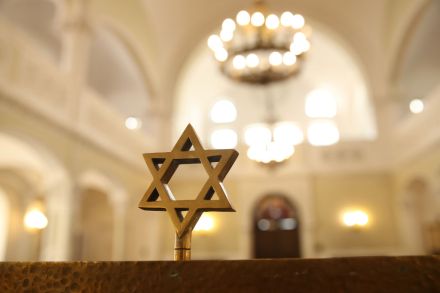
‘Are you Jewish?’ the officious-looking Dutch diplomat asked my dad. ‘Yes’, he said, realising at that very moment, everything had changed. He was no longer Polish; the culture he had been born in, the citizenship he held, the language he spoke, the country he loved – it all meant nothing. He was just Jewish. He couldn’t be both. The diplomat stamped my father’s papers and he left for a new life in western Europe. Up to 20,000 Jews, including my mother, were hounded from Poland at the end of the 1960s. They were accused of supporting Israel in a virulent anti-Semitic campaign led by the communist government. This anti-Jewish campaign was ostensibly sparked in 1967 by the Six-Day War between Israel and its Arab neighbours, supported by the Soviet bloc.

If Sister Nijole can be happy, so can you

In the past five years I’ve met many people who’ve had direct, sometimes horrific, experience of communist rule. But I was more excited about doing a recent interview than I had been about any of the previous ones. It was going to be with a nun in a convent in Lithuania. I had imagined the scene: we would enter a large, gloomy, medieval stone convent. We would be cautiously admitted into a cavernous hallway and then ushered by a silent nun into a small, bare room for visitors. Then, dressed in black nun’s garb, Sister Nijolė Sadūnaitė would enter the room, head bowed, and sit in a plain wooden chair, her face lit only by a candle.

We love you, Uncle Xi!

In 2015, I had lunch with an old chum of Xi Jinping. He described how China’s most powerful leader since Chairman Mao was born into the Communist party’s ‘red aristocracy’ but had to toughen up fast when his father was jailed in the Cultural Revolution. The young Xi briefly became a street hoodlum who swore like a trooper, smoked like a chimney and drank like a fish. He survived by turning ‘redder than red’, climbing the party ladder from a branch secretary in a lowly village all the way up to the top job in Beijing. ‘I am fond of Xi, but he is isolated from his old friends and there is a danger of emperor syndrome,’ the friend warned me. ‘I think Xi will want to rule for 20 years.

Will Russians soon realise how remarkable Mikhail Gorbachev was?

Mikhail Gorbachev, the final president of the Soviet Union who died last night, was remarkable both as an international politician and as a domestic reformer. I first met him when he came to London in December 1984, when Mrs Thatcher said that she liked him and could do business with him. He was open, friendly, and spoke without notes: the opposite of his predecessors. Some of Thatcher’s own officials suspected that he was merely an old-fashioned communist who had learned new tricks, and that his charm was seducing her from her clear view of the Soviet threat. Thatcher was right, and the sceptics were wrong. By that time, the Soviet system was in serious trouble. It could just about keep up with American military technology.

Gorbachev was no saint. But he was a kind of hero

Mikhail Gorbachev is dead at the age of 91, and in a way I feel orphaned. I became fascinated by what was still then the Soviet Union in its late years of sclerosis, when one moribund geriatric at the top of the system succeeded another (the dark joke at the time went as follows: a KGB guard stopped someone at one of the state funerals and asked him if he had a pass – ‘oh,’ came the reply, ‘I’ve got a season ticket’). But my early years as a Russia-watcher were during his time as General Secretary, and if my seniors had become used to the idea that the USSR was a stagnant, unchanging police state, for us, the thought that there could be change, even change for the good, was baked into our assumptions.

Is self-loathing the British disease?

Whatever one thinks of the government’s plans to send refugees to Rwanda, it was amusing to see this country’s left suddenly finding all sorts of reasons why only the UK – ‘a cake-filled, misery-laden, grey old island’ according to Emma Thompson, patron of the Refugee Council – would do as a final destination for these poor people. It was especially ironic that the place which the great and the good decreed unfit for humane habitation was a country of which liberals have historically approved: France. The phrase ‘French flu’ was coined in the 1950s to describe the cultural cringe of British progressives towards France as the source of all things civilised.

The sin of neutrality

Yet again, millions of civilians across the Horn of Africa are starving. The world blames the crisis on drought and climate change, which nowadays is the way we excuse these countries for environmental mismanagement. But as ever, war is really the single greatest reason why people are killed year after year in this region. And while western countries pour billions of dollars of food aid into Ethiopia, Somalia and South Sudan, the weapons flooding those states originate mainly from Russia, China, Belarus – and Ukraine. In response to an article I recently wrote in The Spectator about why I think so few African governments condemn Russia’s invasion of Ukraine, I have had the usual deluge of ad hominem attacks so familiar to anybody who dares to criticise African governments.

Why Russians celebrate monsters

Nobody knows how long people live in Dzerzhinsk – life expectancy statistics for the Russian city, 250 miles east of Moscow, aren’t released to the public. In the days of the Soviet Union, it was closed to outsiders and left off official maps, but those in neighbouring Nizhny Novgorod joked that residents must have purple skin and second heads because of the emissions from its secretive chemical weapons plants. In recent years, however, it has gained notoriety as one of the most polluted places on the planet, with a study after the fall of the Iron Curtain reporting locals usually died in their mid-forties.

Putin’s neo-communism is doomed to fail

It is responsible for inequality. For financial instability. And probably for poverty, racism and global warming as well. We have heard a lot about neoliberalism over the last 20 years. But now Vladimir Putin’s Russia is going in completely the opposite direction. The world is about to witness an experiment in what can only be described as neo-communism. The twist is that, unlike its liberal counterpart, it will be a complete failure – and the best thing the West can do is wait for it to implode. A Big Mac is not going to be any better when it is grilled by the Russian government Over the last three weeks since Russian soldiers moved across the border into Ukraine it has become clear that Putin is trying to recreate a Soviet empire.

The truth about my father, Philip Guston

Philip Guston’s later work is — and I say this with love — nails-down-a-blackboard weird. The vapid pinks and flat reds lend a nightmare cheerfulness. The menacing American figure wearing Mickey Mouse gloves is rendered in cartoonish style. The clock shows it is time to panic, challenging you to call out the hood for the Ku Klux Klan symbol it appears to be. By the time he started making these paintings, in 1968, Guston was pretty much post-everything: post-realism, post-abstract expressionism, post-criticism (he and his wife Musa sailed to Italy the day after the show’s opening night, and when a review found him in Venice, poste restante, he dropped it in a canal).

What the Russians thought of James Bond in the 1960s

Last year I wrote a piece about James Bond for the ‘Freelance’ column of the Times Literary Supplement. All true Bond lovers — of the novels, I mean — know that he lived in a ‘comfortable flat in a plane-tree’d square off the King’s Road’, as Ian Fleming described it in Moonraker. Further internal evidence in Thunderball indubitably established that it was Wellington Square — but there was considerable mystery and doubt about exactly which house contained the Bond apartment. In my article I claimed to have identified it as No. 25, based on a certain amount of sleuthing and, I thought, convincing circumstantial evidence. No.

Was the US involved in neo-fascist Italian terrorism?

Last month, Italy’s Prime Minister Mario Draghi promised to declassify government documents involving two organisations: Gladio, an anti-communist paramilitary group linked to Nato and the CIA, and a masonic lodge known as P2. These two groups are believed by some to have been involved in the darkest moments of post-war Italian history. For much of the latter half of the 20th century, Italy had the unenviable position of being the epicentre of European terrorism. The blast at the Bologna train station in 1980, which left 76 people dead and more than 200 wounded, was at the time the bloodiest terrorist attack ever suffered by a European country. The bombing was pinned on a small neo-fascist militia called Armed Revolutionary Nucleus.

Tales from the Gulag: why I’m helping survivors tell their stories

I trudge up the concrete stairs of a council block of flats in west London. Up three floors. Then along one of those outside corridors, past several doors until I reach the final one. It is already open and there she is — smaller than I remember and with a charming, friendly smile. I guess that is because Ivanna knows me better now. She trusts me more. After what she has been through, it’s not surprising that it takes time to gain her trust. She welcomes me into her little one-bedroom flat and before long, I am in a different world — a world of Ukrainians, Poles and Soviets, deportations, helping resistance fighters, being arrested… it is a world of memories which mean so much to her. She is 96, and the people she was closest to are long gone.

Why the far-right flourishes in East Germany

A spectre is haunting Germany — the spectre of the AfD. Having come to prominence on a wave of anti-migrant sentiment, most German commentators believed that the Alternative für Deutschland was now a spent force. The party had been able to attract centre-right voters following the 2015 migrant crisis, many of whom may not have agreed with its entire manifesto but sought a political outlet for their scepticism of Merkel’s handling of the crisis. But last year, its national polling dropped to just over half the level of support it enjoyed in late 2018. The pandemic has brought to the surface many of the AfD’s most extreme members and activists, including anti-vaxxers and conspiracy theorists. This seemed to have made them unelectable — or so we were told.

Riveting: Dear Comrades! reviewed

Andrei Konchalovsky’s Dear Comrades! is based on a true event and set in 1962 in the Russian city of Novocherkassk where the local factory, the Novocherkassk Electric Locomotive Plant, went on strike. This doesn’t sound especially sexy, I know, but it is superbly acted and so rivetingly told my concentration did not waver for an instant which, given how hard it has been to concentrate lately, is high recommendation indeed. (It wouldn’t be fair to list the films I couldn’t concentrate on, as the problem is likely mine, but… Mank!) Konchalovsky certainly has a wild CV. He has worked with Tarkovsky. He made the wonderfully hypnotic The Postman’s White Nights, about a remote Russian village whose only contact with the outside world is their postman.

The rotten legacy of communism in Albania

Our heavily laden taxi turned off the main highway from Tirana and started to negotiate the rough, one-track road. The road wound its way around the edges of the mountains until we reached the ruins of Spaç prison, once a slave labour camp in the communist era of Albania. Two three-storey buildings housed the large cells where 54 men at a time had lived and slept. They were required to work gruelling shifts, filling metal wagons with copper ore and pushing the along uneven rails, some of which were under water. If they failed to fulfil their quota, they would have to do a second shift. And if they failed again, they would be put in a punishment cell. That meant sleeping half-starved in a tiny cell on a concrete floor. The temperature could fall to minus 18˚C.

Are liberal conservatives now history?

It was a luminous late August sunset, and we were in France, dining outdoors with some friends who have a magical, charming place in the countryside there. We were discussing audiobooks of the kind you could listen to on a long car journey and I mentioned how Julian, my partner, and I had enjoyed my Times colleague David Aaronovitch’s memoir of childhood and youth, Party Animals: My Family and Other Communists. If you haven’t read it, do. David’s family were hardline members of the British Communist party. He was brought up to believe that ‘God Save the Queen’ was an anthem of imperialist oppression, and the revolution, hopefully peaceful, was perhaps just around the corner.

Welcome to authoritarian Hong Kong

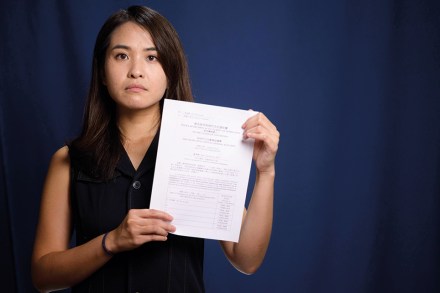
The national security law in Hong Kong has been passed for just over a month, but the scope of Beijing's plans are now clear. This is a constitutional coup. The safeguards which have historically defended human rights in Hong Kong have been shattered. Rule of law has been replaced with rule by law – and the Communist Party's word is law. Thursday 30 July brought home the reality of the new status quo. Hong Kongers woke up to the news that four young people aged between 16 and 21 years old – representing a small group of students who campaigned for Hong Kong independence last year – heard a midnight knock on the door and were arrested. Their crime? Posting on social media, or ‘organising and inciting secession’ in the new dystopian Hong Kong.

The forgotten victims of communism

I just read a piece by Scott McConnell in the American Conservative, a magazine we co-founded 18 years ago. He writes about how the victims of communism are less commemorated than those of fascism. The death toll under communism was 100 million (see the Black Book of Communism). And as the mass murders continued, your Cambridge Joseph Needhams and his fellow apologists insisted that Maoism represented mankind’s best hope. Maoism never received the moral obloquy that Nazism did. The United States Holocaust Memorial Museum, which documents the horrific enormity of the Nazi project, has had 40 million visitors since 1993; the victims of communism are marked by a ten-foot statue in a tiny park near Union Station, tended by private donations.

It was Bevin, not Bevan, who was the real national treasure

On a family holiday almost 40 years ago I visited Winsford, the village on the edge of Exmoor where Ernest Bevin was born (and Boris Johnson was raised). Having read the first book in Alan Bullock’s scholarly three-volume biography, I’d become a convinced Bevinite (not to be confused with the followers of Nye Bevan, his near namesake and bête noire). As it was the centenary of Bevin’s birth I expected to find some kind of commemoration, but there was nothing apart from a faded plaque on the cottage he was born in. I asked the woman serving in the Post Office opposite if I’d missed anything, but she’d never heard of the great man.