Cold war

The best Cold War thriller I’ve seen that I fully understand: The Courier reviewed

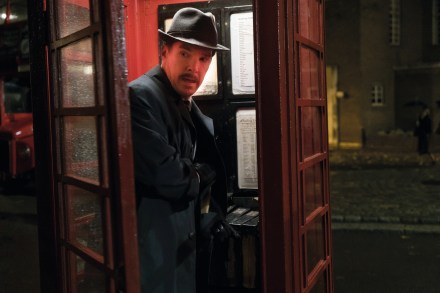
The Courier is a Cold War spy thriller and the prospect of a Cold War spy thriller always makes my heart sink. There will be agents. There will be double agents and triple agents and maybe even quadruple agents. Is he working for our side while pretending to work for the Soviets as someone pretending to be working for us? After any Le Carré adaptation, for example, I also need debriefing in a wood-panelled room filled with cigarette smoke and there is still no saying I’ll emerge any the wiser. But The Courier isn’t like that. This is a damn good, explosively tense story that focuses on the friendship that develops between two men on opposite sides. And it is plainly wonderful.

Olivia de Havilland’s Red Scare

From our US edition

Olivia de Havilland, who has passed aged 104, will forever be remembered for the role of Melanie Hamilton in Gone with the Wind, a performance that earned her a Best Supporting Actress nod from the Academy. She would go on to star in acclaimed romantic dramas like To Each His Own and The Heiress, both of which brought her Oscars for Best Actress, but to fans of classic movies she will always be Scarlett O’Hara's sickly cousin, love rival but ultimate ally. She was cinema’s quintessential southern belle: genteel on the surface, steel underneath. Less well known is that de Havilland was a lively anti-communist and worked to expose and counter the influence of Soviet sympathizers in Hollywood.

olivia de havilland

The problem with mystery podcasts like Wind of Change

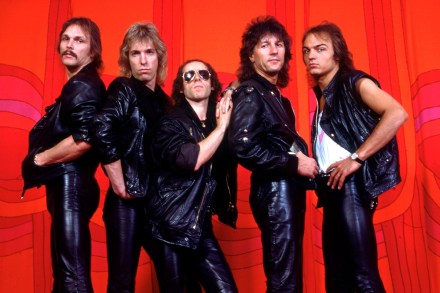
Did the US secretly write a power ballad in order to bring down the Soviet Union? That’s the question behind Wind of Change, a serial documentary that has topped the podcast charts. It’s the work of an investigative journalist called Patrick Radden Keefe who claims to have once received a tip-off, from an intelligence contact, that the song ‘Wind of Change’ — recorded by the hair metallers Scorpions — was actually a CIA campaign to encourage anti-Soviet uprisings. Now he wants to prove it. This week’s episode, the fourth of eight, takes Keefe to a collectors’ convention in Ohio in pursuit of an internet user called ‘Lance Sputnik’ who creates customised versions of GI Joe action figures.

Germany’s military has become a complete joke

It is not hard to think of times when German military weakness would have been lauded as good news across the rest of Europe, but perhaps not when the German minister accused of running her country’s armed forces into the ground has just been named as the next president of the European Commission. The most recent embarrassment for the Bundeswehr — the grounding of all 53 of its Tiger helicopters this month due to technical faults — is just the latest in a long series of humiliations to have sprung from Ursula von der Leyen’s spell as defence minister. A country once feared for its ruthless military efficiency has become a joke among European powers.

Ross Perot was the populist who betrayed populism

From our US edition

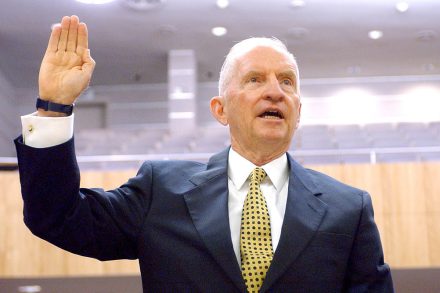
Ross Perot, who has just died at age 89, is wrongly remembered as the man who cost George H.W. Bush his re-election in 1992. He should be remembered as the man who cost his own populist ideas their chance to remake American politics 20 years before the election of Donald Trump. Perot showed the promise of populism — then betrayed it, bottling it up for the next two decades. As far as Perot was concerned, if populism could win without him, it shouldn’t win at all. And so he made it as difficult as possible for anyone else — Jesse Ventura, Pat Buchanan, and yes, even Donald Trump — to build on what Perot achieved in 1992. And maybe Perot did cost Bush I his re-election, just not in the way most people think.

ross perot

Will Trump enter the hypersonic nuclear arms race?

From our US edition

The Pentagon is urgently reviewing just how and when the president might launch nuclear missiles as a dangerous new nuclear arms race breaks out. Hypersonic missiles are capable of flying at around 12,000 miles per hour, or Mach 20. That would reduce the US response time to as little as five minutes — too short for the president to enter the launch codes into the ‘football’ (actually a briefcase) that is never more than a few feet away. Instead, some officials argue that Artificial Intelligence should manage the US response. AI could gather information about launches, likely targets, and the most effective counter-responses — and be empowered to launch nuclear missiles without human intervention.

nuclear arms

Let’s twist again

What’s the best way to start a six-part thriller? The answer, it seems, is to have a bloke of a certain age pottering about at home when he’s suddenly and shockingly murdered by asphyxiation. You then roll the opening credits, forget about the dead guy and introduce the main character, who’s asked to take part in some sort of mission — and agonises about whether to accept or to leave the whole series somewhat stranded. At least, this is exactly what happened in both of this week’s big new Sunday-night dramas: BBC1’s Baptiste and Channel 4’s Traitors.

Cold War is a true work of art

From our US edition

Socialists dismiss liberal democracy as false consciousness, but no one falsifies consciousness like a socialist. Socialist history is false history, the march of workers who want to work harder. Socialist economics is false economics, where the numbers never add up, but it’s always someone else’s fault. Socialist art is false art, because it is always propaganda. The socialist individual begins as an impossible fiction, and ends as an enemy of the state, because the aim of socialism is to subordinate individual desires to collective duties. This corruption of human relationships — denouncing your parents, spying on your wife, fearing your children — is not an accident, but an operating principle.

cold war

George H.W. Bush: a man in full

From our US edition

George H.W. Bush was a president without an asterisk next to his name. No one ever wondered what overseas power was bankrolling him or what foreign intelligence service was running an operation to elect him to the White House. Americans had partisan and policy differences with George Bush, but even in the heat of the 1992 campaign, the toughest of his life, no one questioned his motives or his intentions. No one could or can doubt his deep patriotism, loyalty, and commitment to service to the nation he so clearly loved. The remembrances of this good man and consequential leader are many, and as a Republican official, campaign operative, ad maker, pundit, and proud Bush guy, I am happy to see America’s outpouring of gratitude and support for the greatest President in my lifetime.

george bush sr

Betraying bandits

Spy stories, whether the stuff of fictional thrillers or, as in the case of Sergei Skripal, the real deal — often leave a question nagging. For all the tales of tradecraft and tension, double agents and drama, what difference did one person’s decision to spy really make? That is not the case with Oleg Gordievsky. Gordievsky’s story is remarkable because it has all the drama of a fictional tale and yet also conveys why a single person’s choices can make a difference. Gordievsky was a rising star in the KGB, but one who became disillusioned with the regime he was serving — particularly as he watched the crushing of the Prague Spring by Soviet tanks in 1968.

Europe ‘resurgent’

When I reviewed the first volume of Sir Ian Kershaw’s wrist-breaking history of the last 100 years of Europe, To Hell and Back, in these pages exactly three years ago, I compared our continent in 1945 to a punch-drunk boxer rising from the canvas with both eyes blacked. How, I wondered, would Kershaw handle the battered old bruiser coping with a not-so-brave new world in which he was no longer the undisputed champ? The image of the wounded fighter, I think, was apt, for the red thread running through Europe in the first half of the century, as Kershaw rightly saw, was violence. States waged catastrophic war on each other and on their own citizens. Belonging to the ‘wrong’ race, religion, or political persuasion could mean imprisonment, torture and violent death.

The spying game

Some of us grew up worrying about reds under the bed, which was perhaps not as foolish as all that if a report on Saturday morning’s Today programme on Radio 4 is to be believed. Amid a cacophony of weird-sounding bleeps and disembodied voices, Gordon Corera, the BBC’s security correspondent (always clear, calm and collected, no matter the brief), told us about the ‘number stations’ that proliferated in the Cold War and are now being brought back to life. Anyone can tune in to them, but only those in the know can understand what they mean, and although the source of the transmissions can be traced it’s impossible to pick up those who are listening in to them, which is why they have come back into use.

Now it can be told

Deployed in vastly exaggerated numbers, nuclear weapons were maintained in place not just by secrecy, but by banalities and lies. The atomic bomb has been, from the very beginning, both extraordinarily public and secret. Everyone knew about what was regarded as a momentous development in human history. It kept many clichés in circulation for decades — humanity as scientific giants and ethical infants; the desire for international control; the idea of moral scientists who did, or should, reject the sweet blandishments of the bomb. At the same time, insiders knew and did things which were the deepest and most troubling secrets of the deep state. For those few in the know, and assiduous critics, there was a huge mismatch between rhetoric and reality.

Talking down to God

‘There is something enviable about the utter lack of inhibition with which Leonard Bernstein carries on,’ wrote the critic of the Boston Globe after the US première of Bernstein’s Third Symphony, Kaddish, in February 1964 — and looking at the forces arrayed at the Barbican, he had a point. In addition to the full LSO there was the London Symphony Chorus, a narrator, a solo soprano and the Tiffin Boys’ Choir. It barely fitted on stage. And if you thought the set-up was extravagant, a glance at Bernstein’s self-written text would probably have sent you screaming from the hall. ‘Lenny’ was classical music’s original bleeding-heart superstar: the man for whom Tom Wolfe coined the phrase ‘radical chic’.

His dark materials | 12 October 2017

In this giant, prodigiously sourced and insightful biography, John A. Farrell shows how Richard Milhous Nixon was the nightmare of the age for many Americans, even as he won years of near-adulation from many others. One can only think of Donald Trump. Nixon appealed to lower- and  lower-middle-class whites from the heartland, whose hatred of the press and the east-coast elite, and feelings of having been short-changed and despised by snobs, held steady until their hero and champion unmistakably broke the law and had to resign his second-term presidency. Nixon won a smashing re-election in 1972, even as it was apparent that the White House was awash with skulduggery.

A blast from the past

If you had to choose one book that both typified spy fiction and celebrated what the genre was capable of doing, then John le Carré’s The Spy Who Came in From the Cold is probably the one to go for. Published in 1963, and set within the comfortably binary framework of the Cold War, it combined moral ambiguity and an air of grim authenticity with a steady narrative pull. It also had an unforced literary distinction that made it impossible to dismiss as ‘mere’ genre fiction. Now, over half a century later, le Carré’s latest novel returns to this murky episode and proceeds to make it even more complicated and harrowing than it was before.

Paradise or prison?

This daintily dress-conscious and rewardingly heavyweight novel is set mainly in a half imaginary stately home in Oxfordshire. The story begins in 1663, jumps forward to modern times and then back to 1665. On all occasions, our attention is less on the actual house, Wychwood, than on the power of nature, whatever’s left of the surrounding primeval forest, ornamental lakes-in-the-making, majestic vistas and, above all, the ‘monstrously expensive’ wall or ‘the great ring of stone’, built, or being built, around its park. Those featured include the original landscape designer Mr Norris, his silk-coated, high-heeled employer Lord Woldingham and later the silk-and-chiffon-clad Rossiters, who rule the roost in the 1960s.

An epic for our times

Trailing rave US reviews, fan letters from Yann Martel and Khaled Hosseini and a reputation as ‘Doctor Zhivago for the 21st century’, comes this outstanding historical saga from debut novelist Sana Krasikov. It’s a dazzling and addictive piece of work from an author born in the Soviet Republic of Georgia whose family emigrated to New York when she was eight. Not only is this novel accomplished and packed with believable detail and entertaining dialogue, it also feels curiously relevant, tip-toeing around the complicated relationship between the United States and Russia during and after the Cold War. Raised in 1930s Brooklyn, Florence Fein escapes a stifling existence with a seemingly glamorous job entertaining Soviet dignitaries on business trips to the US.

Trump’s show of strength to Moscow

Donald Trump has not lost his capacity to surprise: few would have bet on him starting his address to Congress with praise for Black History Month. Tuesday night’s speech was the nearest Trump has come to acting like a traditional president. But one thing conspicuous by its absence was any mention of Russia. To Europeans, his Russia policy remains a riddle wrapped in a mystery inside an enigma. Four things make Trump’s approach to Moscow particularly hard to fathom. First is the fact that no one is sure who really speaks for him on foreign policy. What should Europe make of vice-president Mike Pence’s soothing words at the recent Munich Security Conference?

A scandalous scramble

Empires in the Sun might conjure up romantic visions for some, but this book’s essence is distilled in its subtitle, ‘The Struggle for the Mastery of Africa’. Lawrence James’s panoramic survey of imperial and then neo-colonial subjugation of the African continent between 1830 and 1990 is a timely reminder, if any were needed, of the devastating consequences of chauvinistic nationalism and expansionism. Violence, inflicted on a continent wracked by the slave trade, internal wars and epidemics, is the dominant theme: empire-building is always brutal. France’s conquest and settlement of Algeria, the first European colony in Africa in modern times, sets the scene.