Climate change

Met Office in crisis meeting as sun comes out

The Met Office is apparently holding a ‘crisis meeting’ today to discuss why Britain’s weather refuses to behave itself these days. No sooner had the camp, pirouetting, forecasters told us that we were in for weeks and weeks of gale force winds and torrential rain, stretching into July, better wear your wellies etc, than the sun came out, the birds began to sing again and the wind became a vague, if pleasant, caressing of the senses. Their meeting is really to ask the rhetorical question, the only question they know – is it global warming or what? – rather than the more immediately relevant question: why are we always completely wrong about everything? I think it’s pique that makes them believe so unquestioningly in climate change.

What fossil fuel subsidies?

The environmental movement hasn’t responded well to the setbacks it has suffered seen since the failure of the Copenhagen climate conference.  The #endfossilfuelsubsidies campaign — trending worldwide on Twitter this morning — is the latest example of their descent. To be clear, fossil fuel subsidies are not a good idea; that is why governments like ours don’t offer them. Fossil fuels are huge cash cows for every western government.  When someone fills up their car with petrol, around sixty per cent of the pump price goes to the Exchequer. When an oil company drills in the North Sea and extracts a barrel the amount that the Treasury gets varies but it is invariably a substantial share of the price, and the sector was raided again at Budget 2011.

Energy special: Get ready for the ‘fire ice’ revolution

On Saturday, 8 June, the research vessel Kaiyo Maru No. 7 left the port of Joetsu, in western Japan, to begin a three-year survey of the Sea of Japan — the latest step in a little-known research programme that in a decade or less could profoundly change the international balance of power. Kaiyo Maru, a 499-ton trawler, is hunting for beds of methane hydrate, a cold, white, sherbet-like substance found off coastlines in Japan and much of the rest of the world. The United States Geological Survey estimates that as much as 2.8 trillion cubic metres of this mixture of frozen water and natural gas may exist. Although only part of this vast deposit is accessible, methane hydrate — ‘ice that burns’ — may be the Earth’s single biggest fossil-fuel source.

Tim Yeo “steps aside” as committee chairman. But will he now sue himself for libel?

From the moment that the Sunday Times caught Tim Yeo offering to advise energy companies for cash, it was clear that his chairmanship of the energy and climate change select committee was untenable. Yet he's coming to this conclusion slowly. It has taken him until now to decide he'll "step aside," apparently under pressure from Labour members of the committee. Committee chairmen are elected nowadays, so what other members of the committee matters in a way it didn't used to. And Yeo, who took £140,000 from various commercial interests last year, will now have become an embarrassment to the green movement more generally. Those who regard renewable energy as a massive racket will see in him the embodiment of their suspicion: an MP on the take.

First Mercer, now Yeo – isn’t it time politicians tried to entrap journalists?

Now that it has become commonplace for the press to entrap MPs and peers, why don’t our legislators try to turn the tables? I suggest that ministers sidle up to journalists (secretly filming them the while) and offer them honours. They should hint that the honour is conditional on favourable coverage, and agree to meet again in six months. In between, they should track what the journalists write, and then, when they have trapped their victims, expose the pattern. Another trick would be for politicians to get friends to pretend to be businessmen offering journalists money or freebies to place products in their stories and features. These tactics would get interesting results. The latest Sunday Times sting can be read here (£).

Let’s get fracking

Great news on the fracking front. A company called IGas says it’s sitting on a huge shale gas reserve deep below Cheshire. Given the company’s ‘most likely’ estimate of 102 trillion cubic feet of gas, and a potential extraction rate of around 15 per cent, that could fulfil five years of UK gas demand, which runs at three trillion cubic feet per year — half of it currently imported. The other leading player in this field, Cuadrilla, has already claimed reserves of 200 trillion cubic feet in Lancashire, so all told (and subject to lots of caveats) that could be 15 years’ worth of fuel to keep us going until new nuclear stations get built and someone designs a wind turbine that works in the lightest of English breezes.

The Man Who Plants Trees, by Jim Robbins – review

Remember the ‘Plant a Tree in ’73’ campaign? Forty years on, has anyone inquired into what happened to all those trees and how many are still alive? Since then, planting amenity trees has grown into an industry, and turns out to have its down sides. One is that little trees are imported in industrial quantities from other countries, as if they were cars or tins of paint, and inevitably bring with them foreign pests and diseases which destroy established trees. Globalisation of tree diseases has overtaken climate change and too many deer to become the number one threat to the world’s trees and forests. This book, by a scientific journalist, is a miscellany of what people, especially Americans, think about trees and the virtues that they ascribe to them.

Global Crisis, by Geoffrey Parker – review

Just before I was sent this huge tour de force of a book to review, I happened to be reading those 17th-century diary accounts by Pepys and John Evelyn which record a remarkable number of what would today be called ‘extreme weather events’. Repeatedly we see them referring to prolonged droughts, horrendous floods, summers and winters so abnormally hot or cold that their like was ‘never known in the world before’. These were the days of those London Frost Fairs, when the Thames froze so thickly that it could bear horses, coaches and streets of shops. This was the time of the Maunder Minimum, when for decades after 1645 sunspot activity was almost non-existent.

At long last the mainstream media are paying attention to global warming sceptics

The failure of the Earth to warm since the start of the century has been a talking point for global warming sceptics for many years, but it is only in the past few months that the mainstream media have started to pay attention too. In recent weeks the Economist, Channel Four News, and even ultra-green writers like the Telegraph’s Geoffrey Lean have sat up and taken notice. And on top of the pause, a series of recent studies of how fast temperature will rise in response to carbon dioxide emissions has produced estimates that are decidedly un-scary.

Climate wars: I’m being attacked by my own side. Why?

There’s nothing more irritating then being asked to apologise for something you haven’t done. No, wait, there is: when the person demanding the apology is one of the friends you admire most in the world — and when the alleged victim of your non-existent crime is one of the people you most despise. The friend’s name is Anthony Watts, meteorologist and fellow happy warrior in the great global battle against climate change nonsense. He runs the world’s most widely read climate sceptic website, Watts Up With That?, which got to the Climategate story before I did. Recently, we were both winners in the 2013 Bloggies Awards: he deservedly won best science blog (for the third year running); I was named best political blogger.

What’s happening? Snow was ‘disappearing from our lives’ in 2000

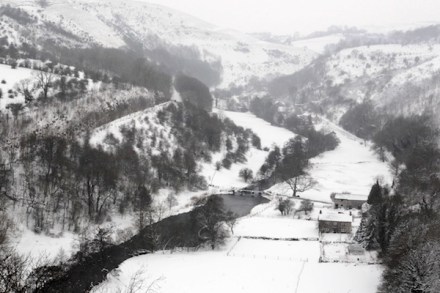
Enormous thanks to OGT for alerting us all to the brilliant article from the Independent – published on Monday March 20th, 2000. Here’s the first bit of it: 'Britain's winter ends tomorrow with further indications of a striking environmental change: snow is starting to disappear from our lives. Sledges, snowmen, snowballs and the excitement of waking to find that the stuff has settled outside are all a rapidly diminishing part of Britain's culture, as warmer winters - which scientists are attributing to global climate change - produce not only fewer white Christmases, but fewer white Januaries and Februaries. The first two months of 2000 were virtually free of significant snowfall in much of lowland Britain, and December brought only moderate snowfall in the South-east.

This extreme weather is a consequence of exhaustive reporting

Just as a follow up to what I was talking about below. Here’s the government’s chief scientific advisor, Sir John Beddington: 'Professor Sir John Beddington said that time lags in the climate system meant that accumulations of greenhouse gases in the atmosphere now will determine the weather we experience for the next 25 years. 'Climate change is already manifesting itself in huge variations in the weather, clearly illustrated by the way Britain experienced both drought and extreme rainfall last year, he said.' That’s from today’s Torygraph. I’m sorry, I just don’t swallow it. I’m perfectly prepared to accept that man-made climate change is a reality. But to tie it to what was, last year, perfectly normal weather is facile and deceiving.

Nursing prejudice: how climate change activists are prisoners of their own politics

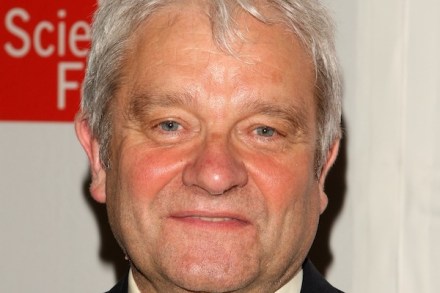
Sir Paul Nurse, the Nobel laureate and President of the Royal Society, has been hitting out at global warming sceptics. In a speech to the University of Melbourne recently, he attacked dissenters from the climate change orthodoxy, declaring that their objections were in reality political rather than scientific: 'A feature of [the global warming] controversy is that those that deny there is a problem often seem to have political or ideological views that lead them to be unhappy with the actions that would be necessary should global warming be due to human activity. I think that's a crucial point.

How Oliver Letwin lost his Kyoto bet with Nigel Lawson

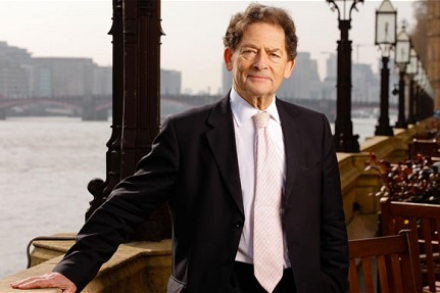
Not that anyone has noticed, but the Kyoto Protocol expired on 31 December, with  carbon emissions up by 58pc over 1990 levels - instead the 5pc cut the signatories envisaged. All that fuss for worse-than-nothing. Kyoto has not been replaced, because a new era of climate change rationalism is slowly taking root. As Nigel Lawson predicted, the hysteria of the last few years is cooling. There’s no point legislating for change that’s not going to happen. No point taxing the poor out of the sky (or off the roads) if it won’t make the blindest bit of difference to the trajectory of global warming. To be sure, countries responsible for 15pc of emissions have signed an extension of Kyoto.

Tata Steel’s job cuts, a tale of 2 press releases

Today brings bad news that Tata Steel is to cut 900 jobs in the UK (at plants in South Wales, North Yorkshire, Teesside and the West Midlands). This is catastrophic news for a government that has announced its intention to rebalance the economy away from financial and professional services in the south-east (and therefore get an hearing electoral hearing in Britain’s former industrial heartlands); but that is only one aspect of the politics at play here. Tata's statement says: ‘Today's proposals are part of a strategy to transform ourselves into an all-weather steel producer, capable of succeeding in difficult economic conditions. These restructuring proposals will help make our business more successful and sustainable.

Revealed: who decides the BBC’s climate change policy

Just when you thought the BBC had no more scandals, Guido Fawkes has revealed what the Beeb tried very hard to cover up: the 28 mysterious individuals who have been informing its climate change reporting policy. As a state-funded broadcaster, the BBC has a duty to provide balance. It rejected this on its environmental coverage after taking advice from people in a now-infamous 2006 seminar from people whose identity the BBC was keen to keep secret. I wrote on Sunday how it had refused FoI requests to reveal those names.

Another BBC scandal: hiding their climate change agenda

While the BBC struggles to deal with its recent bout of self-proclaimed ‘shoddy journalism’, there’s another ethical scandal simmering away. The simple question of 'who decides how the BBC covers climate change' has a rather complicated answer. In 2006, the BBC Trust held a seminar entitled ‘Climate Change - the Challenge to Broadcasting’. As m’colleague James Delingpole has written at Telegraph Blogs, the seminar appeared to be far from a healthy debate.

Danny Alexander’s real enemy

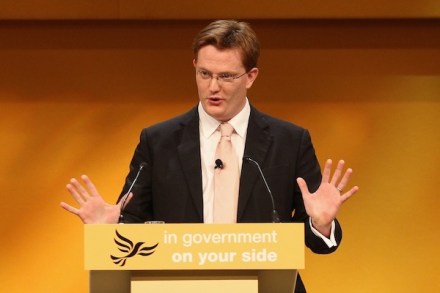
Danny Alexander, the Chief Secretary to the Treasury, is to drop his normally conciliatory voice to attack the Tories at the Lib Dem party conference in Brighton. So what? you may well ask. The mild-mannered Alexander is unlikely to strike the fear of God into his listeners, assuming that anyone beyond the conference hall will be listening, or indeed that the conference hall is full: Brighton being lovely at that time of year. Besides, bursts of splenetic outrage at one’s coalition partners have become a feature of conferences, particularly since last year’s unhappy AV referendum.

The Treasury sides with the consumer over climate policy

Tim Yeo is now posing as a friend of the consumer. Launching the latest report from the Energy and Climate Change Committee this morning, he attacked the Treasury for ‘refusing to back new contracts to deliver investment in nuclear, wind, wave and carbon capture and storage’. The report argues that could ‘impose unnecessary costs on consumers’. The basic logic of his claim is this: investments are more expensive when they are riskier. Investors expect to be compensated for the risks being taken with their money. If the Government offers guarantees that reduce the amount of risk energy companies run by investing in expensive sources of energy like offshore wind, then those firms can invest at a lower cost.