Climate change

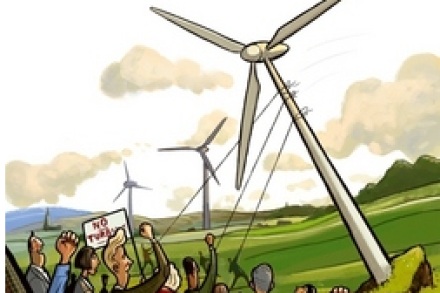
Osborne versus wind farms

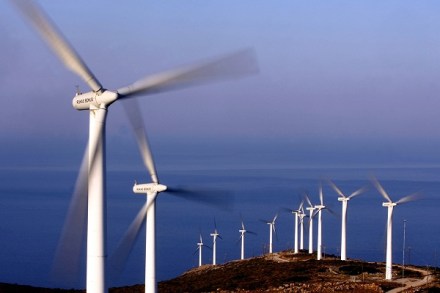
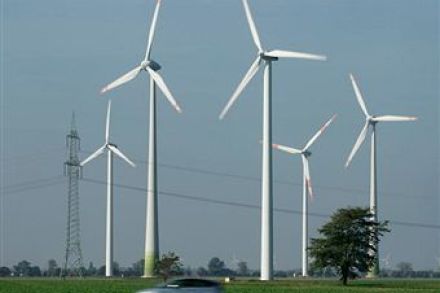
Here’s a U-turn that we can all welcome: felling the wind farms. Matt Ridley described, in a Spectator cover story some while ago, how George Osborne has turned against them. Today, the Observer has more details, saying that Osborne is:     As Ridley argued, wind farms are a ‘monument to the folly of mankind’, representing the triumph of ideology over reason. We could not afford them in the boom years, and we certainly can’t now. The subsidies make a small number of rich people even richer, and a huge number of companies are doing very well from the renewable energy racket. But if you apply rational analysis to it — ie, how much energy does it produce for the money it costs? — there is no reason at all. They generate just 0.

What’s stopping us?

The Climate Change Secretary, Ed Davey, promised this week to ‘reduce the volatility of energy bills’. Unfortunately, his proposal to eliminate the peaks and troughs in the electricity market involves elevating bills to a much higher level and leaving them there. Besides the pain this will inflict on already stretched households, the result of the highly rigged energy market envisaged by the government will be to make British industry chronically uncompetitive. The conceit that fossil fuel prices are necessarily set on an upward and increasingly volatile trend over the coming decades has been put about by the Department for Energy and Climate Change (DECC) for years in spite of mounting evidence to the contrary.

Downfall

It did not take long. Last month, Matt Ridley argued in a Spectator cover story that the wind farm agenda is in effect dead, having collapsed under the weight of its own contradictions. The only question is when our ministers would realise. In an interview with the Sunday Times (£), climate change minister Greg Barker admits that his department has adopted an ‘unbalanced’ approach to wind farms and will now look at other options. ‘Far from wanting thousands more, actually for most of the wind we need… they are either being built, being developed or in planning. The notion that there’s some new wave of wind [farms] is somewhat exaggerated.

The green squeeze

Bjorn Lomborg’s article on why Germany is cutting back on its support for solar power is well worth reading and has clear implication for this country’s debate about energy policy. As Lomborg argues: ‘there is a fundamental problem with subsidizing inefficient green technology: it is affordable only if it is done in tiny, tokenistic amounts. Using the government’s generous subsidies, Germans installed 7.5 gigawatts of photovoltaic (PV) capacity last year, more than double what the government had deemed “acceptable.” It is estimated that this increase alone will lead to a $260 hike in the average consumer’s annual power bill.

Lawson: Abolish DECC

Did we need to replace Chris Huhne at all? Nigel Lawson, a former editor of The Spectator (amongst other things), has an intriguing idea in a letter to today’s FT: just break up the Department for Energy and Climate Change. It has done nothing to encourage the development of shale gas, which — as we argue in a leader in tomorrow’s Spectator — could keep Britain in energy for the next 100 years without the need to build another windmill. Lord Lawson, a former energy secretary, says that Ed Davey: ‘...has the opportunity to enter the history books as the only minister to use his position to abolish it for the wider public good.

The Climate Change Committee’s suspiciously opaque report

The Climate Change Committee, a quango set up to advise the Government on its emissions targets, make a big claim in their report today. They have, they suggest, disproved the argument that climate policy is set to drive substantial increases in energy bills by 2020. They say that ‘policies to achieve a low-carbon economy will add a further £110 to bills in 2020, almost entirely due to support for investments in low-carbon power generation’, less than other estimates. And so the Guardian have used that as a pretext to let climate attack dog Bob Ward accuse the TaxPayers’ Alliance and Nigel Lawson’s Global Warming Policy Foundation of an attempt to ‘confuse and misinform the public with blatantly inflated figures’.

Whatever Chris Huhne says, Durban hasn’t changed anything

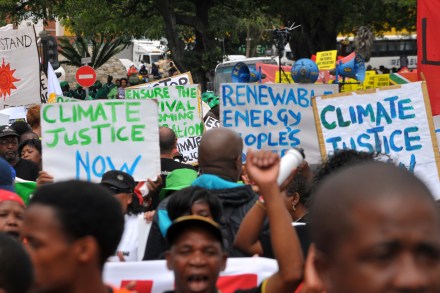
This morning the Department of Energy and Climate Change (DECC) told us that the climate summit in Durban, which concluded over the weekend, has been ‘heralded a success’. As they say, the ‘talks resulted in a decision to adopt the second commitment period of the Kyoto Protocol next year in return for a roadmap to a global legal agreement covering all parties for the first time’. Should anyone be heralding that as some kind of step forward? Was I wrong to be sceptical last week? As it happens, the various parties were actually trying to secure that ‘global legal agreement’, covering all of them, two years ago in Copenhagen — not just talking about securing it in the future.

Disappointment in Durban

Will Durban break the cycle of climate change meetings that repeatedly disappoint those hoping to replace Kyoto with an upgraded model? With so much else on, most people seem to be ignoring the latest summit entirely. Scanning the major newspaper websites, only the Guardian and the Independent mention “Durban” on their homepages.    First Copenhagen failed to live up to the massive hype. Then Cancun continued the stalemate on the big picture and negotiators contented themselves with addressing some relatively minor points. But Kyoto’s commitment period ends at the end of 2012, so those hoping for new mandatory targets can’t content themselves with stalling forever.

Good news! Sea levels aren’t rising dangerously

This week's Spectator cover star Nils-Axel Mörner brings some good news to a world otherwise mired in misery: sea levels are not rising dangerously – and haven't been for at least 300 years. To many readers this may come as a surprise. After all, are not rising sea levels – caused, we are given to understand, by melting glaciers and shrinking polar ice – one of the main planks of the IPCC's argument that we need to act now to 'combat climate change'? But where the IPCC's sea level figures are based on computer 'projections', questionable measurements and arbitrary adjustments, Mörner's are based on extensive field observations.

An open letter to Chris Huhne

Earlier this year, the former head of the civil service, Lord Turnbull, wrote a pamphlet on climate change entitled The Really Inconvenient Truth or “It Ain't Necessarily So”. It was praised by Nigel Lawson, writing its foreword, as a ‘dispassionate but devastating critique’ of global warming alarmism — and it is a critique that Chris Huhne saw fit to respond to earlier this week, in a letter to the ennobled pair. Well, now they've responded in turn, via the open letter below, and we thought CoffeeHousers might care to see it: Dear Secretary of State, We are pleased that you have decided that a public response to growing criticism of your climate policies is now required.

The policies behind your energy bills

It may be a week old, but last Monday's episode of Panorama really is worth putting half-an-hour aside for, if you haven't seen it already. Its subject was energy prices, and it raised some very urgent concerns about the government's policies in that area. You can watch it on the BBC site, but here's a brief summary in the meantime. All in all, switching our dependence away from coal and oil is going to be enormously expensive. Some £200 billion of taxpayers’ money is to be spent on increasing renewable energy output from seven to thirty percent by 2020. And, because sources like offshore wind costs almost £100 an hour more than traditional generators, this policy’s most immediate effect will be to raise energy bills sky high.

Osborne’s carbon conceits

George Osborne told a Conservative Party increasingly wary of expensive climate policies that Britain needs to "cut [its] carbon emissions no slower but also no faster than our fellow countries in Europe. That’s what I’ve insisted on in the recent carbon budget."  What he actually insisted on was what Chris Huhne described as "a review of progress in early 2014 to ensure our own carbon targets are in line with the EU’s".  Even if that review is serious, and energy intensive industries have every reason to be sceptical, it is only going to hold our policy to the same standard as today.  The current targets require us to cut our emissions faster than our European competitors, and the policies we are adopting to meet them are far more draconian.

The green threat to growth

Luciana Berger is a frequent speaker at this year's conference and her creed is simple: tax energy use to tackle climate change. But, journey along the Mersey, from the glamorous fringe events held on Liverpool’s well rejuvenated quays to the post-industrial wasteland that lies beyond and you discover a different breed of Labour MP. ‘Is the green economy a threat to growth?’ asked Ellesmere MP, Andrew Miller at a seminar earlier this afternoon.

Tories hit back at Huhne and his policies

Chris Huhne can always be guaranteed to grate. Several Conservatives have cracked wry smiles at the energy secretary’s comments about the “Tory Tea Party tendency”. Mark Pritchard quipped that plenty of senior Lib Dems would soon be at leisure to throw their own tea parties and John Redwood dismissed Huhne’s cant as conference high-jinks. Redwood went on to challenge Huhne’s policies. Speaking to Sky News, he said he was “happy to hear ideas” about “promoting more competition”, pointing out that competition might reduce prices. Then he added that Huhne “has also got to understand it is his policies that are driving costs of electricity up in Britain because we are choosing to generate it in a very expensive way.

Huhne, the Lib Dems’ black comedian

Today we got the black comedy follow up to Sarah Teather’s stand-up routine.  Chris Huhne is going to drive down our energy bills! For those of us wondering how families and businesses can afford his expensive climate policies, it is a bit of a joke. The basic issue – as I set out in the new book Let them eat carbon – is that we need to invest an absolute fortune to meet the range of environmental targets that the government has put in place. Citigroup estimated last September that we need to invest about €229 billion (about £200 billion) in the energy sector this decade.  That is far more than any other major European economy.

Let Them Eat Carbon

After a Spectator debate on climate change in March, Fraser Nelson wrote about whether or not we should try to engage in the debate ourselves or “trust the expert”. Simon Singh had argued in the debate that the most credible experts supported the view that the human contribution to potential global warming was real and serious. The response to my new book Let Them Eat Carbon shows how much that kind of debate is turned on its head when it comes to policy. The science is much less important than people make out. No argument about historical bristlecone pines is going to settle whether or not we should pay handsome subsidies to offshore wind farms. Policymakers often have to make decisions with only a vague sense of the likely results.

Huhne pooh-poohs rising energy bills as ‘nonsense’

Chris Huhne was on the Andrew Marr show this morning. As you might expect on a day when the Sunday Telegraph broke the news that fuel bills will boom by 30 per cent as a result of green taxes, the Energy Secretary was asked to ruminate at length on all matters Murdoch. Eventually, though, Huhne had to answer searching questions pertaining to his brief. Confronted with the Sunday Telegraph’s story, Huhne described it as ‘nonsense’ because it did not take potential savings into account. Huhne also pledged to introduce more competition to shatter the grip that the ‘Big Six’ utility companies have on 90 per cent of the UK's energy market. Greater competition should, theoretically, lower bills.

The danger of unbalanced trade with China

The Chinese premier seems to like cars; the Chinese in general seem to like cars. China has bought MG in Britain and Volvo in Sweden, to which it has just added Saab. If the Chinese can make European car companies viable, then what's the problem? Theoretically nothing: trade will help the Chinese and Europeans alike. But, as Robert Peston made clear in his questioning of Wen Jiabao, trade remains unbalanced. For example, European companies are excluded from public procurement contracts in China. It is also worth noting that China’s purchase of Spanish and Greek bonds over the past year, coupled with their promise to buy from Hungary, have made it a bilateral lender of last resort for politicians in indebted countries.

In England’s green and pleasant land

What do the TUC, heavy industry and the European Commission have in common? This is not the start of a bad joke; the answer is that they all oppose the government’s energy policy. Ten days ago, Tata (formerly British Steel) announced that it was to cut more than 1,500 jobs at plants in Scunthorpe and on Teeside. The directors later confirmed that their decision was influenced, in part, by the introduction of a costly carbon floor price at the last Budget. The floor price, which exists on top of levies imposed by the EU, has increased the burden of taxation on energy consumption to subsidise renewable energy research. In last week’s issue of the Spectator, Matt Ridley predicted how this policy will likely be an expensive fiasco.

The battle over the 4th carbon budget

At the weekend, it appeared that Chris Huhne had won his battle with Vince Cable and George Osborne over whether or not the government should sign up to the 4th carbon budget. This budget covers 2023 to 2027 and is all part of a plan to cut carbon emissions by 80 percent by 2050 compared to the level in 1990; they have currently been reduced by 26.5 percent from the 1990 level. But it now appears that the greens in government might have been premature in declaring victory. First, the next set of cuts in UK carbon emissions is dependent on the European Union agreeing to embark on an equally significant emissions cut by early 2014. If this does not happen, then the UK carbon budget will default to the EU average.