Class

What your whippet says about you

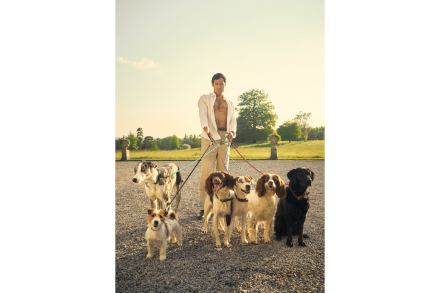
‘Whippets are simply ducal,’ a grand friend pants at me in her drawing room when I ask her why she owns one. Certainly not a Regency duke, I mutter, looking at the fawn skeleton lying in wait on the brocade sofa. Because to me, whippets aren’t posh, just as Michael Heseltine isn’t fooling me all these years later. Rather, I find them sinister: the endless jutting ribs, the paper-thin coat, the incessant shaking. But I know I am not in good company. Whippets, the Ozempic-coded dog of our age, have been taken up by high society in their droves.

Motherless friends: Kin, by Tayari Jones, reviewed

Set in the American South during the Jim Crow era, Tayari Jones’s Kin follows the parallel lives of Annie and Vernice. The ‘cradle friends’ are both motherless, Annie having been abandoned and ‘Niecy’ orphaned, leaving them with a painful ‘wound’. They are as vulnerable as ‘unshucked, naked peas’. Though they are trauma-bonded, the ways in which they approach their lives differ hugely. As her mother is still somewhere out there, Annie becomes fixated on finding her and ‘trying to climb back in her womb’. She’s unable to move forward until she arrives at a resolution. Tracking her mother down becomes ‘the point of her whole life’ – much to Niecy’s dismay: ‘Finding your mama won’t fix you.

The vivid legacy of Martin Parr

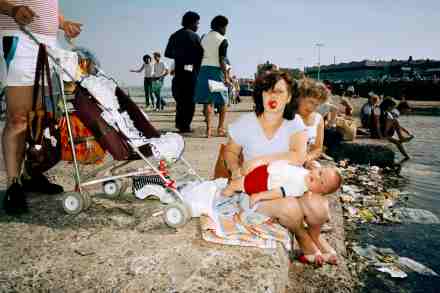
Four decades ago, a man took lots of photos of some working-class people having a day out at the seaside. The resort was New Brighton on Merseyside, and the photos showed that the sun shone, the ice creams were runny and lots of people fell asleep in their deckchairs, resulting in their faces turning fire-engine red. What ‘The Last Resort’ – the most famous photography project by Martin Parr, who died last month at the age of 73 – also showed, and continues to show, is that there is nothing that the liberal-artistic-media-elite loathe more than seeing ordinary people having a good time and not giving a hoot what anyone else might think of them.

Is it better to be posh or cool?

From our US edition

What in twenty-first-century Britain is it better to be: posh or cool? Of course the correct answer is: it’s best to be posh and cool. But posh people, on the whole, tend not to be cool and really cool people aren’t usually posh. But the tribes have a lot in common. They share a certain insouciance, which is a posh word for total indifference to the feelings and thoughts of other people. They are both anti-democratic and anti-meritocratic in spirit and practice. No matter how hard you try and how much money you have, you can’t join the posh or be cool. Like sex appeal, you’ve either got or you ain’t. Defining either group is not easy, but you know when you see it — or in the case of the posh, hear it.

posh

A hit – but please don’t pretend it’s feminist: Disney+’s Rivals reviewed

For most of my adult life, clever, well-read, feminist women have told me how much they love Jilly Cooper. It therefore came as a bit of shock when I finally tried her novels for myself and found what they contained. There is, for example, no mistaking Jilly’s scorn for women who are fat and/or hairy, her belief that all female unhappiness can be cured by a damn good rogering, and the idea that not only is it fair enough for middle-aged blokes to lech after teenage girls, but that teenage girls rather like it when they do. (I was also slightly disconcerted by her favourite word for female genitalia – which, by way of a big clue, is the surname of the 41st and 43rd US presidents.

Rather in the lurch: Small Bomb at Dimperley, by Lissa Evans, reviewed

Stories and films set in stately homes continue to fascinate us, and Lissa Evans’s latest novel is likely to increase our appetite. It is 1945, and Dimperley Manor, the large, dilapidated home of the Vere-Thissetts near Aylesbury, has been almost emptied of its wartime evacuees. Only the widowed Zena Baxter (who adores Dimperley) and her small daughter remain, and the place has become a millstone round the neck of the heir, Valentine. The new baronet is expected to marry a rich bride to save his ancestral home. The nation, battered and bloodied, has just voted overwhelmingly for Labour. Is it a new dawn or a disaster? All this might seem familiar to fans of Evelyn Waugh, P.G. Wodehouse, Hannah Rothschild and Emerald Fennell’s Saltburn.

Does it matter how posh pop stars are?

‘A working class hero is something to be.’ Rishi Sunak and Keir Starmer must have missed the conflicted, sardonic edge to John Lennon’s lyric, from his 1970 song ‘Working Class Hero’, given their rush to scrub away the whiff of privilege in the crudest manner imaginable. Sunak, desperately, by means of bemoaning a childhood forever blighted by lack of access to satellite TV; Starmer by dully hammering home that he is the son of a toolmaker. A country pile, a double-barrelled girlfriend and a mock-regal drawl were valued plunder in 1960s pop As in politics, so in music. In both fields, class anxiety has become inverted. The fear now is to appear too privileged. It wasn’t always thus.

Where to find self-esteem

From our US edition

It’s a month before publication day for my second book, Second Class: How the Elites Betrayed America’s Working Men and Women. I start an Instagram account in the hopes of drumming up interest in the book on a new platform. I post a few clips of TV hits from recent weeks and follow a few friends. Instagram immediately recommends an article about how to grow your Instagram following, and I click on it and learn that consistency is key on Instagram. Roger that. Later that day, I find myself arranging my overachiever elder millennial self into an artfully nonchalant pose while stirring a lamb curry I’m whipping up for my regular Shabbat dinner salon. “There once was a Batya,” my husband mutters on his way to the fridge. “Now there’s a content creator.

class

How ‘woke’ hierarchy created an upper-class underclass

From our US edition

It was an uprising of “retards.” That’s what they called themselves, anyway. When followers of the Reddit forum r/wallstreetbets organized en masse to buy shares of the video-game chain store GameStop, they did so in the self-deprecating spirit of very online weirdos. Since digital downloads had taken over the gaming market, billionaire hedge funders had “shorted” GameStop, meaning they’d bet on its brick-and-mortar model to fail. The company’s sudden windfall caused such panic among the good and the great that the ensuing furor ended in a congressional hearing. Impressive for a bunch of dorks who gleefully referred to themselves in meme-laden pep talks as “apes” and “autists.” In January 2021 this was a marquee event.

class

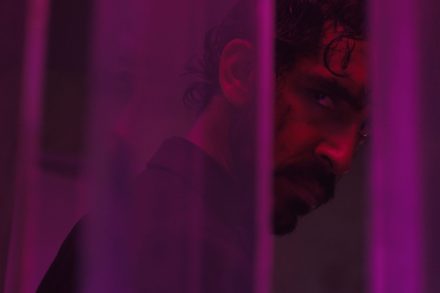
Monkey Man proves fighting the gods is a bloody affair

From our US edition

Only a few short years ago, I was a professional bartender working for Michelin-star chefs in fine-dining restaurants and, eventually, serving the social elite in five-star hotels. Most of the known names were genial. Killer Mike and El-P of Run the Jewels were gentlemen. So too were Thundercat and Anderson .Paak — who were particularly keen on my margaritas. Some night porter friends anticipated trouble when they heard Nicki Minaj was staying, but found her to be extremely down to earth, pleasant and normal. Others, however, were not.

monkey man

The next Senate GOP leader won’t be super-rich. That’s a good thing

From our US edition

One of the two Johns — John Cornyn and John Thune — is in all likelihood going to be the next leader of the Senate. One may potentially, based on the very favorable map for Republicans this cycle, may be the next majority leader. It’s a massive trade in power, away from the long-tenured Mitch McConnell and his diaspora of consultants and groups, and into the new hands of different Senate staffers and teams. But one thing that Cornyn and Thune represent is not just a generational shift, but a shift in the nature of the leadership and what they represent. Cornyn and Thune were both recruited in 2004 by Karl Rove as part of the effort by George W. Bush to take the Senate.

Why the luxury life feels alien

From our US edition

My path to “media personality” (puke) and cultural commentator was not the usual one. I didn’t get a degree in Journalism or Broadcast Journalism or Communications. I didn’t go to Harvard or Columbia or Syracuse or Yale. In fact, I didn’t get a degree at all. This sets me apart from almost everyone in old-guard media — and were it not for new media and more importantly, social media, I would still probably be excluded by most of the establishment gatekeepers. Our mainstream media and late-night television rooms are dominated by people who went to Ivy League schools. The Harvard Lampoon guys. The Columbia School of Journalism kids.

luxury

Fascinating: Radio 4’s Empire of Tea reviewed

I can scarcely remember a time before tea: I started drinking it at around four, at home in Belfast, as a reward after school. Before long I was as fiercely protective of my right to a brew as the workers of British Leyland’s Birmingham car plant, who were famously spurred to strike action in 1981 when the management proposed cutting tea breaks by 11 minutes. Decades on, my passion is undiminished. There is no problem to which tea is not at least a partial solution: it restores flagging spirits, calms the over-excited, warms in winter and refreshes in summer.

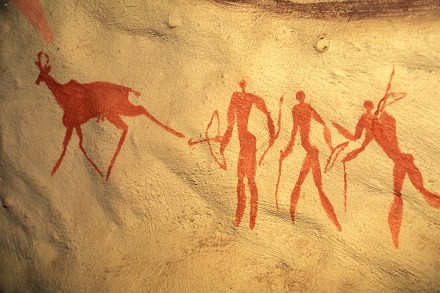
Was there ever a time of equality in human society?

Origin stories have always helped humans gain a moral compass. Locked in a tight embrace, the Maori deities Rangi and Papa are separated by their enveloped children, creating the distant father sky and nurturing Mother Earth, bringing light to the world. Mayan gods fashion man from maize after destroying earlier clay and wood versions, who are seen to have no soul. Adam and Eve eat from the Tree of Life but illicitly also from the Tree of Knowledge. One of the more touted modern human origin stories, ostensibly based on evolutionary science, speaks of a natural inequality between violent and promiscuous men and caring and faithful women. Having evolved to produce more of their sort, aggressive, lustful males hunted for game and exchanged meat for sex with coy female partners.

Why do people assume I am posh?

If we cram any more doctors into our spare rooms we can put a sign outside advertising NHS accommodation. We came by the first one when he answered my ad on a well-known website, booked for a few nights and ended up staying for years. He has a family home elsewhere, but needs somewhere to sleep when he is working late at the nearby hospital. I cannot find a small house with a few acres that I can afford anywhere in Britain He is an anaesthetist and no trouble at all. We see him only one or two nights a week, or sometimes less, depending on his shift pattern. He arrives at night, looking like he’s anaesthetised himself, microwaves a ready-meal, then creeps silently to bed. He leaves very early the next morning and we won’t see him again for days or weeks.

It’s taken me days to uncringe: All My Friends Hate Me reviewed

All My Friends Hate Me is a film about a university reunion weekend and should you have an upcoming university reunion weekend, I’d duck out if I were you. No good will come of it. This is social anxiety as horror (almost) and you won’t just cringe for the full 90 minutes, you will violently cringe. It may take you days to uncringe. It’s a clever film, and surprising, and compelling. Yet it is also an endurance test. You won’t regret seeing it, but you will be so glad when it’s over. https://www.youtube.com/watch?

Fleeing dysfunctional America

From our US edition

America is sorting itself out by class and kind, back to blood and political pedigree. The demographic trend favors the so-called red states and the metro nodes inside these dominions. Austin, Reno, and Nashville beckon. Meanwhile, academic towns like Eugene, Chapel Hill, and Burlington draw gentry blues trying to escape crazy and crime but who are not in tune with Tulsa or Fargo. For big-city emigrants, fatigue with misgovernment, ill-spent government largesse, and racial disorder are part of the picture. As much as they are seeking uncrowded real estate, runaways are searching for courts, authorities, teachers, and stable neighbors whom they can trust.

The foremost challenge facing Western democracies

From our US edition

A few philosophers since ancient Greece have been wise, scarcely any humble. None at all, to my knowledge, has had the hubris — or maybe courage — to tackle the foremost challenge in political philosophy facing Western democracies today: how to achieve a demotic political system with an elite culture resting on top of the popular one, and the subordinate problem of how to prevent bad culture from driving out good, or making it impossible. Not even Tocqueville addressed the problem, which shows what a wise man the aristocratic Frenchman truly was.

class

A gem that should be released online: Park Theatre’s Abigail’s Party reviewed

Mike Leigh’s classic, Abigail’s Party, has been revived under the direction of Vivienne Garnett. The script is a guilty secret for middle-class types who like to sneer at those beneath them but who can’t express their shameful feelings openly so they watch Mike Leigh instead. The only sympathetic character, Susan, is a well-bred gal who arrives at the party with a bottle of red wine which Beverly puts in the fridge. Red wine in the fridge! How hilarious. Offered a gin or a Bacardi and Coke, Susan asks for a sherry, which Beverly doesn’t stock. A drinks cabinet with nothing but gin and Bacardi! What a bunch of barbarians. Next they’ll be saying ‘lounge’ instead of ‘sitting-room’.

The joy of being cancelled

New York I’ve never met anyone called Othello, certainly not in Venice nor in Cyprus, but perhaps there are men by that name in Africa. Someone who was referred to as Othello, but always behind his back, was the greatest of all Russians, Alexander Pushkin: a ‘raging Othello’ was how les mauvaises langues in court described the great poet. Pushkin’s great-grandfather, General A.P. Gannibal, was Ethiopian. I’ll get back to Othello in a jiffy, but first a few words about marital jealousy and Pushkin. The poet got a bee in his bonnet soon after marrying the beautiful but coquettish Natalia because she flirted, harmlessly but nevertheless disastrously.