Class

Journalism’s class problem has gotten worse

From our US edition

It’s very unlikely that I’d be a reasonably successful journalist today if I hadn’t come from an upper-middle-class family. Fresh out of college, I got a series of non- or low-paying internships. It wasn’t until spring of the following year that I found a staff position with benefits (and a salary of $33,000, which at the time seemed like plenty to live on). Because my parents provided financial support and because I had no debt, I was able to gain the experience and connections that helped launch my career. Somewhere, surely, there is a 37-year-old who is very similar to me and who wanted to be a journalist, but who is now doing something else because it just wasn’t feasible, financially.

class

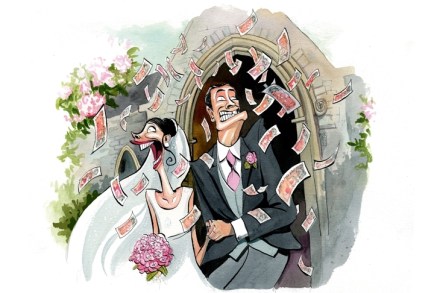
Forget race or class, marriage is the big social divide

The latest spark to ignite the culture wars is a report from the parliamentary education committee on the underachievement of working-class white boys. But this isn’t about race. The boys don’t underachieve because they are white. Their skin colour is merely a marker by which we can see that a certain cohort is doing worse than another. And despite received wisdom, it’s not just about poverty, school funding or investment. Children of other ethnicities who are equally poor, and even potentially at the same school, will likely do considerably better. It’s not even about class, which seems to be the latest factor on which the fickle finger of blame is falling.

The secret code of the ruling class

I naively hoped that last year’s statement by the Equalities Minister explaining why unconscious bias training was being phased out across the civil service might slow its spread. After all, the minister’s scepticism wasn’t based on political disagreement but on research commissioned from the Behavioural Insights Team that concluded: ‘There is currently no evidence that this training changes behaviour in the long term or improves… equality in terms of representation of women, ethnic minorities or other minority groups.’ Reading between the lines, the BIT evidently thinks that UBT is little more than snake oil — and there’s a vast amount of literature in the social sciences to back that up.

Is my phobia of upmarket restaurants misplaced?

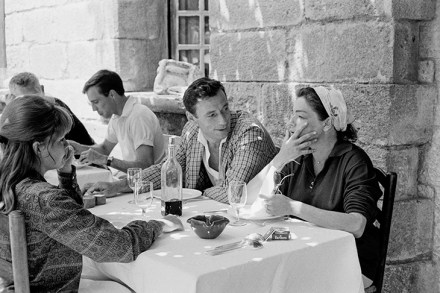
Scotching my bright idea of a stiff gin for Dutch courage in the bar across the road, Catriona bounded straight for the door of the Colombe d’Or. My restaurant phobia was fast upon me and I followed her into the bourgeois holy of holies more slowly than a nudist climbing through a barbed wire fence. We were half an hour early and directed to the bar. Here my plea for strong spirits was again denied and I had to make do with champagne. Speechless with ecstasy — this was her birthday treat — Catriona toddled off with her flute to cast her eye over the Miros, Matisses and Chagalls in the dining room. I sat alone on the windowsill in the bar where Picasso and Yves Montand and James Baldwin had once parked their famous arses and I mourned.

How the French view their weekly clap for carers

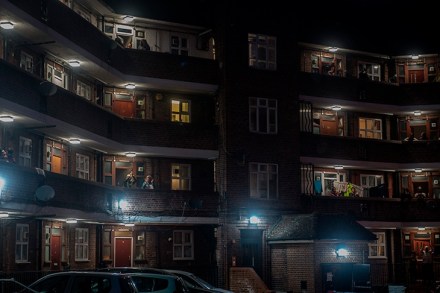
Once a week we break French emergency law and have a friend round for drinks on the terrace. The terrace overlooks the village rooftops as if it were a box at the theatre. Two weeks ago we were pleasantly lit up, when, at one minute to eight, the villagers below came out on to their terraces or stood at their windows and front doors to make a noise in support of the ‘essential’ workers: nurses, doctors, carers, postmen, shopkeepers, council workers, and so on. Some banged saucepans together or beat them with wooden spoons. Some blew horns of one kind or another, including what sounded to me like one of those long prayer horns blown by Tibetan monks from monastery rooftops.