Christianity

Religion has been resurrected in British politics

British history is littered with elections and Elections. The first type, common or garden elections, are fought with prosaic issues at their core. Readers might remember the 2001 general election, which saw such pressing topics as the fate of Kidderminster hospital pushed to the fore. The 1865 general election was also considered uneventful by contemporaries. Even contests nominally involving major changes can be just ‘elections’. The tedium of 2024, featuring cynical electoral bribery, with the result a foregone conclusion and the stated policy platforms of the two main parties largely similar, is a prime example. What, then, are the other type: the Elections?

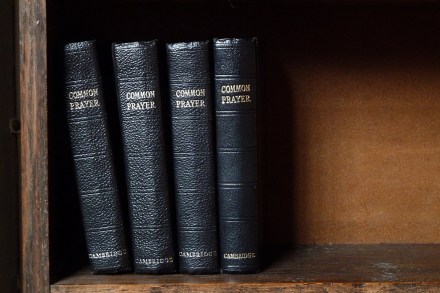
Gen Z are turning to the Book of Common Prayer

‘No one pretends that modern services will fill the churches. But adult converts ought to be able to step naturally into being worshippers. How absurd that a convert should be warned to undergo cultural orientation before he comes to church.’ These words of the arch-reformer Colin Buchanan in 1979 sum up the views of that post-1960s generation, who believed that all the prayer and thought which Anglicans had inherited was alien to the new generation. It was thought so alien, in fact, that a full cultural orientation would be needed to persuade people to come to church. Modernity was the answer to most questions, and most especially: ‘How do we get the young to come to church?’ Fifty years later, I am not sure anyone would call this experiment a success.

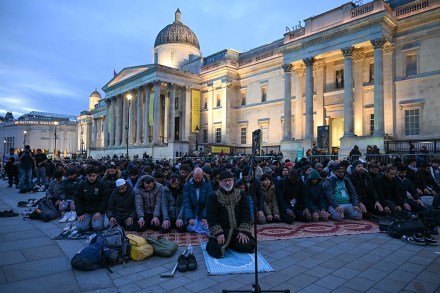
I stand by my comments about Islamic public prayer

Following my appointment as shadow justice secretary, I was moved to a bigger office in parliament. Where once I enjoyed a tiny room directly above the chamber (perfect for rushing to votes), now I have a plush room much further away. It is directly above the irksome Steve Bray, who continues his noisy campaign against Brexit. Of course his anti-social behaviour should mean he is moved on by the police, but these days officers balance the public interest against Bray’s ‘rights’. I recently relied on some Anglo-Saxon vernacular to tell Bray what I thought of his protest, and realised afterwards in today’s upside-down world the police would probably finger my collar – not his. Opponents of Labour’s ‘Islamophobia’ definition warned it would stop us debating religious ideas.

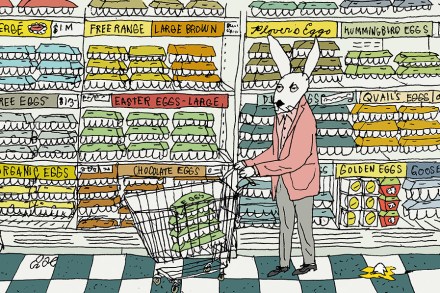
How different is Catholic and Protestant food at Easter?

From our US edition

I’m a New York-raised Italian Catholic, and my family’s inherited religious-cultural neuroses inform our meals every bit as much as the WASPs next door. This is particularly true at Easter, where centuries of European immigration have shaped the culinary traditions in New York. The Easter feast became a religiously sanctioned opportunity to indulge For my family, the Easter feast typically includes a herb-crusted leg of lamb (American only; New Zealand lamb is far too gamey), deviled eggs, rich scalloped potatoes, honey-glazed carrots, some fresh spring vegetables and an absurdly decadent chocolate dessert – all washed down with a robust Etna Rosso, generously poured.

Who is Sarah Mullally?

45 min listen

One week from the enthronement of Sarah Mullally as the new Archbishop of Canterbury, her biographer Andrew Atherstone – Professor of Modern Anglicanism at Oxford University – joins Damian Thompson for this episode of Holy Smoke. This marks the second profession she has risen to, having first been the most senior nurse in England & Wales. Archbishop Mullally has led an 'ordinary, suburban' life and is by all accounts well-liked by her congregations but what do we know of her views on some of the most controversial topics in her in-tray: abortion, gay blessings and safeguarding – to name but a few. Is it fair to say she is the 'Welby-continuity' candidate? Produced by Patrick Gibbons.

Who is Sarah Mullally?

How Russia is waging Holy War in Ukraine

32 min listen

On the fourth anniversary of Russia's full-scale invasion of Ukraine, Dr Yuri Stoyanov – of SOAS university in London – joins Damian Thompson to reflect on the religious dimensions of the war once again. The theological gulf between Russia and Ukraine is perhaps comparable to the political one and, for now, seems insurmountable, with the war increasingly being framed in some spheres as a 'Holy War'. You have to stretch back to the First World War to find a war within Christendom framed in these terms, but what effect is this having on the family of Orthodox churches across Europe and the Middle East? And how can we better understand this strand of Russian 'jihadism'? Plus, what has the impact of the Papal succession been?

Is there any truth in the Christian revival?

25 min listen

There has been a lot of speculation about a 'quiet revival' of Christianity happening amongst the younger generations – including on this podcast. Much of this traces back to a survey conducted by the Bible Society last year. Respected demographer Conrad Hackett of the Pew Research Center joins Damian Thompson to explain the truth behind the statistics, and why we have to be wary of the methodology used by different polls.

Is there any truth in the Christian revival?

Why Gen Z is troubled by Jesus

Many teenagers today find Christianity off-putting because Jesus seems too fond of "mansplaining." He appears to have a "God complex," while the Almighty is alienating on account of being "really violent and aggressive." These are the findings in the report Troubling Jesus, the third part of Youthscape’s "Translating God" project, based on a recent survey of British 14- to 17-year-olds. Drawing on five reading groups, in which teenagers reacted to passages of scripture traditionally understood as conveying "good news," Youthscape faced reactions "radically different" from what it says might have been expected. While Jesus was not only seen as a condescending male chauvinist and God the Father as a bully, many youths discerned other issues in the readings.

christianity gen z jesus

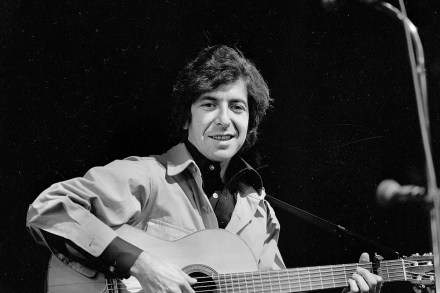
Why Leonard Cohen felt empowered to pronounce benedictions

If it is true that a serious artist is one with the capacity to go on reinventing who they are in their work, Leonard Cohen unquestionably counts as serious. Not that anyone is likely to think of him as frivolous, exactly. While the famously acid description of his songs as ‘music to slit your wrists to’ is hardly fair, the whole persona, the register of his writing and performing, resists any mood of simple celebration.

Christian nihilism is taking over American life

From our US edition

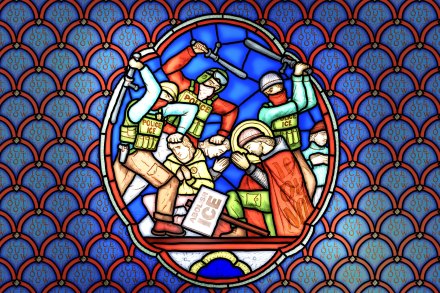
There’s something very religious about nihilism. For proof, look to the new capital of American nihilism, Minneapolis. A callousness toward death and danger has fallen over the city. Of the many disturbing videos to come out of Minnesota’s anti-ICE protests, one of the stranger examples shows a white man walking up to a line of heavily armed law-enforcement officers, shouting: “Shoot us in the fucking face! Shoot me in the fucking head!” What possesses someone to do that? I understand being against Donald Trump and Stephen Miller’s blitzkrieg deportation policy. And it’s not irrational, in the viral age, to protest theatrically. But this is psychotic. It is the death drive in overdrive.

christian nihilism

Americans will believe in anything

From our US edition

The US has not known social and domestic peace since the start of the present decade, and it is unlikely that it will know it again for the foreseeable future. This is because it has ceased to be a country at all, assuming that nationhood implies fundamental unity, which America no longer has. When novelist John Dos Passos wrote in the late 1930s, “All right, we are two countries,” the boundary he had in mind was economic, separating the rich from the poor. Today the obvious divide is political, between left and right. But what seems obvious is not always true, as in this case.

Electrifying: Annie & the Caldwells, at Ronnie Scott’s, reviewed

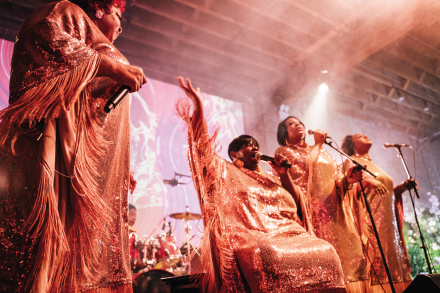
Annie & the Caldwells are a long-running family gospel ensemble from West Point, Mississippi – father and sons playing guitar, bass and drums, mother and daughters singing. The chaps offer a sinewy, stripped-down funk redolent of the late 1970s: dad, Willie J. Caldwell Sr, is a fantastic guitarist, and mother and daughters tear the roof off the place. They came to attention when David Byrne put out a record on his Luaka Bop label, and suddenly they were no longer just a local gospel group. Except they are. In an early show at Ronnie Scott’s, Annie – seated centre-stage in what looked like a black leather housecoat – was there to save souls. She refused to be discouraged by only three hands rising when she asked who believed in Jesus.

Why did Pope Leo choose a ‘safe pair of hands’ for Westminster?

32 min listen

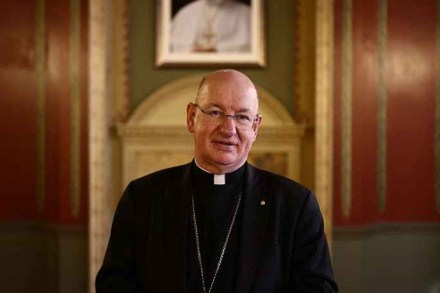
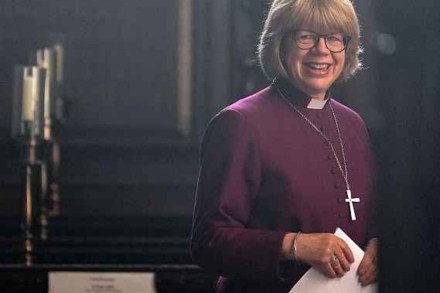
The next Catholic Archbishop of Westminster, Richard Moth, will be installed in his cathedral on February 14. Bishop Moth, formerly of Arundel and Brighton, is seen as a ‘safe pair of hands’. But why didn’t the job go to a more charismatic figure, such as Archbishop John Wilson of Southwark? What does this low-key appointment tell us about Pope Leo’s vision for the Church? Fr Alexander Lucie-Smith, a moral theologian and priest of Arundel and Brighton – and friend of Holy Smoke, joins Damian Thompson for a frank and wide-ranging discussion about the problems facing the Catholic Church in England and Wales. Produced by Patrick Gibbons.
What can we expect from the new Archbishop of Westminster?

The historic value of English churches – with Daniel Wilson

22 min listen

When was the last time you visited your local parish church? Historian and social media influencer Daniel Wilson joins Damian Thompson to encourage more people to visit their local churches – not just as a centre of worship but as a historical treasure trove. Daniel takes us through some of his favourite examples of medieval architecture, as he emphasises the importance of being a 'tourist in your own neighbourhood'. For more from Daniel, you can find him on Instagram and TikTok: @greatbritisharchitecture Produced by Patrick Gibbons.
What is it about Bob Dylan that sends writers mad?

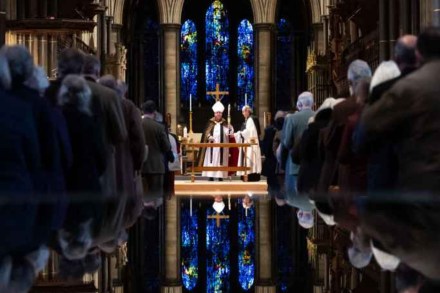
Ron Rosenbaum is a man of galactic learning. Theology, neuroscience, American history, psychology, Shakespeare, cosmology, ‘all of Dickens’, nuclear weapons, quantum theory, iron ore – nothing escapes his hungry eye. Except, perhaps, Bob Dylan. Which is unfortunate, given that he’s written a book about him. What is it about Dylan that sends writers mad? Christopher Ricks’s usual mellifluousness succumbs to a pun-overdose; Clinton Heylin’s blindingly completist biographies are as impenetrable as their subject; Sean Wilentz lurches from the unlikely to the banal. With Things Have Changed, Ron Rosenbaum, the de facto ‘Dylan correspondent’ for the Village Voice in the early 1970s, proves that even ‘being there’ confers no immunity.

Jack Rankin: No to Reform

No to Reform Sir: Perhaps because I have been candid about the Conservative party’s failures in office, I am mooted as being of interest to Reform by your political editor (‘14 questions for 2026’, 3 January). But acknowledging failures is not a prelude to defection; it is the necessary starting point of renewal. When Reform speaks of a ‘uniparty’, it implies that swapping politicians is enough. It is not. The crisis of the British state runs far deeper. Governments are in office, not power, because of the pernicious shift we have seen over the past 30 years from a political constitutionalism to a legal one.

At 53, I’m training to be a priest

I have recently begun training for holy orders in the Church of England. I know, they’re getting desperate. My motivation for wanting to be a priest is selfish. I want more joy in my life. You might feel that joy is to be found in extreme sports, or pop concerts, or snorting coke from the midriffs of hookers. But I think you mean pleasure. Joy is deeper, linked to a sense of the goodness of existence. It seems to me that joy is to be found in doing cultural things. I don’t mean going to plays or art galleries; I mean cultural things that are very participatory and democratic. Things like this: getting to know people who are different from me, through putting on a little play, making stuff for a festival and seeing some local children enjoying it, singing a rousing song.

Iranians are risking everything to convert to Christianity

Apostasy – specifically, conversion to Christianity from Islam – is punishable by death in Iran. Suspected Christians are routinely imprisoned and tortured. Despite this, evangelical Christianity is sweeping through Iran. A 2020 survey of 50,000 Iranians conducted by a Dutch NGO, the Group for Analysing and Measuring Attitudes in Iran, suggests that there could be more than 1.2 million Christian converts. In a country with a population of 90 million, that’s a sizeable portion – and it’s growing fast. ‘It’s probably more like two million today,’ says Father Jonathan Samadi, founder of the Persian Anglican Community of London. ‘The numbers increase every year.’ Father Jonathan converted as a young man, having found a Farsi copy of the New Testament in a Tehran library.

How transformative has 2025 been for Christianity?

21 min listen

Anglican author The Rev'd Fergus Butler-Gallie, Catholic priest Fr Alexander Lucie-Smith and Evangelical commentator Fleur Meston join Damian Thompson to reflect on 2025. They discuss Pope Leo XIV's leadership so far, the choice of Dame Sarah Mullally as Archbishop of Canterbury and why Christianity has been coopted by the far right. Plus, was the 'quiet revival' of Church-going the start of a trend – or just a blip? Produced by Patrick Gibbons.
This Christmas, listen to Mary Did You Know?

From our US edition

A popular and poignant Christmas song, written late in the previous century for a church’s holiday program, incites passionate criticism from those who disagree with the way it phrases its message. Since first being recorded in 1991, “Mary, Did You Know?” has been performed by soloists and groups ranging from Carrie Underwood and Dolly Parton to Pentatonix, CeeLo Greene and Kathleen Battle. The lyrics are a series of questions to Mary, Jesus’s mother, asking whether she knew during his infancy about the profound impact he would make as an adult. Yet that powerful literary device annoys those who believe the song demeans its subject.