China

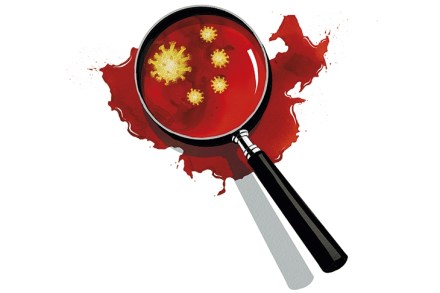
The Covid lab leak theory is looking increasingly plausible

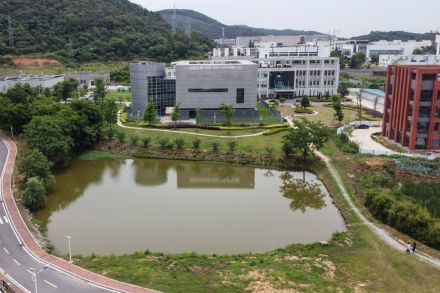
In March last year, it was widely agreed by everybody sensible, me included, that talk of the pandemic originating in a laboratory was pseudoscientific nonsense almost on a par with UFOs and the Loch Ness monster. My own reasoning was that Mother Nature is a better genetic engineer than we will ever be, so something as accomplished at infection and spread could not possibly have been put together in a lab. Today, the mood has changed. Even Dr Anthony Fauci, the US President’s chief medical advisor, now says he is ‘not convinced’ the virus emerged naturally.
The many failures of China’s vaccine programme

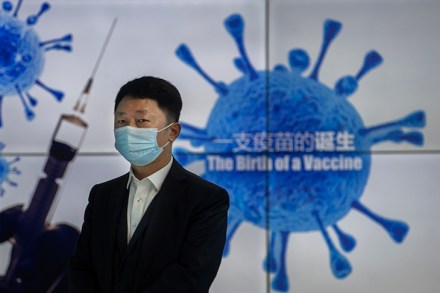
At the start of the year Sebastián Piñera, president of Chile, went to Santiago airport personally to greet a consignment of vaccines from China. ‘Today is a day of joy, excitement and hope,’ he said from a podium on the tarmac. ‘As you see behind me, there is the plane that brought a shipment of almost two million doses of Sinovac vaccines.’ By April, Chile had suffered one of the worst Covid surges in Latin America. The joy and hope, it seemed, had been misplaced. A few weeks ago, Chile’s government announced that, after a real-world study involving 10.5 million Chileans, Sinovac turned out to be only 16 per cent effective at reducing the risk of infection after one shot and 67 per cent effective two weeks after the second dose.

Beijing’s plan to pick the next Dalai Lama

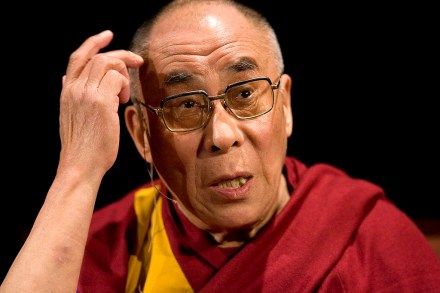
Imagine for a moment that Cuba picked the next Pope. That is the scenario which Lobsang Sangay, the then-Sikyong (the Tibetan government-in-exile’s head of state), asked the world to consider several years ago in light of growing concerns that the Chinese Communist party (CCP) would seek to select the next Dalai Lama. Now such a possibility – that Beijing will attempt to impose their own man at the top of Tibetan Buddhism – seems increasingly plausible. Last week, China’s State Council issued a white paper on Tibet to mark 70 years since the signing of the Seventeen Point Agreement, which incorporated Tibet into the People’s Republic of China.

Letters: The beauty of brick

The Union in peril Sir: Fraser Nelson (‘The great pretender’, 15 May) writes that it has never been easier to make a bold positive case for the Union. He suggests the UK government starts to fight. Perhaps the starting point could be the benefits which flowed from 1707 — joint citizenship, a currency union, a customs union and wealth transfer — both individual and national (the Barnett dividend speaks for itself). Without the Union these would not have happened. Without the Union there is no guarantee any of these will continue. It is not Project Fear to point that out.

The Australian trade deal is about more than just trade

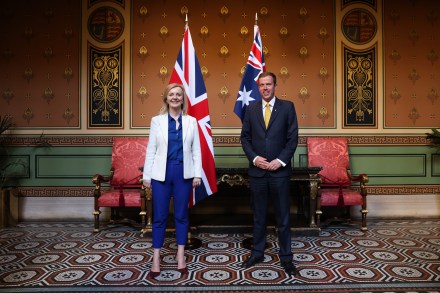
What happens with an Australia trade deal won’t just reveal how serious this country is about free trade but also how committed it is to helping democratic countries stand up to China. China is Australia’s largest trading partner but since Australia called for an independent inquiry into the origins of coronavirus, Australian-Chinese relations have severely deteriorated. Beijing is now trying to use this economic relationship to get Canberra to fall into line.  China has imposed huge tariffs on Australian barley and on wine for the next five years, while technical reasons have been found to bar most Australian timber and beef from the country.

Scientists: WHO wrong to dismiss theory that COVID came from lab

From our US edition

If the World Health Organization was hoping that its report earlier this year into the origins of COVID-19 would be the last word on the matter, it is going to be sorely disappointed. A group of 18 immunologists, biologists and other scientists have written to Science, the journal of the American Association for the Advancement of Science, to make it clear that they reject WHO’s conclusion that it is ‘extremely unlikely’ that SARS-CoV-2, the virus which causes COVID-19, entered the human population through a laboratory accident. The report, published on February 28, pretty well rejected the theory that SARS-CoV-2 could have originated as a virus held, even invented, at the Wuhan Institute of Virology, from which it escaped.

wuhan institute of virology lab theory

Letters: China has peaked

China has peaked Sir: Niall Ferguson makes some good points about the nature of Xi Jinping’s imperial aspirations but misses two important parts of the picture (‘The China model’, 8 May). First, the Chinese Academy of Science predicts that China’s population will peak at 1.4 billion in 2029, drop to 1.36 billion by 2050, and shrink to as few as 1.17 billion people by 2065. They even forecast that China’s population might be reduced by about 50 per cent by the turn of the next century. And second, China’s economic rise is stalling.

The China model: why is the West imitating Beijing?

‘There’s an osmosis in war, call it what you will, but the victors always tend to assume the… the, eh, trappings of the loser,’ says one of the officers in Norman Mailer’s The Naked and the Dead. ‘We might easily go fascist after we win.’ Americans have long been haunted by the notion of the osmosis of war. Throughout the First Cold War, a recurrent theme of liberal and conservative commentary was that there was a kind of convergence taking place, causing the United States to resemble — at least in some respects — its Soviet antagonist. That all nuclear superpowers would end up as slave states had been George Orwell’s grim prophecy in the article that coined the term ‘Cold War’, as well as in Nineteen Eighty-Four.

How China is stoking racial tensions in the West

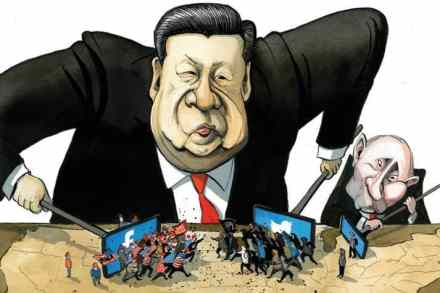
Footage of a brutal late March attack on a 65-year-old Asian American woman in Manhattan drew widespread outrage on social media. It also made for a productive afternoon for Zhao Lijian. From his Beijing office, the Chinese government spokesman retweeted 20 posts and shared the video 12 times on his official Twitter account. ‘We can’t help but wonder, who will be the next victim? When will it all end?’ he asked his almost 900,000 followers. Zhao isn’t the only one who’s been busy. In the wake of the Atlanta spa shootings on March 16, Chinese state media used Facebook, Twitter and YouTube to stoke a narrative of American racism and hatred.

Vince Cable: on Brexit and the case for working with Beijing

Sir Vince Cable is talking about Brexit and damaged bicycle wheels. ‘The metaphor I like to use when talking about the economic consequences of Brexit is a slow puncture,’ the 77-year-old explains from his home in Twickenham, South West London. ‘Because effectively we're losing access to Britain's largest market of goods and services.’ ‘I was initially encouraged that Brexit campaigners wanted to pursue an open and global Britain,’ he says. ‘And I think that's absolutely right because that is very much part of the old free trade tradition… But we are now in a world which is probably going in the opposite direction. And I fear that Britain now stands to be isolated.’ Cable is well-placed to know about the difficulties of Brexit.

Joe Biden’s skewed climate change priorities

It's not hard to see why politicians like Joe Biden and Boris Johnson want to talk about climate change.  First of all, it looks good to the electorate. Caring about the planet (or at least being seen to care about the planet) is one of the things that marks you out as 'a good person'. It also allows leaders to compare themselves to other leaders and take pride in being more hardline than others. It tends to result in massive government-sponsored infrastructure programmes, requiring the Prime Minister and various cabinet ministers to keep their hi-vis jackets and hard hats within easy reach. Most importantly of all, the results won’t be seen until well after their term of office has finished.

Beijing is quietly challenging Brussels

The new agreement between China and the US on climate change, announced this week, contained the usual worthy overtures. Both nations reasserted their commitment to fighting the ‘climate crisis’ by ‘co-operating with each other and with other countries.’ But can the West really take the Chinese Communist party at its word? Judging by Beijing's activity in the Western Balkans, the answer is a resounding no. In Bosnia and Herzegovina, Chinese state-owned energy companies have built four coal power plants since 2010, with a further four planned – made possible by the Chinese Development Bank.

A word about Prince Philip and religion

The recent Sewell report on Race and Ethnic Disparities has been much abused and little read. It is full of interesting suggestions, however. One, emphasising the shared history of modern Britain, is to compile ‘a dictionary or lexicon of well-known British words which are Indian in origin’. Actually, such a work already exists. It is called Hobson-Jobson, ‘a glossary of colloquial Anglo-Indian words and phrases, and of kindred terms, etymological, historical, geographical and discursive’. Edited by Colonel Henry Yule, Royal Engineers, and Dr A.C. Burnell, of the Madras Civil Service, it was completed in 1886. It is a large, fascinating book, half an hour in whose company is never wasted.

Who can take on China in the tech arms race?

The government’s decision to water down new foreign investment rules designed to protect national security casts serious doubt about its resolve to keep China out of the most sensitive parts of the British economy. Raising the threshold above which an overseas stake must be examined from 15 per cent to 25 per cent will sharply reduce the number of deals facing scrutiny. The amendment to the National Security and Investment Bill, now wending its way through parliament, was presented by business secretary Kwasi Kwarteng as necessary to show Britain is still ‘open for business’.

Why I fled Hong Kong

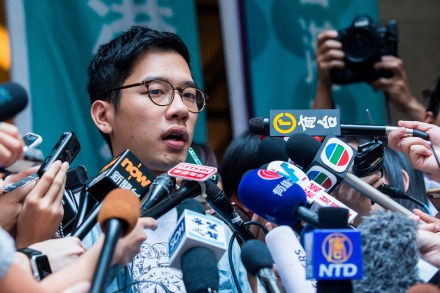
On 26 June 2020, I boarded a plane from Hong Kong international airport bound for the United Kingdom. Last week, after a wait of four months, I was finally granted asylum in Britain. My journey from elected legislator in Hong Kong to political refugee reflects the erosion of freedom in the city I love. The Chinese government has made considerable efforts to portray me as a violent agitator, a secessionist who wanted to separate Hong Kong and China. This is because I support democracy in Hong Kong and believe in accountability for Beijing's despotic regime.  The Chinese government’s approach is to smear you then use that smear to justify all political persecution, including extra-legal assaults and imprisonment. I have experienced both, unfortunately.

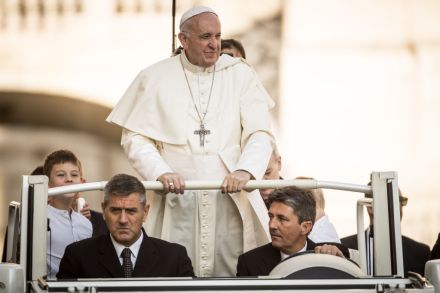
Is the Pope a Chinese asset?

From our US edition

Twenty years ago, the Catholics of a city in Alaska gathered enough money to build a church dedicated to the Sacred Heart. They presented the architectural drawings to the city council, whose non-Catholic members winced a bit. Were Gothic arches really meant to be painted the color of pale strawberries? Why were the bell towers capped with domes in cotton-candy stripes? But, what the hell, Catholics have their own funny ideas about what churches should look like. OK, they said, we’re fine with this so long as you don’t shove it in our faces. Here’s a bit of land on the outskirts of town where you can build the thing and we won’t have to look at it every time we walk down Main Street.

pope francis

What China wants from Britain

What are we to do about China? To turn a phrase beloved by the Chinese Communist party (CCP) on its head, Beijing is increasingly ‘interfering in our internal affairs’. Yet if you hoped to answer that question by reading the recent integrated review of defence and foreign policy, the most you would find is that China is a ‘systemic competitor’. But recognition is not a strategy; at best, the review indulged in ambiguity, or perhaps obfuscation. The Prime Minister wants good relations with China. Who doesn’t? Certainly, a new Cold War would be disastrous, for us and for the CCP.

Why fear a society that’s tearing itself apart?

In my teens, rubbishing the implacable edifice of the United States felt like kicking a tank in trainers. Richard Nixon’s ‘silent majority’ was patriotic. Railing about my country’s disgraceful historical underbelly — slavery, the Native American genocide — seemed edgy. Fast-forward, and in the West trashing your own country has become a central preoccupation of the ruling class. University administrators, corporate board members and media pundits compete with one another over who can denounce their disgusting society with more fervour. Shame, or what passes for it, is the new ostentation. America’s own President decries his country’s ‘systemic racism’.

Why is New Zealand afraid of criticising China?

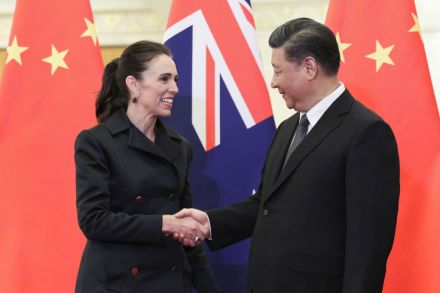
It is becoming harder and harder to ignore China’s aggressive behaviour. As I say in the magazine this week, China wants to pick off its opponents. Only a unified western response can stop this, but all too often that has been lacking. New Zealand was strikingly absent from the statement issued by 14 countries When Beijing turned on Australia for suggesting that there should be an independent inquiry into the origins of the coronavirus, there was a shocking lack of solidarity from New Zealand. Wellington’s trade minister, while negotiating an upgrade to its trade deal with China, suggested Australia should ‘show respect’ to China. New Zealand now exports almost half its meat and wool to China.

China’s toothless wolf warrior diplomacy

Xi Jinping's overseas diplomats have attracted much controversy in recent years for their aggressive use of 'Wolf Warrior' tactics to denounce criticism of China on online platforms. But while past trolling incidents have sparked anger or dismay, the rest of Twitter was left baffled by the Chinese Embassy in Ireland's most recent foray into statecraft-by-social media. Following the news on Wednesday that RTE journalist Yvonne Murray has been forced to leave China, the official account of PRC tried to make the light of the situation, asking its 2,900 followers 'Who is the wolf?' before riffing on Aesop's fable 'The wolf and the lamb' and claiming 'the wolf is the wolf, not the lamb. BTW [by the way] China is not a lamb.