Gray Sergeant

Gray Sergeant is an Associate Fellow in Chinese Geopolitics at the Council on Geostrategy, Chair of Hong Kong Watch, and a long-suffering Labour party campaigner based in South Essex

Europe must resist China’s advances

From our UK edition

Since Trump's inauguration in January, not a day has gone by when supporters of a liberal international order have not sunk their heads deep into their hands. The global trade war that has erupted between the US and the rest of the world is just the latest episode in the American President's mission to overturn the old order (despite the unexpected 90-day pause announced on Wednesday for everyone but China). If this was not disturbing enough, liberal internationalists also need to contend with what will replace it. What rules and norms will prevail, or rather whose? Disconcertingly, some Europeans appear to be buying the charm offensive The People’s Republic of China is a prime contender.

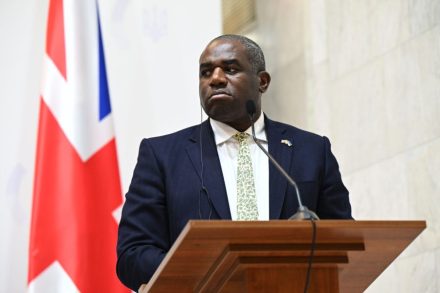
Why is Labour so scared to talk about Taiwan?

From our UK edition

Since Keir Starmer took office, Britain's approach to Taiwan seems to have changed little from that of the previous Tory government – but is that really the case? Beneath the surface, there are worrying signs that Starmer's government wants to dodge discussing the potential flashpoint of Taiwan's sovereignty, lest it disrupt their attempt to reset relations with the People’s Republic of China (PRC) The previous government, in the 2023 Integrated Review Refresh, committed the United Kingdom to supporting stability across the strait. Rishi Sunak, when asked about arms sales to the island, was unequivocal: ‘We stand ready to support Taiwan’.

How Edinburgh kowtowed to Beijing

From our UK edition

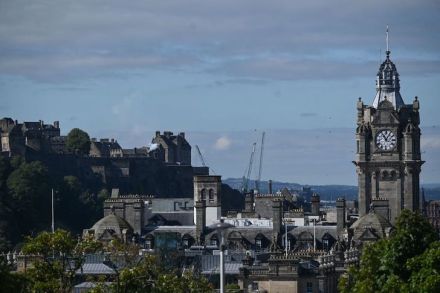
Zhang Biao, Beijing’s man in Scotland, warned earlier this month that a proposed friendship agreement between Edinburgh City Council and Taiwan’s southern city of Kaohsiung would ‘hurt the feeling[s] of the Chinese people’. The people of China, from Shenzhen to Harbin – all 1.4 billion of them – can sleep easy tonight: the proposal has been pulled from the council's agenda. Whether it will reappear is unclear. The city’s leader, Cammy Day, has announced that ‘more discussion is required before taking this agreement forward’. Discussions which could presumably, if necessary, go on indefinitely.

China’s threats to Kinmen should be taken seriously

From our UK edition

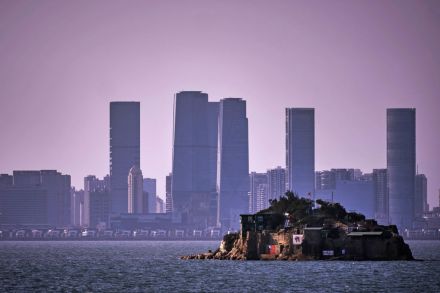
When two Chinese fisherman died last month trying to flee Taiwan’s coastguard, Beijing laid the blame at Taipei’s feet and demanded an apology. The Chinese Communist Party (CCP) also spied an opportunity to advance its territorial claims. China has been targeting Kinmen, an island controlled by Taiwan, more aggressively over the past few weeks. The CCP stated that ‘there is no such thing as “prohibited or restricted waters”’ – saying that the waters around the island had been used as traditional fishing grounds by both sides. On the morning of 19 February, four Chinese coast guard vessels patrolled around Kinmen’s restricted waters.

How China is weaponising trade against Taiwan

From our UK edition

Why should we care that Beijing has suspended tariff relief for 12 Taiwanese petrochemical products? The move certainly lacks the fear factor which Chinese military manoeuvres around Taiwan generate – exercises which have become more routine and grander in scale during 2023. Yet China’s economic warfare against Taiwan is just as pernicious. It is also premeditated, with moves on this front aligning with key moments in Taiwan’s political calendar and developments in the country’s relationship with the United States. By targeting specific products with restrictions and sanctions, Beijing seeks to punish both the Taiwanese people and their government.

Why is India covering up clashes with China in the Himalayas?

From our UK edition

For more than 20 years the West ignored China’s militarisation of the South China Sea. Until, that is, it was too late. Now, after being artificially expanded and built out with sand, the islands of this crucial maritime space are dotted with Chinese missile systems and runways. The region's smaller nations, who also lay claim to sections of this sea, can only protest in vain.  Will the Free World learn from the mistakes of history? Beijing is now trying to redraw the map across the Himalayas, most recently in Arunachal Pradesh, a territory in North-eastern India that China claims as ‘South Tibet’.  Last week, Chinese and Indian troops clashed in the Tawang area of the region.

Beijing’s plan to pick the next Dalai Lama

From our UK edition

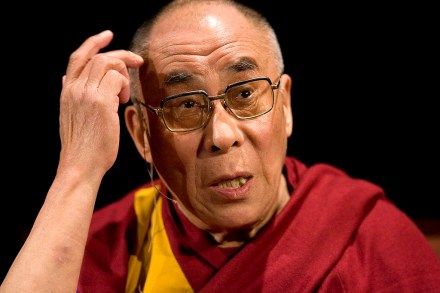
Imagine for a moment that Cuba picked the next Pope. That is the scenario which Lobsang Sangay, the then-Sikyong (the Tibetan government-in-exile’s head of state), asked the world to consider several years ago in light of growing concerns that the Chinese Communist party (CCP) would seek to select the next Dalai Lama. Now such a possibility – that Beijing will attempt to impose their own man at the top of Tibetan Buddhism – seems increasingly plausible. Last week, China’s State Council issued a white paper on Tibet to mark 70 years since the signing of the Seventeen Point Agreement, which incorporated Tibet into the People’s Republic of China.

In defence of Keir Starmer

From our UK edition

Now that we've finally heard Boris Johnson's 'roadmap' out of lockdown, a key question remains: when will we see a return to politics as normal? It might not be the most pressing concern for most people, but for Keir Starmer and his supporters, it matters. Only when this happens can Labour start making some serious assaults on the Tories stubborn poll-lead. As a Labour member of ten or so years I want Starmer to have a chance to shine. After all, it is not like my party has been blessed with great leaders in recent years. Much of my time on the doorstep during the 2010 and 2015 general elections involved shying away from talk about leadership.

Is China’s hidden hand behind the Myanmar coup?

From our UK edition

Was China involved in the coup in Myanmar? It seems unlikely, but that does not mean Beijing is blameless. As satisfying as it might be to point the finger at an omnipotent and scheming superpower, the reality is rather more complicated. After all, for all the shenanigans associated with China's wolf-warrior diplomacy, Beijing is not as reckless or revisionist in its ambitions as it was back in the mid-to-late-60s.  Back then, amidst the chaos of the cultural revolution, Mao set about spreading his revolutionary thought abroad. Myanmar was firmly in his sights. In Southeast Asia, Beijing supplied communist guerrillas with money, weapons and training in an effort to instigate civil wars. In Myanmar, the ethnic-Chinese minority was also mobilised.