China

No, monkeypox didn’t leak from Wuhan

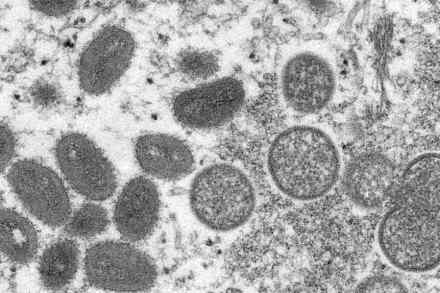
It’s a familiar story. Close contacts of individuals infected by a dangerous illness are being asked by UK officials to isolate as government concern about the outbreak grows. Just 57 cases have been reported in Britain so far – 168 globally – but already questions are being asked about the virus’s origins. One theory involves the Wuhan Institute of Virology. The lab, which is considered by a growing number of scientists to be the origin of the original Covid pandemic, specialises in so-called ‘gain of function experiments’. These experiments aim to genetically enhance viruses (like Covid) so they are more likely to jump species to humans.
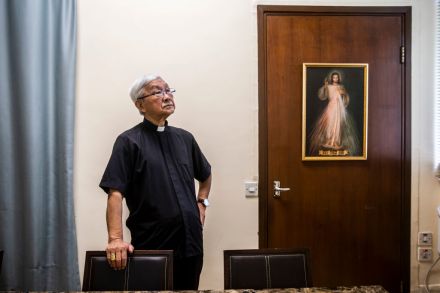
China’s grave insult to the Catholic Church

From our US edition

The outrageous arrest of Cardinal Joseph Zen last week — together with the Vatican’s weak response — presages dark days for Catholics under Beijing’s authority. Nicknamed “the conscience of Hong Kong,” Cardinal Joseph Zen is known and respected throughout the world for his fearless defense of Chinese Catholics and his opposition to communism. As bishop of Hong Kong, he encouraged and celebrated annual masses on June 4 for the victims of the Tiananmen Square massacre (participation in a Tiananmen Square memorial was one of the “offenses” that put Hong Kong media tycoon Jimmy Lai in jail last year). This year, the diocese of Hong Kong has canceled the June 4 Tiananmen Square memorial masses, for the first time in over two decades.

Pope Francis has betrayed Cardinal Zen

When Cardinal Joseph Zen, the 90-year-old former Bishop of Hong Kong, was arrested by Chinese authorities on Wednesday and charged with ‘collusion with foreign forces’, the White House called for his immediate release. Lord Patten of Barnes, the last British governor of Hong Kong, said the arrest was ‘yet another outrageous example of how the Chinese Communist Party is hell-bent on turning Hong Kong into a police state.’ Human rights activists lined up to defend the cardinal, who although released on bail faces the prospect of spending his last years in a Chinese jail cell. You might expect the loudest protest of all to come from the Vatican. Not so. In fact, it didn't protest at all.

New Aussie rules: Conservative values have fallen out of fashion

The election campaign is under way in Australia, barbs are being exchanged, candidates denigrated and abused, and promises – many of which are just fantastic in the literal sense of the word – are being made. The Prime Minister, Scott Morrison, who is the leader of the Liberal party, is being challenged by the Labor leader, Anthony Albanese. Although Morrison has the edge over Albanese as preferred prime minister, neither is much loved. The leaders are unlikely to be a decisive issue in the election. What is the deeper mood of the country? That needs to be put into its historical context. Ever since the mid-1970s, Australians have expected political parties to be economically responsible.

Hong Kong is now a police state

From our US edition

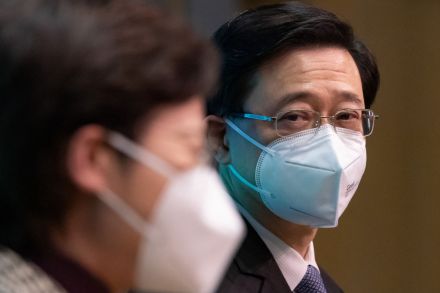
No one now denies that Hong Kong is a fiefdom of Beijing. Its democratic leaders have been packed off to prison on spurious grounds or have left the territory, and its street protests have long been beaten to pieces with batons. The 2020 national security law has made mockery of Hong Kong's last shreds of freedom of expression, rendering all criticism of the Chinese Communist Party akin to terrorism; and its uncensored homegrown newspapers are now closed by the state — their proprietors inexorably marched off to jail. Any pretense of adherence to the treaties signed by Britain and China around the time of the handover in 1997 — treaties that guaranteed Hong Kong autonomy — has long fallen away. Hong Kong is a subject province of the People's Republic now, and nothing more.

China’s zero-Covid horror show is inspiring Taiwan to open up

Taipei Nowhere is watching the zero-Covid horror show unfolding in China more closely than Taiwan, where it is encouraging the island to ease restrictions, even as cases of the infectious Omicron variant spike. Taiwan’s premier Su Tseng-chang has said the extreme measures being imposed on the other side of the Taiwan Strait are ‘cruel’ and his country would not follow suit. From next week, mandatory quarantine for arrivals in Taiwan will be cut to seven days from the current ten, as the island moves gradually towards a policy of trying to live with the virus.

Will the bad luck of the Philippines ever turn?

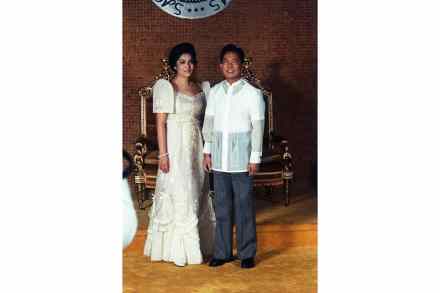
The Philippines is the odd man out in Asia, a predominantly Catholic country colonised first by Spain, then the United States. An archipelago with more than 2,000 inhabited islands on the cusp of the Indian and Pacific oceans, its strategic location is obvious. Yet it receives scant coverage in the British media beyond its natural disasters, the flamboyance of its leaders, whether Imelda Marcos or Rodrigo Duterte, and its long-running Marxist and Muslim insurrections. On a more mundane level, our encounter with its people will most likely be through the care they provide within the NHS. Philip Bowring, a former editor of the Far Eastern Economic Review, for many years the outstanding English-language magazine on Asia, provides a much fuller picture. His book divides into two parts.

Joe Biden’s new world disorder

The chaos abroad that has marked Joe Biden’s presidency is accelerating. Russia’s bloody war on Ukraine is rolling from winter into late spring; Iran and its proxies are launching missiles into Iraq and Saudi Arabia; China is menacing Taiwan and other Asian neighbours, and North Korea is preparing to revive its nuclear programme. Meanwhile, long-time US friends like Saudi Arabia and newer partners like India are starting to hedge their bets by cosying up to these regimes. Is the post-Cold War, US-led world order fracturing? It certainly looks like it. America’s enemies no longer fear her — and her friends don’t wholly trust her.

Are China’s censors losing control of Shanghai?

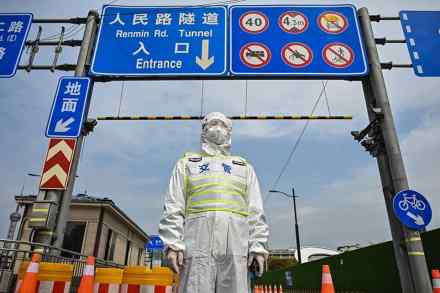
For weeks, Shanghai’s 25 million residents were assured that they would not be locked down. Then when the order came, the lockdown was supposed to last only seven days. It is now almost into its fourth week, and the government is struggling to suppress the chaos. Last week, 82-year-old Yu Wenming called his neighbourhood committee to say he had run out of medicine and food. Rather than reassure him, the local official despaired. ‘I am really helpless,’ he admitted. ‘I’m more sad than you are, because you are just one person. I see countless families…’ The elderly Mr Yu ended up comforting the worker. When a recording of their conversation was posted online, it was shared rapidly. By the time it was deleted, the damage was done.

Portrait of the week: Boris packs his bags, XR blocks bridges and Netflix viewers switch off

Home Boris Johnson, the Prime Minister, told the House of Commons that it did not occur to him that the gathering in the Cabinet Room on his birthday (for which he had been issued a fixed-penalty notice) could amount to a breach of the rules on coronavirus. ‘That was my mistake and I apologise for it unreservedly,’ he said. He packed his bags for a visit to India to coincide with a Commons debate on whether he had misled parliament. Priti Patel issued a ministerial direction (the second in the Home Office in 30 years) to implement a scheme whereby people deemed to have entered Britain unlawfully since 1 January could be flown to Rwanda, where they would be allowed to apply for the right to settle there. More than 6,000 people had crossed the Channel in small craft in 2022.

Sri Lanka’s descent into chaos

Colombo, Sri Lanka Some 13 years after the end of a civil war that saw 100,000 deaths, Sri Lanka is once again on the cusp of serious violence. Earlier today, the police opened fire on protesters in the town of Rambukkana. One person has died and at least ten people are said to be in critical condition. It’s the first use of deadly force against demonstrators who seem to have filled the entire island in recent weeks. Grainy footage shows half-conscious bodies being carried into hospital, bullet casings littering the quiet palm-lined streets. This was meant to be a time of celebration. Buddhists are marking the new year while the country’s Muslim minority observe Ramadan.

China’s pact with the Solomons is a direct threat to Australia

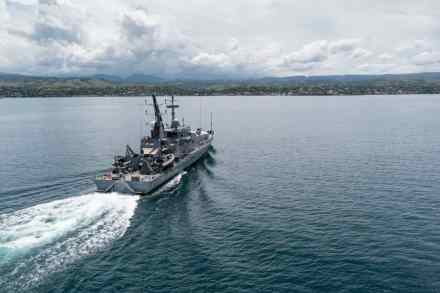
Tulagi, a 1.5 square mile island in the South Pacific’s Solomon Islands, is perhaps the most remote place on the planet to have a repeat role in world history. On 4 May 1942, Emperor Hirohito’s Japanese forces landed on Tulagi – then the capital of the British Solomon Islands Pro­tectorate – to attempt to cut off Australia from American supplies. Worse still, Aus­tralia feared invasion. These goals were ulti­mately thwarted in the naval and land battles of Guadalcanal. Not surprisingly, then, the news today that China has signed a security pact with the Solomon Islands has horrified the Australians.

Springtime for Cold War nostalgics

From our US edition

My favorite spy movie cliché of all time is the secret agent stuck in the 1980s. The threats have gone asymmetrical, terrorists slip across borders, but our hero longs for the simple days when the world was divided between good Westerners and bad Russians. “You’re a fossil!” sneer his girlboss department administrator, his vegan drone pilot, his tech whiz who has just hunted down a non-state actor by crosschecking the latest SIGINT with a Yelp! review of an Iraqi yoga studio. Cut to him muttering under his breath à la Judi Dench in Casino Royale: “Christ, I miss the Cold War.” Now, suddenly, those who miss the Cold War are having a moment.

Cold War

What Ukraine means for Asia

From our US edition

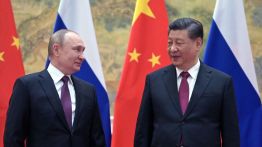
If Asia has entered the debate over the war in Ukraine, it is primarily through questions over the role China is purported to be playing in supporting Russia. Given the now-infamous declaration of a “partnership without limits” by Vladimir Putin and Xi Jinping during the Beijing Olympics just weeks before the invasion, many observers have searched for signs of Chinese aid, military or economic, to Russia in the conflict. The scope of devastation in Ukraine and the probable war crimes being committed by Russian troops understandably mean less attention has been paid to how the conflict might affect geopolitical stability in the Indo-Pacific region. The exception is Taiwan — there has been considerable speculation over the influence of Ukraine on Beijing’s calculations there.

asia

How to avoid World War Three

From our US edition

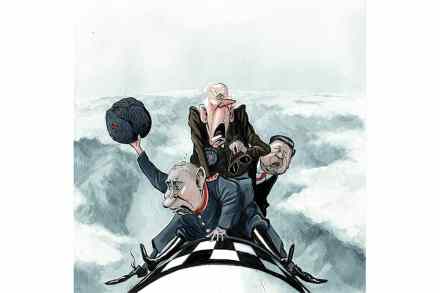
The Russian assault on Ukraine has awakened the West to the fact that we may be back in a Cold War — or worse. After a few decades’ respite in which the United States did not find itself in conflict with any nuclear powers, presidents must consider a world in which nuclear-armed Russia and China actively oppose US interests and deliberately test American resolve. This reality will become even more complicated if a hostile Iran gets its hands nuclear weapons too. The return of Cold War-style geopolitics means the return of Cold War-style statecraft. Presidents will once again face the difficult task of calibrating their actions to advance US goals while avoiding escalation toward possible nuclear confrontation.

presidents

Why we need robust free speech laws

From our US edition

The biggest tragedy of the Russian invasion of Ukraine is, of course, the loss of thousands of Ukrainians, who have been killed because of Vladimir Putin’s insane and horrific actions. But alongside that horror are many other alarming developments. One of them is the near-total suppression of the free flow of information in both Russia and China. As you have likely read, Putin cast the war with Ukraine not as the unprovoked invasion it is but, laughably, as a “special military operation” for “de-Nazifying” the Ukrainian leadership. Russia swiftly passed a law greatly enabling Putin’s propaganda campaign.

speech

Will America follow China toward ‘Zero Covid’?

From our US edition

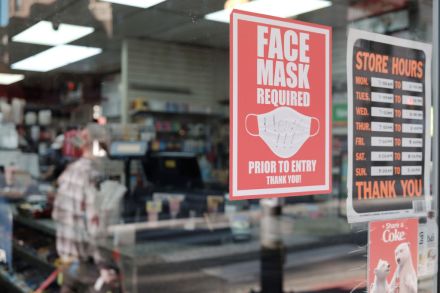
The city of Philadelphia appears to be following China, if only in small steps, toward the delusional goal of Zero Covid. A new indoor-mask order, announced last week by Cheryl Bettigole, Philadelphia’s health commissioner, takes effect today, April 18. It’s the first resumption of such a mandate by any large city in the United States. President Xi Jinping, the well-meaning Dr. Bettigole most definitely is not. Yet is Philly, like China, again being seduced by the notion that the virus can be made to go puff? In Shanghai, a brutal push for Zero Covid is imprisoning millions in their homes and tearing infected children from their parents for quarantine.

Hollywood won’t say gay in China

From our US edition

Exactly when and where are our stunning and brave Hollywood stars prepared to take a stand for gay rights? Liberal actors and celebrities have a made a show of standing against Florida’s Parental Rights in Education Bill, signed earlier this month by Governor Ron DeSantis, a man progressives seems intent on making the next president. When activists and journalists realized they couldn’t stop the bill from becoming law, they deployed their new favorite tactic: demanding that corporations speak out against the bill (see also: how in response to Georgia’s new voting legislation, they insisted that Major League Baseball relocate the All-Star game).

‘Putin still has a lot left to lose’: Niall Ferguson and David Petraeus in conversation

David Petraeus is a former CIA director who, as a four-star general, led US military campaigns in Iraq and Afghanistan. He speaks to the historian Niall Ferguson about the war in Ukraine. NIALL FERGUSON: General, I wanted to ask you to give your assessments of the Russian invasion of Ukraine. If you were grading Russia’s military performance and Ukraine’s, what grades would you give? DAVID PETRAEUS: Clearly Russia has failed. That’s the only way to describe the campaign thus far. And the Ukrainians, gosh, I think you have to give them an A at least and perhaps even more for just the sheer determination. But it’s much more than fighting for their very survival. They have done it very, very impressively.

Does knotted string constitute ‘writing’?

What particularly excites Silvia Ferrara, the author of The Greatest Invention, is not language per se but writing – that is, the specific tool created for recording and conveying language visually. Sound made visible, tangible. The impulse to communicate might be innate, but writing is cultural, and in no way inevitable. It’s a bit of tech, which needed to be developed, and which needs to be learned. Writing has many obvious benefits – allowing communication to survive across time, thus enabling cultural traditions and posterity – unlike purely synchronous conversation, face-to-face, stuck in the present. Yet as a species (and a species with memory, specifically) we could live perfectly well without it, as indeed we did.