China

Why was Biden stuck in the nosebleeds at the Queen’s funeral?

From our US edition

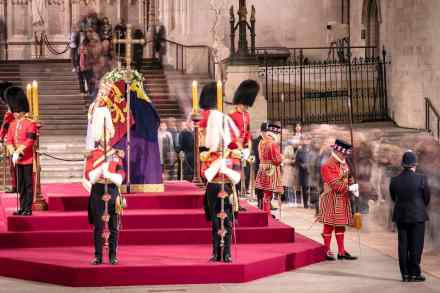
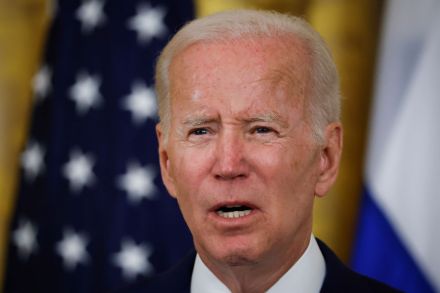
Cockburn was glued to the television during the memorial and funeral services for Queen Elizabeth II — naturally. There were many highlights, but Donald Trump made sure to spotlight on one of the more unfortunate lowlights of the week’s events, surrounding our very own President Joe Biden. During the funeral service at Westminster Abbey, you see, Biden and First Lady Jill were seated “in the 14th row… only seven rows from the very back,” reports Business Insider. This led Trump to roast the Bidens on Truth Social, declaring that the less-than-stellar seating situation would have been different if he were still commander-in-chief: Indeed, Cockburn had trouble picking out the Bidens, who blended into a blur of the more than 500 other dignitaries in attendance.

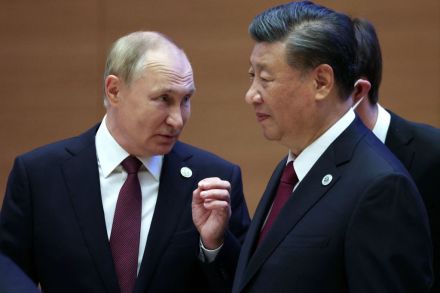
Putin and Xi herald a rising authoritarian axis

From our US edition

Russian President Vladimir Putin and Chinese President Xi Jinping met in Uzbekistan during this week’s Shanghai Cooperation Organization (SCO) summit — and a lot had happened since their last meeting. With the Russian Army on the back-foot in Ukraine and its economy forecasted to contract by over 4 percent in 2022, Putin is in a far worse position. Whether this impacted the meeting is hard to tell, though Putin indicated that Xi had “questions and concerns about [Ukraine].” Nevertheless, both countries expressed support for one another, touching on their respective concerns. Xi stated that China wanted to work with Russia “to set an example of a responsible world power,” a jab at the Western powers that both countries are positioning themselves against.

It’s wrong to ban China from the lying-in-state

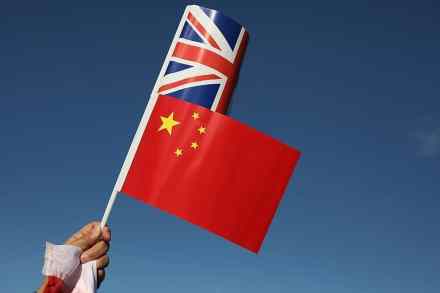
Unlike some Americans, China’s communists have no problem getting their heads around hereditary monarchy. Last week, President Xi sent his condolences to the United Kingdom. Now, he’s sending one of his most trusted deputies to pay respects at the Queen’s funeral. China has called off its wolf warriors, its diplomatic ideologues known for berating the West. Beijing is on best behaviour. Instead, the bellicose rhetoric is coming from a few British MPs, indignant that Chinese officials have been invited to the funeral. Vice-president Wang Qishan, the man tasked with representing China, is one of Xi’s most reliable lieutenants, having led the President’s flagship anti-corruption drive.

An outcast in Xinjiang: The Backstreets, by Perhat Tursun, reviewed

Like Dostoevsky’s Underground Man, Perhat Tursun’s unnamed protagonist is an outcast. A young Uighur in an increasingly Han city (Urumchi, the capital of Xinjiang), he is alone, angry, unstable and homeless. The events of The Backstreets take place over one long night, as he looks for somewhere to stay (‘I just wanted a small space – the space a person would need in a graveyard’) or, more accurately, somewhere to belong. In this poignant and disturbing short novel, the influence of Dostoevsky and Camus, among others, is clear. It’s not meant to be comfortable reading. Identity permeates the book in the same way that a fog forever buries Urumchi. Almost everyone the narrator meets, as he walks through the smog-filled streets, seems terrified of him.

What Xi wants from Central Asia

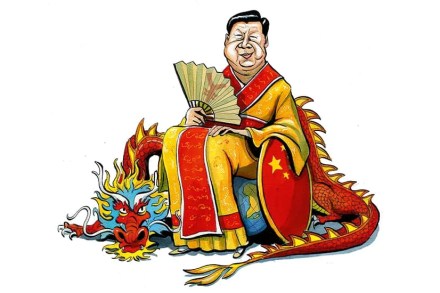
President Xi Jinping hasn’t stepped outside his country since the pandemic began. For almost three years, China’s elderly leaders have been swaddled inside Beijing; journalists granted an audience with Xi have told me that they had to go through days of hotel quarantine before the meeting. Today Xi returns to the global stage. His first stop is Kazakhstan, a country rarely on the minds of western politicians. It goes to show how important China’s western backyard is to the country. Washington and London are attempting to pivot to the Indo-Pacific to respond to Chinese influence in the South and East China seas; what they’ve failed to focus on is Beijing’s alliance-building in the mountains and deserts to the west.

China, not America, has the real emissions problem

From our US edition

Hailed as America’s first comprehensive climate law, the Inflation Reduction Act was signed by President Biden earlier this summer. It had been thirty years and sixty-five days since President George H.W. Bush signed the United Nations Framework Convention on Climate Change in Rio de Janeiro. The UNFCCC’s objective was to stabilize concentrations of greenhouse gases in the atmosphere “at a level that would prevent dangerous anthropogenic interference with the climate system,” a threshold that the convention left undefined. In 1992, the average concentration of carbon dioxide in the atmosphere was 356.54 parts per million by volume (ppmv).

China vs the US: who will win the chip war?

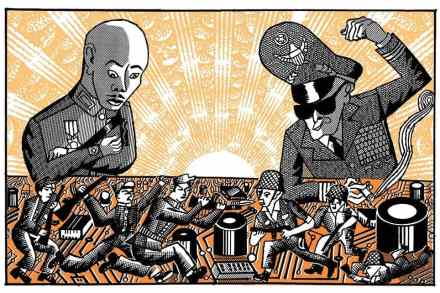
There is a joke in Taipei that if China invades Taiwan, the best place to shelter will be in microchip factories, because they are the only places the People’s Liberation Army can’t afford to destroy. The country that controls advanced chips controls the future of technology – and Taiwan’s chip fabrication foundries (‘fabs’) are the finest in the world. Successful reunification between the mainland and its renegade province would give China a virtual monopoly over the most advanced fabs. Given Xi Jinping’s designs on Taiwan, it is no wonder that the US government is worried. For this reason, in recent months the United States has taken various steps to thwart China’s attempts to make advanced semiconductors.

The missing Biden foreign policy

From our US edition

What is Joe Biden's foreign policy? It's a trick question, because he has no actual policy, no plan, no careful set of chess moves a step ahead of his adversary. America suffers for it. Biden's foreign policy initially began and ended in Afghanistan with the disastrous withdrawal that left refugees strewn across the globe. There were years, then months, then weeks, then days to plan the NEO — the noncombatant evacuation order — and plenty of planning books for one sitting on desks in places like Seoul.

Nancy Pelosi, stock trader extraordinaire

From our US edition

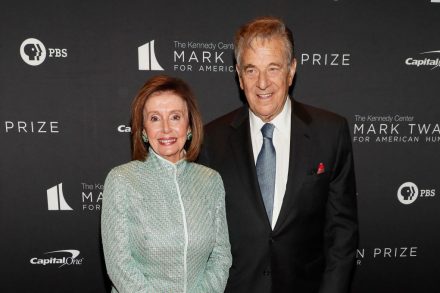
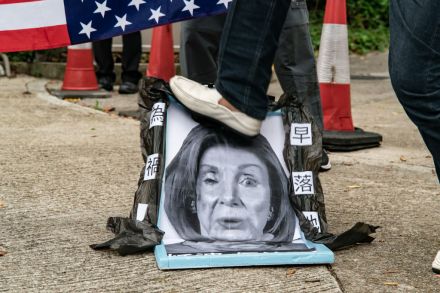
Cockburn doesn’t believe in coincidences. That’s why when he saw that Nancy Pelosi and her multimillionaire husband Paul saved hundreds of thousands of dollars by selling shares one month before their stock price plummeted, he thought that it was probably more than just an educated guess. According to a report from the Washington Free Beacon, model citizen Mr. Pelosi sold 25,000 shares of technology company Nvidia, at around $165.05 in July which resulted in a loss for him of $341,365, a set of disclosures showed. Luckily he dumped the stock in time, as one month later, Nvidia revealed that the government had imposed export restrictions on the company’s A100 and forthcoming H100 circuits.

pelosi

Chinese tyranny? American surveillance is scary too

From our US edition

The New York Times recently ran an article on the dangers of surveillance tech in China. One wishes they would do the same for the US. According to the Times, Chinese authorities implement facial recognition tech everywhere they can, the police seek to connect electronic activity (making a call) to a physical location, biometric information such as fingerprints and DNA is collected on a mass scale, and the government wants to tie together all of this data to build comprehensive profiles on troublesome citizens. The latter is the Holy Grail of surveillance, a single source to know all there is known about a person.

Letters: Lockdown saved lives

Lockdown saved lives Sir: Rishi Sunak presents an alarming picture of what happened during lockdown (‘The lockdown files’, 27 August) – and one echoed by lockdown sceptics who claim that Covid policy was a disaster, stoked by fear and based on questionable scientific advice. Worst of all, they cry, the trade-offs were not even discussed. But none of this is true. I know because I sat around the cabinet table as politicians, scientists, economists and epidemiologists agonised over the extent to which lockdown would devastate lives and livelihoods. It was not an easy decision for anyone. Looking back, it’s clear that the biggest mistake we made wasn’t locking down, but doing so too late.

When will the West start to deal with Africa on its own terms?

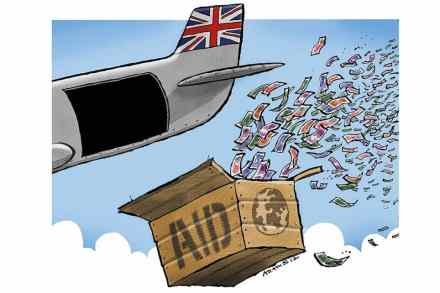
Kenya Suddenly all the great powers are courting Africa. Like emissaries to the 14th-century Malian monarch Mansa Musa in his adobe Timbuktu palaces, foreign officials from West and East compete for attention in multi-country tours across the poorest continent. Recent visitors include the US Secretary of State Antony Blinken leading caravans of Washington officials, Moscow’s Sergei Lavrov and Emmanuel Macron of France. Invitations arrive for trade summits; speeches plead forgiveness for past wrongs, pay tribute to Africa’s new influence and offer the return of artefacts looted by imperialists; while Beijing – well, the Chinese came to stay a long time ago.

I’d be the perfect communist shill

Could I be the model communist shill? Consider these facts: I was born and raised in China. I speak and read Chinese. Some question my English accent, almost suspiciously posh given that I didn’t speak a word of the language until the age of ten. Before the pandemic, I visited China regularly. My podcast, Chinese Whispers, often explains the Chinese government’s way of looking at things. I studied at Oxford and now work at the heart of the British establishment. Am I not ideally placed to advance Beijing’s agenda? When I started my career, this was all a joke. Now it’s less of one. The atmosphere in Britain towards China has soured.

Is Germany afraid of China?

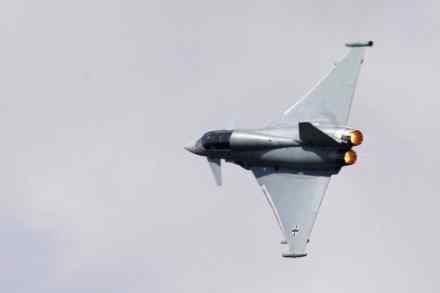
The German air force has taken off for its first deployment in the Indo-Pacific region. It will take part in Australia’s biennial warfare exercise Pitch Black from Friday, side by side with other western nations as well as regional partners such as Japan, Singapore and South Korea. Berlin’s show of solidarity will be welcomed by Nato allies, but it will also draw pushback from China. It’s an opportunity for Germany to show that it can make a meaningful contribution to the deterrence of Chinese aggression in the Pacific. But in order to do so convincingly it will have to resist pressure from Beijing with more confidence than it has in the past. Germany’s commitment looks promising.

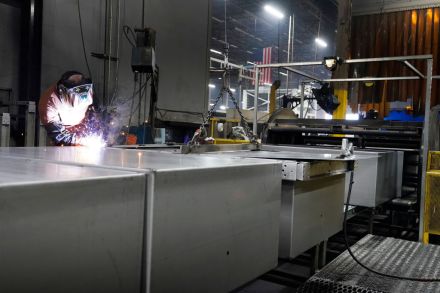
America is forgetting how to make stuff

From our US edition

Articles about the future and “progress” have been popping up a lot lately, with conversations revolving around the inevitable advancements in technology and automation. Where we should head next is the collective theme. To the metaverse? To outer space itself? But instead of setting our sights on colonizing Mars or creating a perfect alternate reality, we should slow our roll, focus on the here and now and consider whether the frenzied “progress” we’re in such a rush to make has demonstrated any benefit to real-life people. Manufacturing is a good place to start. Let this startling reality sink in, reported in 2017 by the Organization for Economic Co-operation and Development: Between 2000 and 2010, US manufacturing experienced a nightmare.

What has Pelosi’s Taiwan trip wrought?

From our US edition

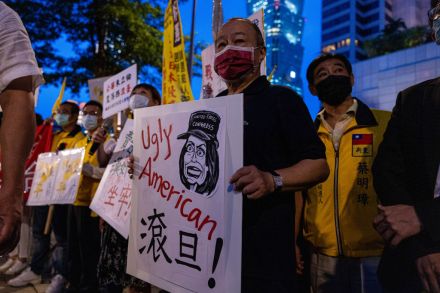
In becoming the highest-ranking American politician to visit Taiwan in a quarter-century, House Speaker Nancy Pelosi has become the dominant foreign affairs news story of the month, eclipsing, if briefly, Russia’s war in Ukraine. Yet beyond all the sound and fury, Pelosi’s trip changed nothing in the cross-Strait balance of power. What it did was to legitimize the “mission creep” bringing Taiwan and America closer together. Both supporters and critics of the trip were quick to invest Pelosi’s visit with major symbolic significance.

Baby bust: China’s looming demographic disaster

This week, the world is gripped by the risk of conflict between the US and China. The People’s Liberation Army has fired live missiles into the Taiwan Strait in retaliation for US House Speaker Nancy Pelosi’s visit to Taipei and those who fear that China vs America is the next world war see Taiwan as a flashpoint. Some analysts imagine a repeat of the Cold War: two countries, two rival political systems, vying for world economic supremacy. China’s dominance is inexorably linked to the size of its population. It has long been the world’s most populous country. A technologically advanced society, with a great army of young workers and soldiers, is inevitably a power to be reckoned with.

Pelosi is right to put China on notice

From our US edition

House speaker Nancy Pelosi has always had a flair for the dramatic. During the Trump presidency, for example, she ostentatiously tore up his State of the Union speech. But for sheer spectacle, it will be hard for Pelosi to top her “will she, won’t she” visit to Taiwan this week. In spite of the suspense, there was never really any doubt about it. For weeks China has issued dire warnings about the perils of her visit. So, as it happens, have several commentators, including The Spectator’s Freddy Gray, whom I debated on the Americano podcast, and who seems to have a bad case of the collywobbles about the Pelosi trip.

Nancy Pelosi knows how much Taiwan matters

In the coming hours, Nancy Pelosi is expected to arrive in Taiwan. The plane that is thought to be carrying her is approaching the island from the east to avoid the Taiwan Strait and any attempt by the Chinese to fly close to her. As Speaker of the House of Representatives, she will be the most senior US figure to visit Taipei this century. The economic effects of a Taiwan invasion would dwarf those of the Russian invasion of Ukraine Beijing is furious about Pelosi’s decision to go. It has warned that its military ‘won’t sit idly by’ if she does touch down and is planning various displays of military strength. While no one expects the Chinese to actually attack the island, there is talk of buzzing the Taiwanese air defence zone and other intimidatory acts.

China delayed its 2008 financial crisis until 2022

From our US edition

The year 2008 was consequential by many measures. The collapse of the US investment bank Lehman Brothers sparked a worldwide financial crisis. Yet China appeared to emerge out of it relatively unscratched after Beijing introduced a massive stimulus package in the world, about three times the size of the United States government's rescue program. Thanks to this expansionary fiscal policy and the easy credit that came with it, the Chinese economy quickly returned to its robust growth by growing 8.7 percent in 2009 and 10.4 percent in 2010. After 2008, the Chinese Communist Party leaders concluded that China "escaped" the financial crisis because of its outstanding leadership and the superiority of the Chinese political system over deeply flawed western democracies.