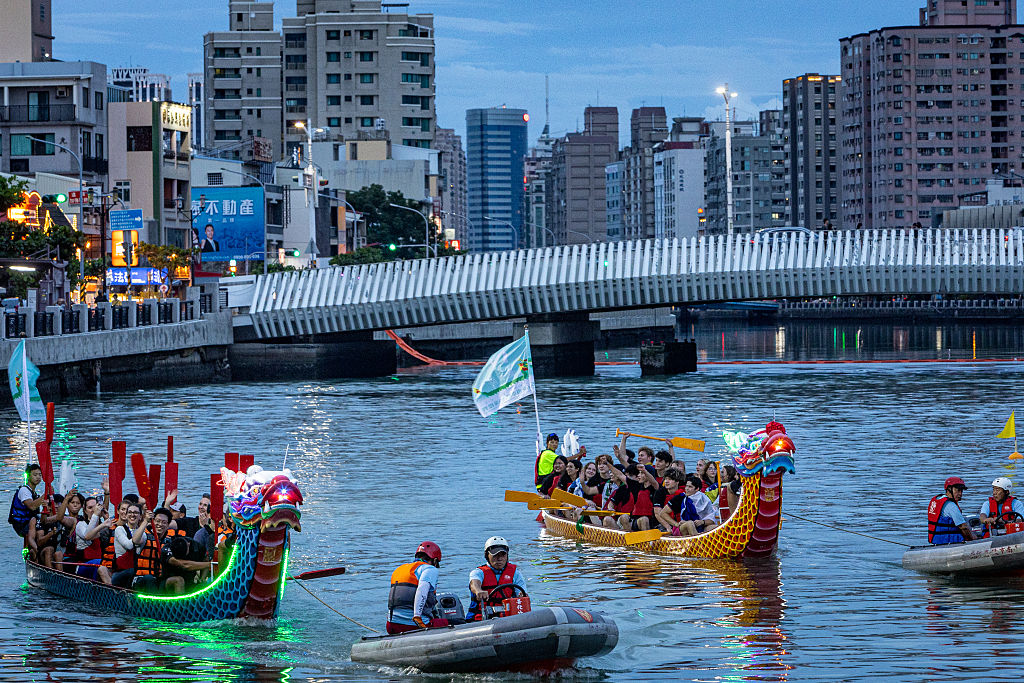

In a country full of brilliant food, the Garden Night Market in sultry Tainan, southwest Taiwan, is still a standout: a cheerful riot of steam, umami, deep-fried tofu and loud, vivacious chatter. Families drift past in loose formation, grandparents hefting toddlers with fruit ices, flirting teenagers orbiting bubble-tea stalls, couples sharing hot skewers of squid, pork and chicken gizzards. Almost everyone plays lurid and inexplicable games involving teddy bears and claw machines.
I eat sublime oyster omelettes slick with sweet chili pepper sauce, then hot soup dumplings that collapse into scalding, savory bliss. Someone presses popcorn chicken into my hand. It is dangerously moreish.
The next morning, Tainan feels sun-blessed and unhurried. This city was Taiwan’s capital for two centuries and it still carries itself with a certain stateliness. There are charming old buildings (rare in typhoon/earthquake/invasion-prone Taiwan).
The oldest are southwest of the city, at Fort Zeelandia, a modest, fading ghost of the now-vanished Dutch empire. The fort rises from the swampy coastal plain like a weathered brick ziggurat. Built in the 1620s as a trading fortress for sugar, spice and deer hides, it later fell to the Sino-Japanese pirate-general Koxinga. Today the fort is drowsy and languid. Sunday strollers buy lucky tourmaline bracelets under the battlements.
From there I shift into Tainan’s center. My first stop is the Grand Mazu Temple, dedicated to the sea goddess who watches over sailors and fishermen. The entrance is guarded by towering, green-faced deities with bulging eyes and curling mustaches. Inside, the smoke from hundreds of joss sticks coils toward the ceiling as if a dozen 1950s French actresses are gathered below, puffing on their Gitanes.
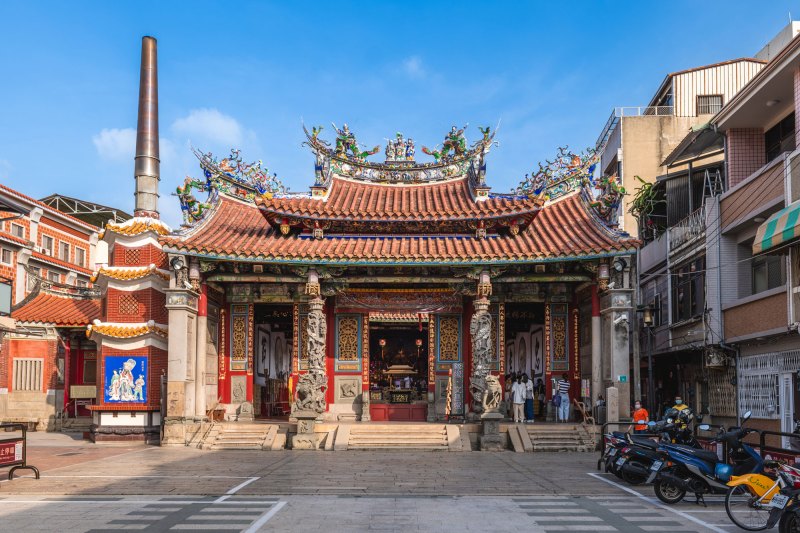
The ambience is not reverent, however. It is vibrant, quirky and lively. Visitors throw loud and lucky wooden sticks onto the floor, seeking charm and approval. Young women pray for marriage at side altars. No one seems to mind the dark history of the temple. Notoriously, five concubines of the last Ming prince hanged themselves here; their defeated lord followed the next day.
Stepping back into the sunlight, I wander toward another shrine. Halfway there, the sky tears open. Three, then four Taiwanese fighter jets scream overhead, low enough to rattle windows and shake the walls. Yet no one else seems to notice, let alone care.
My next stop is Tainan’s Confucius Temple, Taiwan’s oldest, founded in 1665. The entrance courtyard opens into an area of shaded paths broken up by crimson walls. The atmosphere is studious and monastic – for a reason. This was once the island’s first academy, where scholars prepared for the imperial examinations that could transform a life. At a dainty café a nice lady makes me a cup of green tea with unexpectedly sweet bubbly milk, which I politely and discreetly chuck into a bin.
Now I summon an Uber. My destination is the Southern Taiwan Science Park, on the outskirts of the city. The suburbs slide past, all gray apartment blocks and 7-Elevens. Wet paddy fields emerge, green and flat and glinting in the sun. Then the big buildings begin. At first they appear as distant shapes on the horizon, vast, gray and metallic, like stranded aircraft carriers. As we drive closer, the truly numbing scale becomes disorienting. Abruptly, the car pulls up. I have arrived.
I am staring at Taiwan Semiconductor Manufacturing Company’s flagship fabrication center: Fab 18. It is the most advanced factory on Earth – and quite possibly the most expensive building ever erected.
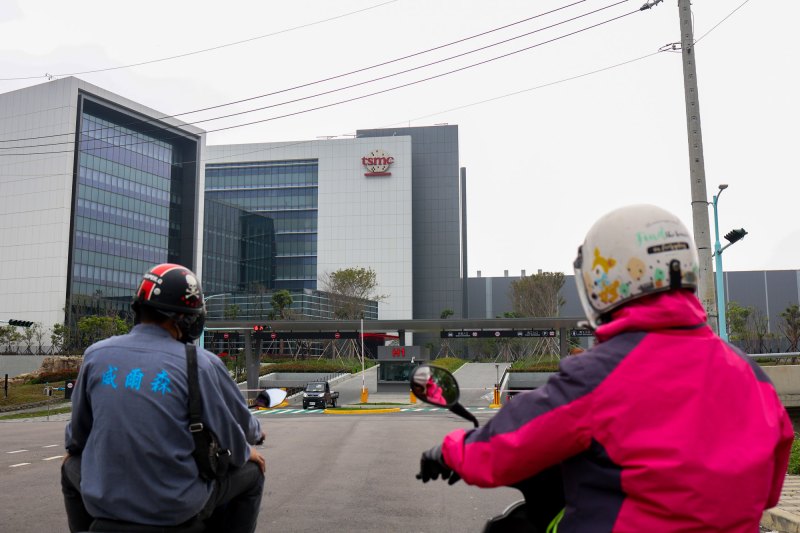
Inside, more than 11,000 engineers work around the clock, seven days a week. The floors float on giant dampers to eliminate any vibrations from even the most distant passing truck. Air is filtered to a level purer than in an operating room – one speck of dust can ruin products costing millions.
Fab 18 is the most advanced factory on Earth – and possibly the most expensive building
At the atomic scale, patterns are carved into silicon using EUV – extreme ultraviolet lithography. The grooves etched here are smaller than viruses. Invisible to the eye. Yet these microscopic circuits power global tech. The planet’s most advanced chips – 3 nanometer jobs – are all manufactured in Fab 18. If you have a newish phone in your hand, the most important part of it was probably made here.
Standing next to Fab 18 produces a strange emotional whiplash. The building feels awesome, humbling, magnificent – and seriously terrifying. Like visiting an old cathedral and a Cold War ICBM silo at the same time.
Why is it terrifying? Because this building is the hinge and fulcrum of two enormous, apocalyptic dangers.

The first is obvious and geopolitical. Taiwan produces the vast majority of the world’s most advanced semiconductors. Without them, modern economies stall as technology stops. As we all know, China, coveting Fab 18 and its cousins, considers Taiwan its territory. The United States, understandably, considers Taiwan essential. If World War Three kicks off, it will start here. Hence the endless fighter jets on patrol.
But there’s an added danger: the chips made here also power the latest AI systems. These chips are already driving the rapid transformation of work, culture and daily life. As I write, graduate job openings have plunged to historic lows, partly because of AI. If AI eventually destroys us all, then Fab 18 will be the place it started.
And this is why sweet, sunny Tainan is the world’s most dangerous city.
I don’t linger long at Fab 18. No one does, unless they work here. In the Uber back to the city center, I start reading about the site. I learn that construction of the complex was delayed by an awkward archaeological discovery beneath the flat Nanke Plain, where the Southern Taiwan Science Park sits.
As the foundations were dug, workers uncovered prehistoric burials by the hundred – among them many skeletons missing their skulls. Archaeologists believe they were victims of headhunting, a practice that survived in Taiwan into the early 20th century. Fab 18 is likely built above sites of ancient, ritualized murder. Soon enough, however, the bones were moved to a museum. And TSMC is already clearing more Tainan ground, for newer and bigger Fabs.


Comments