Childhood

Alone in the world

From our UK edition

Orphans are everywhere in literature — Jane Eyre, Heathcliff, Oliver Twist, Daniel Deronda, and onwards to the present day. They are obviously useful to storytellers, and particularly to the writers of children’s books, who naturally want their heroes to undertake adventures without the controlling eye of ordinarily caring parents. The parents of Roald Dahl’s James have to be killed by a rhinoceros for his satisfyingly swashbuckling adventure in a flying giant peach to take place. L. Frank Baum’s Dorothy, living with an aunt and uncle, is, we know, an orphan, but no trouble at all is taken over her loss — we just like to know that there’s no one keeping an eye on her.

The way things were…

From our UK edition

Across the fields from the medieval manor house of Toad Hall, and the accompanying 16th-century timber-frame apothecary’s house which Alan Garner dismantled and moved 17 miles to join it in Blackden in rural Cheshire, sits Jodrell Bank Observatory. Here huge telescopes scour the cosmos, seeking radio waves from distant planets and stars. This juxtaposition between past, present and future, all existing in harmonious symbiosis on land that Garner’s family have lived on for 400 years, seems the perfect metaphor for the creative output of this most singular of English writers.

Even if councils did ban children from playing in parks, most of them wouldn’t notice

From our UK edition

Poor old Wandsworth Council. After being pilloried in the weekend press for banning children from ever having fun outside ever again, its members are complaining of a stitch up, claiming that they were merely updating by-laws which would allow them to prosecute someone who was drunkenly thrashing about in a tree, rather than a child wanting to clamber around its branches. The Council was accused of telling children that they couldn't fly kites, climb trees or play ball games such as cricket in its parks. Campaigners said it would make it even more difficult for children to exercise and enjoy the great outdoors, but councillors have insisted that this is just not the case at all. Deputy leader Cllr Jonathan Cook said: 'It's a classic case of fake news.

Child’s play

The Florida Project is a drama set in one of those cheap American motels occupied by poor people who would otherwise be homeless. It’s sad but not depressing, bleak but also joyful, and features one of the best and truest child performances you will ever likely see. Also, it is captivating without ever being condescending — I think. It is always so hard to know, but if you get too hung up on that, cinema will never be allowed to say that poverty exists, or deal with stories that don’t regularly get told, and that’s the end of my lecture for this week, you will be delighted to hear. The movie is written and directed by Sean Baker, whose previous film, Tangerine, about a transgender sex worker, was shot on an adapted iPhone 5 and won many awards.

Box of delights | 7 September 2017

From our UK edition

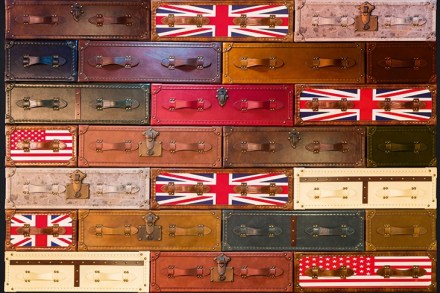
No mother, wrote Roald Dahl in his childhood memoir Boy, would send her son off to prep school without, at the very least, the following in his tuck box: a home-made currant cake, a packet of squashed-fly biscuits, a couple of oranges, an apple, a banana, a pot of strawberry jam or Marmite, a bar of chocolate, a bag of Liquorice Allsorts, and a tin of Bassett’s lemonade powder. To these, a boy would add ‘all manner of treasures’, such as magnets, pocket knifes, balls of string, clockwork racing cars, lead soldiers, tiddlywinks, catapults, stink bombs and Mexican jumping beans. One boy in Dahl’s class at St Peter’s in Weston-super-Mare drilled an air hole in his pinewood tuck box and kept a pet frog, which he fed with slugs.

Frater, ave atque vale

From our UK edition

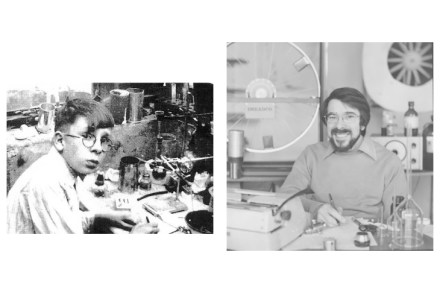
As his obituaries pointed out, my brother David made a name for himself with his unrideable bicycle; his ‘perpetual motion’ machine — a bicycle wheel still rotating in a frame on our mantelpiece (it attracted 1.1 million hits on a German website); and his theory that the arsenic found in Napoleon’s hair and fingernails was down to his wallpaper. The papers naturally got all this wrong (‘Napoleon killed by wallpaper’ they intoned, as did Andrew Roberts), and the image of the potty prof emerged. In fact, his purpose was serious. He was equally serious about our children — after a failed marriage, he had none of his own, to his great regret — and at lunch every Sunday the idiosyncratic scientist and dedicated uncle came together.

Death and childhood

From our UK edition

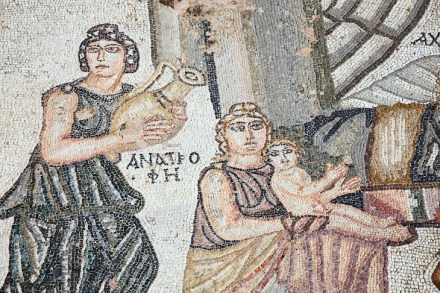
Charlie Gard is incurably brain-damaged, blind, deaf, cannot cry, and cannot move or breathe without help. At the request of his parents, he has been kept alive in hope of a minimal improvement. Ancients did not feel about babies as we do. About one in three died within a month, and about half by the age of five. Putting disabled babies out to die was probably common. There are about 55,000 inscriptions on tombstones referring to ages at death, yet only a handful relate to those under six months. Few ancient authors describe babies behaving like babies; indeed, Latin had no specific word for ‘baby’. Cicero remarked that nature granted life on the same terms as one accepted a loan, and nature would call that loan in whenever it felt like it.

Brava Bella

From our UK edition

I like Bella Pollen for her open-mindedness, self-deprecation and verve. Given her early success as a fashion designer — top client Princess Diana — her memoir is extraordinarily modest. Now in her mid-fifties, she has also published five novels — one, Hunting Unicorns, a bestseller. Unusually, this had a dead narrator, and Meet Me in the In-Between also begins with an unearthly creature — a ‘demon’ sexual predator, who won’t leave our memoirist alone. It also deals with writer’s block.

Is boarding school cruel?

From our UK edition

Yes Alex Renton Last week some 20,000 children under the age of 14 packed their bags to return to boarding school for the summer term: a migration unique in anthropology. The habit was born of necessity for the rural gentry in the 18th century, and it became customary for the wealthy and aspirational in the 19th century. But what possible need for boarding is there in the 21st? Some parents say they have no choice. ‘She literally made me do it,’ one mother told me of her eight-year-old, residing at a very smart prep in the Midlands. ‘I was in bits. Still am. But she’d read Harry Potter and Malory Towers and her mind was made up.’ I pointed out that neither J.K.

Dogs for children

From our UK edition

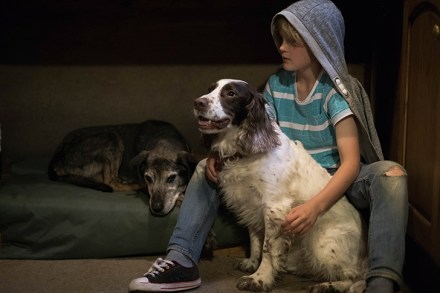
Henry, our springer spaniel, has died, suddenly and prematurely. With the passing weeks, we are becoming accustomed to the strange stillness his absence has left behind, and I no longer expect to meet him hurtling around the house in motiveless delight or to find him sidling against my leg as I sit in the kitchen. We do adapt quite quickly to life post-dog, though the sadness lingers. Sir Walter Scott knew this. ‘I have sometimes thought of the final cause of dogs having such short lives,’ he wrote, ‘and I am quite satisfied it is in compassion to the human race; for if we suffer so much in losing a dog after an acquaintance of ten or 12 years, what would it be if they were to live double that time?

In praise of pink Lego

From our UK edition

There aren’t many toy companies that could make headlines in the business press merely by expanding their London offices — ‘Lego blocks out Brexit concerns’ — but Lego is not like other toy companies. Last week it was named the world’s most powerful brand by the consultancy Brand Finance; this week the second Lego movie is opening in cinemas; the University of Cambridge will shortly be appointing its first Lego professor of play. For a company that, a decade ago, was losing $1 million a day, this is a remarkable reconstruction.

Uh-oh

From our UK edition

Here are the first 50 words in the order that they were learnt by a child called Will: 1 uh-oh; 2 alldone; 3 light; 4 down; 5 shoes; 6 baby; 7 don’t-throw; 8 moo; 9 bite; 10 three; 11 hi; 12 cheese; 13 up; 14 quack-quack; 15 oink-oink; 16 coat; 17 beep-beep; 18 keys; 19 cycle; 20 mama; 21 daddy; 22 siren sound; 23 grrr; 24 more; 25 off; 26 tick-tock; 27 ball; 28 go; 29 bump; 30 pop-pop [fire]; 31 out; 32 hee-haw; 33 eat; 34 neigh-neigh; 35 meow; 36 sit; 37 woof-woof; 38 bah-bah; 39 hoo-hoo [owl]; 40 bee; 41 tree; 42 mimi [ferry]; 43 sss [snake]; 44 ooh-ooh [monkey]; 45 yack-yack [people talking]; 46 hohoho [Santa]; 47 bye-bye; 48 doll; 49 kite; 50 Muriel. Isn’t that extraordinary?

Why I’m telling my son about the sky fairy

From our UK edition

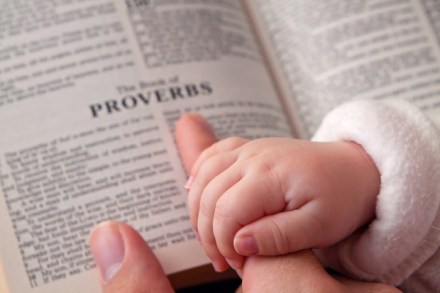
After we were married, my husband and I went on honeymoon to Mexico. We drove across country east to west, then north to Mexico City, to the Basilica of Our Lady of Guadalupe where I prayed for a baby. My husband, the least judgmental of atheists, sat happy in the babble of ladies all talking loudly, conversationally, to God. In April this year, with a vomity newborn on my shoulder, I made a nightlight out of a picture of Our Lady of Guadalupe and some fairy lights. Now, eight months later, as we begin each evening’s slow, hopeful descent towards bed, I take the stout and opinionated baby to say goodnight to her. Goodnight Virgin Mary I whisper, and he leans forward, rips the battery pack out of the fairy lights and lets it fall, clattering on its wires.

The lonely passion of Beatrix Potter

From our UK edition

The story of the extraordinary boom in children’s literature over the last 100 years could be bookended with a ‘Tale of Two Potters’ — Beatrix and Harry. The adventures of the latter have sold millions, but the foundations of his success were laid by the former, whose series of ‘little tales’ Matthew Denison estimates in his equally condensed new biography, ‘are purchased somewhere in the world every 15 seconds’. That is not bad for an author whose first book, The Tale of Peter Rabbit, came out in 1902 — 40 million copies sold so far, and counting — with neither the benefit of the internet or a movie franchise to spread the word. Much has been presumed about the effect of J.K.

Private fears

From our UK edition

I should have known the London prep school scene was a racket from the way parents talk about it. They sound mad. ‘You’re too late!’ I was told by one mother, when my Little Face (not his real name) was nine months old, as if we had, by a whisker, missed the lifeboats at the Titanic. ‘What schools are you considering?’ asked a stranger in the playground. I muttered some names and she, a drab suburban Maleficent, cursed me. ‘You’ll be lucky,’ she smiled, as I dreamed of laying a peculiarly north London curse of my own: ‘May your child fail its A-levels.’ Even so, I put Little Face on waiting lists for prep schools, and write cheques. I do not have a complex defence for this. It is, for a leftist, hypocrisy.

Why I’d like to be a more dangerous dad

From our UK edition

According to figures obtained by BBC Breakfast last week, more than 500 people were arrested in England and Wales in 2014–15 for leaving children unattended. In the majority of cases, the children concerned were aged ten or under, but some parents got into trouble for leaving their 15-year-olds home alone. It’s hard not to conclude that the police are being a bit heavy-handed, trying to take on responsibility for something that properly belongs to parents. As regular readers will know, Caroline and I have four children aged 12 and under and we don’t see eye to eye about this. Her level of anxiety about the various disasters that might befall them is about average for a west London yummy mummy, whereas I’m at the intensely relaxed end of the spectrum.

Jonathan Meades on god, football and brutophilia – and why his memoir was 17 years late

From our UK edition

This is a transcript of a talk, 'Composing the Past', given by Jonathan Meades at the Assembly Rooms in Edinburgh on 26 August 2015, about writing An Encyclopaedia of Myself, which won the Spears Memoir Prize and was shortlisted for the PEN Ackerley award The most recent film I made was on the sculptural neo-expressionistic architecture of the late 50s, 60s and early 70s - known as brutalism after the French for raw concrete, beton brut or bru, depending on how costive with consonants the speaker is. This film has had bizarre and unintended consequences. Forty years ago two fine comic actors, both now dead, John Fortune and John Wells, collaborated on a novel called A Melon For Ecstasy. The title comes from a Turkish proverb: 'A woman for duty, a boy for pleasure, a melon for ecstasy'.

Aristotle on the Lego chair

From our UK edition

So Cambridge University has accepted £4 million from the makers of Lego (snort) to fund a Lego chair (Argos sells a kit at £8.99) and a research centre into the importance of play (titter). One must not laugh (shriek). Aristotle (384–322 bc) might have approved — in part. At the start of his ground-breaking treatise on animal form and function, Aristotle pointed out that there was something marvellous in every aspect of the natural world.

Songs of innocence and experience

From our UK edition

We live in an age of generational turmoil. Baby-boom parents are accused of clinging on to jobs and houses which they should be freeing up for their children. Twentysomethings who can’t afford to leave home and can’t get jobs are attacked as aimless and immature. Both sides of the generational divide should take comfort from this timely, thoughtful work by Steven Mintz, professor of history at the University of Texas at Austin. In Mintz’s view, no one is to blame for these changes, neither the selfish baby boomers nor their Peter Pan offspring. What is happening is a shift in the nature of adulthood, and to understand this we need a historical perspective.

The age of the Skype Dad

From our UK edition

Could you be a useful and loving father to your children if you only ever saw them on a computer screen? Most of us would say no. So much of being a parent is about being physically there. It’s curious then that our courts seem to think the opposite — that a chat via Skype or on an iPad is all a father needs to bond with and care for his child. British judges, like American ones, have to deal with increasingly complicated custody cases every year. We travel more these days, and so we meet our partners abroad. When these marriages break up (as four in ten marriages do), a foreign wife often longs to take the kids and head back home.