Claudia Massie

The visionary art of Eduardo Paolozzi

From our UK edition

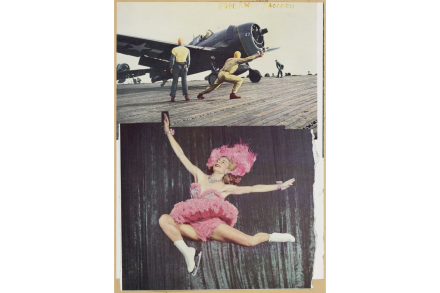
On 10 June 1940, a riot erupted in Edinburgh as a 2,000-strong mob swarmed the streets, hell-bent on revenge. Their targets were barbers, delis and ice cream parlours; anything or anyone Italian. Mussolini had just entered the war and the mob scented blood. The police eventually quelled the violence and the city’s more sympathetic locals helped sweep up the broken glass and mop up the spilled wine. But nearly half of the city’s 400 Italian Scots were rounded up under Winston Churchill’s order to ‘collar the lot’, and sent to internment camps. Among them was the 16-year-old Eduardo Paolozzi, who was locked up at Edinburgh’s Saughton prison. While Paolozzi was creating pop mash-ups, Warhol was still making whimsical illustrations of shoes It could have been worse.
The splendour of Edinburgh’s new Scottish galleries 

From our UK edition

For nearly 50 years, the Scottish collection at Edinburgh’s National Galleries has been housed in a gloomy subterranean space beneath the main gallery, rarely visited, never celebrated. If you didn’t know it was there, don’t be ashamed. Just 19 per cent of visitors ventured into the bowels to find the jumble of Scottish paintings, dimly lit and hanging on colour-sucking, mucky green walls above a depressing brown carpet. Of those who did get there, lots immediately turned and fled back upstairs to the luminous comforts of Titian, Velazquez and Rubens. Safe to say, the space was not exactly showcasing Scottish art; a puzzling strategy for the country’s flagship gallery. The hang is uncluttered. Each painting has room to breathe But no more.

The greatest artist chronicler of our times: Grayson Perry, at the Edinburgh Art Festival, reviewed

From our UK edition

The busiest show in Edinburgh must be Grayson Perry: Smash Hits which, a month into its run, still has people queuing at 10 a.m. His original title, National Treasure, was rejected because ‘national’ is a politically loaded term in Scotland. But Perry’s lens is resolutely fixed on England and Englishness. Seen from a Scottish perspective, this riot of rococo folkishness is familiar and exotic. Grayson Perry is the greatest artist chronicler of our times, with an omnificent style that’s all substance The exuberant exhibition, which is curated by the National Galleries of Scotland but showing at the Royal Scottish Academy and ends on 12 November, slaps the viewer around the face with its huge narrative tapestries, prints and pots.

A tale of two cities

From our UK edition

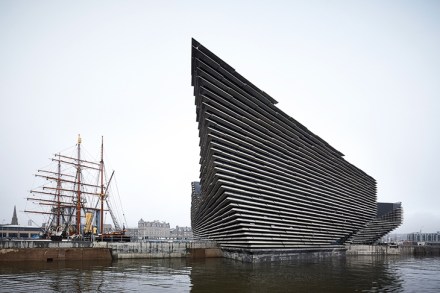
Not so long ago, the Dundee waterfront was presided over by a great triumphal arch, built to commemorate Queen Victoria’s visit in 1844. It was an imposing piece of decorative architecture, 84 feet high, and it dominates most views of the city painted over the ensuing century. It became a cherished symbol of Dundee but in 1964 they knocked it down and used the rubble as infill for a thuddingly insensitive road system that would effectively destroy the southern face of the city. Mary Shelley stayed in Dundee in her youth and later wrote of the ‘blank and dreary’ northern shores of the Tay. It’s a description still familiar to many, although the region’s nadir arrived long after Shelley. The destruction of the arch heralded decades of dismal urban planning.

Move fast to snap up one of Elizabeth Blackadder’s sleek cats at the Scottish Gallery

From our UK edition

If there’s one thing the internet knows, it’s that cats sell. The Scottish painter Elizabeth Blackadder, who died in 2021 at the age of 89, knew it too. Her sinuous, characterful cat pictures, watercolours mostly but also oils and prints, helped cement her place as the nation’s favourite painter. She was an establishment favourite too, becoming the first woman to be elected to both the Royal Scottish Academy and the Royal Academy in London. In 1995, her cats adorned a set of Royal Mail stamps and, in 2001, she became the first woman to be appointed as Her Majesty’s Painter and Limner, a position unique to the Royal Household of Scotland, previously occupied by the likes of Henry Raeburn, David Wilkie and David Young Cameron.

Outsider art

From our UK edition

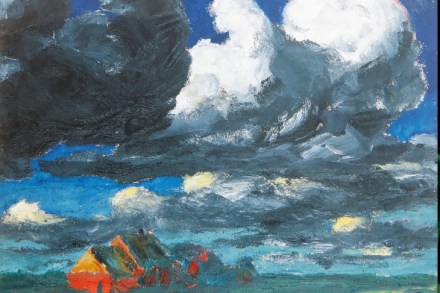
The complexities of Schleswig-Holstein run deep. Here’s Emil Nolde, an artist born south of the German-Danish border and steeped in the marshy mysteries and primal romanticism of that landscape. In 1920, he sees his region, and himself, become Danish following a post-Versailles plebiscite. An already well-established German nationalist bent — pronounced despite, or perhaps because of, his shifting national identity and shaky grasp of the German language — is inflamed. He moves back across the new border before eventually joining the local branch of the Nazi party and writing a volume of autobiography entitled, Jahre der Kämpfe in which he rails against the Jewish dominance of the art world.

‘I love twigs’: botanical painter Emma Tennant interviewed

From our UK edition

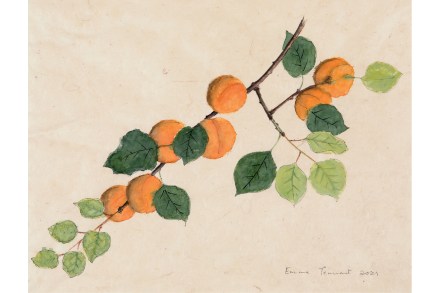
Hermitage, where the heel of Roxburghshire kicks into the once-lawless Debatable Lands, seems an unlikely place to find a botanical artist. It’s hard to make anything grow here, let alone an exhibition-load of rare and sometimes exotic plants. Lorded over by Hermitage Castle, a menacing hulk of medieval brutalism described by George MacDonald Fraser as ‘shouting “sod off” in stone’, this is a remote, rarely visited stretch of the border. Once the playground of reivers, and the graveyard of their victims, today it’s a land of sheep farming, forestry plantations and cruel May frosts. But there, hunkered against the wind in the foot of the Hermitage valley, is the studio of Emma Tennant, who has lived, farmed and painted here for more than 50 years.

It’s a miracle this exhibition even exists: Audubon’s Birds of America reviewed

From our UK edition

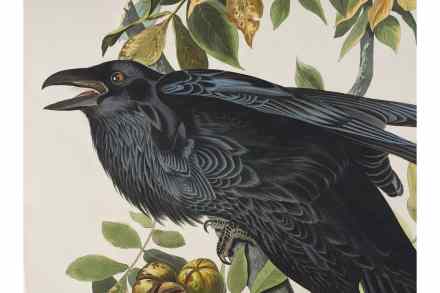
In 2014, an exhibition of watercolours by the renowned avian artist, John James Audubon, opened in New York. The reviews, from the New York Times to the Guardian, were unambiguously enthusiastic, celebrating the painter as a legendary genius who ‘exceeded the limits of his era’. Fast forward eight years, and a rather different vibe hangs over the latest outing of his bird portraits, one that reflects both the limits of that era and the limits of the man. Visitors to the National Museum of Scotland’s Audubon’s Birds of America are welcomed with an acknowledgment that the artist was ‘full of contradiction and controversy’. His charge sheet is substantial.

Joan Eardley deserves to be ranked alongside Bacon and de Kooning

From our UK edition

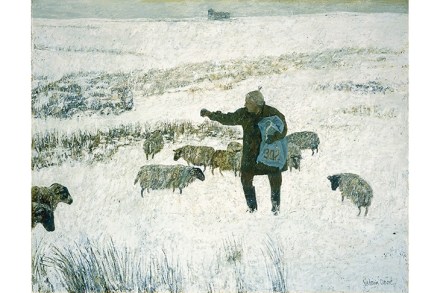
Painting is a fight and few artists demonstrate this more emphatically than the volatile and complicated post-war master, Joan Eardley. Scotland’s great English artist or England’s great Scottish artist, box her as you will, she’s revered north of the border, but often oddly dismissed south of it. The Scottish public have been enthralled by her work for decades, and spoiled in their access to it, with 60 or so pieces in the National Galleries of Scotland collection alone (the Tate has just one). You’re rarely far from an Eardley here, and never more so than in this, her centenary year, which sees some 20 shows and events lined up to celebrate her life and work. Only one of the exhibitions is in England, the country of Eardley’s birth.

The genius of stop-motion wizard Ray Harryhausen

From our UK edition

Modern Two in Edinburgh reopens this week, and what more fitting subject for a show in a time of global catastrophe than Ray Harryhausen, titan of cinema, creator of beasts, destroyer of cities, king of adventure? If you were near a screen at any point during the Cold War, you almost certainly watched Harryhausen movies. The tentacled Beast from 20,000 Fathoms, so realistic it was awarded an X certificate upon arrival in Britain; the mythical marvels of The 7th Voyage of Sinbad; and the vicious skeletons of Jason and the Argonauts captivated generations of viewers. These indelible creations, all handmade by one man, the animator, special-effects pioneer and producer Ray Harry-hausen, have become a magical fixture in our collective imagination.

Sebastiao Salgado – master of monochrome, chronicler of the depths of human barbarity

From our UK edition

Occasionally, we encounter an image that seems so ludicrously out of kilter with the modern world that we can only flounder in antiquity for appropriate descriptions. We see a black and white photograph that shows a swarm of tiny figures, ant-like in their relentless pursuit of some mysterious purpose around the edges of a dark, cavernous maw, and we say it’s biblical, epic, ancient. We invoke the building of the pyramids, the Tower of Babel or Dante’s Inferno. Our artistic sensibilities might point us towards the darker paintings of Jan Brueghel the Elder or the apocalyptic waxwork tableaux of Gaetano Zumbo. What we seldom imagine is a 1980s Brazilian gold mine.

Eye-frazzlers

From our UK edition

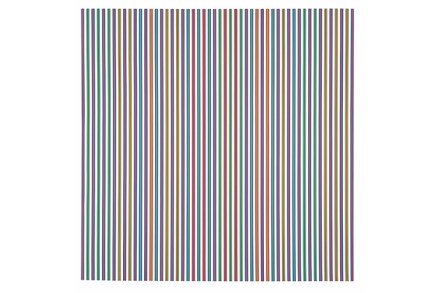
The old observatory on Edinburgh’s Calton Hill may be the most favourably positioned art venue in the world. Recently resurrected by a group called Collective, the space, with its panoramic views and Enlightenment history, is an ambitious and imaginative addition to Edinburgh’s art scene. In their Hillside gallery there’s a firing-range warning sign on the screen, a few seconds of stillness and silence, then a sudden machine-gun rattle. The sound is revealed to be a stick, dragged by a child along corrugated iron, and the juxtaposition is the strongest moment in Helen McCrorie’s portentously titled video work, ‘If play is neither inside nor outside, where is it?’ (until 6 October).

Cutting edge

From our UK edition

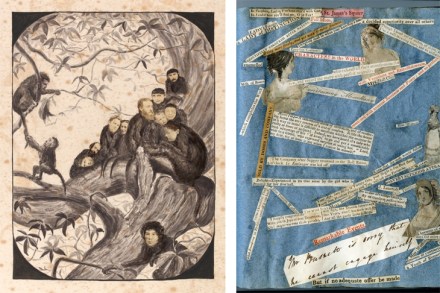
The art-history books will tell you that sometime around 1912, Picasso invented collage, or, actually, perhaps it was Braque. What they mean is that sometime around 1912 a man of sufficient standing took up a technique that had been quietly practised in largely domestic spheres by a largely female army of amateurs, and applied it in his own work. Cue the universal astonishment of observers who pretended they had never seen such a thing before. This narrative has been recycled ever since, assuring us that the collage techniques that shaped the language of dada, surrealism and all the other isms that made up modernism, as well as pop art and even today’s Photoshop-driven design, all emanated from that one original spark of paper-sticking cubist genius.

Memories, dreams, reflections | 23 May 2019

From our UK edition

This mesmerising retrospective takes up three floors of the City Art Centre, moving in distinct stages from the reedy flanks of the Pentland Hills through fractured half-views of Venice and Scotland and into fresh, twilit forests. Mirrors and windows reflect and refract, rigid faces stare from the shadows, animals flit and bare branches twist. It’s 50 years of painting, and half a century of observing, finding, losing and remembering. Victoria Crowe, born in England but long since adopted by Scotland, is one of our more distinguished painters. She is a respected portraitist but it is her other work that dominates this show, and rightly so. We see the trajectories of an inner life expressed through these paintings.

Lines of enquiry

From our UK edition

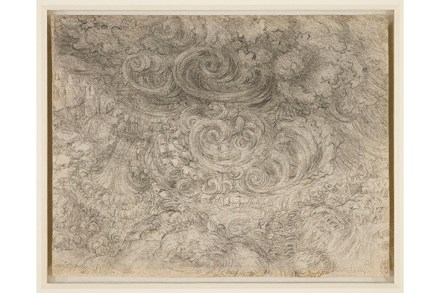
A cataclysmic storm is unfolding. Dense, thunderous lines of black chalk sweep rapidly around the paper in frantic curls of awesome energy. Rocks tumble beneath the irresistible force of an engulfing flood. Cloud and rain, vapour and water, both churned by the same punishing vortexes, become almost indistinguishable. The scale is hard to judge until you glimpse, in the foreground, a hilltop fortress, dwarfed and ruined by the relentless inundation. Man and his monument, both powerless in the face of almighty nature. It’s a terrifying scene of chaos and one that Leonardo da Vinci revisited numerous times in his final years. Facing his own mortality, he produced a series of these intense, obscure drawings in which he imagined an apocalyptic storm obliterating the landscape.

Poster boy

From our UK edition

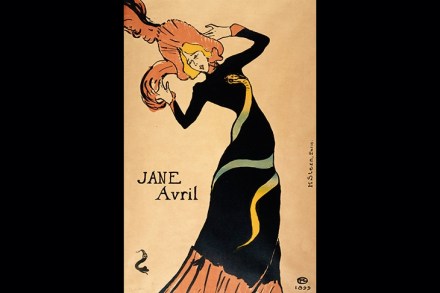
You don’t need to be much of a psychologist to understand the trajectory of Henri de Toulouse-Lautrec. Born to aristocratic first cousins, in a family never shy of consanguinity, he was blighted by congenital deformities and weaknesses. When his brittle legs broke in his teenage years, they stopped growing altogether, leaving the adult Lautrec tiny as well as weird-looking, with his heavy lips and thick-lidded eyes. Fortunately, Montmartre was waiting for him, offering a boozy and bosomy refuge from his peculiar family and woeful self-regard. In the dance halls of the capital, Lautrec found his people, and in his art they found themselves. His paintings tell the story best, all those fleshy whores lying in bed or lining up for medical examinations.

A soldier’s-eye view

From our UK edition

The first world war paintings of Paul Nash are so vivid and emotive that they have come to embody, as readily as any photograph, the horrendous, bitter misery of the trenches. His blighted landscapes represent the destruction of a generation of soldiers, men who were blasted apart as carelessly as the bomb-shattered mud in ‘The Mule Track’ (1918) or the reproachful twists of blackened wood and pocked land in ‘Wire’ (1918/9). These works are fixtures in our visual understanding of that war. It is strange, then, to see an exhibition of first world war art that excludes Nash, his brother John, and indeed any of the other artists we associate with the period. No Otto Dix or Max Beckmann, no Sydney Carline, William Orpen or John Singer Sargent. But, one little C.R.W.

Northern lights | 16 August 2018

From our UK edition

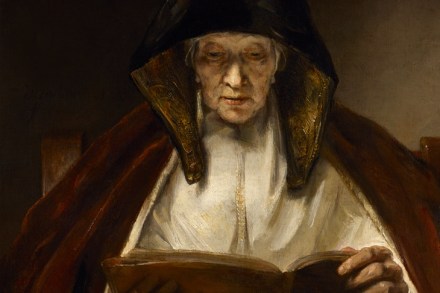
The Rembrandt show at the National Galleries of Scotland (until 14 October) has a problem. A mighty haul of Rembrandt paintings and prints are arrayed against a backdrop that mines the historical impact of his work on British artists and collectors. This is interesting. The problem is that the Rembrandt works are so astounding that there’s a danger you won’t bother with the rest. You should, because here Reynolds and Raeburn and Ramsay and more, all inescapably influenced by Rembrandt, tell fascinating and sometimes complicated tales of artistic heredity and homage. There’s no disgrace in going only for the Rembrandts, though.

Glasgow School of Art is much more than just an art college

From our UK edition

Let’s be clear. This is not Grenfell. The word ‘tragedy’ may be all over the news, Twitter may be full of despair, but no architectural loss can compare with the deaths of seventy-two people. Nevertheless, the response to the latest devastating fire at Glasgow School of Art really is visceral and profound, just as it was four years ago when part of the building that included Charles Rennie Mackintosh’s world famous art nouveau library, first burned down. The Mack, as the old section of the art school is known, is more than a building, more than an institution; it’s one of the cultural threads that runs through Glasgow, or at least through a wide slice of Glaswegian society.

Hot dogs

From our UK edition

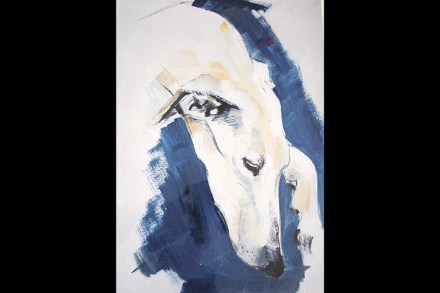
There are currently 151,000,000 photos on Instagram tagged #Dog which is 14,000,000 more than those tagged #Cat. The enormous number shouldn’t surprise us. We’ve been obsessively depicting our dogs since prehistoric times, when we painted them on walls, carved them in ivory and buried them with bones and blankets for the afterlife. A Dog a Day is one of two marvellous new books that feed this atavistic devotion. A handsome collection of Sally Muir’s dog portraiture, it demonstrates the artist’s technical range and her keen understanding of essential doggishness. The images are deft sketches that capture the particular hang of a hound’s head, the Mikado-sticks jumble of lurcher legs or the crazy glint in a spaniel’s eye.