Elisa Segrave

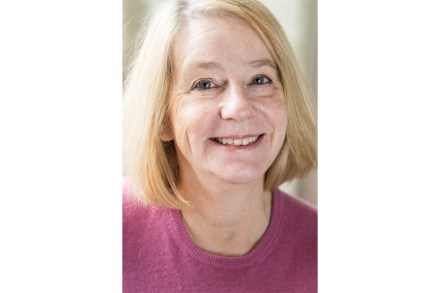
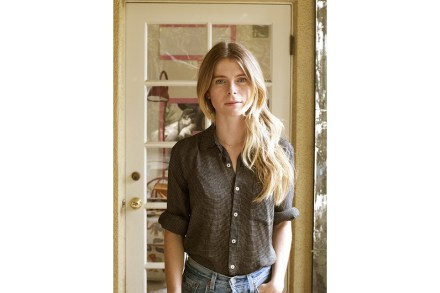
Elisa Segrave is an author whose books include The Girl from Station X: My Mother's Unknown Life.

Paw prints through the ages: a stunning visual history of man’s best friend

From our UK edition

Inspiring, educational, moving, sometimes distressing, this is a riveting visual history of man’s best friend. Thomas Laqueur, from a German Jewish family, whose mother owned boxers, introduces us to many hitherto unexplored facts. Who knew that in 1938 guard dogs, using Bedouin herding dogs, were specially bred for ‘the new Zion’? Or that Darwin thought that dogs have a conscience?   We are encouraged to scrutinise master- pieces of art with a fresh eye. In ‘The Wedding at Cana’ (1563), Paolo Veronese includes one white dog, who is ‘looking up at Jesus’s white shining face and invites us to join it’. Five dogs feature in this painting, and I took some time to spot each.

Chasing happiness: The Daffodil Days, by Helen Bain, reviewed

From our UK edition

Is there anything more to be said about Ted Hughes and Sylvia Plath? I didn’t think so, but Helen Bain’s debut novel The Daffodil Days proved me wrong. I did not expect to be absorbed, on the first page, by a woman cleaning a house (Court Green in Devon), the home Plath had just vacated with her two young children for London, where a couple of months later, in February 1963, she would gas herself.               Working backwards from December 1962, the novel describes the last 18 months of Plath’s life, glimpsed through some friends – writers and poets such as Al Alvarez, Bill Merwin and Marvin and Kathy Kane – but mostly through local people in or near the small Devon town of North Tawton.

The reality of raising an autistic child

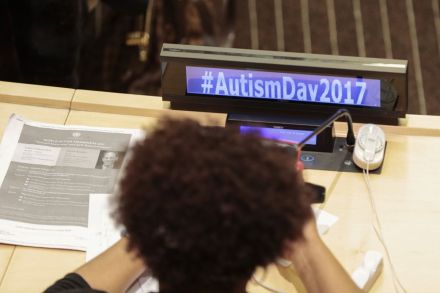
Although I disagree with Donald Trump’s and Robert F. Kennedy Jr.’s suggestion that mothers who took Tylenol during pregnancy may have caused the huge rise of children born with autism in the US, I also can’t agree with the spate of articles and interviews that have followed – several by high-functioning autistic adults, others by parents of autistic children – basically saying it is great to be autistic. I understand that they are fearful that Trump’s idea of a “cure” could result in anyone with special needs being regarded as subnormal and a second-class citizen, but it’s not helpful, either, to pretend that autism is without its many frightful drawbacks. My son, 42, was diagnosed with Asperger syndrome on his 13th birthday in 1996.

autistic

The hedgehog and the fox poll highest as ‘the nation’s top animal’

From our UK edition

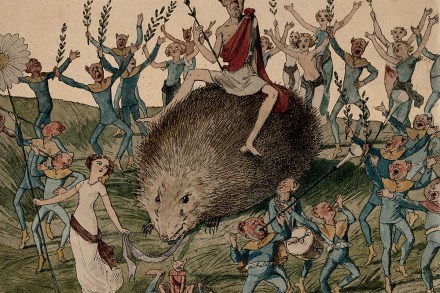
This is a truly wonderful book, erudite and fun. Karen R. Jones, a kind of alternative David Attenborough, explains her purpose: ‘Charismatic and amazing creatures are not only to be found in distant places. They are here. In our everyday spaces.’ Switching effortlessly and with relish between history, science and anecdote, the author selects ten creatures to represent Britain. Hedgehog and fox are polled highest as ‘the nation’s top animal’. Her other choices may surprise: sheep, pigeon, newt, herring, stag beetle, flea, black dog and plesiosaur.  The largest fox ever recorded, reported by the Daily Mail in 2012, was in Moray, Aberdeenshire, weighing 17 kilos. Foxes mate for life. One in seven cubs die in their first month, and their parents bring them playthings.

Is it wrong to try to ‘cure’ autism?

From our UK edition

Is autism the worst thing that can happen to a person? Is ABA – Applied Behaviour Analysis – the right treatment for an autistic child? Should an autistic person get away with being rude? Do autistic individuals not feel empathy? If, as exists for unborn Downs Syndrome babies, a precise test is found to diagnose foetal autism, should the mother abort? Is it wrong, as some high-functioning autistic people claim, to try to ‘cure’ autism? Surely it is important to offer intervention to less able autistic children and adults, to help make their lives more bearable? These are some of the questions discussed in this passionate and informative memoir.   Virginia Bovell’s son Danny, now 31, was diagnosed with autism in 1996, aged three.

Don’t bribe your dog with treats

From our UK edition

‘Do NOT look Lulu in the eye. Keep your voice low and soft and ignore her barking. Do NOT make arm or hand gestures. You can give her a treat, letting her come to you or drop it for her. She has been doing well with strangers outside but her property is difficult for her.’ I was alarmed by this WhatsApp message from my cousin. I was due to visit. Would I be attacked by Lulu when I walked in? Surely I wouldn’t remember these instructions forwarded from her trainer by then? My cousin’s family, like my own, have  always had dogs. But I was dismayed that, like most modern owners, they had sunk so low as to bribe their pets with food. I was trying to resist the contemporary training-with-food obsession with my own new Jack Russell, Peggy.

The Xi files: how China spies

From our UK edition

38 min listen

This week: The Xi files: China’s global spy network. A Tory parliamentary aide and an academic were arrested this week for allegedly passing ‘prejudicial information’ to China. In his cover piece Nigel Inkster, MI6’s former director of operations and intelligence, explains the nature of this global spy network: hacking, bribery, manhunts for targets and more. To discuss, Ian Williams, author of Fire of the Dragon - China's New Cold War, and historian and Guardian columnist Simon Jenkins joined the podcast.. (02:05) Next: Lara and Gus take us through some of their favourite pieces in the magazine, including Douglas Murray’s column and Gus’s interview with the philosopher Daniel Dennett.

Longing for oblivion: The Warm Hands of Ghosts, by Katherine Arden, reviewed

From our UK edition

This novel, set towards the end of the first world war, is eerie and fanciful yet gruesomely down-to-earth. It features Laura Iven, formerly a nurse at the Front – awarded the Croix de Guerre in 1915 – and her brother Freddie, part of the Canadian Expeditionary Force sent to take Passchendaele Ridge in November 1917. Owing to a deep shrapnel wound, Laura is back home in Halifax, Canada. It is January 1918, and the previous month her parents died when their ship Mont Blanc exploded in Halifax harbour. To make matters even worse, Freddie is missing. Laura is now a live-in nurse companion to three elderly sisters who conduct séances. A parcel arrives containing Freddie’s jacket and a German postcard with a cryptic note.

Israel’s challenge

From our UK edition

42 min listen

On the podcast: Anshel Pfeffer writes The Spectator’s cover story this week. He voices concern that support from Israel’s allies might begin to waver if they don’t develop a viable plan after the war finishes. Paul Wood – former BBC foreign correspondent – and Dennis Ross – former Middle East coordinator under President Clinton and advisor to President Obama – join the podcast to debate whether Israel can rely on its allies. (01:18) Also this week: In the Books section of the magazine this week we review Andy Stanton’s new book Benny The Blue Whale. It has a fascinating inception and was co-authored by the machine learning tool ChatGPT.

How to date a widower

From our UK edition

When is it acceptable to consider dating a widower? How do you know if they are still grieving and not ready to move on? According to statistics, men die earlier than women, so I was surprised this year to meet several whose wives had died before them. Divorced since the early 1990s, I had no intention of remarrying, but thought of striking up some sort of liaison with a widower. I had heard of women behaving in a desperate and undignified way, charging round with casseroles I had rejected two non-widowers, whom my grandmother would have described as ‘cast-offs’, meaning exes one mustn’t go back to.

How an animal psychic helped find a missing dog

From our UK edition

It was more in a spirit of desperation that I decided to contact an animal psychic after my friends’ terrier Lark disappeared. Lark vanished one evening from their house. She was chipped, and her collar had their number on it, but as the days went by no one called. Lark’s photo was put on Facebook and on posters near her home. Had she been stolen, or hit by a car? We searched for her body but found nothing. Was she stuck down a rabbit hole? Five days after her disappearance, my friends went on a prearranged holiday and left me in charge of the mystery. Becky mentioned birds of prey, and people living off the land. It seemed a litany of clichés I put dog food outside Lark’s home. What if she returned and, like Peter Pan, couldn’t get in?

My pilgrimage to Lourdes

From our UK edition

‘Will someone steal my coat?’ ‘No, you’re on a holy pilgrimage,’ my son’s Irish carer-companion Rosemarie reassured him. We were going to Lourdes, where in 1858 a poor peasant girl, Bernadette Soubirous, had 18 visions of the Virgin Mary. At Stansted I’d lost a tooth. I had a bad knee and an ancient foot injury. Should I not be in a wheelchair myself, instead of being a helper? Our group was BASMOM, the British Association of the Sovereign Military Order of Malta. I was a bit dubious about Lourdes (Rosemarie’s idea). Wasn’t the Order full of recusant Catholics who my father, a Knight of Malta himself, always claimed were ‘interbred’?

Caught in a web of lies: The Guest, by Emma Cline, reviewed

From our UK edition

This deeply unpleasant novel kept me reading all night. Alex, 22, preys on rich men as an upmarket prostitute, formerly in New York and now in resorts such as the Hamptons. She is a thief and addict, sneaking her boyfriend’s sleeping pills, his valuable watch, a former room-mate’s medication, random jewellery and any available alcohol, while lying to herself and others. Moving among the rich, she pretends to be one of them. Writing about them in their holiday homes, Emma Cline is skilful and observant: The women had a funny, girlish air: their tiny steps, their uncertain smiles, satin bows in their ponytails, though most of them were probably over 60, raised in a time when childishness was a lifetime female affect.

An angry poltergeist: Long Shadows, by Abigail Cutter, reviewed

From our UK edition

Long Shadows, a powerful novel set mainly in the American civil war, is very unlike Gone with the Wind. The narrator, Tom Smiley, is now an unhappy ghost trapped in his old home, which, apart from snakes, mice and silverfish, has been uninhabited since his widowed daughter Clara died. A young couple arrive: Harry, who has inherited the property, and Phoebe, a psychic. To Tom’s indignation, they start renovating, getting rid of loved objects such as his family’s kitchen table and piano. Letters, medals and his sisters’ clothes are unearthed, prompting painful memories for him.

Why aren’t mistresses a secret any more?

From our UK edition

I was shocked at a party recently when a woman I hardly know announced to me and another guest that she was the ‘mistress’ of a certain man in the room. I discussed it with my American friend in a local Italian afterwards. Holly took a robust view. ‘Since when does a mistress reveal herself publicly?’ she said, adding that the lover (married, we’d heard, to a third wife, not present that evening) should ‘kick the mistress to the kerb for not playing the role she signed up for’. She pointed out claims that George Bush Sr had a girlfriend, Jennifer Fitzgerald, for about 20 years who hardly anyone knew about. ‘Does a mistress nowadays even have her own “mistress” Instagram account?’ Holly wondered sarcastically.

School trip: My déjeuner sur l’herbe

From our UK edition

In 1966 we were 17 and about to do A-levels and leave our convent school for ever at the end of that summer term. Two girls were having a lesbian affair, another had been tempted to sleep with a boy, dramatically confessing this to our head nun, Mother Benedicta, in Mother B’s terrifying private room halfway up the staircase. Our head girl, Vanessa, had an older sister who would roar down to the school on the back of her boyfriend’s motorbike along with his friends, known as ‘leather boys’. Vanessa was worried about her sister living in sin. ‘The sins of the flesh are not the worst sins my child,’ Mother B wisely told her. (The sister was still married to her leather boy 50 years later while Vanessa married at least twice, and lived in sin.

Cop out: Boris’s battle to save the climate summit

From our UK edition

32 min listen

In this week’s episode: Can Cop26 deliver on its grand promises? In our cover story this week, Fraser Nelson assesses the state of the upcoming Cop26 summit in Glasgow and questions their very effectiveness in dealing with climate change in a world of global players with very different priorities. He is joined on the podcast by reporter Jess Shankleman, who is covering Cop26 for Bloomberg. (00:48)‘This one’s in Glasgow, but you’d best think of it as the Edinburgh Festival for environmentalism. Lots of fun, lots of debates, lots of protests, lots of street action, but not really any much of concrete substance.’ – Fraser Nelson Also this week: Is it moral to bribe your child to go to church?

Fight club: when book groups turn nasty

From our UK edition

‘Small friendly village book club is looking for three or four new members.’ I was infuriated to read this in our village newsletter, an alternative to the parish magazine. I had just been ‘cancelled’ by this ‘friendly’ club from featuring at one of their evenings. A text, sent by a hitherto pleasant woman who’d liked my last book, explained: ‘There are many hurt feelings in the village. We in the book group believe that your email, put on the parish council notice board, was hurtful and upsetting. So the feeling is that at the moment it would be better to postpone your visit.’ ‘Hurt’ seems to be a current buzzword for those who don’t share others’ views.

On the run from the Nazis: a Polish family’s protracted ordeal

From our UK edition

Writers of memoirs are often praised for their honesty — but how do we know? I found I did believe Frances Stonor Saunders for readily admitting her ambivalence towards her father, who died in 1997 of Alzheimer’s. She is ‘secretly furious’ with him for ‘not telling his story’. But when his suitcase — almost certainly containing revealing documents — is handed to her in a church car park in 2011, she baulks at opening it and puts it first in her mother’s attic (her parents divorced when she was eight), then in her uncle Peter’s, where it stays for the next ten years. Her mother had warned: ‘If you open that suitcase you’ll never close it again.’ This is an intense, sometimes sad book.

A quick fix: how Boris and Carrie can bring Dilyn the dog to heel

From our UK edition

A lot of nonsense is being written about Dilyn, the adorable Jack Russell owned by Boris and Carrie, a lookalike for my dog, Perry, now nearly 16. Is Dilyn the currently subdued Boris’s alter ego, one journalist wondered. We read that Dilyn allegedly humped Dominic Cummings’s leg, and at Chequers ‘mounted’ a stool made from the hide of an elephant shot by Teddy Roosevelt. He also peed on an aide’s handbag after she arrived at Downing Street for a meeting. Of course it is not the first time Boris has had a poorly trained dog in his life. When he was editor of The Spectator, a dandie dinmont called Laszlo terrorised the office, leaping on columnists and messing on furniture. The dog, who belonged to publisher Kimberly Fortier, was eventually castrated.