Catholicism

Mapping the Emerald Isle: Land, by Maggie O’Farrell, reviewed

Maggie O’Farrell’s two previous historical novels, Hamnet and The Marriage Portrait, made her a household name. Land marks a return to her Irish roots: ‘Every family has its myths and ours was that my great-great-grandfather had worked on the early maps of Ireland.’ The year is 1865 and 31-year-old Tomás, a mapmaker, accompanied by his ten-year-old son Liam, is in the employ of the English redcoats and tasked with surveying and mapping Ireland from top to bottom, rocky outcrop to drumlin.

Keir Starmer is downplaying the Islamist threat to Jews

At Tuesday’s anti-Semitism ‘summit’ in Downing Street, Sir Keir Starmer achieved a personal first. He used the word ‘Islamists’. But in order to utter a word he had previously avoided in relation to the subject, Sir Keir had to approach it crabwise. Instead of identifying Islamists as the main ideological and physical threat to British Jews, he said: ‘We’re clear-eyed about the fact that anti-Semitism does not have one source alone: Islamists, far-left, far-right extremism, all target Jewish communities.’ Islamists were thus inserted into the conversation but also downplayed. It is obsolete not to recognise that the far right in Britain – for the moment at least – more or less leave Jews alone.

Leonardo Sciascia and the reshaping of the detective novel

Northern Italians sometimes speak of Sicily as the place where Europe finally ends. The island was conquered in the 9th century by Arab forces from north Africa, who left behind mosques and orchards of pistachio and almond. The Arab influence remains strongest in the Mafia-dominated west of Sicily where the sirocco blows in hot from Tunisia. Leonardo Sciascia, the Italian detective novelist and essayist, was born in Racalmuto in western Sicily in 1921. The town takes its name from the Arabic rahal maut, ‘dead village’, after Arab settlers found the area devastated by plague. It appears thinly disguised as Regalpetra in Sciascia’s work. For years the Mafia infiltrated the town’s sulphur industry, but the mines are derelict now and the landscape looks denuded.

Why I’m keeping my Christmas decorations up until February

It feels like the 57th day of January. Last week the coldest temperature of the winter so far (-12.5°C) was recorded about 20 miles west of my house. And according to every newspaper and social media feed I have scanned since new year, I should be purging my body of toxins by eating ‘plant-based meals’, abstaining from alcohol or otherwise giving up any semblance of comfort and joy. But there is another way. This may be ‘the worst time of the year… the very dead of winter’, as T.S. Eliot described the season in ‘Journey of the Magi’, but we are still in Christmastide – right up until 2 February, or Candlemas.   Twelfth Night used to be about fun and misrule, incorporating elements of the Romans’ midwinter festival Saturnalia.

The diminutive dictator who ruled Spain with an iron fist

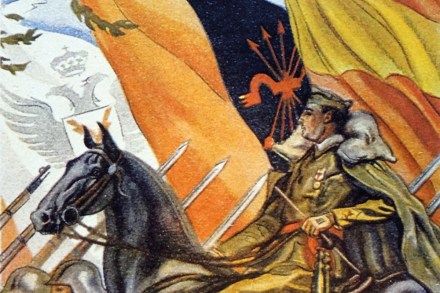
General Franco died on 20 November 1975, and with the 50th anniversary just passed, this biography – the first in years – of the man who ruled Spain with an iron fist for nearly four decades is timely, incisive and authoritative. Written by a former Madrid correspondent of the Economist, it’s also an up to date and highly accessible introduction to 20th-century Spanish history. Born in 1892 into a middle-class family, Francisco Franco shared a bedroom with his younger brother Ramon, who later won international fame as Europe’s ‘equivalent of Charles Lindbergh’. There were few signs, however, that eminence also awaited Francisco. A weedy child, who dutifully got by at school, he had a difficult relationship with his domineering Freemason father.

What do Oscar Wilde, Gwen John and Evelyn Waugh have in common?

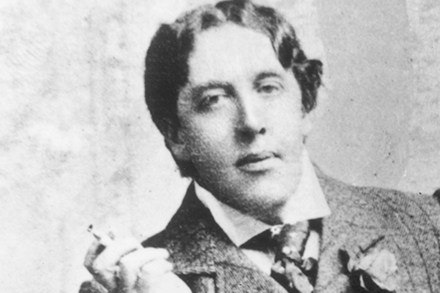
Religious conversions do not, for the most part, make for good anecdotes. An exception can be found in Patricia Lockwood’s memoir Priestdaddy, which describes the author’s father Greg’s road to Damascus experience in a nuclear submarine off the coast of Norway, where he watched The Exorcist 72 times: That eerie, pea-soup light was pouring down, and all around him men in sailor suits were getting the bejesus scared out of them, and the bejesus flew into my father like a dart into a bull’s eye. It was, Greg boasted, ‘the deepest conversion on record’.

The furious tug of war between 18th-century Whigs and Tories

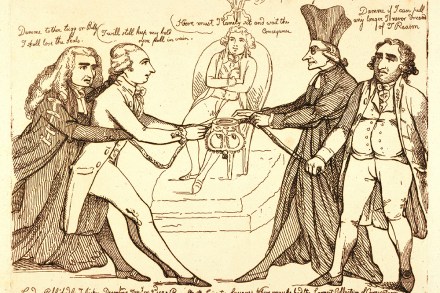
A foul-mouthed fantasist with a chin like an ironing board starts a wild conspiracy theory about the King’s brother. An alcoholic racing fanatic turns his gambler’s eye to the ballot box. A maniacal preacher gives such a polarising sermon that he paints himself as a second Christ and tours the country as a sex symbol. These are not the inventions of William Hogarth or Jonathan Swift; they are the figures who divided our political system in two, as George Owers tells us in his delightful new history of the birth of party politics. The Rage of Party traces the fevered rise of Whigs and Tories during the reigns of William III and Queen Anne.

Satanic verses: the origins of Roman Catholic black metal

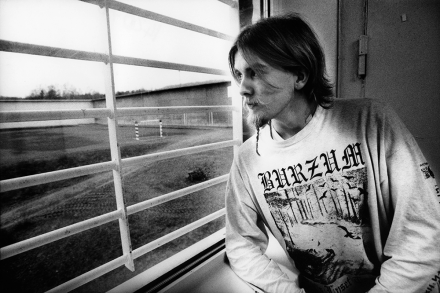
In his youth in the early 2000s, Emil Lundin became obsessed with the idea of recording the world’s ‘most evil album’. The lanky, long-haired Swede formed a black metal band and set to work. He faced an immediate obstacle. In making history’s most nefarious musical creation, he could hardly use Swedish, with its sing-song tones. English was also out of the question: he didn’t want to sound like Abba. That left Latin, the native tongue of the occult and, it is said, of demons. In a quest for suitably devilish lyrics, he pored over arcane texts. That led him to Latin editions of Sayings of the Desert Fathers – bad-ass early Christian monks – and St Augustine’s Confessions.

Are Vermeer’s paintings really coded religious messages?

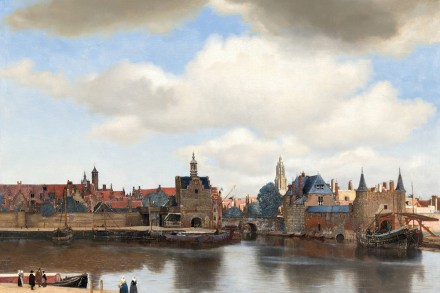
The Delft painter Johannes Vermeer, now probably the most beloved artist of the Dutch Golden Age, had an unusual career. His reputation in his lifetime was small. For some reason he painted almost exclusively for the van Ruijvens, so only those who knew the family would have been able to view much of the work. One foreign observer who did see a painting owned by a baker (probably handed over in security for a large overdue account) was incredulous at what the owner claimed was the value of a small picture by an unknown artist. After Vermeer’s death, and the sale of the collection for very little on the death of his patrons’ son-in-law, his name disappeared. He is hardly ever mentioned in any of the exhaustive and insightful 18th-century histories of Dutch painting.

A celebration of friendship – by Andrew O’Hagan

When I interviewed Andrew O’Hagan ten years ago about his Booker longlisted novel The Illuminations, the most striking thing that he said was: Friendship is more important than almost anything. I always thought it was a sort of deliverance, having a good friend, that they would bring a generosity and an unprejudiced eye to your ambition, your hopes and your thoughts in a way that family can’t always do. I mean what is family but a lovable collection of prejudices, some in your favour and some not? Although I agreed with him, I was intrigued that someone who was both a parent and a sibling would feel this way. The importance of friendship is clearly an ongoing preoccupation.

Which are the ‘Twelve Churches’ that made Christianity?

40 min listen

What links the Church of the Nativity in Bethlehem and St Peter's in Rome with the 16th Street Baptist Church in Birmingham, Alabama, and Canaanland in Ota, Nigeria? These are just some of the churches that Anglican priest and writer the Revd Fergus Butler-Gallie highlights in his new book Twelve Churches: An Unlikely History of the Buildings that made Christianity. The Anglican priest and writer joins Damian Thompson on Holy Smoke to explain how each Church not only tells a story but also raises a surprising dilemma for modern believers. Fergus aims to tell the history of the Churches 'warts and all' and argues that, from Turkey to Britain, today’s Christians must be prepared to defend their religious spaces.

The Catholic influencers spreading the word of God

Vatican City In an auditorium just outside St Peter’s Basilica, the Vatican’s Secretary of State, Cardinal Pietro Parolin, sat solemnly in the front row as a young crowd sang, danced and hopped around to a pop hymn. The cardinal, who is 70, was widely expected to become the pope earlier this year. Instead, he inaugurated the Catholic Church’s first social media influencer conference. Around 1,000 influencers attended last week’s Jubilee of Digital Missionaries and Catholic Influencers. In his opening remarks, Parolin described social media as not just an instrument of communication, but ‘a way of living in the world’.

It’s time for Pope Leo XIV to make some tough decisions

13 min listen

Nearly everyone loves Robert Prevost, the unassuming baseball fan from Chicago who unexpectedly became Pope Leo XIV this year. But as he prepares to spend his summer in Castel Gandolfo he has some difficult decisions to make. Is he prepared to clear up all the doctrinal confusion created by his predecessor Pope Francis? And will he allow liberal bishop to continue to persecute Catholics who prefer the ancient Latin form of Mass?  Damian Thompson gives us his thoughts in advance of Recovering the Sacred, a Spectator event at St Bartholomew-the-Great in the City of London on July 8 featuring debate and sacred music illustrating the recovery of tradition by a new generation of Christians. For tickets and more information, go to spectator.co.uk/church.

Letters: How lads’ mags spawned OnlyFans

Bad lads Sir: The articles on Britain’s relationship with porn were fascinating and frustrating in equal measure. Fascinating in that Louise Perry and Michael Simmons’s contributions (‘Devices and desires’ and ‘Dirty money’, 14 June) provided a thought-provoking analysis of the extraordinary growth of the industry. Frustrating in the juxtaposition of these pieces with Sean Thomas’s delusional thoughts about ‘lads’ mags’ (‘Age of innocence’). Mr Thomas seems to recall these publications with the same dewy-eyed fondness that folk of my generation reserve for Spangles and Bagpuss. He is unable to see the direct line that joins them to the worst excesses of OnlyFans.

The Renaissance master who rescued polyphonic music

Last month I watched conductor Harry Christophers blow through what sounded like an arthritic harmonica but in fact was a pure-toned pitch pipe, which handed the singers of his vocal group the Sixteen their starting notes. Then the Kyrie from Giovanni Pierluigi da Palestrina’s Missa Regina coeli unfolded inside the resonant splendour of St James’s Church in Mayfair and, 500 years after his birth, I grasped why Palestrina, maestro di cappella of St Peter’s Basilica in Rome from 1551-5, still has the capacity to surprise. Christophers and the Sixteen are celebrating this greatest of the late Renaissance composers in his anniversary year with three concerts promoted by the Wigmore Hall but held at St James’s: this music lives or dies by the acoustic in which it is heard.

Can Pope Leo end the liturgy wars?

Last weekend, under windswept banners depicting the Sacred Heart of Jesus and the Virgin Mary, nearly 20,000 young pilgrims marched through fields and forests between the cathedrals of Paris and Chartres. All of them carried rosaries and chanted in Latin, sometimes breathlessly: it’s a punishing 60-mile trek through mud and rocks. Each ‘chapter’ of the column was accompanied by priests. Like the lay pilgrims – drawn from 30 countries but dominated by French teenagers in scouting uniform – they wore backpacks and trainers, but also full-length cassocks or habits. They were traditionalists and so were the young people: despite their informality, they were utterly committed to intricate Latin worship.

Vampires, werewolves and Sami sorcerers

I have to be honest: I’ve never been much concerned with what happened in the Grand Duchy of Lithuania in 1387. I suspect that may even be true for many Lithuanians. In Silence of the Gods, Francis Young pinpoints this year – of the conversion of the duchy to Christianity – as the official triumph of Christianity in Europe over paganism and idolatry. But he then goes on to examine the debris – and the survivors of paganism and their traditions in the northern regions of Europe. The first difficulty is defining and identifying paganism. The book is published by Cambridge University Press, so there is an unmistakably academic, seminar-ready, conference-hardened edge to the text.

Finding spiritual treasure in César Franck

36 min listen

The Belgian composer César Franck – unfairly associated with kitsch and sentimentality by certain cultural sophisticates – wrote some of the most spiritually inspiring music of the late 19th century.  In this episode of Holy Smoke, Damian Thompson talks to the British-Israeli pianist Ariel Lanyi, who has just recorded Franck’s late masterpiece Prélude, Aria et Final on the Linn label. Ariel discusses the influence of Catholicism and the anti-Catholic Richard Wagner on the devout Franck, who was organist of a church in Paris for 30 years – but reserved his most profound thoughts for ostensibly secular works.  Produced by Patrick Gibbons and Damian Thompson.

The problem with Pascal’s wager

Blaise Pascal resists definition. During a short life (he died in 1662, aged 39) he invented the calculator, laid the foundations for probability theory and created the first public transport system. He was also an austere Catholic, whose call for a return to strict Augustinian doctrines put him outside the religious mainstream. As a philosopher, he is remembered today for his ‘wager’ argument – a challenge to atheists, framed as a cosmic gamble. As Graham Tomlin shows in this lively, conversational biography, Pascal worked in threes, often steering a course between extremes.

How silence makes music

‘What!? But they won’t let you in!’ and ‘What!? But they’ll detain you at the border!’ and ‘What!? But they’re all nuts over there!’ were just some of the responses from friends and colleagues at my announcement that I was heading to the US for three and a half weeks’ work. But my visa was valid and accepted at passport control, I wasn’t thrown in jail, and the people whom I met and worked with were perfectly sane, perfect hosts and a perfect delight. First up was the Minnesota Orchestra, where I conducted two concerts of my own music and more well-known works by Rachmaninov and Rimsky-Korsakov. Also on the programme was an excerpt from Wagner’s Parsifal.