Catholicism

An intimate, lucid and unforgettable new James MacMillan work

On Tuesday night I was at the world première of a motet by Sir James MacMillan and I don’t think I’ve ever heard a more haunting piece of music. It begins in half-light, with pinpricks from the organ so widely spaced that you could be listening to a forbidding tone row from the Second Viennese School. A four-part choir enters in close harmony and you realise that those apparently unrelated notes hint at austerely beautiful chords encircling the melody. In Carmel’s Shade is one of the smallest but brightest jewels in the MacMillan collection There are moments when we could be listening to Palestrina, to César Franck, to Benjamin Britten – a reminder that MacMillan is fluent in more musical languages than most living composers.

Fresh air and fascism in the Bavarian Alps

The village of Oberstdorf lies in the Bavarian Alps, geographically remote but, as this gripping book demonstrates, deeply etched by the politics and violence of the Third Reich. Julia Boyd and Angelika Patel have used diaries, letters, newspaper reports and the official papers of Oberstdorfers as a lens through which to look at the rise of Nazism in Germany. The result is a fascinating and often surprisingly discordant cacophony of experiences. Oberstdorf was a small village but it had a wide range. By the early 1920s it was a favoured tourist spot: its population of 4,000 was swelled to 9,000 by visitors who came for health cures and winter sports. There were several hotels, a cable car, a cinema and a sanatorium.

Friend of Elizabethan exiles: the colourful life of Jane Dormer

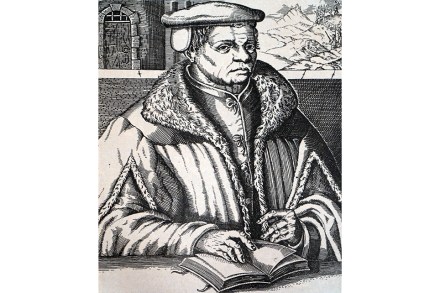
Thomas Cromwell’s biographer Diarmaid MacCulloch once told me that my father’s family, the Dormers, had been servants of the great enforcer of Henry VIII’s Reformation. This may have been a tease. It is a matter of family pride that Jane Dormer’s great- uncle, the Carthusian monk Sebastian Newdigate, was executed for refusing to accept the Royal Supremacy. Jane, Duchess of Feria (1538-1612), was named after his pious sister, her grandmother. Most of Jane Newdigate’s Dormer descendants remained stubbornly Catholic over the centuries of persecution that followed, but they were never aggressive about it.

A tale of forbidden love: Trespasses, by Louise Kennedy, reviewed

Kenneth Branagh’s Oscar-winning recent film Belfast chronicles the travails of a Protestant family amid sectarian conflict in 1969. Louise Kennedy’s much hyped first novel, set outside Belfast in 1975, explores the same tensions from a different perspective. Like her protagonist Cushla, Kennedy’s Catholic family owned a pub in a Protestant-majority town, and Trespasses captures how it feels to be outnumbered and under scrutiny. Kennedy’s career is enough to inspire anyone. A chef for 30 years, she only began writing at 47, but her ascent since is far from typical: nine publishers fought over her debut short story collection The End of the World is a Cul de Sac and she has twice been shortlisted for the Sunday Times Audible Short Story Award.

Monsignor Michael Nazir-Ali on his first Easter as a Catholic

22 min listen

My guest on this episode of Holy Smoke was an Anglican bishop for 37 years – one of the Church of England's foremost scholars and its leading witness for persecuted Christians. He was also an evangelical who, as bishop of the ancient see of Rochester, ordained women priests. But, as of this month, his title is Monsignor. I am, of course, talking about the Pakistani-born Michael Nazir-Ali, whose decision to join the Ordinariate has come as an enormous, if surprising, boost to the fortunes of that small but dynamic organisation for ex-Anglicans set up by Pope Benedict XVI. This will be his first Easter not just as a monsignor – he has just been made a Prelate of Honour by Pope Francis – but as a Catholic.

Is the Virgin Mary being sidelined by Rome?

The Catholic church has always venerated Mary (‘Mother of God’) above other saints. But in recent years there has been a slight (a very slight) cooling in the church with regard to the inclusion of Mary in the liturgy of the mass. It’s been an English custom since medieval times to recite a Hail Mary (a verse of the rosary – the traditional Marian prayer) at the end of the ‘Prayers of the Faithful’ – the sequence of introductory prayers in the main body of the service. But just over a decade ago Rome decided to gently discourage this practice. It still continues in many churches (old habits die hard) and in some senses represents a small disjunction in the English church’s relationship with Rome. Okay, not small – tiny. Infinitesimal.

Poland’s abortion culture war is a battle for the country’s soul

This week it emerged that a hospital in the city of Białystok in Poland refused to grant an abortion to a pregnant woman, even though her baby had no chance of survival. The abortion was requested because of the woman’s psychological state after learning about the foetus’s prospects. Although two psychiatrists confirmed she had severe depression, the hospital said this did not meet the level of risk required for an abortion under Polish law, after a ruling by the Polish Constitutional Tribunal last year made it illegal for doctors to carry out abortions unless a woman’s life is at risk or if the pregnancy is the result rape or incest.

Profound and original and unashamedly religious: Midnight Mass reviewed

I was turned on to Midnight Mass by Ricky Gervais who raved about it in one of his social media chats: ‘I absolutely loved it, and it got better and better. It’s like all the themes like love and death, regret, second chances, but it’s about good and evil in a biblical sense.’ Yes. Midnight Mass is very unusual in that (so far, at least; I’m only two and a bit episodes in) it seems to take Christianity at its own estimation. God is real, miracles do happen, even (or especially) the most miserable sinners can find redemption through repentance. Watching it is quite unsettling because you keep expecting the rug to be pulled from under your feet and, say, the hero priest Father Paul Hill (Hamish Linklater) suddenly to be revealed as a secret agent of Satan.

Why I left the Church of England: an interview with Michael Nazir-Ali

By now, almost everyone who’s remotely interested will know that Michael Nazir-Ali, former Bishop of Rochester, a man once tipped to become Archbishop of Canterbury, has converted to Catholicism. Dr Nazir-Ali is the second senior Anglican cleric to jump ship this year, which makes church gossip sound pleasingly Shakespearean: ‘Ebbsfleet has fallen… what and Rochester too?’ But it’s also sad. It’s as if the Church of England is exploding in slow motion, all its constituent pieces — bishops, buildings, parishioners — drifting off for want of a centre to hold them. When I went to meet Dr Nazir-Ali this week, I expected to find him full of vim.

The faith of Tyson Fury

As soon as he had beaten Deontay Wilder last weekend, Tyson Fury gave thanks “to my Lord and savior Jesus Christ”. He said that he was going to pray for his fallen opponent. He has said that when he was recovering from depression and mental illness he “couldn’t do it on [his] own” and got down on his knees to ask God for help: I went down as a four hundred pound fat guy but when I got up off the floor after praying for like twenty minutes...I felt like the weight of the world was lifted off me shoulders. Most media reports glossed over these (admittedly eccentric) expressions of Christian piety, but the clips of Fury praising Jesus for his victory went viral for good reason.

A papal visit would be another blow to Scottish anti-Catholicism

You wait 2,000 years for a papal visit and three come along almost at once. Reports in the Scottish press suggest that Pope Francis would like to say Holy Mass while in Glasgow for the COP26 climate summit in November. It would mark the third time a sitting pope has visited Scotland and celebrated Mass there. Saint John Paul II was the first to come, in 1982, and led an estimated 300,000 in worship at Glasgow’s Bellahouston Park, then in 2010 his apostolic successor Benedict XVI gave an open-air Mass in the same park to a crowd of 70,000. Both events were seen as successes, attracting interest from non-Catholics and prompting reams of favourable media coverage.

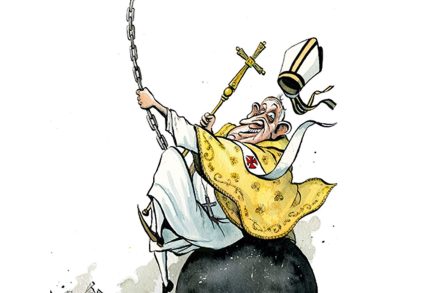
Pope Francis is losing his culture war

Since I wrote about the Pope’s declaration of war on the Old Rite, something unexpected and beautiful has happened. Many bishops have held the line. Far from all: some have gleefully welcomed the opportunity to extinguish the pretty rite, and intellectual justification has come, predictably, from the Jesuits, who haven’t been sound since The Exorcist. But so many other bishops have judiciously, almost seditiously, chosen to interpret the Pope’s instruction to the letter while ignoring its spirit, and given immediate dispensation to the priests who already say it to continue. Others, I'm told, have written or telephoned Old Rite-saying priests to offer personal comfort and reassurance. This is how you quietly turn the tide in a culture war. Ignore the bullies.

The word ‘mother’ isn’t offensive. The Catholic church should say so

I’m used to waiting for the Catholic church to make sense. I’m a convert to Catholicism, and Catholic ideas sometimes take a while to become clear. I start from a position of suspicious distaste, but if I sit tight, I’ve found, the strangest things come right. It’s in this spirit of patient confusion that, since the beginning of the year, I’ve been waiting for the Catholic bishops of England and Wales to speak out in defence of the word ‘mother’, and to state the simple, unremarkable fact that only biological women give birth. Out of America, out of universities, from the HR department of every big business has come this push against ‘gendered language’.

Orcadian cadences: celebrating the reclusive poet George Mackay Brown

Few journalists can have conducted such a dismal interview as mine with George Mackay Brown in the summer of 1992. The Times had sent me to Orkney, and the night before we met I sat up in my B&B reading his poetry, spellbound. So much to ask him! But that first meeting was a disaster. Brown was so shy he answered my questions in monosyllables. After five minutes he sat back and rested his lantern jaw on long hands, silent. Seamus Heaney called Brown ‘the praise singer’. There was no singing that afternoon. But the next day I ran into Brown at Mass (he was that rare thing, an Orcadian Catholic). He invited the whole congregation — five of us — to tea. In familiar company he was transformed: a generous host, a brilliant raconteur.

Audiences don’t want woke: comic-book writer Mark Millar interviewed

Mark Millar has a raging hangover but he couldn’t be more chirpy or enthusiastic. ‘People say they get worse as you get older but I get reverse hangovers where I feel amazing. I wake up at four or five and I’m ready to go!’ I’ve caught him on a Sunday morning, on his way to Mass, after an exhausting three weeks in which he has been doing up to 45 interviews a day to promote Jupiter’s Legacy, his blockbuster superhero series for Netflix. He ought to be nervous: this is his first big project off the blocks since (in 2017) the studio bought up his publishing company Millarworld for a reported $50-100 million. Instead, as ever, he’s fizzing with energy, enthusiasm and optimism. The reason, he explains, is that he was born with a kind of superpower.

Community music-making is the jewel in the British crown

Music is a universal language. The style that has enraptured me since childhood, classical music, has always had an international dimension, and has taken me around the world in the decades since. But even in those early boyhood encounters I became aware of music and musicians from many different lands and eras. Apart from the beauty and excitement of the music itself, the art form became an early gateway for me to languages, history, geography, philosophy, theology and much more. There were clearly a lot of Germans to grapple with (Bach, Beethoven, Brahms) — and some French (Debussy, Ravel) —as well as Italians (Vivaldi, Verdi) and lots of Russians too (Tchaikovsky, Stravinsky, Shostakovich). But where did my own country figure in all of this?

In defence of Flannery O’Connor

I have a thought for the students of Loyola University in Baltimore, Maryland: this Easter, why not resurrect Flannery O’Connor? Why not show that you appreciate America’s greatest Catholic writer even if the poor, frightened duds in charge of you do not? Last summer, the university’s president, the Revd Brian F. Linnane SJ, removed O’Connor’s name from its halls of residence. The New Yorker had published a pompous piece about racism in O’Connor’s private correspondence, the George Floyd protests had begun and so… best not make the students uncomfortable, said Father Linnane. The cosmic joke of this has stayed with me ever since.

In America, politics has become a form of religion

When I finally head back to church this weekend, after a year of Covid-avoidance, it is going to feel a little strange. These past 12 months constitute the longest stretch of time I’ve been away since I was born. And I’m not going to lie, part of me liked the sudden plague-long dispensation. I’ve become used to the lazy, empty, gently unfolding Sundays. They’ve grown on me. I could live like this, it occurs to me — as so many others do, all the time. So why go back? When I ask myself what exactly I’ve missed, I realise it isn’t a weekly revelation. I don’t expect to feel something profound every time I go to Mass — because most of the time I don’t, and rarely have.

The curious case of Cornelia Connelly

Visiting Jackson, Mississippi, in the 1980s, I found myself warmly welcomed (I cannot remember why) by a lively group of Catholic feminists. Their heroine was Mother Cornelia Connelly. I was embarrassed not to have heard of her since she did her greatest work near us in Sussex. Hers is quite a story.  In 1831, aged 22, she married Pierce Connelly, an Episcopalian minister, in her native Philadelphia. Both later converted to Catholicism. Pierce wanted to become a priest, which was difficult, what with a wife and five children. The couple eventually signed a perpetual deed of separation so he could be ordained. While still looking after her younger children, Cornelia became a nun. Coming to England, she established a teaching order, the Society of the Holy Child Jesus.

Is America now a Catholic country?

'It’s like being in church', said my teenage son. It was a bit — two bursts of prayer, a religious song, a long sermon, and a general air of community-reverence, inclusive piety. We were watching Biden’s inauguration last week, grateful for a mid-afternoon break from other screens. These are quasi-religious events — I knew that. But this time it seemed more pointedly religious than ever. Let’s get back to the true faith, after a spell of gold-plated idolatry. And, if you knew how to spy the signs, this ceremony reflected the new man’s Roman Catholicism — a Jesuit leading the prayers, a quote from Saint Augustine, songs from an Italian-American and a Latina.