Canada

Adrift on the Canadian frontier: The Voyageur, by Paul Carlucci, reviewed

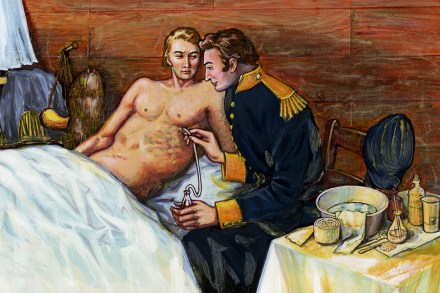
At the core of Paul Carlucci’s debut novel is a protracted medical experiment conducted by one human on another. Set on the Canadian frontier of the 1830s and inspired by historical record, the book takes the strange case of Dr William Beaumont’s tests on Alexis St Martin’s digestive system and spins a marvellously dark yarn around them, exploring the uses and abuses of an innocent. Alex is the innocent in question – the voyageur of the title. Our journey with him starts in raw boyhood, finding him living at the back of a Quebec harbour storehouse. His mother is dead, his beloved petit frère also. His grief-stricken father has sailed back to France, promising to return with enough earnings to start their dreamed-of peach orchard.
Montréal serves up a surprising array of off-season delights

From our US edition

There’s cold, then there’s winter-in-Canada cold. The kind where I’m jamming hand-warmers into my ski gloves — yet still somehow my fingers go numb — and snowflakes keep their intricate patterns as they scatter over my clothes (back home in comparatively balmy England, they’d melt instantly). But what did I expect? I’d made it my New Year’s resolution to travel off-season. Think Rajasthan in the summer monsoon, Sicily’s midwinter citrus harvest, Portugal’s Atlantic Coast when the record-breaking waves roll in come November. I’m not the only one with this idea.

Montréal

The problem with trying to resuscitate dying languages

Books about endangered languages tend to be laments, full of shocking statistics and portraits of impossibly frail, ancient last speakers in faraway places. Ross Perlin’s exuberant, radical book blasts that away, exploring, instead, New York, now ‘the most linguistically diverse city in the history of the world’, home to more than 700 languages (of approximately 7,000 on the planet), and a ‘last improbable refuge’ for many speakers of ‘embattled and endangered’ tongues. ‘Far from being confined to remote islands, towering mountains or impenetrable jungles, they are now right next door.’ So one block of flats in Brooklyn is a ‘vertical village’, home to 100 of the world’s 700 speakers of Seke, a language of Nepal.

Something the Tories can learn from Canada’s conservatives

When contemplating the scale of the Tories’ expected drubbing in the coming general election, some commentators reach for the example of Canada’s Progressive Conservatives. The 1993 federal election saw the governing centre-right party, which had been in power since 1984, lose all but two of its seats in the House of Commons. It never recovered and became defunct within a decade. The comparison is particularly tempting given one of the factors behind the Progressive Conservatives’ demise was the emergence of a rival right-wing party called Reform.

Longing for oblivion: The Warm Hands of Ghosts, by Katherine Arden, reviewed

This novel, set towards the end of the first world war, is eerie and fanciful yet gruesomely down-to-earth. It features Laura Iven, formerly a nurse at the Front – awarded the Croix de Guerre in 1915 – and her brother Freddie, part of the Canadian Expeditionary Force sent to take Passchendaele Ridge in November 1917. Owing to a deep shrapnel wound, Laura is back home in Halifax, Canada. It is January 1918, and the previous month her parents died when their ship Mont Blanc exploded in Halifax harbour. To make matters even worse, Freddie is missing. Laura is now a live-in nurse companion to three elderly sisters who conduct séances. A parcel arrives containing Freddie’s jacket and a German postcard with a cryptic note.

How Canada discovered resistance

From our US edition

In February 2022, I attended the Great American Outdoor Show in Harrisburg, Pennsylvania, and struck up a conversation with a hunting guide from Newfoundland. We talked about guided trips to hunt moose and caribou and about how much of a haul it is to get from Newfoundland to Pennsylvania (and to pretty much anywhere else, for that matter). At the time the “Freedom Convoy” — in which Canadian truck drivers were joined by thousands of demonstrators protesting Covid-19 lockdowns and vaccine mandates — was in full swing. My newfound Newfoundland friend seemed to be as polite and self-effacing as the stereotype, so I felt comfortable asking his thoughts on the Freedom Convoy.

canada

Exploring the forgotten towns of Green Bay

From our US edition

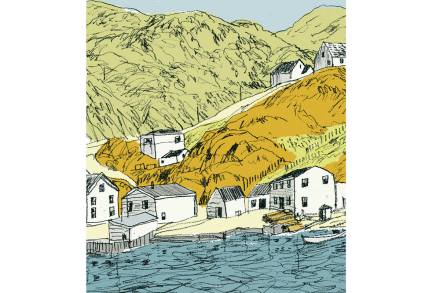
In Pilley’s Island, Canada, a tiny fishing town of barely 290 people along the northeast Newfoundland Great Whale Tour route, there’s a memorial to the area’s dead. It sits on a hillside, with a view of the rocky and wooded bay on the left, and a direct line of sight to the historic church on the right. These aren’t any generic old dead people honored at the memorial, though. Nor is it a memorial for local war casualties (that’s up a small trail nearby) or to fallen firefighters (that’s in the next town over). No — this is a memorial to the people who have died in other terrible ways. The top of the memorial says only “TRAGIC DEATHS,” with small plaques naming each person with possibly a date and a single letter in parentheses to denote the manner of death.

Green Bay

Internet poet Rupi Kaur boycotts White House Diwali celebration for Palestine

From our US edition

Cockburn was surprised to learn the war in Israel has a more global impact than he had previously imagined. The carnage in Gaza is affecting the way that Indian women living in the United States celebrate Diwali, at least according to the Canadian-Indian poet Rupi Kaur. South Asian women are now the latest group with a moral imperative to weigh in on the war.  Kaur’s crusade to involve an Indian holiday in a regional conflict all started when the internet poet, famous only to her 4 million Instagram followers and readers of New York women’s websites, rejected an invitation to a Diwali celebration that will be hosted by Kamala Harris on Wednesday. https://twitter.

rupi kaur

Justin Trudeau is tanking Canada’s economy

From our US edition

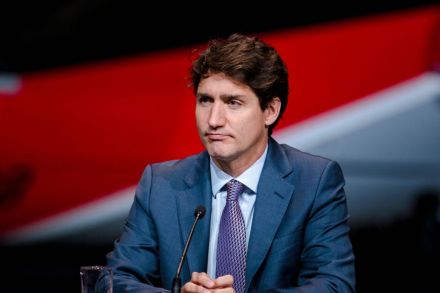
In September the leaders of the world’s most powerful nations met in New Delhi for the annual G20 Summit to address such heady matters as the war between Russia and Ukraine, the future of energy production and the criticality of food security. Everyone smiled for the cameras, shook hands politely and agreed to do their best to do something about everything, just so long as they weren’t asked to make any enforceable commitments. At the end of the weekend, all the great men and women of the world put their shoes back on, took one more group photo and bid adieu to their friends (and enemies). Then they all headed for home. All, that is, except one.

trudeau

Canada’s parents are taking to the streets

In the biggest demonstration since the Freedom Convoy, large numbers of Canadian families and supporters took to the streets across the country on 20 September to assert the rights of parents as primary educators and protectors of their children with the slogan, ‘Leave our kids alone!’  The ‘1 Million March 4 Children’ was spearheaded by Muslim Canadians in response to increasingly aggressive policy and curriculum changes in publicly funded schools, pushing radical gender ideology and putting content before children that protesting parents say is indecent or age-inappropriate. Turnout was impressive, with many thousands of participants in over 100 cities and up to 10,000 marchers reported at the largest gathering in Ottawa.

The lack of Indigenous mass graves in Canada

From our US edition

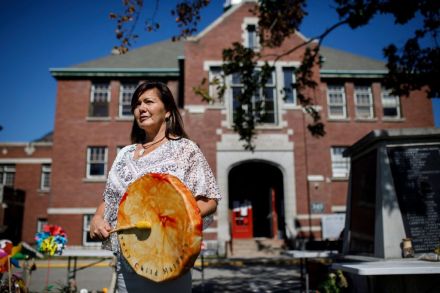
In May 2021, the Canadian Broadcasting Corporation reported that the remains of 215 children had been found buried at the former Kamloops Indian Residential School in British Columbia. The Tk'emlúps te Secwépemc First Nation band had confirmed the story, they claimed, quoting Chief Rosanne Casimir. “To our knowledge, these missing children are undocumented deaths,” she said. “Some were as young as three years old. We sought out a way to confirm that knowing out of deepest respect and love for those lost children and their families, understanding that Tk'emlúps te Secwépemc is the final resting place of these children.”  The outcry was enormous.

kamloops mass graves

Spectator Out Loud: Robert Tombs, Jamie Blackett and Tanya Gold

22 min listen

This episode of Spectator Out Loud features Professor Robert Tombs on Canada's willingness to believe anything bad about its own history (00:55); the farmer Jamie Blackett on the harms of wild camping (12:10); and Tanya Gold on the reopening of Claridge's Restaurant. Presented and produced by Cindy Yu.

The rise of conspiracy history

Readers would doubtless find it hard to believe that the late Queen and the Duke of Edinburgh kidnapped and killed indigenous children while on a state visit to Canada in 1964. Yet this story circulated for years in Canada along with other horror stories of the rape, torture and murder of indigenous children at the hands of depraved priests and nuns. The bodies, it was said, were thrown into furnaces or secretly buried at dead of night. These accusations were linked to boarding schools run by various religious bodies first established in the 19th century and finally closed in the 1990s. A Truth and Reconciliation Commission was set up in 2008, and millions of dollars were given by the government to search for clandestine mass graves. None was found.

Canada’s assisted dying horror story

My favourite Martin Amis novel was his 1991 book Time’s Arrow. It is a pyrotechnically brilliant work in which all time goes backwards. On publication it was criticised in some quarters because the novel includes a reverse version of the Holocaust and some thought Amis was using the Holocaust as a literary device. As so often, these transient critics didn’t get the point. It is hard to say anything new about the Holocaust or find any new angle on it. Europe, like Canada, does not believe in the death penalty for criminals. Only for victims But Amis managed, because towards the end of the novel (that is, at the beginning of the Holocaust) one of the characters starts to worry about the bodies that they are bringing out of the crematoria.

Wildfire apocalypse, not

From our US edition

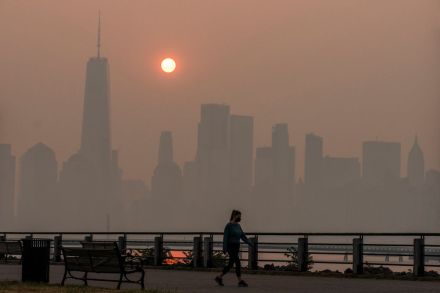
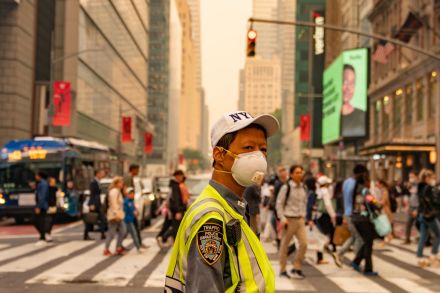
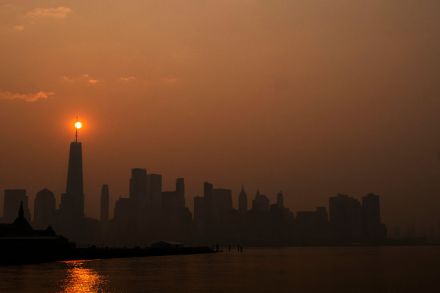
There was nothing new about springtime wildfires in Canada until the wind shifted unexpectedly last week. That shift blew smoky air all over the northern and eastern US, producing memorably apocalyptic-like orange air in New York City. Not wanting to waste a crisis, the lamestream media jumped right in with both feet. They blamed the wildfires on the much-dreaded “climate change,” scared the daylights out of everyone about the air quality and then warned that more like it was on the way unless we changed our fossil fuel-burning ways. Not unexpectedly, the media’s knee-jerk take was all wrong. Wildfires and smoky air have always occurred wherever there are forests. At least eighteen of these dark or “yellow days” occurred in the US and Canada from 1706 to 1910.

wildfire

The Canadian wildfire is a reboot of Covid panic mode

From our US edition

I was skeptical when my children arrived home from school Wednesday and informed me they could not play outside, irritated when they used the faculty fearmongering to demand screen time, irate when we pulled into the drop-off line Thursday morning. There was the crossing guard in an N95, a teacher in the same. A small boy was wrapped in useless cloth, dragged to the front steps by a mother sporting a surgical mask and a smart business suit. Evidently, cartoonish shoulder pads are making a comeback after a three-decade slumber, but mass panic barely had time to take a nap here in Washington before bureaucrats roused it in the name of public safety. It feels as though we are living in a horror movie and a particular one at that: the rushed sequel to a surprise box office hit.

wildfire canada covid

Climate change didn’t cause Canada’s wildfires

From our US edition

Is the hazy stuff out there smoke billowing down from Québec, or hot air emitted from smoggy-brained politicians and journalists? Chuck Schumer told the Senate on Wednesday that the smoke drifting over the Eastern Seaboard was caused by climate change. Alexandra Ocasio-Cortez said it showed the urgency of going greener faster. Proof of carbon pollution, lectured the Canadian minister of the environment. A stark reminder of climate change, intoned Biden. Every news organization and weather app out there suddenly became experts on a new hazard — not smoke or fire, well-known phenomenons that have been extensively documented throughout history — but a new threat, both more nebulous and more ominous: “air quality.

climate canada wildfires

The legal challenge to assisted suicide

From our US edition

Lonnie VanHook was preparing to board the train to Oregon when his body gave out. The Navy veteran is accustomed to these sorts of betrayals. He is quadriplegic and legless to boot; a rare form of cancer is eating away at his skeletal-muscle tissues and bladder. He awoke in a facility surrounded by medical professionals wearing the plastic countenances of concern and sympathy they picked up during the med school lessons on bedside manners. During the interaction, Lonnie told them about the reason for his upcoming trip. You can picture the Oakland native rolling his eyes as he has prepared for the rebuttal. The doctors, no doubt, exchanged astonished glances. Lonnie, what were you thinking?!? You don’t need to take the train. We can do that right here!

assisted suicide

How VICE lost its cool

From our US edition

Last week I was at a writers' party in Miami, a city at the cutting edge of tech, finance, the creator economy and nightlife. Naturally the writers were talking about themselves. I asked someone what he would do if he didn’t have to worry about pageviews or proprietors or the other pressing concerns of the modern media. “Think VICE, when it was good,” he replied. To me, VICE when it was good is the girl’s bum on the fiction issue from 2008. It’s Michael Moynihan’s raspy voice reporting from South Korea. It’s the floppy hair of the one super-hot reporter I knew that smoked filterless roll-ups. VICE was where the cool kids at the back of the bus would grow up to write, the place that you would daydream about working for as a young reporter.

vice

How to spend 48 hours in Montreal

‘You’ll see when you get there,’ my friend said. ‘There’s just a different vibe in Montreal.’ He wasn’t wrong. I travelled from Toronto by train – a five-hour journey made infinitely more bearable by the impressive landscapes that flashed past the window – to find that Montreal is a tale of two cities. Still distinctly North American – and Canada’s second most populous metropolis – Montreal is dotted with all the chrome skyscrapers and wide, bustling intersections you would expect. Yet around each corner there is also a dose of seemingly incongruous European flavour: a cobbled street, an old stone church, a statue in a tree-lined square. For every modern vista, there is a strip of café culture that kids you into thinking you have strolled down a French avenue.