Canada

Justin Trudeau’s rule could end this week

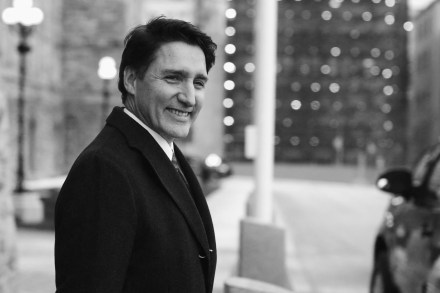
The next 48 hours could well spell the end of Justin Trudeau. The Canadian Prime Minister – the last major western leader of the pre-Trump era – is reportedly considering resignation, ahead of a key national caucus meeting on Wednesday. Over Christmas, a growing chorus of Liberal MPs from across the country have been issuing calls for Trudeau to quit. The Globe and Mail newspaper quotes sources suggesting that he will make an announcement before the Wednesday meeting to avoid the appearance that he was forced out by Liberal opponents. Still, no one should be in any doubt: after almost ten years in office, Justin Trudeau’s luck may have finally run out. With an election due by October at the latest, Canadian Liberals are looking nervously at the polls.

The case against assisted suicide

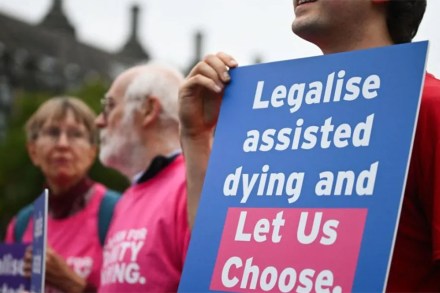
Those in favour of the Terminally Ill Adults (End of Life) Bill insist they’ve addressed critics’ principal concerns and that ‘stringent safeguards’ are in place. But it is impossible to see how this could be the case. If suicide is institutionalised as a form of medical treatment it is inevitable that vulnerable people will feel under pressure to opt for it, and inevitable that the bill will in time be amended and extended. In Canada, denying assisted suicide to people who are not terminally ill has been ruled to be discrimination Under the terms of the existing bill, a terminally ill person given less than six months to live will legally be able to take their own life if sanctioned by two independent doctors and a High Court judge.

Green Bay

Exploring the forgotten towns of Green Bay

From our US edition

In Pilley’s Island, Canada, a tiny fishing town of barely 290 people along the northeast Newfoundland Great Whale Tour route, there’s a memorial to the area’s dead. It sits on a hillside, with a view of the rocky and wooded bay on the left, and a direct line of sight to the historic church on the right. These aren’t any generic old dead people honored at the memorial, though. Nor is it a memorial for local war casualties (that’s up a small trail nearby) or to fallen firefighters (that’s in the next town over). No — this is a memorial to the people who have died in other terrible ways. The top of the memorial says only “TRAGIC DEATHS,” with small plaques naming each person with possibly a date and a single letter in parentheses to denote the manner of death.

The West faces a new type of housing crisis

From our US edition

Throughout the West, particularly the Anglosphere, housing costs are ravaging the middle class. Homeownership, long the key to social mobility, is on the decline, particularly among younger generations and minorities. According to the Organization for Economic Cooperation and Development, house prices in high-income countries have been rising “three times faster than household median income over the last two decades,” causing the standard of living “to stagnate or decline.” Unlike previous housing crises, this one is not primarily caused by mass displacements due to wars or natural disasters or population growth.

housing

My problem with the American election

In an ideal world, I wouldn’t have chosen an election year for my American book tour. It’s not that I dislike elections generally. And – praise be – a population of 300 million Americans has managed to raise one presidential candidate who is not a convicted felon awaiting sentence. No, my problem with American elections – and it viscerally distresses me every four years – is the affront to democracy called the electoral college. I’ve done the maths. The electoral college can hand you the presidency even if your opponent receives three-quarters of the popular vote. Of course that’s a hypothetical extreme. The familiar reality is that campaigns ignore all but a handful of ‘swing’ states. A genuine electoral college, however, could work rather well.

A chillingly seductive glimpse of assisted dying

A few weeks ago, I was present when my aunt, a Canadian citizen born in the UK, chose to die through euthanasia, or as it is euphemistically called in Canada, Medical Assistance in Dying or MAiD. Being British, I wasn’t familiar with the process. What I saw horrified me, but it was also chillingly seductive. My aunt was 72 and in the early stages of motor neurone disease. She had lost the use of one arm but though frail, was living independently and had perfect mental acuity. She was an artist who had worked in the theatre for 40 years designing beautiful and elaborate costumes. For several decades following her divorce she had lived determinedly alone and was not prepared to become an invalid. She made the decision to die freely and against the wishes of her family.

Whoever imagined that geology was a lifeless subject?

Rocks are still and lifeless things, and geologists are men with beards whose emotional bandwidth is taken up with an unnatural attachment to cherts and clasts and the chill beauty of the subducted lithosphere. Such is the stereotype. The academic geologist and New Yorker contributor Marcia Bjornerud has managed to go a fair distance towards dispelling it. In her previous book, Timefulness, she wrote for the general reader and with persuasive lyricism about readjusting our focus to thinking in geological time.

Why Joni Mitchell sounded different from the start

What makes Joni Mitchell’s music special? The lyrics alone put her on 20th-century music’s Mount Rushmore, alongside her cultural mirror Bob Dylan and her brief lover Leonard Cohen. But for me it’s her phrasing, her tunings and her sense of time. Decades on, her music remains endlessly surprising. Think a line is going in a certain direction? Think again, as Mitchell bends it away; or shifts key; or arcs her voice into its celestial sphere, only to suddenly plummet, like a plane in turbulence. And yet the swerves feel somehow right, inevitable.

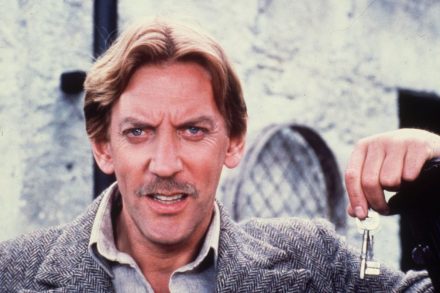
RIP Donald Sutherland, a Hollywood master

From our US edition

When the news of the Canadian actor Donald Sutherland’s death at the age of eighty-eight was announced yesterday, it was greeted with a sigh and a shout by his peers. A sigh, because every great actor’s death, even at a grand old age, is a sad loss, and a shout, because there will now be the niggling feeling that Sutherland never quite got his due treatment when compared to his peers. Yes, he won an honorary Oscar in 2017, and yes, he appeared in his fair share of hugely acclaimed and iconic pictures, from M*A*S*H to Pride and Prejudice. But Sutherland’s tendency to appear in a lot of undistinguished B-movies, especially in the Eighties, has counted against him.  This is deeply unfair. He was an actor who, even in the weakest films he appeared in, brought class and dignity.

donald sutherland

Meet Pierre Poilievre, Canada’s anti-Trudeau

From our US edition

An extreme form of mental gymnastics is required to believe that a pro-choice, pro-LGBTQ, pro-immigration philosemite in an interracial marriage is also Canada’s beachhead for an invasion of American-style white nationalism. Then again, Canadians have extremely flexible imaginations. There are armies of politically literate Canadians who earnestly think that Pierre Poilievre would be comfortable among the members of the Republican Party — even in the Freedom Caucus that comprises its rightmost flank. Not a few of them — grown adults who can tie their own shoes and read without moving their mouths — genuinely believe that Poilievre is something other than a mild-mannered, ideologically malleable, Ottawa-tempered functionary.

Poilievre

Peter Parker, Wayne Hunt, Nicholas Lezard, Mark Mason and Nicholas Farrell

33 min listen

On this week’s Spectator Out Loud: Peter Parker takes us through the history of guardsmen and homosexuality (1:12); Prof. Wayne Hunt explains what the Conservatives could learn from the 1993 Canadian election (9:10); Nicholas Lezard reflects on the diaries of Franz Kafka, on the eve of his centenary (16:06); Mark Mason provides his notes on Horse Guards (22:52); and, Nicholas Farrell ponders his wife’s potential suitors, once he’s died (26:01). Presented and produced by Patrick Gibbons.

Even Orwell’s Thought Police didn’t go as far as Trudeau

You’d assume the reaction to the SNP’s new hate crime laws would make other authoritarian governments hesitate before introducing similar legislation. Humza Yousaf has become a laughing stock and his approval ratings have fallen by 15 points. But apparently not. The new Irish Taoiseach, Simon Harris, is determined to railroad through the Criminal Justice (Incitement to Violence or Hatred and Hate Offences) Bill, Donald Tusk’s government in Poland wants to introduce a new law that would make it a criminal offence to ‘defame’ a member of the LGBT community and Justin Trudeau is pressing ahead with an Online Harms Bill that makes our own Online Safety Act seem like the First Amendment.

Adrift on the Canadian frontier: The Voyageur, by Paul Carlucci, reviewed

At the core of Paul Carlucci’s debut novel is a protracted medical experiment conducted by one human on another. Set on the Canadian frontier of the 1830s and inspired by historical record, the book takes the strange case of Dr William Beaumont’s tests on Alexis St Martin’s digestive system and spins a marvellously dark yarn around them, exploring the uses and abuses of an innocent. Alex is the innocent in question – the voyageur of the title. Our journey with him starts in raw boyhood, finding him living at the back of a Quebec harbour storehouse. His mother is dead, his beloved petit frère also. His grief-stricken father has sailed back to France, promising to return with enough earnings to start their dreamed-of peach orchard.

Montréal serves up a surprising array of off-season delights

From our US edition

There’s cold, then there’s winter-in-Canada cold. The kind where I’m jamming hand-warmers into my ski gloves — yet still somehow my fingers go numb — and snowflakes keep their intricate patterns as they scatter over my clothes (back home in comparatively balmy England, they’d melt instantly). But what did I expect? I’d made it my New Year’s resolution to travel off-season. Think Rajasthan in the summer monsoon, Sicily’s midwinter citrus harvest, Portugal’s Atlantic Coast when the record-breaking waves roll in come November. I’m not the only one with this idea.

Montréal

The problem with trying to resuscitate dying languages

Books about endangered languages tend to be laments, full of shocking statistics and portraits of impossibly frail, ancient last speakers in faraway places. Ross Perlin’s exuberant, radical book blasts that away, exploring, instead, New York, now ‘the most linguistically diverse city in the history of the world’, home to more than 700 languages (of approximately 7,000 on the planet), and a ‘last improbable refuge’ for many speakers of ‘embattled and endangered’ tongues. ‘Far from being confined to remote islands, towering mountains or impenetrable jungles, they are now right next door.’ So one block of flats in Brooklyn is a ‘vertical village’, home to 100 of the world’s 700 speakers of Seke, a language of Nepal.

Something the Tories can learn from Canada’s conservatives

When contemplating the scale of the Tories’ expected drubbing in the coming general election, some commentators reach for the example of Canada’s Progressive Conservatives. The 1993 federal election saw the governing centre-right party, which had been in power since 1984, lose all but two of its seats in the House of Commons. It never recovered and became defunct within a decade. The comparison is particularly tempting given one of the factors behind the Progressive Conservatives’ demise was the emergence of a rival right-wing party called Reform.

Longing for oblivion: The Warm Hands of Ghosts, by Katherine Arden, reviewed

This novel, set towards the end of the first world war, is eerie and fanciful yet gruesomely down-to-earth. It features Laura Iven, formerly a nurse at the Front – awarded the Croix de Guerre in 1915 – and her brother Freddie, part of the Canadian Expeditionary Force sent to take Passchendaele Ridge in November 1917. Owing to a deep shrapnel wound, Laura is back home in Halifax, Canada. It is January 1918, and the previous month her parents died when their ship Mont Blanc exploded in Halifax harbour. To make matters even worse, Freddie is missing. Laura is now a live-in nurse companion to three elderly sisters who conduct séances. A parcel arrives containing Freddie’s jacket and a German postcard with a cryptic note.

How Canada discovered resistance

From our US edition

In February 2022, I attended the Great American Outdoor Show in Harrisburg, Pennsylvania, and struck up a conversation with a hunting guide from Newfoundland. We talked about guided trips to hunt moose and caribou and about how much of a haul it is to get from Newfoundland to Pennsylvania (and to pretty much anywhere else, for that matter). At the time the “Freedom Convoy” — in which Canadian truck drivers were joined by thousands of demonstrators protesting Covid-19 lockdowns and vaccine mandates — was in full swing. My newfound Newfoundland friend seemed to be as polite and self-effacing as the stereotype, so I felt comfortable asking his thoughts on the Freedom Convoy.

canada

Internet poet Rupi Kaur boycotts White House Diwali celebration for Palestine

From our US edition

Cockburn was surprised to learn the war in Israel has a more global impact than he had previously imagined. The carnage in Gaza is affecting the way that Indian women living in the United States celebrate Diwali, at least according to the Canadian-Indian poet Rupi Kaur. South Asian women are now the latest group with a moral imperative to weigh in on the war.  Kaur’s crusade to involve an Indian holiday in a regional conflict all started when the internet poet, famous only to her 4 million Instagram followers and readers of New York women’s websites, rejected an invitation to a Diwali celebration that will be hosted by Kamala Harris on Wednesday. https://twitter.

rupi kaur

Justin Trudeau is tanking Canada’s economy

From our US edition

In September the leaders of the world’s most powerful nations met in New Delhi for the annual G20 Summit to address such heady matters as the war between Russia and Ukraine, the future of energy production and the criticality of food security. Everyone smiled for the cameras, shook hands politely and agreed to do their best to do something about everything, just so long as they weren’t asked to make any enforceable commitments. At the end of the weekend, all the great men and women of the world put their shoes back on, took one more group photo and bid adieu to their friends (and enemies). Then they all headed for home. All, that is, except one.

trudeau