California

‘I don’t want this state that I love to become the country I left’: Steve Hilton on why he’s running to be California governor

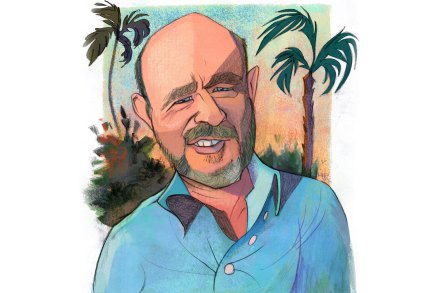
‘I don’t want this state that I love to become the country I left,’ Steve Hilton tells the lunch meeting of Southern California Republican Women. Knives and forks rattle on porcelain as the perfectly coiffured ladies down cutlery to clap. Remarkably, Hilton, the former director of strategy under David Cameron, has topped virtually every poll for governor of California since he launched his campaign in April last year. Hilton has leant into the West Coast aesthetic and spirit. Once the rebel of Downing Street in T-shirts and stockinged feet, today he sports a tech-bro beard, more bracelets and beads on his wrists than Prince Harry, and has the top three buttons of his white shirt undone. British by birth, he has renounced his citizenship and become an American.

Unhappy band of brothers: the Beach Boys’ story

Film noir was the term coined by the French in the late 1940s to describe the genre of Hollywood crime movies which probed the darkness that lay in the shadows cast by all that bright Californian sunlight. The Beach Boys, who broke through in the early 1960s with a repertoire that hymned, in five-part harmonies, the Golden State’s promise of sun, sand and waves, bronzed bodies, beach-party ‘babes’, hot rods and open highways, were – and remain – the quintessential Californian band. But their story, an unhappy family saga featuring the three Wilson brothers (Brian, Carl and Dennis) and cousin Mike Love, is, like that of California’s itself, as dark as it is light. Their presiding musical genius, Brian, died in June.

‘Sitting the 11-plus was the most momentous event of my life’ – Geoff Dyer

Geoff Dyer, eh? Geoff Bloody Dyer – without doubt one of contemporary Eng. Lit.’s most successful, intellectually playful and stylistically distinctive voices. His extraordinary oeuvre spans fiction, non-fiction, memoir, criticism and genre-defying hybrids, often likened – I don’t know by who, but by me at least now – to greats such as W.G. Sebald or Roland Barthes. Dyer expertly navigates the tricky territory between high culture and everyday experience, balancing erudition with comic digression in books ranging from Out of Sheer Rage (a hilarious study of not writing a book about D.H.

The road trip from hell: Elegy, Southwest, by Madeleine Watts, reviewed

Throughout her quietly compelling second novel, Elegy, Southwest, Madeleine Watts conjures a sense of trundling steadily towards disaster. The narrator, a young Australian woman called Eloise, is recounting a road trip that she and her husband Lewis took through the American Southwest in 2018 – while a deadly fire was sweeping through northern California. The trip was bookended by disasters you could describe as closer to home: before it, Lewis’s mother died; after it, Lewis disappeared. By combing through their time in and out of the ‘climate-controlled interior of the car’, Eloise tries to figure out what happened. The journey is part business, part pleasure. Eloise is researching her dissertation on the Colorado River.

Her weird name was the least of Moon Unit Zappa’s problems

On Frank Zappa’s first date with Gail Sloatman, he blew his nose on her skirt. As acts of territory-marking go, it’s hard to imagine something more equivocal. But Gail, a 20-year-old secretary at Los Angeles’s Whisky a Go Go club, must have read it as love. She built her life around the musician, composer and ‘rock’s most committed iconoclast’, as his New York Times obituary described him, for 27 years, until his death from prostate cancer in 1993, aged 52. A year after that first, snot-filled seduction, the Zappas were married, a week before Gail gave birth to Moon Unit, the first of four children. Moon’s name is not a compound noun: Unit is her middle name, given to reflect how her arrival turned two people into a single family – Frank’s idea.

Private tragedies: Must I Go, by Yiyun Li, reviewed

I can think of few novels as bleak or dispiriting as Yiyun Li’s 2009 debut, The Vagrants. Set in a Chinese industrial town in 1979, it opens with one woman’s death and closes with another. The pages in between are jammed with misery meted out by scalpel: treacherous friends, underfed children, craven officials, all have their turn upon the stage, while school choirs sing unfalteringly in praise of the communist party. Her latest book, Must I Go, is more cheerful, if only by a whisker. It’s the first time Li has set a novel squarely in her adopted America, with a faded Californian babe as its heroine. Lilia Liska is 81 and thrice widowed. She is spending her final years in a retirement village that she tolerates.

Dedicated to debauchery: the life of Thom Gunn

In 1876, writing to his friend Gertrude Tennant, Gustave Flaubert set down a principle that artists and writers should live by: Soyez réglé dans votre vie et ordinaire comme un bourgeois, afin d’être violent et original dans vos œuvres. (Be regular in your life and ordinary as a bourgeois, in order to be violent and original in your work.) The life of the English poet Thom Gunn had its disciplined aspect (he managed to hold down a job at least), but, overall, it was so dedicated to debauchery and excess that it’sa wonder it lasted as long as it did. The story, told in detail by Michael Nott, makes even the least censorious reader sometimes wonder why this seemed like a good idea. Gunn was born in Kent in 1929 to an upper-middle-class intellectual family.

A long goodbye to Berlin

Christopher Isherwood pioneered what is now known as ‘autofiction’ long before it acquired that label. His best known work, Goodbye to Berlin (1939), which later inspired the musical Cabaret, was based on the diaries he kept while living in the Weimar Republic in his twenties. He’d already used the material before in Mr Norris Changes Trains (1935), a brilliant black comedy thriller that deserves to be read alongside more supposedly serious works of modernism. Forty years later, he reworked the experiences yet again in Christopher and His Kind (1977), in which he finally made explicit, for the new gay liberation era, what had been suppressed in the earlier works: his homosexuality, which had previously been outlawed.

The lost America of Palm Springs

California was once home to a certain vision of the American dream; Mamas & the Papas records, grinning surfers, chrome bumpers. Now LA and San Francisco are full of glass and steel and petty criminals. Escape their sketchy downtowns and you’ll find huge copy-and-paste estates of identical homes. Urban sprawl has choked off California’s charm in everywhere but Palm Springs, a desert valley city to the east of Los Angeles.  Kirk Douglas lived here, alongside Rock Hudson, Janet Gaynor and Frank Sinatra. Elvis and Priscilla Presley honeymooned in the city for the whole of 1967. Producers would often oblige their stars to remain within a two-hours drive of their LA studios. Meanwhile, paparazzi were only reimbursed for travel within 100 miles of LA.

The tyranny of 1970s self-help gurus

As any book about the rise of that most nebulous idea ‘wellness’, should, James Riley’s Well Beings begins with Gwyneth Paltrow, purveyor of ‘This Smells Like My Vagina’ candles, ‘Metabolism-Boosting Super-powder’ and nostrums about mindfulness and ‘self-care’ – for which read self-indulgence. In 2019 Paltrow’s company Goop chartered a luxury liner for a ‘Goop at Sea’ extravaganza, at which attendees were invited to spend $4,200 for the ‘basic’ cruise and a suite at the ship’s onboard spa, and a further $750 for the event itself, the highlight of which would be an appearance by the high priestess of wellness herself. Goop at Sea was cancelled due to Covid.

Newsom is asking the nation’s high court to right progressive wrongs

California’s derelict legions are everywhere — under bridges, near railroad tracks, blocking off-ramps and weaving unsteadily across busy avenues on bicycles.  The soft-woke rich can no longer hide in luxe enclaves. Taxpayers are fleeing the troubled state, hundreds of thousands of them since 2020. California’s fabled quality of life is taking a rapid dive, yet the cost of housing, already outlandish, goes up and up. Five years ago, the Ninth Circuit Court of Appeals upheld Martin v. Boise, declaring that municipal laws, “prohibiting sleeping outside against homeless individuals with no access to alternative shelter,” violate constitutional protections against cruel and unusual punishment, thus voiding local vagrancy laws.

‘People thought I was insane’: Graham Nash on the birth of Crosby, Stills and Nash

Graham Nash always seemed like the reasonable, peace-making one among his famously fractious compadres, David Crosby, Stephen Stills and Neil Young. But he didn’t get to where he is today by being plagued with doubt or false modesty. Even talking remotely over a Zoom connection, he still radiates a kind of unshakeable certainty. ‘I just trust that the universe loves me enough to support what I’m doing,’ he declares. ‘I don’t seek my life, my life happens to me and I’m perfectly content to let it. Look what I’ve done in my life… Pretty nice!’ ‘Joni was the only witness to that sound and it was created in less than a minute’ At 81, Nash is, incredibly, a pre-baby boomer, but mentally he seems about three decades younger.

Stewart Brand: man of ideas and infuriating contrarian

In his 2005 book What The Dormouse Said John Markoff traced the roots of the personal computer industry to the counterculture of the 1960s – a tale that owed as much to Jefferson Airplane as Jeffersonian ingenuity. Constantly popping up in that narrative is the adopted Californian Stewart Brand. Markoff wrote of his ‘Zelig-like penchant’ for being present at turning points in the story. Whole Earth, viewed one way, is an extended apology for that epithet. ‘The Zelig reference,’ Markoff says now, ‘is the wrong way to describe him, for there has been a consistent through line that has connected his various campaigns, crusades and inquiries over more than six decades.