British 20th-century history

There will be blood – the vital work of field transfusion units

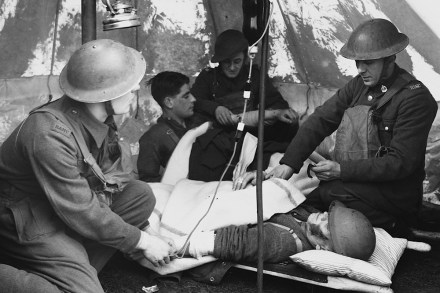
Most conventional second world war military histories focus on weapons, materiel and even the manpower needed for a decisive victory over Hitler and the Axis powers. Little has been written about blood as a strategic resource. However, a pioneering service of specially trained medics who worked dangerously close to the front lines, pumping blood into the veins of battle casualties, saved not only lives but contributed significantly to winning the war. They did this by returning men to the front line and boosting morale by persuading them that, if wounded, they had the maximum chance of life.
The vexed relationship of Winston Churchill and George V

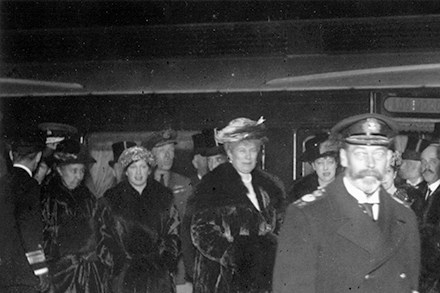
It is ironic that although Winston Churchill revered the concept of monarchy – his wife Clementine joked that he was the last believer in the Divine Right of Kings – half of the six monarchs under whom he served had anything but reverence for him.  He never met Queen Victoria, who signed his officer’s commission but died when Churchill was 26. He had a complicated relationship with Edward VII. As Prince of Wales, in 1876 Edward had been blackmailed by Winston’s father Lord Randolph Churchill, and had later slept with Winston’s mother, Jennie Jerome, after Lord Randolph’s death.

Why the General Strike of 1926 could never succeed

Although it may be in bad taste to have a favourite story about the General Strike of May 1926, one served up by David Torrance in his superb The Edge of Revolution is probably unbeatable. He quotes an anecdote told by Walter Citrine, the 39-year-old acting secretary of the TUC, who recalled a man ‘with rather sharp, hawk-like features’ turning up at the Congress’s London headquarters in Eccleston Square, near Victoria Station, and offering, in return for £1,000, to solve the unions’ problems.  He announced: I want 100 trusted men and if you cannot find them, I can. I will arm them, take them along to Downing Street, shoot the members of the cabinet and hold Princess Mary’s children as hostages.

The anxious gaiety of Britain’s interwar years

However many times one absorbs the brevity of the interlude between the first catastrophic worldwide conflict of the 20th century and the next, it was the not-knowingness of that timetable that allowed society to cope. In the 20 years between world wars that shattered several generations, Britain’s full emotional recovery was never really accomplished. But with his eye for the political and the cultural, for the game-changing and the deliciously absurd, for comedy and for tragedy, Alwyn Turner demonstrates the irrepressible optimism of humanity, whatever the circumstances: ‘Highbrows and lowbrows [lived] cheek by jowl, rubbing along with politicians, priests and pressmen.

The dirty war of Sefton Delmer

There is an obvious problem with trying to judge who ‘won’ a propaganda war. Unlike its physical counterpart, there is virtually no real-world evidence either way, and everyone involved has spent years learning how to spin, manipulate and outright lie about reality to try to shape it into what they want. As a result, it remains the conventional wisdom – among those who think of such things, at least – that despite their eventual and total defeat in the second world war, it was the Nazis who won the propaganda war of their era.

What Britain owed to Gracie Fields

Simon Heffer is the supreme Stakhanovite among British writers. Where the original Stakhanov moved 227 tonnes of coal in a single shift, within the past decade Heffer has produced four massive volumes of modern British history, each little less than 1,000 pages. Alongside them he has edited three equally voluminous diaries of the waspish socialite MP ‘Chips’ Channon, as well as writing regular reviews and columns. Hats off to the master!

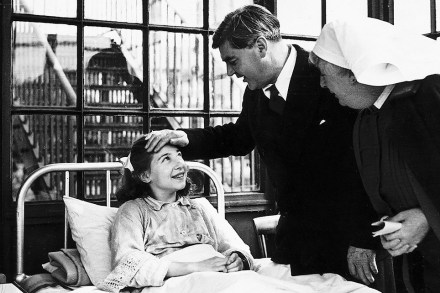
How much does Britain still ‘love’ the NHS?

‘Of course I support the NHS. Everybody supports the NHS, or says they do,’ poked the comedian Frankie Boyle in one of the many campaigns promoting the health service. To admit you don’t believe in this national institution is as taboo as not caring about Britishness, about goodness, about people. The public is keen to find evidence for this collective belief. Nigel Lawson famously said that ‘the NHS is the closest thing the English have to a national religion’ – words which tend to be heard as praise. But his comment was laced with criticism. He continued, ‘with those who practise in it regarding themselves as a priesthood. This made it quite extraordinarily difficult to reform.

The pacifists of the 1930s deserve greater understanding

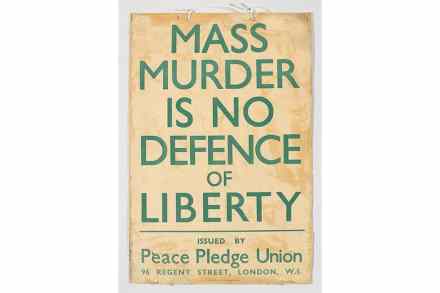
As I’ve occasionally come to think is the case with The Spectator, this book is perhaps best begun at the back. Otherwise it might be taken for niche history – applied historical moral philosophy, say, or an aspect of ‘the people’s war’ usually overshadowed by the manifest imperative to defeat the unparalleled evil of Nazism. That evil, concludes Tobias Kelly, professor of political and legal anthropology at Edinburgh, has indeed ‘become the frame through which we seem to assess all evils’; but ‘the spectre of appeasement has also reared its head too often’.