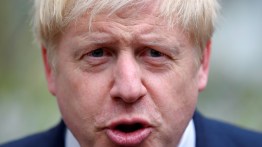
Boris johnson

Ex-Tory rebels plot to reintroduce Theresa May’s Brexit deal

The rebel MPs kicked out of the Tory party held a phone conference last night to plot their next move, I understand. The group, now numbering 22 after Amber Rudd’s resignation, is keen to work across the Commons to get a deal past MPs that the European Union would accept, and it wouldn’t be a million miles away from what Theresa May tried – and failed – to get MPs to approve. There’s another meeting today, this time of the group ‘MPs for a Deal’, which is being led by Rory Stewart from the ex-Tory side, and Labour’s Caroline Flint and Stephen Kinnock.

Amber Rudd quits Cabinet – and the Tory party

Amber Rudd has quit the Cabinet and resigned the Tory whip. Rudd’s departure deepens the split in the Tory party and will be a particular blow to Boris Johnson; the pair have always got on well personally despite their very different views on Brexit. What will worry Number 10 is that Rudd might start something of a domino effect. There are, as I said in the Sun this morning, several Cabinet Ministers who are worried about the government’s direction and irritated at not being more involved in Number 10’s decision making. I hear that others might follow her out of the door in the next 48 hours, as we discuss in the latest podcast (below) Rudd backed Remain in the referendum and Jeremy Hunt for the Tory leadership.

Tories pushing for Boris Johnson v Jeremy Corbyn TV debates

Boris Johnson’s best route to a majority is turning the election into a question of whether you want him or Jeremy Corbyn as Prime Minister, I say in The Sun this morning. Polling shows that 43% of voters regard a Corbyn premiership as the worst outcome to the current crisis, compared to 35% for no deal. If Boris Johnson can get the vast majority of that 43% to vote Tory, then he’ll get the majority he so desperately needs. This desire to frame the election as a choice between Boris Johnson and Theresa May means that he is taking a very different approach to TV debates than Theresa May did. I understand that negotiations have already begun with the broadcasters and the Tories have made clear that they’ll do as many head to heads with Jeremy Corbyn as possible.

What the opposition pact means for Boris Johnson’s path to an early election

Although Downing Street heralded Thursday the 'first day of the election campaign', Boris Johnson is yet to be able to call an election. Today Labour and other UK opposition parties have agreed not to back the Prime Minister's call for general election before the October EU summit. Explaining the decision, the SNP's Ian Blackford said they wanted to make sure the UK did not crash out in a no-deal Brexit. Ahead of the meeting, Corbyn had been under pressure from figures including Keir Starmer to hold off on an early election until after an extension has been requested on 19 October. Johnson had hoped to have an election October 15 - before the crucial EU summit meeting and thereby run a campaign about who should go to that meeting and represent the UK. In response to the news, a No.

The political pact that could save Brexit

If there is to be an election before we leave the European Union, some kind of non-aggression pact between the Tories and the Brexit party is essential. Without it, the risk is all too obvious: that pro-Brexit voters will be divided, allowing pro-Remain candidates to win, even in some constituencies where a clear majority are in favour of leaving. A case in point is Boris Johnson’s constituency. Uxbridge and South Ruislip is in the London borough of Hillingdon, where 56.37 per cent of votes cast in the 2016 referendum were for Leave. But his majority in 2017 was only 5,034, and if the Brexit party fields a candidate against him — particularly if some of the pro-Remain parties decide to stand down in favour of Labour — there’s a chance he’ll lose.

Gatekeeper anxiety: a new disease for our times

A general election looms, the outcome could go almost any way and those who normally offer themselves as experts are seized by panic. Parliamentarians, journalists and academics who previously exerted a degree of control over policy, debate and knowledge — or flattered themselves to think they did — worry their grip is being loosened. Behold gatekeeper anxiety: political and media elites locked in a feedback loop of despair. Sufferers’ symptoms range from anguish to hysterical anger. The backlash against Boris Johnson’s decision to prorogue parliament is a good example. His move was political skulduggery — but the gatekeeper class hallucinated a ‘coup’ and imagined themselves as democracy’s last line of defence against tyranny.

Boris Johnson could be about to lose everything – or redefine British politics

Boris Johnson has already decided on his election message: vote for me and get Brexit, vote for anyone else and get Jeremy Corbyn. He will ask voters: who can you imagine negotiating best with Brussels? Me, or Corbyn? Clear as the message may be, the Prime Minister is risking everything in this contest. He could lose it all: Brexit, his premiership, the party, the works. He could go down in history as the shortest-lived occupant of No. 10. Or he could win, take this country out of the EU, then realign and reshape British politics. As one of those intimately involved in the decision to go for an election puts it: ‘It is a massive gamble. Nobody knows how it will pan out.’ One secretary of state admits that the outcome of the election is ‘totally unknowable.

Boris Johnson denied election request – but snap poll remains likely

Boris Johnson has lost his third government vote – and his first bid for an early election. MPs voted against his call for an early election under the Fixed Term Parliaments Act, with Johnson failing to get two thirds of the Commons to vote for it – 298 MPs voted in favour with 56 against. On hearing the news, the Prime Minister said that Jeremy Corbyn was the first opposition leader in history to refuse a general election. Ahead of the vote, Johnson had vented that it was ‘completely impossible’ for government to function when MPs won’t back any government legislation. He said the choice the public needs to make is who should go to the EU council summit and sort out Brexit. So, is an election off the cards? Not at all. No.

Boris Johnson’s confusing election stance

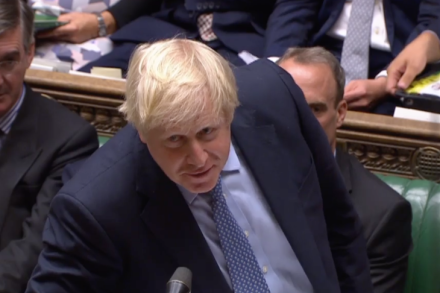
Does Boris Johnson want an election or does he not want an election? He managed to make both claims this afternoon at Prime Minister's Questions, accusing Jeremy Corbyn of being a 'chlorinated chicken' for not wanting an election, while also continuing to insist that he didn't want one either. He then – apparently accidentally – told the Chamber that he did want an election. The whole effect was rather chaotic, and Johnson's demeanour wasn't particularly prime ministerial. He even said 's***' in the Chamber, which might have been designed to get all the attention in a session where Corbyn unusually had the upper hand. When someone takes on the highest office, their stature often appears to grow a little.

Boris tries to charm Tory MPs in Commons tearoom

The Tory rebels on tonight's motion are in the process of losing the party whip. There were many more than the whips had expected, but this may well be seen by those around Boris Johnson as being a way of getting rid of the sort of MPs who would always be a thorn in the Prime Minister's flesh. There is little point in having an election to get a majority if that majority turns out to be hollow, with a large group of backbenchers who won't actually back the government on the key issue of the day. All this might be true, but the Conservative party tonight is in a state of shock.

Government loses vote – Boris Johnson looks to early election

Boris Johnson tonight suffered his first government defeat in his first Commons vote since becoming Prime Minister. Tory rebels joined forces with opposition MPs to take control of the agenda tomorrow – the first stage of their attempt to pass a law to legislate against no deal. The Commons voted 328 to 301 – meaning the government lost by 27 votes. This was on the high end of Tory expectations. 21 Tory MPs rebelled tonight, including Ken Clarke, David Gauke, Rory Stewart and Nicholas Soames. A No. 10 spokesman confirmed that this group will now have the whip removed: 'The Chief Whip is speaking to those Tory MPs who did not vote with the government this evening. They will have the Tory whip removed.

Could the Tory rebels win back their seats at the next election?

Imagine that you’re a Tory MP who wants to vote against the government today – and you’re going to be deselected if you do. What do you do about the next general election? Do you stand as a Gaukeward squad independent? Do you do a Phillip Lee and move over to the Lib Dems? Or, like Justine Greening, give up on Westminster altogether? The answer, and what Boris Johnson's deselection threat means to potential rebel MPs, is complex and highly dependent on the political outlook of each MP's seat. For some MPs, Boris Johnson's threat is very real, and potential rebels will have chosen to walk back from the brink today to prevent their careers being cut short.

The rebel MPs don’t know what they want

Was there ever such a principled stand over a such a feeble cause? If today’s Tory rebels were intent on overturning the 2016 referendum result because, in all their conscience, they could support a policy of leaving the EU, I would not agree with what they were doing, but I would have some grudging respect for it. Instead, what is the great issue at stake in today’s vote? Another extension of Article 50 to 31 January. Yep, another three whole months in the EU. But to what purpose? The rebels can’t come up with a more specific demand because they do not know or cannot agree on what they want. Some want to remain, others think we should leave but do not know how.

What is the point of these prime ministerial statements?

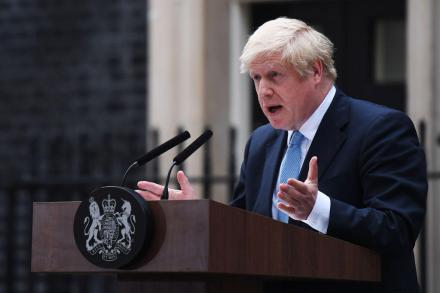
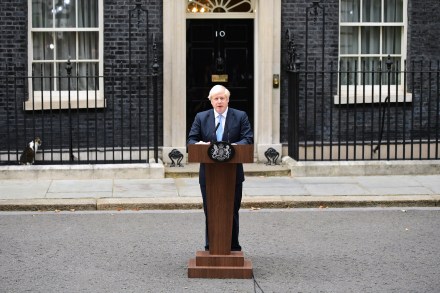
I know I can’t speak for your circumstances but I hope you’re enjoying this Festival of Brexit as much as I am. The country hasn’t endured this kind of dismal government since the last one and, sweetly, the opposition is just as inspirational and attractive as it was then too. Yet again, nothing has changed. Say what you will about Boris Johnson however – and I suppose there’s plenty you could – no-one can deny he possesses the priceless ability to spraff on and on with stuff he, even he, must surely know is nonsense on a zip wire. On Monday evening he charged out of Downing Street - rather with the air of a startled Number 8 it must be said – to tell an expectant nation that he shared their impatience.

Does Boris Johnson want to lose tomorrow’s vote?

To reinforce what I said about the gravity of tomorrow’s vote, rumours are swirling that Dominic Cummings – the PM’s chief aide – wants to lose (I am not persuaded!) the vote so he can purge Grieve and any other rebel Tories and then take on Corbyn’s Labour before the next EU council on 17 October. He may now feel this the best platform to honour Boris Johnson’s pledge to leave the EU by 31 October. This is quite the game of chicken. What is clear to me is that events will move very fast if Johnson loses tomorrow – because Johnson will not want his authority damaged by a whole week of defeats at the hands of the opposition and rebel Tories. In a nutshell, here is the dilemma for Tory rebels and the opposition Labour Party.

What is Number 10 up to?

Boris Johnson’s team wants to set up a binary choice between backing him on Brexit and a Jeremy Corbyn government. First, they are trying this on their own MPs—hence the decision to treat this week’s vote on an extension as if it was a confidence matter. But if this doesn’t work, and at the moment it looks like there are enough rebels for anti no-deal MPs to seize control of the order paper, then—I suspect—they will go to the country with the same message. They are determined not to allow MPs to make a puppet of Boris Johnson. They know that if the Prime Minister requested an extension, even if he had been forced into it, it would destroy their electoral strategy. Why?

Is Boris Johnson about to go for an election?

Things are moving fast in Westminster this afternoon, with speculation mounting that Boris Johnson might be about to call an election. The Cabinet is meeting this afternoon, and there will be a reception of Tory MPs in Downing Street this evening, too. Those involved are definitely discussing an early general election as one possibility. The reason this is under consideration is that Number 10 expects MPs to win their bid tomorrow to take control of the order paper, which would mean that Johnson is pitched into eight weeks of being Prime Minister but with no power. He will have lost around a dozen Tory MPs, meaning he has no majority. In these circumstances, he could argue, the only right thing to do is to ask the country what sort of parliament it wants in another general election.

Boris’s game of chicken with Tory rebels

Is Boris Johnson playing a game of chicken with anti-no-deal Tory MPs? The two sides are locked in a furious standoff over the threat from the Prime Minister that MPs will lose the Tory whip and be prevented from standing for the party at the next election if they back this week's rebel legislation blocking no deal. That threat, first reported by James Forsyth, might have caused one or two MPs to back down, but it has made others, including Rory Stewart and David Gauke, more defiant. They are insisting that they will vote for the extension legislation this week, even if it means they stop being Conservatives. The point of a game of chicken is that at some point, the loser veers away.

Why the far-left really does think there is a ‘coup’

On Saturday thousands of people across Britain demonstrated against Boris Johnson’s recently-announced prorogation of parliament. Despite the heated response it provoked, proroguing parliament is a standard device which over the years has been employed by governments of all stripes. And as parliament was to be suspended for a few weeks during September and October in any case to allow the parties to hold their annual conferences, Johnson’s measure has reduced MPs’ time to prevent a no-deal Brexit by just a few days. In the context of an unprecedented crisis, with the clock ticking down to October 31, the Prime Minister’s act of constitutional sharp practice nonetheless outraged those who demonstrated on Saturday.