Boris johnson

Boris’s Tory enemies don’t know how lucky they are

It is often said that most Conservative MPs have a highly ‘transactional’ relationship with Boris Johnson. The inference is that in an ideal world they would not choose to be led by someone they regard as having far too many foibles and shortcomings and will only tolerate him being PM while he continues to be a winner. The Times political commentator Rachel Sylvester set this out fluently during an appearance on Channel 4 News at the height of the ‘curtaingate’ affair last month.

Blindness and betrayal still bedevil Britain’s policy in Ireland

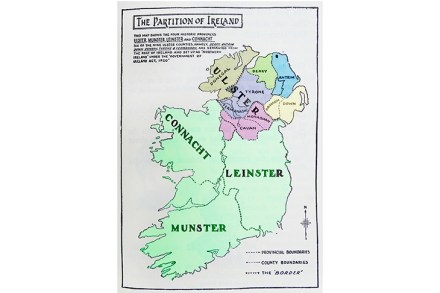
Charles Péguy’s adage that everything begins in mysticism and ends in politics is sharply illustrated by the development of the Irish Revolution. In his previous scintillating studies, Easter 1916: The Irish Rebellion and The Republic: The Fight for Irish Independence 1918–1923, Charles Townshend traced the progress of Ireland’s long-drawn-out severance from Britain. The completion of the trilogy is delivered with his characteristic scholarly panache.

The government debate over June 21

The roadmap out of lockdown is the signature document of Boris Johnson’s new team in No. 10. It’s intended to be cautious, detailed and based on a new mantra of under-promising and over-delivering. It’s meant to strike a contrast with the chaos that came in the early stage of the pandemic by projecting an image of competence and calm. So far, so good. Each stage — including Monday’s easing — has proceeded as planned. The vaccine rollout has been the fastest in Europe (although the Prime Minister still complains, in private, that it could have gone faster) and is now credited by ministers as a large part of the reason the party made so many gains in the local elections.

‘Level’ has a bumpy history

‘I must level with you, level with the British public, many more families are going to lose loved ones.’ That is what Boris Johnson said on 20 March last year. On 14 May this year, he said: ‘I have to level with you that this new variant could pose serious disruption.’ In between, the Prime Minister often spoke of levelling up. He even got the Queen at it, in her ‘Most gracious speech’, as it is formally called: ‘My government will level up opportunities across all parts of the United Kingdom.’ Mr Johnson explained how that is done: ‘These new laws are the rocket fuel that we need to level up this country.

Sir Keir was defeated by his own strategy at PMQs

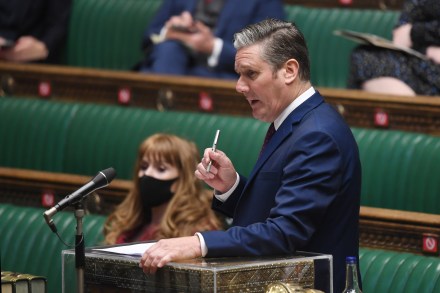
The great thing about being trashed in the polls is that the tiniest improvement looks like a triumphant comeback. At PMQs the Labour leader, Sir Keir Starmer, needed to do some minor damage to Boris’s armour. The teeniest dent could be spun as a glorious revival. But Sir Keir was defeated by his own strategy. He attacked the government’s red-amber-green system of travel restrictions. This metaphorical tricolour is easy to interpret: amber-list countries are safe to travel to except when they’re dangerous. And amber-list countries are dangerous to travel to except when they’re safe. It’s the legal equivalent of an ‘amber shopping day,’ when thieves can operate with impunity. Sir Kier mocked the absurdity of this kaleidoscopic travel advice.

Starmer’s flip-flopping came back to haunt him at PMQs

Prime Minister's Questions today wasn't a particularly easy session for either man taking the main exchanges. For Boris Johnson, it was a struggle to answer what Sir Keir Starmer referred to as a 'simple question that goes to the heart of this issue': if it's not advisable for people to travel to amber list countries unless absolutely necessary, is it now easier for them to do so?  Johnson repeatedly stressed that the government has been clear on travel restrictions, quarantine measures and penalties for failing to observe these rules. But a simple rule in politics is that if you're having to insist you've been clear, then your messages are as clear as mud.

Boris’s levelling up risks leaving behind London

Boris Johnson’s plan to ‘level up’ Britain sounds long overdue. It implies the creation of a less geographically unequal United Kingdom. What's not to like? The motivating theory behind ‘levelling up’ seems to go like this: London, the beating heart of this relatively affluent corner of our nation, has had plenty of investment in recent years. It is now time to listen to the needs of the newly-Conservative ‘Red Wall’ and Leave-voting ‘left behind’ communities in the north of England. These areas have been ignored for decades, and recently voiced their displeasure at the ballot box. But the reality is rather more complicated – and there is a danger that, yet again, London’s poorest get left behind.

Can Boris keep his roadmap on track?

Boris Johnson's favourite phrase since he released his roadmap out of lockdown has been ‘cautious but irreversible’. These are the three words that supposedly describe the UK’s six-month timeline to freedom since it went into lockdown at the start of the year.  But the phrase was notably absent from tonight’s press conference. Instead, the Prime Minister warned that the rise of the Indian variant B1617.2 could pose a ‘serious disruption to our progress, and could make it more difficult to move to step 4 in June.’ The government’s worries, as Johnson laid out tonight, are what he described as ‘important unknowns’. The key question is to what extent the virus is more transmissible than the other variants.

Why the Tories mustn’t give in to the Nimbys

A 15-point YouGov poll lead and last week’s election performance suggests that things look good for the Tories in England. But some results are still causing concern in Tory ranks. In Cambridgeshire, the party lost control of the county council; in Oxfordshire, the Tory council leader lost his seat; and the Conservatives had their majority on Surrey County Council slashed. Some Tories are quick to point the finger at proposed developments for these losses, as I say in the Times today. They argue that a radical shake-up of the planning system, such as the one the government is proposing, will make this problem far worse. They fear this could put parliamentary seats across the southeast in danger.

The problem with ‘Devo-max’

A common failing of pro-Union politicians down the years has been the stubborn belief that there exists somewhere a tidy ‘solution’ to the problem of separatist nationalism. With new polling showing that ‘devo-max’ would comfortably win a three-way referendum, it appears to be silly season once again. The history of unionism’s efforts to engineer decisive solutions to the challenges of separatism is an unhappy one. Devolution was meant to be it, after all. As Labour’s manifesto said in 1997:  'A sovereign Westminster Parliament will devolve power to Scotland and Wales. The Union will be strengthened and the threat of separatism removed.' Talk about ‘not understanding how the United Kingdom works’.

Boris faces a painful choice over social care

If social care reform were any deeper in the long grass of political priorities, it’d probably get mistaken for a hedgerow. It got a one-line reference in the Queen’s Speech this week, which does not even guarantee that the 'clear plan' promised by the PM in his first speech in the job will be published this year. Announcing ‘a long-term plan for social care reform this year’ has been a quaint annual government ritual since 2017. The Queen’s Speech also mentioned the need to clear the NHS backlog. Delays for treatment, already widespread before Covid-19 due to a decade of NHS funding increases lagging behind demand, are now the worst since reliable record-keeping began in 2007. And house prices are playing in to both of these problems.

Boris’s animal rights laws could come back to bite him

Boris Johnson wants to beef up animal rights. The new rules will include a ban on importing stuffed heads as hunting trophies, and possibly on fur as well; a mandatory microchip for every cat in the kingdom; no more exports of live animals for slaughter; a ban on keeping primates as pets; and, most bizarre of all, a law requiring government to accept that animals are sentient and feel pain and angst like the rest of us. This looks odd. There was no extensive pressure except from a small fringe for any of these measures. To most traditional conservatives, animal rights conjure up unattractive visions of young men in dirty anoraks smashing laboratory windows to rescue supposed vivisection victims.

A Tory rebellion is brewing against planning reforms

Boris Johnson used the Queen's Speech on Tuesday to set out the policy reform he plans to do now that the pandemic is easing. This was largely centred on attempting to flesh out the ‘level up’ agenda through a focus on skills, industry and planning reform. It's the latter bill that poses the greatest risk. Already Tory MPs have come out in opposition to what ministers say will be the biggest shake-up of the planning system in over 70 years. The government hopes the relaxation of the rules will pave the way for a home-building boom that will help it hit its goal of 300,000 new homes per year, ease the current housing crisis and get more young people onto the property ladder.

Why a Covid public inquiry could prove useful for Boris

The Prime Minister said today there would be a 'full proper public inquiry' into the government's handling of the Covid-19 crisis. This is highly significant, because a 'full, proper public inquiry' means one led by a judge and with witnesses represented by lawyers. I am also told – though Downing Street is refusing to comment on this – that the Cabinet will be asked by the Prime Minister to approve the terms of the inquiry on Wednesday morning, and there could be an announcement shortly afterwards. Such a public inquiry – like Leveson's into hacking and Chilcot's into the decision to go to war in Iraq – would take many years and might not report until after the next election.

A ‘cautious cuddle’? No thanks, Boris

There have been some truly dystopian spectacles during the past year-or-so of lockdowns. Cops using drones to spy on dog-walkers. Park benches sealed off with yellow tape. Curtain-twitchers dialling 999 after seeing the bloke next door go for a cheeky second jog. But this headline surely tops all of that: ‘Hugs will finally be legal again from next Monday.’ Read that again. We live in a country in which the government has accrued so much power that it now gets to tell us when we may hug each other. This should send a chill down the spines of all who care for liberty. To be honest, I wasn’t even aware hugging had been outlawed. I’ve been hugging people for months.

Does No. 10 really have a plan for social care?

Is the government ever going to reform social care? After a lengthy row between No. 10 and the Treasury, the Queen’s speech does include a promise that ‘proposals on social care reform will be brought forward.’ The stand-off wasn't just over how much those proposals will cost, but the design itself. Perhaps this is why the briefing accompanying the speech is so very light on what the government plans to do. All we know is that the Health and Care Bill ‘will include provisions to improve the oversight of how social care is commissioned and delivered, and facilitate greater integration between health and care services by placing Integrated Care Systems on a statutory footing across the UK, putting more power and autonomy in the hands of local systems.

Sadiq Khan’s victory is good news for the Tories

Sadiq Khan is here to stay. London's mayor has suggested he wants to stay on until 2040. But is this really good news for Labour? Or might the Tories be quietly pleased that Khan beat Shaun Bailey? In the coming years, one of Khan's tasks will be to go cap in hand to the government asking for money. Transport for London (TfL), which Khan is in charge of, is in dire financial straits. TfL is desperate for cash: its fare revenues have collapsed by 90 per cent since the pandemic took hold. Even as commuters start to return to offices, London's transport network will need money to stay afloat. But when Khan inevitably comes knocking, Boris will be able to repeat his trick from last year – and point the finger of blame at London's mayor for bungling the finances.

Hugging gets the green light

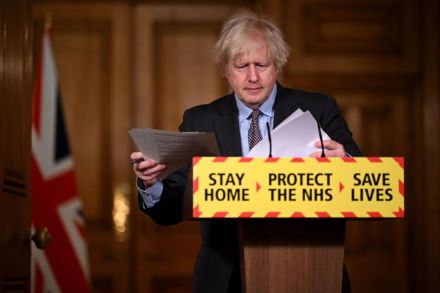
The next stage of the roadmap is set to go ahead. At tonight’s No. 10 press conference, Boris Johnson announced from next Monday, 17 May, groups of up to six (or two households) can meet indoors, while up to 30 people will be able to meet up outside. Face coverings in school classrooms will be scrapped, and there will no longer be a cap on the number of people attending a funeral. Indoor hospitality can reopen, including restaurants and pubs, while hotels, cinemas and theatres can also open their doors, albeit with social distancing still in place.

Boris should be ashamed of his treatment of Shaun Bailey

What with all the excitement about Hartlepool and the understandable fuss about Scotland, there’s one aspect of the elections that seems to have passed everyone by, and that’s the result of the mayoral contest in London.  You may have missed it: Sadiq Khan won, with 1.2 million votes. But the Tory candidate, Shaun Bailey, did really unexpectedly well, with 977,601 votes. In some constituencies in outer London, he beat Sadiq comfortably; in other central London areas, he ran him really close, leaving the most predictably metrosexual or Corbynite areas to give Sadiq his majority. So Bailey got not far off a million votes. Just think what he might have done if Boris and the bigwigs had actually come out to support him.