Book review

Both lyricist and agitator: the split personality of Vladimir Mayakovsky

From our UK edition

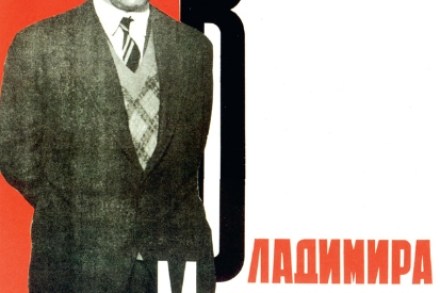
Why increase the number of suicides? Better to increase the output of ink! wrote Vladimir Mayakovsky in 1926 in response to the death of a fellow poet. Four years later, aged 36, he shot himself. What drove the successful author, popular with the public and recognised by officialdom, to suicide? Bengt Jangfeldt provides some clues to this question in his detailed, source-rich biography. Mayakovsky came to poetry as a Futurist, co-authoring the 1912 manifesto A Slap in the Face of Public Taste, which granted poets the right ‘to feel an insurmountable hatred for the language existing before their time’. That the new era demanded a new language was a principle Mayakovsky adhered to all his life.
When the money ran out, so did the idealism in post-Revolutionary France

From our UK edition

For his holiday reading in the summer of 1835, the literary and political journalist John Wilson Croker packed the printed lists of those condemned to death during the Reign of Terror in revolutionary France. The several thousand guillotined in Paris after the establishment of the Revolutionary Tribunal (10 March 1793) and before the fall of Maximilien Robespierre (27 July 1794), were accused of crimes ranging from hoarding provisions or conspiring against the republic to sawing down a tree of liberty or declaring ‘A fig for the nation!’ In horrified disbelief Croker asked the question that has never gone away: how could this have happened? How could the progressive revolutionary optimism of 1789 have turned in just five years to summary arrests and executions?

Alexandra’s Fuller’s parents are the stars even when their daughter is divorcing, in this sequel to the bestselling Don’t Let’s Go to the Dogs Tonight

From our UK edition

‘Double ouzo, hold the Coke,’ Mum ordered at the Mkushi Country Club bar, during spanikopita night. ‘My daughter’s a lesbian.’ The Greek farmers blinked at her uncomprehendingly. ‘Oh, don’t pretend you don’t know what I’m talking about. You bloody people invented it.’ Alexandra Fuller’s wild parents make good copy, as was clear in Don’t Let’s Go to the Dogs Tonight, her bestselling 2002 memoir about her chaotic, often tragic, childhood in Zimbabwe (then Rhodesia).

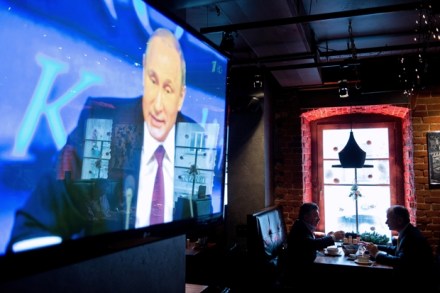
How Putin turned Russian politics into reality TV

From our UK edition

‘We all know there will be no real politics.’ A prominent Russian TV presenter is speaking off the record at a production meeting in 2001. ‘But we still have to give our viewers the sense that something is happening. They need to be kept entertained. Politics has got to feel … like a movie!’ When Peter Pomerantsev, a Brit of Russian descent, sat in on this meeting he had recently graduated and moved to Moscow to work as a TV producer. A decade in Russian television has now provided him with the material for his chilling first book. Nothing is True… is more than an evocative travelogue or an insight into a new system of authoritarian control, although it is both of these.

Anne Tyler’s everyday passions

From our UK edition

There was nothing remarkable about the Whitshanks. None of them was famous. None of them could claim exceptional intelligence, and in looks they were no more than average….Their family firm was well thought of. But then, so were many others. But like most families, they imagined they were special. So, you know what you will get in this novel, which Anne Tyler says will be her last, and that is the stories of three generations of the Whitshanks, a straightforward, unexceptional Baltimore family. We have been here before.

Even the people who make political adverts aren’t sure they work

From our UK edition

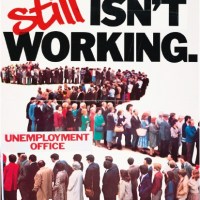
It is a common prejudice about modern politics that it is all focus groups and spin, all public relations and advertising. The rather heartening conclusion from Sam Delaney’s history of advertising in politics is that this is a calumny on the political trade. Delaney has spoken to everyone involved in political advertising since the phenomenon began in earnest with Wilson in 1964 and can hardly find a soul who is certain that advertising does anything more than varnish good ideas. Maurice Saatchi, for example, credited Margaret Thatcher’s proposals, rather than his talent for a pithy slogan, for her electoral victories. Chris Powell, a leading figure in Labour’s Shadow Communications Agency, also doubts whether advertising can really change popular opinion.

Cybersex is a dangerous world (especially for novelists)

From our UK edition

Few first novels are as successful as S.J. Watson’s Before I Go to Sleep, which married a startling and unusual premise to a tightly controlled and claustrophobic thriller. Its only drawback was that it was a hard act to follow. Novelists tend to dump all their brilliant ideas into their first book, and the white heat of originality compensates to some extent for any want of craft. Second novels lack both advantages, and have the additional problem that readers come to them laden with expectations. Like its predecessor, Second Life is a slice of domestic noir with a woman narrator. It is set mainly in affluent corners of London, with occasional trips to Paris.

They sought paradise in a Scottish field — and found hunger, boredom and mosquitoes

From our UK edition

Dylan Evans, the author of this book, was one of those oddballs who rather looked forward to the apocalypse, because it promised ‘challenging times ahead’. If, in the not too distant future, famines and droughts more or less wipe us out, that will be our own fault for allowing population levels to reach an unsustainable nine billion — the predicted figure for 2050. How much better the planet will be with a select handful living in their villages of yurts, log cabins, teepees and straw-bale huts, the children gambolling happily ‘amidst the bracken and the trees’. The air will be cleaner. Wildlife ‘will make a comeback’. Neighbours will help each other out. People will be fitter as a result of their manual labour.

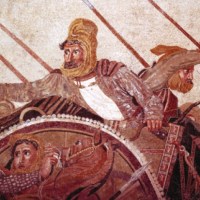
Darius III: Alexander’s stooge

From our UK edition

In 1891, George Nathaniel Curzon, ‘the very superior person’ of the mocking Balliol rhyme, and future viceroy of India, arrived at Persepolis. Torched in 330 BC by Alexander the Great, it had once been the nerve-centre of an empire that stretched from the Aegean to the Hindu Kush. For Curzon, whose tour of Iran had already taken him all over the country, the ruins of the great palace were a particular highlight. The Persia of the Achaemenids, the ruling dynasty of the ancient empire, was, so he declared, ‘immeasurably superior to medieval Persia in its attributes and even now more respectable in its ruins’. Coming from a man who was himself no slouch at imperial pomp, this was high praise indeed.

The greatest American Arctic disaster

From our UK edition

In the course of the 19th century, various flotillas of expeditions hastened to the polar regions in little wooden ships which sooner or later expired in the pincers of an ice floe while crewmen ate their shoes. These stories bear retelling for our own age, and Hampton Sides does well to identify the gruesome story of the USS Jeanette, which ended in the greatest American Arctic disaster ever. The idea began with James Gordon Bennett Jr, the proprietor of the New York Herald (the largest circulation daily in America) and a flamboyant character who enjoyed riding round Manhattan in the nude. He had already sponsored numerous expeditions and popularised the now standard technique of creating news, the more sensational the better. (The phrase ‘Gordon Bennett!’ was minted for him.

The fallen idol: seeing Putin in a new light

From our UK edition

The way to think about Russia, Bill Browder told me in Moscow in 2004, using a comparison he recycles in Red Notice, is as a giant prison yard. Vladimir Putin, he argued then, had no choice but to destroy Mikhail Khodorkovsky, the yard’s top dog and country’s richest man. One of a tribe of Western financiers who traversed a hermetic circuit of offices, guarded apartments, upscale restaurants and the airport, Browder would berate reporters for banging on about human rights abuses or atrocities in Chechnya. Putin was already Putin, for anyone who cared to notice — autocratic, corrupt, nationalistic — but, for Browder, Russia was an oil-powered success story, and Putin was a seer.

From prince to pauper: a dramatic overview of Britain on 18 June 1815

From our UK edition

Of all the big battalions of books marking the bicentenary of the battle of Waterloo that have come my way, this has to be the best. David Crane has used the bloody campaign as a telescope, bringing into sharp focus not just the carnage along the Brussels road, but the state of Britain itself: a country on the cusp of vast, irreversible change. He achieves this within the compass of a single summer’s day — Sunday, 18 June 1815 — devoting a chapter to each hour and cutting cinematically between the three armies slaughtering each other in Belgium and the citizens at home. Some anxiously await news of triumph or disaster; others are utterly oblivious of what the cannonade rolling across the Channel, clearly heard by Kentish churchgoers, portends.

Cabinet of curiosity: we do not even know for sure the maker of the Sixtus Cabinet at Stourhead

From our UK edition

Italian cabinets and tables decorated with inlaid semi-precious stones known as ‘pietre dure’ were a ‘must-have’ for English milords returning from their Grand Tours. The finest example is perhaps the Sixtus V cabinet at Stourhead, in Wiltshire, which has just been written up in a thorough, scholarly way by Simon Swynfen Jervis and Dudley Dodd, two eminent furniture and architectural historians. As well as placing the Sixtus V cabinet within the contexts of Roman manufacture and English collecting, the book brings to life its Roman provenance and its subsequent residence at Stourhead after the banker Henry Hoare bought it in about 1740.

The low sculduggery of high Victorian finance

From our UK edition

The whole idea of capitalism, according to Enlightenment philosophers, was that it created a positive spiral of moral behaviour. ‘Concern for our own happiness recommends us to the virtue of prudence,’ wrote Adam Smith. ‘The profits of commerce,’ according to David Hume, carry us towards a state in which ‘the tempers of men, as well as their behaviour, refine apace.’ In the first chapter of Forging Capitalism, Ian Klaus encapsulates this theory as an 18th-century artist might have titled an allegorical painting of intertwined figures: ‘Commerce encouraging Virtue, and Virtue harnessing Commerce.’ But that’s not really the way it was, Klaus goes on to argue — and certainly not the way it is today, he implies.

Drink, drugs and dressing-up: behind the scenes of the fashion industry

From our UK edition

It’s a curious subject, fashion, and those who write about it rarely want to jeopardise future access to it on the altar of clear-eyed analysis. The business must pretend that there is a single genius at work here, whose vision creates not just clothes but the things that actually make the money. The catwalk shows are all very well, but they haven’t been the main business for decades, and it came as rather a surprise to the industry when a great mob of new customers emerged from nowhere, the wives of Russian oligarchs and American hedgefund traders, willing to spend six-figure sums every season on a new wardrobe.

Process of elimination: the horrors of Ravensbrück revealed

From our UK edition

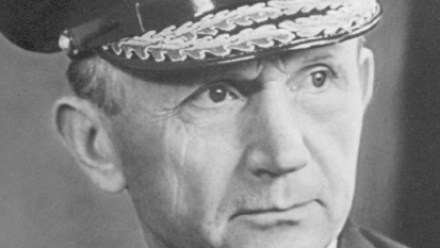
Concentration camps in Nazi Germany were originally set up in 1933 to terrorise Hitler’s political enemies; as war drew near, their function expanded to gratify his obsession (and that of Reichsführer Himmler, as head of the SS which administered them) with ‘purifying the race’ by getting rid of gypsies, Jews, ‘asocials’ — prostitutes, criminals, vagabonds — as well as the mentally ill and handicapped. An all-female camp at Ravensbrück, set up in 1938, soon afforded the prison doctors a steady supply of women — the ‘rabbits’, as these prisoners became known — for medical experiments .

A state of terror: Islamic State longs to be left alone to establish its blood-stained utopia

From our UK edition

The Sykes-Picot agreement will be 100 years old next year, but there will be no congratulatory telegrams winging their way to the Middle East from London, or from Paris on high alert. The Islamic State, the world’s most powerful jihadist group, has filmed its men bulldozing border posts between Syria and Iraq, dealing perhaps the final blow to those Anglo-French cartological ambitions of a century ago. The ‘Caliphate’ is inhabited by some six million people and is now larger than the United Kingdom. In the words of Patrick Cockburn, ‘a new and terrifying state has been born that will not easily disappear’. Yet far from appearing out of the blue in 2014, IS was fostered for years by those who profess to oppose it, as this book argues convincingly.

Muriel and Nellie: two radical Christians build Jerusalem in London’s East End

From our UK edition

This is the tale of Muriel Lester, once famous pacifist and social reformer, and Nellie Dowell, her invisible friend. Nellie Dowell is invisible in the sense that Claire Tomalin described Nelly Ternan in The Invisible Woman. While Ternan, the mistress of Charles Dickens, simply ‘vanished into thin air’, Nellie Dowell, who may or may not have been the mistress of Muriel, trod so lightly on the ground that she left barely a footprint behind her. Muriel Lester, the daughter of a Baptist shipbuilder with progressive ideas, has been the subject of several books already, including Vera Brittain’s The Rebel Passion: A Short History of Some Pioneer Peacemakers.