Book review

A window on Chaucer’s cramped, scary, smelly world

From our UK edition

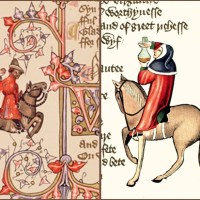
Proust had his cork-lined bedroom; Emily Dickinson her Amherst hidey-hole; Mark Twain a gazebo with magnificent views of New York City. Where, then, did the father of English poetry do his work? From 1374 till 1386, while employed supervising the collection of wool-duties, Chaucer was billeted in a grace-and-favour bachelor pad in the tower directly above Aldgate, the main eastern point of entry to the walled city of London. ‘Grace and favour’ makes it sound grander than it was.

This Winter Journey goes far beyond expectation

From our UK edition

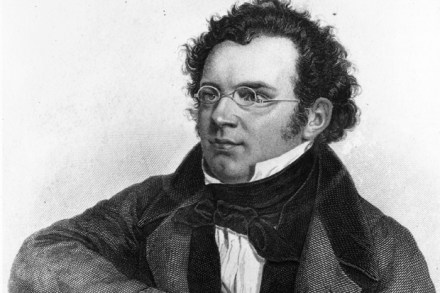
You can tell a lot about a book from its bibliography. It’s the non-fiction equivalent of skipping to the final page of a novel. Turn to the end of Ian Bostridge’s Schubert’s Winter Journey — a study of the composer’s celebrated song cycle Winterreise — and you’ll find monographs on ornithology, weeping as a cultural phenomenon and wood sculpture in Renaissance Germany, essays on Samuel Beckett and the history of the mail coach, and the rather forbidding ‘Regulation of floral organ abscission in Arabidopsis thaliana’. Intrigued? Who wouldn’t be? As academic disciplines go, musicology was a slow starter.

The hidden history of one of the greatest treasures of the early Renaissance: Florence’s Brancacci chapel

From our UK edition

In 1439 Abraham of Souzdal, a Russian bishop visiting Florence, was in the audience in Santa Maria del Carmine for the famous Ascension play, arranged by the members of the lay confraternity, the Sant’Agnese. Sitting in the body of the church, Abraham looked up and saw, on top of one end of the huge stone choir screen, a castle with towers and ramparts, and at the other a Mount of Olives. From here the ascending Christ was drawn up through celestial curtains to be united with God the Father, suspended ‘in a miraculous fashion’ in the far distance above the altar.

The turbulent reign of King Cotton: the dark history of one of the world’s most important commodities

From our UK edition

If not for cotton, we would still be wearing wool. To equal current cotton production, we would need seven billion sheep, and a field 1.6 times the area of the EU. Capitalism has spared us this itching, bleating nightmare. But capitalism, Sven Beckert writes in his hair-shirted history, Empire of Cotton, has wrought other horrors. For medieval Europeans, cotton was a luxury import. Prices fell as Europe’s maritime empires bypassed the Ottoman middleman. They fell further after the 1780s, when the East India Company increased its imports, and British inventors developed water-powered spinning machines.

Bish bash Bosphorus: Elif Shafak’s saga of love and death in Istanbul is crammed with incident on every page

From our UK edition

If you like to curl up by the fire with a proper, old-fashioned, saga-style tale about a boy and his elephant in Istanbul in the 1500s, The Architect’s Apprentice might be suitable for you. My heart sank slightly when the review copy arrived: a 452-page brick by an Orange-Prize-shortlisted Turkish author and ‘global speaker’ who ‘blends western and eastern methods of storytelling’ and has 1.6 million Twitter followers. But I resolved to get caught up in the novel and did.You have to suspend all need for irony and modernity and latch on to Jahan, the Indian boy who is the central character. As a child Jahan stows away on the evil Captain Gareth’s ship in order to stay with Chota, his beloved white elephant who nearly dies on the journey.

Cowboys and Muslims: that’s the new global power struggle, according to the latest great American novel

From our UK edition

‘I’m pleading with you, with tears in my eyes: if you fuck with me, I’ll kill you all.’ When ‘The Bumper Book of American Foreign Policy’ gets written, General James Mattis’s line to Iraqi leaders after the 2003 invasion will be an obvious choice for the cover blurb, but meanwhile it makes a striking epigraph to Bob Shacochis’s furious, sprawling novel about a half-century of US espionage and powerbroking. Like Norman Mailer’s Harlot’s Ghost, Don DeLillo’s Libra and Denis Johnson’s Tree of Smoke, this is the spy story tricked out as the great American novel, vaulting over the conventions of the cloak-and-dagger genre in dogged pursuit of larger questions of the national heart and mind.

The short story in Britain today: enough to make Conan Doyle weep

From our UK edition

I am not sure if it’s properly understood quite what a crisis the short story is now in. Superficial signs of success and publicity — such as Alice Munro winning the Nobel, or the establishment of another well-funded prize — are widely mistaken for a resurgence. But what has disappeared — and disappeared quite recently — is the wide spread of journals willing to pay for a single story. That is what sustained the genre in its glory days. Edwardian magazines such as the Strand happily paid their star writers the equivalent (or even more) of a doctor’s annual income for a single story. There were dozens of such publications between 1890 and the outbreak of the first world war.

Game of thrones: five kings spanning five centuries launch a new series on royalty

From our UK edition

It is a strange paradox of our egalitarian age that a progressive publisher like Penguin should commission — at considerable expense, since the series editor Simon Winder has netted some top academic authors — brief lives of all 44 English, and later British, monarchs, from Athelstan to his distant descendent, our own Queen Elizabeth. The 45th book in the series is devoted to our sole non-royal ruler, Oliver Cromwell. The biographies — each costing £10.99 — though not exactly ‘potted’, are necessarily squeezed by space — none is longer than 150 pages — into extended essays that can be comfortably devoured in a couple of hours; ideal for a railway journey or a short-haul flight in our cash-rich, time-poor era.

Mark Steyn: a hairy, successful version of myself, says Julie Burchill

From our UK edition

For those of you who haven’t had the pleasure, Mark Steyn is sort of a hairy, successful version of me— a civilised, larky type of chap who was just tootling along minding his own biz and scribbling about his favourite show-tunes when — crash, bang, wallop! — he found himself on the frontline of commentating on the clash of civilisations. He is obsessed with the fact that Islamism poses the greatest risk to peace, progress and piano bars since the second world war and is unable to comprehend why so many people seem so bovinely oblivious to this fact. Like Richard Littlejohn — another fine, undervalued writer — he is unfashionable, not using 20 words when two will do and never apologising for being alive.

Sunday roasts and beaded bubbles: dining with the poets

From our UK edition

In December 1817 Benjamin Robert Haydon — vivid diarist and painter of huge but inferior canvases of historic events — held a Sunday luncheon to which he invited John Keats, Charles Lamb and William Wordsworth. Nearly a century later, in January 1914, seven poets and Lord Osborne de Vere Beauclerk met in Sussex to eat roast peacock at another Sunday lunch. Six of the poets (Yeats, Ezra Pound, Richard Aldington, Sturge Moore, Frank Flint and Victor Plarr) came from London to honour the seventh, Wilfred Scawen Blunt, at his manor house. Hilaire Belloc joined them for tea afterwards, and sang a ballad about cuckoldry. Robert Bridges and John Masefield declined their invitations.

Stories about storytelling: Kirsty Gunn’s preoccupation with words is utterly entrancing

From our UK edition

Although entitled Infidelities this collection of short stories could as well be called Choices, because that is what really preoccupies Kirsty Gunn’s characters. Divided into three sections, ‘Going Out’, ‘Staying Out’ and ‘Never Coming Home’, the stories are more linked by style and writing than by any theme. Gunn’s style is clear, unaffected and poetic without being pretentious; her descriptions of nature — for instance the sky at the beginning of ‘The Wolf on the Road’ — are at times almost painfully beautiful. One stylistic technique she favours is not always as successful as her descriptive writing; often in a story she will slip from a narrative voice to an authorial one, from the past to the present.

Fact, fiction or farce? The American comic novel is becoming increasingly hard to define

From our UK edition

The American comic novel is going through an odd phase. Just lately it seems like anything funny must sneak in behind an abstruse metafictional edifice, deployed, I suspect, by insecure authors who want to retain their jobs as teachers of creative writing. 10:04, Ben Lerner’s lopsided but often electric second novel, is the latest example of the comic genre via subterfuge, sprinkled with tricks and played so deadpan you might not know when to laugh. The narrator, who shares a first name with the author, is a resident of a New York City that is battered by storms, vulnerable to hurricanes and hipsters.

How the smile came to Paris (briefly)

From our UK edition

In 1787 critics of the Paris Salon were scandalised by a painting exhibited by Mme Vigée Le Brun. The subject was conventional enough: a self-portrait of the artist cradling her small daughter. The problem was that Vigée Le Brun was depicted smiling. You could even see her teeth. This was, as one critic put it, ‘an affectation which artists, connoisseurs and people of good taste are unanimous in condemning’. These outraged art lovers must have been rather out of touch with current trends. For, as Colin Jones shows in The Smile Revolution — his revealing history of 18th-century French smiling — the full-on, lips-parted sourire had been increasingly visible in Paris since at least the 1740s.

In the steppes of the ancients: travels on the Silk Road

From our UK edition

It is difficult to fault this remarkable volume. The publishers have created a book of quality with stunning illustrations and lucid maps. It will, I believe, become a standard reference for all who study the complex history of Central Asia and the Silk Road. This is the second volume in Christoph Baumer’s projected four-book series on Central Asia and shows its author to be an extraordinary person, whose skills encompass those of an explorer, a geographer, a historian, an archaeologist and a photographer. Moreover, in each of these exacting disciplines he is no amateur. He displays the rare qualities of both an academic and a man of action. His sparkling prose ensures that the armchair traveller will not nod off.

This ex-priest’s history of the gospels could unsettle the most faithful churchgoer

From our UK edition

When James Carroll was a boy, lying on the floor watching television, he would glance up at his mother and ‘see her lips moving, only to glimpse the beads in her lap. I recall thinking that they slipped through her thumb and forefinger the way cartridges moved into machine guns’. There was nothing unusual about this: in 1970s England, as well as 1950s America, most devout Catholic ladies carried a rosary in their handbag. If you walked into church while the Legion of Mary were at prayer, you’d be deafened by their Hail Marys. It was a competitive sport. Whoever prayed loudest and fastest — usually an Irish biddy with the gleam of the Taleban in her eye — could force the others to keep up with her frantic pace.

German history is uniquely awful: that’s what makes it so engrossing

From our UK edition

As I grew up half German in England in the 1970s, my German heritage was confined to the few curios my grandmother had brought here after the war: a signet ring, a cigarette case, a scrapbook with some missing pages.... She’d changed her name, she’d changed my father’s name, the nation she came from lay in ruins — but from this salvaged bric-à-brac I pieced together the story of my father’s German family, a story they’d done their best to bury in the country they’d left behind. Through a range of objects, large and small, from the Gutenberg Bible to the Reichstag, the director of the British Museum has done much the same thing for Germany as a whole.

Hiding in Moominland: the conflicted life of Tove Jansson

From our UK edition

Tove Jansson’s father was a sculptor specialising in war memorials to the heroes of the White Guard of the Finnish civil war. He did not like women. They were too noisy, wore large hats at the cinema and would not obey orders in wartime. Tove used to hide to spy on his all-male parties, where everybody got astoundingly drunk and attacked chairs with bayonets. ‘All men are chums who will never leave each other in the lurch,’ she concluded. ‘A chum doesn’t forgive, he just forgets — women forgive everything but never forget. Being forgiven is very unpleasant.’ Father and daughter had such a strained relationship that she sometimes had to run to the loo and vomit.