Book review

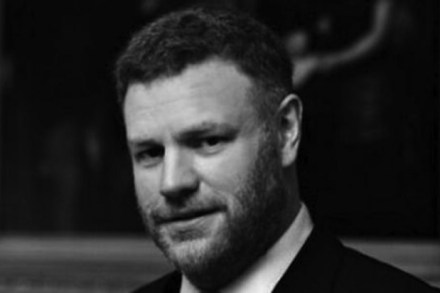
Mark Steyn: a hairy, successful version of myself, says Julie Burchill

From our UK edition

For those of you who haven’t had the pleasure, Mark Steyn is sort of a hairy, successful version of me— a civilised, larky type of chap who was just tootling along minding his own biz and scribbling about his favourite show-tunes when — crash, bang, wallop! — he found himself on the frontline of commentating on the clash of civilisations. He is obsessed with the fact that Islamism poses the greatest risk to peace, progress and piano bars since the second world war and is unable to comprehend why so many people seem so bovinely oblivious to this fact. Like Richard Littlejohn — another fine, undervalued writer — he is unfashionable, not using 20 words when two will do and never apologising for being alive.
Sunday roasts and beaded bubbles: dining with the poets

From our UK edition

In December 1817 Benjamin Robert Haydon — vivid diarist and painter of huge but inferior canvases of historic events — held a Sunday luncheon to which he invited John Keats, Charles Lamb and William Wordsworth. Nearly a century later, in January 1914, seven poets and Lord Osborne de Vere Beauclerk met in Sussex to eat roast peacock at another Sunday lunch. Six of the poets (Yeats, Ezra Pound, Richard Aldington, Sturge Moore, Frank Flint and Victor Plarr) came from London to honour the seventh, Wilfred Scawen Blunt, at his manor house. Hilaire Belloc joined them for tea afterwards, and sang a ballad about cuckoldry. Robert Bridges and John Masefield declined their invitations.

Stories about storytelling: Kirsty Gunn’s preoccupation with words is utterly entrancing

From our UK edition

Although entitled Infidelities this collection of short stories could as well be called Choices, because that is what really preoccupies Kirsty Gunn’s characters. Divided into three sections, ‘Going Out’, ‘Staying Out’ and ‘Never Coming Home’, the stories are more linked by style and writing than by any theme. Gunn’s style is clear, unaffected and poetic without being pretentious; her descriptions of nature — for instance the sky at the beginning of ‘The Wolf on the Road’ — are at times almost painfully beautiful. One stylistic technique she favours is not always as successful as her descriptive writing; often in a story she will slip from a narrative voice to an authorial one, from the past to the present.

Fact, fiction or farce? The American comic novel is becoming increasingly hard to define

From our UK edition

The American comic novel is going through an odd phase. Just lately it seems like anything funny must sneak in behind an abstruse metafictional edifice, deployed, I suspect, by insecure authors who want to retain their jobs as teachers of creative writing. 10:04, Ben Lerner’s lopsided but often electric second novel, is the latest example of the comic genre via subterfuge, sprinkled with tricks and played so deadpan you might not know when to laugh. The narrator, who shares a first name with the author, is a resident of a New York City that is battered by storms, vulnerable to hurricanes and hipsters.

How the smile came to Paris (briefly)

From our UK edition

In 1787 critics of the Paris Salon were scandalised by a painting exhibited by Mme Vigée Le Brun. The subject was conventional enough: a self-portrait of the artist cradling her small daughter. The problem was that Vigée Le Brun was depicted smiling. You could even see her teeth. This was, as one critic put it, ‘an affectation which artists, connoisseurs and people of good taste are unanimous in condemning’. These outraged art lovers must have been rather out of touch with current trends. For, as Colin Jones shows in The Smile Revolution — his revealing history of 18th-century French smiling — the full-on, lips-parted sourire had been increasingly visible in Paris since at least the 1740s.

All you’ll ever need to know about the history of England in one volume

From our UK edition

Here is a stupendous achievement: a narrative history of England which is both thorough and arresting. Very few writers could pull it off. Either they’d have an axe to grind, or they’d lose perspective, or they’d present a series of anecdotes, or they’d end up in a Casaubonish pursuit of other historians’ errors. In fact, to get it right, you’d ideally be a mature and accomplished author, steeped in the facts, who was nonetheless tackling English history for the first time. Which is more or less what Robert Tombs, a professor of French history at Cambridge, is. ‘A writer of history ought, in his writings, to be a foreigner, without country, living under his own law only,’ claimed Thomas Hobbes, adapting Lucian.

In the steppes of the ancients: travels on the Silk Road

From our UK edition

It is difficult to fault this remarkable volume. The publishers have created a book of quality with stunning illustrations and lucid maps. It will, I believe, become a standard reference for all who study the complex history of Central Asia and the Silk Road. This is the second volume in Christoph Baumer’s projected four-book series on Central Asia and shows its author to be an extraordinary person, whose skills encompass those of an explorer, a geographer, a historian, an archaeologist and a photographer. Moreover, in each of these exacting disciplines he is no amateur. He displays the rare qualities of both an academic and a man of action. His sparkling prose ensures that the armchair traveller will not nod off.

This ex-priest’s history of the gospels could unsettle the most faithful churchgoer

From our UK edition

When James Carroll was a boy, lying on the floor watching television, he would glance up at his mother and ‘see her lips moving, only to glimpse the beads in her lap. I recall thinking that they slipped through her thumb and forefinger the way cartridges moved into machine guns’. There was nothing unusual about this: in 1970s England, as well as 1950s America, most devout Catholic ladies carried a rosary in their handbag. If you walked into church while the Legion of Mary were at prayer, you’d be deafened by their Hail Marys. It was a competitive sport. Whoever prayed loudest and fastest — usually an Irish biddy with the gleam of the Taleban in her eye — could force the others to keep up with her frantic pace.

Hiding in Moominland: the conflicted life of Tove Jansson

From our UK edition

Tove Jansson’s father was a sculptor specialising in war memorials to the heroes of the White Guard of the Finnish civil war. He did not like women. They were too noisy, wore large hats at the cinema and would not obey orders in wartime. Tove used to hide to spy on his all-male parties, where everybody got astoundingly drunk and attacked chairs with bayonets. ‘All men are chums who will never leave each other in the lurch,’ she concluded. ‘A chum doesn’t forgive, he just forgets — women forgive everything but never forget. Being forgiven is very unpleasant.’ Father and daughter had such a strained relationship that she sometimes had to run to the loo and vomit.

A treasure-trove of grisly Arab tales may appeal more to an Isis fighter than your average British reader

From our UK edition

The marvellous tales of the title are not just confined to the contents of this book, for the travels and travails of the lone manuscript in which they were inscribed are also something of a wonder, and deserve to be told. The original collection appears to have been composed in the 10th century, and it is easy to imagine some of these stories doing the rounds of Cairo, Baghdad and Damascus while the crusaders were making trouble in the neighbourhood. This particular version of the stories was written down in the 14th century, probably in Cairo, for that is where the manuscript can be traced.

Grimms’ fairy tales: the hardcore version

From our UK edition

Child murder, domestic slavery, abusive families, cannibalism and intergenerational hatred — what could be better for the festive fireside than a new edition of Grimms’ fairy stories? There hasn’t been a straight translation in English of the original 1812 edition; most retellers in English relied on revised versions by Wilhelm Grimm. Now Jack Zipes has produced the complete first edition of The Original Folk and Fairy Tales of the Brothers Grimm. It’s a good translation, faithful to the simple character of the originals. It’s been well received by the fairytale industry, writers and academics who like to remind us that the original versions were rawer than Wilhelm’s family-friendlier edition of 1857.

Wonder Woman: feminist symbol or the ultimate male fantasy?

From our UK edition

It’s always interesting when people succeed in two different arenas — like Mike Nesmith’s mum, who gave the world both a Monkee and Tippex, or Hedy Lamarr, the beautiful film star who also helped develop wireless communication, or Paul Winchell, the voice of Tigger who also invented the artificial heart. (If only he’d played the Tin Man in The Wizard Of Oz!) William Moulton Marston created both the cartoon heroine Wonder Woman and the lie detector machine, though by the time I had finished this book I was wondering how he found the time or the energy to do either.

After the trilogy (and the hurricane): the likeable return of Frank Bascombe

From our UK edition

The story of Frank Bascombe, a sports-writer turned estate agent but always a New Jersey homebody, has already taken Richard Ford nearly 30 years and three volumes to tell, totalling 1,300 pages — longer than War and Peace. But for Frank, aged 68 (and for Ford, aged 70), it’s not over. In the autumn of 2012, Hurricane Sandy ravaged the New Jersey shoreline. And though Bascombe is retired from real estate and living safely inland in Haddam (the town where his first-person chronicles began, in 1986, with The Sportswriter) he is not unaffected by the devastation. In the four long stories that comprise this fourth Bascombe volume, he learns that his former beach house has been destroyed. A woman made homeless by Sandy has retreated to Haddam and shows up at Frank’s door.

Transnistria: a breakaway republic of a breakaway republic

From our UK edition

Transnistria is not an area well-served by travel literature or, really, literature of any kind. The insubstantial-seeming post-Soviet sandwich-filling between Moldova and Ukraine, it doesn’t have a bad reputation. It has no reputation. As Rory MacLean, the author of the ‘across-the-old-Iron-Curtain-in-a-Trabant’ bestseller Stalin’s Nose, explains: ‘Transnistria is a breakaway republic of a ba lot smaller than Devon. And it is recognised by no country in the world except itself. You could indeed be forgiven for thinking that Transnistria is a made-up place (and at times the author of this book almost treats it as if it is).

The quirkiest garden book Roy Strong has read in years

From our UK edition

Incredulity is rarely a word that crosses my mind when it comes to garden writing. This genre can, of course, be quite straight-forward and descriptive, like Miss Jekyll’s rather boring volumes. It can equally be wildly funny, as when Anne Scott-James and Osbert Lancaster hitch their respective wagons to horticulture and produce a spoof history. But where, oh where did Sam Llewellyn’s exotic aberration spring from? Is it fact or fiction? I don’t think I ever decided which. This is one of those books where you spend the whole time worrying less about what’s happening in the kitchen garden in spring and more on trying to work out what the hell is this place and who on earth is this man with a less-than-house-trained duchess in tow.

Roll up, roll up! A history of the circus from Ancient Egypt to the present

From our UK edition

Linda Simon’s compact and colourful circus history is, in many ways, a jewel of a publication. It is hard to say anything new about the circus because almost impossible to uncover quotes and stories that cannot be found in other books. The circus itself — disregarding the circus of ancient Rome — is a modern form and so the stock of images available for this type of illustrated history is quite limited and well known. But here are some interesting photographs of ceramic Mexican acrobats, and an Egyptian fresco of a female contortionist which back up one of Simon’s themes: using the body as a spectacle is an ancient impulse, of which the circus as we know it is just one manifestation.

Five of the best celebrity biographies of 2014

From our UK edition

Cilla Black has become a strange creature during her 50 years in showbiz. When her husband Bobby was in hospital she found to her dismay that she didn’t now how to take the dogs for a walk. That was some time ago, for Bobby Willis died of liver cancer in 1999. ‘They lived their lives almost like Siamese twins,’ writes Douglas Thompson in Cilla, Queen of the Swinging Sixties (Metro, £7.99, Spectator Bookshop, £7.59). He is an old hand in Cillagraphy, having published Cilla Black: Bobby’s Girl in 1998 and Cilla: the Biography in 2002. He is not the author of this year’s Cilla: the Adventures of a Welsh Mountain Pony, which will disappoint fans since it makes no reference to the long-term hostess of Blind Date (1985–2003).

Deng Xiaoping: following in Mao’s footsteps

From our UK edition

Much has been written about Deng Xiao-ping (1904–1997), most recently by Ezra Vogel in Deng Xiaoping and the Transformation of China. But apart from his fondness for eating croissants and playing bridge, and the fact that his second wife left him for a party colleague — Michael Dillon records the divorce only — we still know little about Deng himself. Mao Zedong’s personality, on the other hand, was often remarked on — from Edgar Snow’s first meeting with him in 1936 to Henry Kissinger’s in 1971(both men swooned in his presence). Dillon rightly notes that Vogel compressed a large part of Deng’s life into a mere 30 pages. In this biography the entire life and career are given appropriate space.