Book review

Dickens’s dark side: walking at night helped ease his conscience at killing off characters

From our UK edition

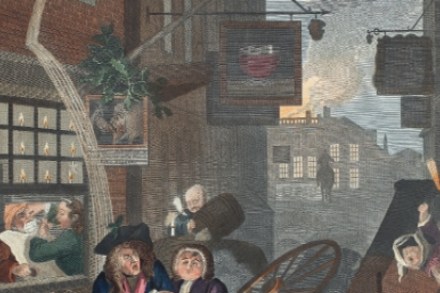
In England, walking about at night was a crime for a very long time. William the Conqueror ordained that a bell should be rung at 8 p.m., at which point Londoners were supposed to put their fires and candles out and their heads down. Again and again, until modern times, Matthew Beaumont tells us, specifically nocturnal laws were promulgated against draw-latchets, roberdsmen, barraters, roysterers, roarers, harlots and other nefarious nightwalkers — including those ‘eavesdroppers’ who stood listening in the close darkness where the rain dripped from a house’s eaves. Beaumont reads such laws as being designed to exert political and social control.

Anders Brievik: lonely computer-gamer on a killing spree

From our UK edition

In 2011, Anders Breivik murdered 69 teenagers in a socialist summer camp outside the Norwegian capital of Oslo, and eight adults with a bomb attack. His hatred was directed at the children of Norwegian politicians who had allowed immigration to contaminate the sturdy bond (as he saw it) of Nordic race and nationhood. ‘You will all die today, Marxists!’ he hurrahed as he stalked and shot his way to infamy. Inflated with self-importance, Breivik was a self-styled ‘Justicious Knight Commander’ come to cauterise Norway of bloody foreigners. He advocated the racial rejuvenation of his homeland through the expulsion of Muslims, and to this end he photographed himself in masonic Crusader regalia, sumptuously gold-braided and primed for holy war. Was he mad?

John Aubrey and his circle: those magnificent men and their flying machines

From our UK edition

John Aubrey investigated everything from the workings of the brain, the causation of winds and the origins of Stonehenge to how to cure the fungal infection thrush by jamming a live frog into a child’s mouth (you hold it there until it — the frog — suffocates, then replace it with a fresh frog). He seemed half-cracked as often as not to less empirical 17th-century contemporaries, and for most of the next 200 years posterity forgot him. His astonishing renaissance in the last century owed much to two novelists: Anthony Powell, who published a biography, followed by a selection of Aubrey’s Brief Lives in 1949, and John Fowles, who brought out his Monumenta Britannica for the first time in 1980.

Ancients on oldies: tips on ageing from the Romans are all Greek to Richard Ingrams

From our UK edition

A few months ago I went to a lunch at Univ, my old college in Oxford, to celebrate the 95th birthday of my Ancient History tutor George Cawkwell. There were toasts and speeches, including one from George himself and my fellow student Robin (now Lord) Butler, who did a brilliant imitation of George getting all excited when describing the battle of Marathon and reverting, temporarily, to his native New Zealand accent. In the company of such men, not forgetting another fine speechmaker, Edward Enfield, also one of George’s pupils, I felt ill at ease. There they were, overflowing with classical allusions, and there was I, wondering how I could have forgotten almost everything I had known about the ancient world including the battle of Marathon.

Sex, rebellion, ambition, prejudice: the story of 1950s women has it all

From our UK edition

Although the young women of the 1950s hovered on the cusp of change, many did not know it. Valerie Gisborn was the exuberant 15-year-old daughter of ‘a sharp-tempered, anti-social’ mother riddled with ‘neurotic restrictiveness’. But Valerie had fallen in love. She had met Brian in 1949 at the local ballroom in Leicester, her sole permissible social excursion of the week. Prevented from continuing her education by parents who insisted she earn her living at the city’s knitwear factory, Valerie’s early ambition to start her own business was crushed by the demotivating monotony of her job. Romance offered an emotional if not a physical escape.

British India — the scene of repeated war crimes throughout the 19th century

From our UK edition

‘Sometimes, strolling through the ruins of earlier civilisations, we idly wonder what it must have been like to live through the end of one of them,’ writes Ferdinand Mount at the end of The Tears of the Rajas. ‘Now we know for ourselves.’ This is a long, wonderfully discursive and reassuringly old-fashioned book which tells the story of the British in India through the lives of one British family — the author’s ancestors, the Lows of Clatto in Fife. The Lows also happen to be the ancestors of Mount’s cousin, David Cameron. The action opens in 1805, in the aftermath of the Second Maratha War, when the East India Company had established its dominant military position through most of the Indian interior.

Madly Modern Mary overcomes childhood hardships to become the Queen of Shops

From our UK edition

In this autobiography, Mary Portas doesn’t dip into the fabled store of her talents by giving an account of her countrywide progress as monarch and oracle of retail, but conjures a nostalgic cornucopia of the mid- 20th-century brands and frankly cheesy TV personalities (she often dressed up as Jimmy Savile) that dazzled her youthful Hertfordshire eyes. These were rapturously set on future journeys, of which we get only one — her great leap forward from North Watford to Knightsbridge, where her undoubted brilliance as a window-dresser eventually blossomed at Harvey Nichols.

Jean-Paul Sartre was perhaps the 20th century’s most famous thinker – if you can get beyond the verbiage

From our UK edition

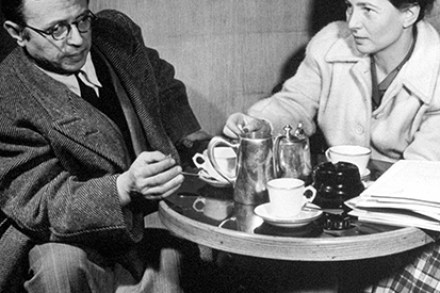
Thomas R. Flynn has written an avowedly ‘intellectual biography’ of Jean-Paul Sartre, which might seem fitting. Sartre was nothing if not an intellectual — so much so that one struggles to think of him as anything but an intellectual. Albert Camus, Sartre’s great rival for the title of the 20th century’s most famous thinker, was a strong swimmer and a stronger soccer player. A little adolescent boxing aside, Sartre did little but sit at zinc tables necking coffee and Corydrane (the amphetamine-based painkiller he was addicted to).

John Gray’s great tour-guide of ideas: from the Garden of Eden to secret rendition

From our UK edition

You can’t accuse John Gray of dodging the big questions, or indeed the big answers. His new book The Soul of the Marionette: A Short Enquiry into Human Freedom isn’t really that short and certainly isn’t confined to a reflection on human freedom. As a reviewer you’re often faced with books that are so bereft of content, so painfully thin that they’re transparent, and you wonder why anyone would publish them. I can imagine Gray’s editor begging him to jettison some profundity. The reader is bombarded with boulders of philosophy and politics. Religions are gobbled up. Whole civilisations whizz past. It’s the ontological kitchen sink coming atcha, or to paraphrase Joyce, Here Comes Everything. Not just the past, but the future too.

When two young Britons go camping in Yosemite their lives are changed for ever

From our UK edition

The title of A.D. Miller’s follow-up to his Man Booker shortlisted debut Snowdrops refers not to lovers but to two British men who befriend each other in their early twenties in 1993 when in the US. Among the sights they see on a tour of Yosemite is a pair of old trees with a conjoined trunk known as ‘The Faithful Couple’. Neil lost his mother as a child, and his father owns and runs a stationery store. He is the only one in his family to have been to university. Adam comes from a more entitled background and is full of confidence. When he speaks of his career ambitions in TV it is with certainty, not hope. Despite their differences, the two strike up a friendship.

The Dear Leader’s passion for films — and the real-life horror movie it led to

From our UK edition

Ahead of last year’s release of The Interview, the Seth Rogen film about two journalists instructed to assassinate Kim Jong-un, North Korea interpreted the film as ‘an act of war’. Sony Pictures were hacked by a group linked to North Korea and hundreds of humiliating titbits about spats between celebrities and Sony execs made public, most memorably the description of Angelina Jolie as ‘a minimally talented spoilt brat’. The film was first cancelled and then given a limited release. Kim Jong-un had the last laugh when the reviews came out, however. ‘About as funny as a communist food shortage, and just as protracted,’ said Variety.

If ‘incorrect’ English is what’s widely understood, how can it be wrong?

From our UK edition

In a cheeringly Dickensian fashion, the names of our supposed experts on grammar imply they want to bind writers (Lynne Truss); send them awry (Kingsley Amis); besmirch their prose (H.W. Fowler); deafen them with moos (Simon Heffer); or snort at their legitimate constructions (John Humphrys). At first glance, Oliver Kamm appears happy to keep them company. A leader-writer for the Times and its resident authority on style, Kamm is the most small ‘c’ conservative man I know. If he has ever left home without cleaning his shoes — and I doubt that he has — he would have realised his mistake before reaching the end of his road, and rushed back to apply the polish. Instead of joining the pedants, however, Kamm batters them.

Both Belgium and the United States should be called to account for the death of Patrice Lumumba

From our UK edition

For decades, all the outside world knew was that Patrice Lumumba, the Congolese independence leader, had been done away with. Like so much connected with the Congo, details were lost in the murk of Africa’s magnificent but broken giant. He had been fed to Katangan pigs, drowned in the river — or was perhaps even still alive and being held hostage in the Ituri rain-forest. So radiotrottoir assured me variously in January 2001 when I made my first visit to Kinshasa around the 40th anniversary of Lumumba’s disappearance. The reason for my trip felt darkly familiar: one of Lumumba’s successors as national leader, Laurent Kabila, had himself just been assassinated by a ‘turned’ bodyguard.

2,500 years of gyms (and you’re still better off walking the dog)

From our UK edition

My favourite fact about gyms before reading this book was that the average British gym member covers 468 miles per year and the average British dog walker 676. Eric Chaline’s history of the institution has offered up some competition on the fact front — but my cynicism remains undimmed. Chaline, a personal trainer and weightlifting instructor, certainly shows that ‘gym-bunny’ doesn’t have to equal ‘numbskull’. The book is learned and well-researched, and although this sometimes gives us sentences such as ‘The body plays a central role in the transformation of abstract social discourses into lived actions and identities’, it also furnishes some pretty interesting history.

Another enemy within: Thatcher (and Wilson) vs the BBC

From our UK edition

In a ‘Dear Bill’ letter in Private Eye, an imaginary Denis Thatcher wrote off the BBC as a nest of ‘pinkoes and traitors’. That drollery points to the corporation’s paradoxical place in British life: an essential part of the establishment (‘Auntie’) yet sometimes its most daring critic, willing to put impartiality above patriotism. Jean Seaton makes one wonder at this impressive balancing act in a book that continues Asa Briggs’s magisterial history of the BBC up to 1987. After the war many from newly liberated Europe thanked the BBC Overseas Service for keeping hope alive during the Occupation; this was reprised after the Berlin wall fell.

A strain of mysticism is discernible in the floating colour fields of Mark Rothko’s glowing canvases

From our UK edition

One of the curiosities of western art is that, until the 20th century, few visual artists were of Jewish ancestry. With odd exceptions such as the Pissarros and Simeon Solomon, the culture tended to produce verbal rather than visual imaginations. With the 20th century that changed. The important group of abstract expressionists that came out of New York after the second world war centred on at least two Jewish artists — Barnett Newman and Mark Rothko. Both possessed a specifically Jewish imagination, and both narrowed down their pictorial language to forms that expressed mystical aspects of their ancestral culture and faith. In Newman’s case it was the ‘zip’, a thin vertical stripe in a colour field connecting Earth and Heaven.

Don’t buy The Glass Cage at the airport if you want a restful flight, warns Will Self

From our UK edition

Nicholas Carr has a bee in his bonnet, and given his susceptibilities this might well be a cybernetic insect, cunningly constructed by a giant tech company with the express purpose of irritating him — a likely culprit might be the Tyrell Corporation in Ridley Scott’s future-dystopic film Blade Runner. In 2012 Carr — whose name has homophonic overtones of Cassandra — published a minatory work on the internet and the web called The Shallows. The title does indeed say it all: Carr’s view was that our increasing use of these technologies is having an impact on our cognitive and other physical faculties, and that by and large it’s a negative one.

The first Lord Dufferin: the eclipse of a most eminent Victorian

From our UK edition

The first Marquess of Dufferin and Ava is largely forgotten today — rotten luck for the great diplomat of the Victorian age. In the second half of the 19th century, Dufferin zoomed around the empire, hoovering up the sweetest plums in the diplomatic service: Governor-General of Canada, ambassador to the courts of Russia, Turkey and Italy, ambassador to France, Viceroy of India. Why did Queen Victoria’s proconsul slip into oblivion? Andrew Gailey, the Vice-Provost of Eton — until now best known as housemaster to Princes William and Harry — answers the question, telling not just Dufferin’s sad, dazzling story but the story of the empire at its high point, before the fall. Practically all the good fairies gathered for Dufferin’s birth in 1826.