Book review

James Shapiro’s timely account of the rise and fall of an influential public theater

James Shapiro, a distinguished Shakespeare scholar, has turned his attention to the seeds of today’s culture wars in this fascinating, timely and deeply researched book. He unearths them in the demise of the New Deal’s Federal Theatre Project, brought down by a Red-hunting congressional committee. Shapiro’s is an unexpectedly gripping tale, as he exposes the “playbook” of the Texas Democratic congressman Martin Dies, a white supremacist and glory hound who seems to have settled on destroying the Federal Theatre simply as a means of boosting his profile, while also exploring the relationships between politics, plays and propaganda. The Federal Theatre was a utopian project of galactic size, of a kind which, in these days of funding cuts, now seems impossible.

Shapiro
Turner

A new and compelling study of the life of the iconic rebel Nat Turner

In 1831, while the slave rebel leader Nat Turner sat in jail awaiting trial in Southampton County, Virginia, he was visited by a local lawyer named Thomas Gray. Turner spoke at length to Gray, who subsequently published his record of their conversations. At one point Turner said he had been visited many years before by the spirit. “What do you mean by the spirit?” Gray asked. “The Spirit that spoke to the prophets in former days,” Turner replied. Gray was unmoved by Turner’s claims of divine inspiration and concluded that he was a “gloomy fanatic” moved to mass murder by religious delusions.

Philbrick

Inigo Philbrick, the art world’s wheeler dealer stealer

A few months after going on the lam in late 2019, the thirty-two-year-old wunderkind art dealer Inigo Philbrick sent his friend and colleague Orlando Whitfield a trove of documents. Philbrick wanted his old friend to write a sympathetic account of the misdeeds he stood accused of — since described as the biggest art fraud perpetrated in US history, for which Philbrick was later convicted and imprisoned. Whitfield has instead written All That Glitters, a memoir chronicling their friendship and dealings during a heady “gold rush” decade in the art world. Going through Philbrick’s correspondence and the court documents, Whitfield realized his friend was not the person he purported to be, certainly not the one his clients believed he was.

Anne Applebaum’s solutions to the ‘threat’ of autocracy

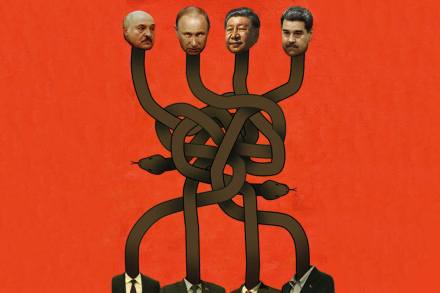
Liberal democracy is endangered more by its friends than by its enemies. Neither Moscow nor Beijing lured the United States into strategic humiliations in Iraq and Afghanistan. Nor was the rise of China to the rank of a great power brought about by Westerners sympathetic to Beijing’s communist system. If liberal parties and movements in the United States and Europe seem to be losing ground to populists, this is not thanks to Facebook ads purchased by Vladimir Putin in support of Donald Trump or Brexit. Liberals themselves sabotaged liberal democracy by prioritizing liberalism over democratic legitimacy for three decades after the Cold War — on fundamental issues ranging from trade and foreign policy to immigration and national values. Anne Applebaum’s latest book, Autocracy, Inc.

Applebaum
King

Stephen King’s You Like it Darker shows a master at his peak

It is not hyperbole to call Stephen King the most influential horror writer alive. Across page and screen alike, nobody else can claim to have had such an expansive and lasting impact on popular culture. King’s name has become so commonplace that it’s easy to take it and him for granted, and to forget that behind the ultrafamiliar and now-ubiquitous branding there lies, in fact, a wild and strikingly original mind and a beating, bloody, passionate heart. You Like It Darker, King’s latest offering, is a highly accomplished and masterful collection of twelve short (and not so short) stories, all blistering examples of King’s powers. Though some have seen the light of day elsewhere, most are published here for the first time. All are worth the purchase.

Murray

Is the hype for The Bee Sting justified?

On a recent visit to the bookshops of New York, I found all the usual suspects front and center. If you wanted David Grann, Amor Towles or Salman Rushdie, you had come to the right department; if your tastes veered more toward the Air Fryer Cookbook, that particular whim would be well catered for, too. But the single book I saw on most prominent display everywhere I visited was the new novel by the Irish author Paul Murray, The Bee Sting. A shop assistant in McNally Jackson professed herself an admirer of both writer and work. “I’ve never seen anything like it. We sell a dozen copies a day, sometimes more. It’s hit a chord with people in a way that other books just don’t.

Barry

Kevin Barry’s latest novel is bursting with energy, brutality and poetry

"He walked as calamity. He walked under Libra. He was living all this bullshit from the inside out. Oh, he scathed himself and harangued and to his own feet flung down fresh charges. But there were dreams of escape, too — one day you could ride south on a fine horse for the Monida Pass.” Well met by moonlight, Tom Rourke, doper and dreamer, formerly of County Cork, now a miner in Butte, Montana, in 1891. Welcome to yet another wild and whirling world made by Kevin Barry. Barry’s first collection of short stories, There Are Little Kingdoms, appeared in 2007; he was already celebrated in his native Ireland as a creator of darkly comic troubled characters compassionately drawn.

Bosker

Bianca Bosker’s snapshot of the art scene

Early on in her entertaining account of five years immersed in the New York art scene, author Bianca Bosker is informed that, as far as the art world is concerned, because she is a journalist, she is the “enemy.” Given that the job of a journalist is to find things out, then explain and communicate those findings, it is unsurprising that a hermetic, deeply self-protective society like the art world would be resistant to journalistic inquiry. In reality it’s not just Bosker’s profession that makes it difficult for her to get past art’s gatekeepers, but a whole litany of personal and social failings that are gleefully enumerated by an art dealer early on.

Have you ever heard of the St. Brice’s Day Massacre?

The St. Brice’s Day Massacre? I must admit I hadn’t heard of this “most just extermination” of Danes in Oxford at the instigation of King Aethelred the Unready in 1002, perhaps because the teaching of history in Britain tends to kick off in 1066. You certainly don’t think of Oxford as a place that pioneered techniques of ethnic cleansing. Crypt is a collection of seven essays that unearth details about how certain people lived and died in the past. If you didn’t already know Alice Roberts’s background as an anatomist and biological anthropologist, you’d have a good chance of deducing it from this book.

Roberts

An incisive memoir of life in the cloisters

Bishop Fulton J. Sheen, the immaculately Brylcreemed megastar of the golden age of Catholic television and radio evangelism in the United States, famously hated hearing the confessions of nuns. Doing so, Sheen is reported to have said, was “like being stoned to death with popcorn.” Despite this, Sheen — at one point broadcasting to over 30 million Americans — found himself hearing a lot of nuns’ confessions in his later career. He was reduced to this, alongside what was rather euphemistically referred to as his “international cassette tape ministry,” having fallen foul of the archbishop of New York, the doughty Cardinal Spellman.

Cloistered
Scouts

A history of the LGBTQ+ aspects of the Boy Scout movement

Today, gay activism may seem synonymous with incompetent nonprofit employees shutting down traffic to demand you use ze/zir pronouns because made-up pronouns, and only made-up pronouns, will fix global warming. But once upon a time, gays understood strategy better than nearly any other special-interest group in America. They were the best in the game. Sarah Schulman’s masterful AIDS history, Let the Record Show: A Political History of ACT Up New York, 1987-1993, details how the HIV activist group ACT UP took a good-cop/bad-cop approach to fighting for life-saving medication.

Rushdie

Salman Rushdie’s memoir is a devastating and powerful account of near-death

In late summer 2022, at the Chautauqua Institute in upstate New York, the celebrated novelist Sir Salman Rushdie was stabbed many times as he was about to give a lecture, the subject of which, ironically, was keeping authors safe. The attack sent shockwaves throughout the literary establishment, and the world. It seemed as if civilization itself was under threat, as if our fundamental freedoms to create, associate and speak as we wish were defunct, reduced to the point of a knife. His new memoir, Knife, examines the attack and its implications for him, and for such freedoms generally.

Ayed

A skillful retelling of one of World War Two’s most dramatic stories

Around lunchtime on a late September day in 1944, a young woman stepped into one of the most fashionable cafés on the Champs-Élysées. Her eyes still scanned the room for threats, even though her war had been over for many months. Known variously as Suzanne, Madeleine, Blanche, Ginnette or Tony, she had “amassed names and personas just as other women of her years and beauty amassed admirers. And she had amassed those too” in the service of her country. Two such admirers now sat opposite her in the café, and she had to decide which one she was going to spend the rest of her life with, and which she would never see again. Such is the climax of the epic story of love and betrayal that Nahlah Ayed tells, using unpublished interviews and archival and personal documents.

The problem with westerners seeking enlightenment in Asia

Call it a prejudice if you like. Living in Japan in the 1970s, I had a slight aversion to a particular type of westerner. He — for it was mostly a he — usually lived in Kyoto, sometimes wore a kimono and liked to sit in ancient temples chasing after that presumably blissful moment of enlightenment, awakening, satori, or whatever one wishes to call it. These seekers were less interested in Japan as a society of human beings. They wanted to float in higher spheres. As Christopher Harding explains in The Light of Asia, the Zen adepts, the Buddhist chanters, the rock-garden worshippers, the kimonoed fools (in my no doubt blinkered eyes) were part of a long western tradition.

Asia

The wild times on the late, great John Belushi’s most famous film

A good place to start with The Blues Brothers, Daniel de Visé’s engaging account of the John Belushi-Dan Aykroyd comedy classic, is in the spring preceding the movie’s summer 1980 release. By this stage, the production was mired in controversy and a martyr to industry scuttlebutt. Press reports put the expenditure at anywhere between $35 million and $40 million (in fact it sailed home at a mere $27.5 million) — and this at a time when over-subsidized box office calamities such as Steven Spielberg’s 1941 and Michael Cimino’s Heaven’s Gate had prompted many a lament about Hollywood hubris. The rough cut came in at a mammoth three hours, at a time when two were reckoned excessive.

Belushi

The ups and downs of the long road toward workplace parity

In late 2019, for the first time ever, American women outnumbered men in the college-educated labor force. Women now earn bachelor’s degrees and doctorates at a higher rate than their male counterparts, and they account for more than 56 percent of law students. They lead more than 10 percent of Fortune 500 companies. Has the United States come a long way in equalizing opportunities for men and women? Definitely. Do we still have a long way to go? Absolutely, says Josie Cox in Women Money Power, her compelling analysis of the ups and downs of the long road toward workplace parity.

women

Gabriel García Márquez’s posthumously published novel is unconvincing

Love and loneliness. Loneliness and love. These two motifs, these two codependent deities, underpin all of grand maestro Gabriel García Márquez’s fiction — from his bewitching magnum opus One Hundred Years of Solitude to the tumultuous romance of Love in the Time of Cholera. His final sultry, sun-soaked and unexpected work, Until August, which he attempted to complete while struggling with dementia, is a continuation of these oeuvre-defining themes. It’s a damn shame it’s half-baked. The circumstances under which Until August came to be written might, themselves, one day make a rather droll short story, perhaps even a sparky novella.

Until August