Laura Allsop

Amanda Knox’s new memoir asks what lies next

The question at the heart of Amanda Knox’s latest memoir Free: My Search For Meaning is a simple one: what are the life prospects for an exoneree? It follows 2013’s Waiting to be Heard, which detailed the Seattle student’s imprisonment in Italy before and after a wrongful murder conviction, and her fight for justice. For anyone who was asleep under a boulder at the time, Knox is the gauche American student who became the target of a media firestorm following the brutal murder of her British roommate Meredith Kercher in Perugia, Italy, in 2007. She was convicted of the crime alongside her boyfriend Raffaele Sollecito in 2009 and freed on appeal in 2011. (Kercher’s actual murderer, Rudy Guede, was convicted in a fast-track trial in 2008, and released in 2021.

amanda knox

How controversial is The Apprentice?

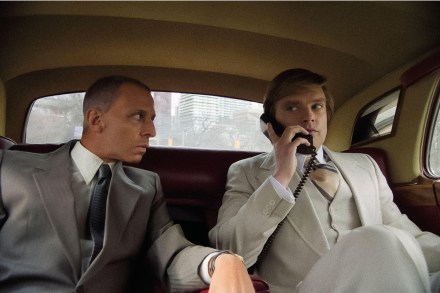
Ali Abbasi’s new film, The Apprentice, may be named after the TV show that fatefully beamed Donald Trump into millions of homes for fourteen seasons before its star’s even more fateful run for the US presidency. But after watching Abbasi’s twisted and wildly entertaining bildungsroman, featuring Sebastian Stan as a young Donald and Jeremy Strong as his dark-arts mentor Roy Cohn, you recognize an echo of the sorcerer’s apprentice too. Abbasi starts the film with footage of Richard Nixon telling the world he is not a crook, before segueing to a punk-soundtracked montage of broke-down Seventies New York.

Trump

Inigo Philbrick, the art world’s wheeler dealer stealer

A few months after going on the lam in late 2019, the thirty-two-year-old wunderkind art dealer Inigo Philbrick sent his friend and colleague Orlando Whitfield a trove of documents. Philbrick wanted his old friend to write a sympathetic account of the misdeeds he stood accused of — since described as the biggest art fraud perpetrated in US history, for which Philbrick was later convicted and imprisoned. Whitfield has instead written All That Glitters, a memoir chronicling their friendship and dealings during a heady “gold rush” decade in the art world. Going through Philbrick’s correspondence and the court documents, Whitfield realized his friend was not the person he purported to be, certainly not the one his clients believed he was.

Philbrick

Bianca Bosker’s snapshot of the art scene

Early on in her entertaining account of five years immersed in the New York art scene, author Bianca Bosker is informed that, as far as the art world is concerned, because she is a journalist, she is the “enemy.” Given that the job of a journalist is to find things out, then explain and communicate those findings, it is unsurprising that a hermetic, deeply self-protective society like the art world would be resistant to journalistic inquiry. In reality it’s not just Bosker’s profession that makes it difficult for her to get past art’s gatekeepers, but a whole litany of personal and social failings that are gleefully enumerated by an art dealer early on.

Bosker