Book review

In hot water

From our UK edition

It’s good to be back in Spook Street, home of the nation’s secret service. From a handful of locations across London, its dedicated employees struggle ceaselessly against the nation’s enemies, when not otherwise engaged in scratching each other’s backs or scratching each other’s eyes out. Spook Street is Mick Herron’s fourth novel in the series, and like its predecessors its focus is the activities of the ‘slow horses’, the Service’s rejects.

Day of infamy

From our UK edition

On 7 December 1941, without declaration of war, 350 Japanese carrier-borne aircraft struck at the US Pacific Fleet at anchor in Pearl Harbor, Hawaii — in President Franklin D. Roosevelt’s ringing words, ‘a date that will live in infamy’. For the 75th anniversary, Craig Nelson, a New York Times journalist, has, says his publisher, produced ‘a definitive account’. I disagree. Indeed, if this book were a motor car (or ‘automobile’, for it is a re-print of the US edition, with American usage and spelling), it would have to be recalled for extensive safety modifications and replacement parts.

Sins of the flesh

From our UK edition

Bill Schutt has an excellent subject, and he explores it from a promising angle. Cannibalism has long interested zoologists, anthropologists, historians, criminologists, literary theorists and students of theology and blasphemy — the absurd claim that Roman Catholics were commending it in their account of transubstantiation was a favourite with 18th-century English blasphemers. Few people have tried to bring all these together, and perhaps by the end we have to conclude that there is not much connecting the very different elements at the remote ends of the scale. Still, it was worth a try. Schutt is an animal scientist, and he begins with the simpler organisms. At the bottom of the scale, cannibalism in invertebrates is actually quite common for particular purposes.

Reading between the lines | 26 January 2017

From our UK edition

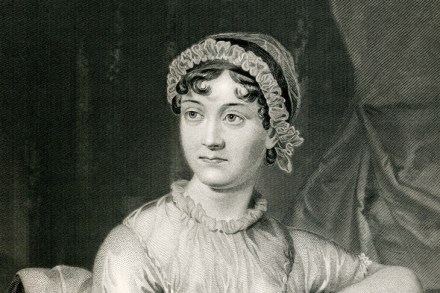
Writing to her sister Cassandra about Pride and Prejudice in January 1813, Jane Austen declared, in a parody of Walter Scott: ‘I do not write for such dull Elves/As have not a great deal of Ingenuity themselves.’ That identification of the good Austen reader as one continually on the qui vive, ready to piece out the novels’ nudges, winks and silences, also underpins Helena Kelly’s ambitiously revisionist new study of Austen — a study that is by turns illuminating, provocative and infuriating. ‘We’re missing something,’ she argues with reference to Northanger Abbey.

A scandalous scramble

From our UK edition

Empires in the Sun might conjure up romantic visions for some, but this book’s essence is distilled in its subtitle, ‘The Struggle for the Mastery of Africa’. Lawrence James’s panoramic survey of imperial and then neo-colonial subjugation of the African continent between 1830 and 1990 is a timely reminder, if any were needed, of the devastating consequences of chauvinistic nationalism and expansionism. Violence, inflicted on a continent wracked by the slave trade, internal wars and epidemics, is the dominant theme: empire-building is always brutal. France’s conquest and settlement of Algeria, the first European colony in Africa in modern times, sets the scene.

Dangerous liaisons | 26 January 2017

From our UK edition

In a Kashmiri apple orchard, a young fugitive from the Indian army’s cruel oppressions spots a snake that has ‘mistaken its tail for a separate creature’ and started to devour itself. Imran, a.k.a. ‘Moscow’, will later break away from the equally barbaric Islamist insurgents who prey on his rage and grief, flee to Pakistan, and there meet the other protagonists of this fifth novel by Nadeem Aslam. Although The Golden Legend has plenty of passages of exposition and argument, Aslam shines above all as the fabricator of radiant images that tell a story in themselves.

Boy wonder

From our UK edition

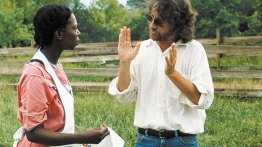
Back in 1978, a young and already successful Steven Spielberg told a bunch of would-be moviemakers at the American Film Institute not to ‘worry if critics like… Molly Haskell don’t like your movies’. Four decades on, and just in time to mark his 70th birthday, Haskell has written a biography of Spielberg for Yale’s series of Jewish Lives. Since the series is essentially celebratory, and since Haskell is one of the hanging judges of feminist film criticism, this is an interesting commission. But is it a wise one? Whatever you think of Spielberg’s work, its emphasis on motherhood and apple pie hardly makes it feminist fodder. Little wonder Haskell hesitated before agreeing to the project.

Do you know who I am?

From our UK edition

Anyone looking for a groundbreaking ethnography of the global political elite —the elusive social grouping that western electorates are currently lining up to slap in the face — is likely to be disappointed by this book. In the course of these ‘Misadventures’ it is often stated that, for example, ‘At the UN, the bullshit meter is off the charts,’ or ‘the State Department is… full of self-importance and hot air… with very little tangible output.

Before the bling

From our UK edition

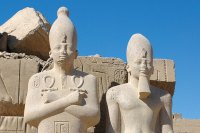
If you read the first volume of John Romer’s A History of Egypt, which traces events along the Nile from prehistory to the pyramid age, you will understand why he thinks Egyptology is not a science. It is hard, perhaps impossible, to be exact about anything when most of your knowledge is based on deduction and when new discoveries can overturn accepted theories. In the 1,000 years covered in this second volume, starting around 2600 BC, would it be easier for Romer to present facts and express certainty — to be scientific? One of the surprises of the pyramid age, as Romer explains very clearly here, is the lack of information concerning what people believed in and even how they lived.

A losing streak

From our UK edition

In backgammon, a blot is a single checker, sitting alone and unprotected. This is a sly title for this sly novel (which was published in the US as the more literal A Gambler’s Anatomy). The hero, Alexander Bruno, is a single, exposed man, and a professional backgammon player. He also suffers from an eye condition: there is a floating blank space in his line of vision, which means that he cannot see that which he looks directly at. Lastly, as a term drawn from the specific vocabulary of the game, the title suggests Lethem’s deep interest in the conventions and insider language of obsessions and professions. As the novel opens, Alexander Bruno is on his way to play backgammon with a rich German industrialist in the outskirts of Berlin. On the ferry, he flirts with a German girl.

The empathy trap

From our UK edition

Being against empathy sounds like being against flowers or sparrows. Surely empathy is a good thing? Isn’t one of the main problems with the world that there isn’t enough of the stuff going around? Paul Bloom of Yale University is here to argue otherwise. As he explains, while empathy can be a good thing in certain circumstances, in general it is a poor moral guide. ‘It grounds foolish judgments and often motivates indifference and cruelty.’ As always this depends on definitions. And as Bloom says from the outset, ‘The act of feeling what you think others are feeling —whatever one chooses to call this — is different from being compassionate, from being kind, and most of all, from being good.

Lord of the Arctic

From our UK edition

According to the author of this beautifully illustrated, hugely engaging book, if we were ever to choose a fellow mammal to serve as symbol for our time, then the polar bear would probably make any shortlist. Standing ten feet tall on their hind legs and weighing as much as a ton, the males are the world’s largest terrestrial predators and the only ones to seek human flesh actively. This extraordinary whale- and walrus-wrestling monster is proof positive that wildness persists on our planet, despite the onslaughts of the Anthropocene. For all its nightmare-haunting power, however, the aspect of the polar bear that really makes it an icon of the age is its vulnerability.

An infinite spirit

From our UK edition

Can American publishers be dissuaded from foisting absurd, bombastic subtitles on their books as if readers are all Trumpers avid for tawdry, over-simplified stunts? Howard Bloch is a professor at Yale whose previous books have had medieval French literature, the Bayeux tapestry and medieval misogyny as their subject matter. He has taken an entertaining diversion in his career by writing a relaxed and accessible book about Mallarmé’s poem of 1897, ‘Un coup de dés jamais n’abolira le hasard’ (‘One toss of the dice will never abolish chance’) and its place in belle époque Paris. The professor’s erudition and light touch need no Barnum-style booming.

A singular horror

From our UK edition

Seventy years after the Nazi Holocaust, against the background of a rich and varied literature, Laurence Rees has achieved the unexpected: a magisterial book that consolidates what has come before and manages to offer fresh perspectives. With Brexit, Donald Trump and Marine Le Pen now centre stage, it also offers a timely reminder of the dangers that are unleashed when the path of demonisation and discrimination is embraced in the name of national well-being. As Primo Levi wrote in 1947, from his own experience, when the ‘unspoken dogma’ of group targeting becomes ‘the major premise in a syllogism, then, at the end of the chain, there is the Lager’.

The trapper and the trapped

From our UK edition

The Hungarian novelist László Krasznahorkai has only lately become known to Anglophone audiences, through the masterly translations of George Szirtes and Ottilie Mulzet. Work written and published in the 1980s, during the corrupt and cynical last days of so-called ‘goulash communism’ under János Kádár, began to circulate in English in the early 2000s. In Sátántangó, War and War and The Melancholy of Resistance, readers were introduced to nightmarish, purgatorial worlds shot through with millennarian anxiety and a hopeless mystical yearning for the divine.

A hellish paradise

From our UK edition

‘Short of writing a thesis in many volumes,’ Patrick Leigh Fermor wrote in his preface to The Traveller’s Tree, ‘only a haphazard, almost a picaresque, approach can suggest the peculiar mood and tempo of the Caribbean and the turbulent past from which they spring.’ Island People, Joshua Jelly-Schapiro’s first book, is an academic picaresque. This unlikely hybrid might be the ideal vehicle for a trip around the ‘American lake’; the Caribbean’s cultures and peoples are also hybrids, legacies of unlikely crossings. The masters, slaves, indentured labourers and merchant middlemen of the Caribbean were the first truly modern societies, drawn and dragged to a hellish paradise solely to serve a global economy.

The legacy of Vietnam

From our UK edition

At first glance, Robert Olen Butler’s Perfume River seems like an application for a National Book Award. Its protagonist, Robert, a 70-year-old history professor, lives in comfortable ennui with his semiotician wife, Darla: tenure, sabbaticals, staring through separate study windows in their sprawling Florida home. It’s a life of carefully brewed coffee and uninterrupted research. All is well, save for the growing distance in the marriage, man and wife siloed into their respective Kindle-glows at night. But a chance meeting with Bob — a homeless man Robert assumes to be a veteran — reveals the reason for the disconnect: Robert’s unacknowledged guilt about his war in Vietnam.

Embarrassing Victorian bodies

From our UK edition

The fetishisation of the Victorians shows no sign of abating. Over the past 16 years, since the centenary of the passing of the Victorian age, we have been treated to a never-ending stream of books about the monarch herself, the houses her subjects lived in, the railways they built and travelled on, their sexual peccadillos, the sensational murders that seized the headlines, and so on ad infinitum. Now we have a study devoted to that ultimate fetishistic object: the human body. According to Kathryn Hughes, biographical writing about the Victorians has been indifferent to their vital signs of life, movement, smell, touch and taste, behaving as if our ancestors were abstractions rather than men and women full of puff and fat who probably stank to high heaven.