Book review

The plight of women in Labour

From our UK edition

We’re told not to judge books by their covers, but faced with these two it’s hard not to. Harman’s is one of those thick, expensive tomes which, understandably, politicians write when they’ve had enough earache and, unbelievably, publishers keep buying for vast sums, despite the fact that a fortnight after publication you can pick them up cheaper than an adult colouring book in a remainder bin. The old saw that ‘all political careers end in failure’ might now better be: ‘All political careers end with a book on Amazon going for less than the price of the postage.

Telling stories

From our UK edition

John Burnside is the author of an impressive bookshelf of elegant novels and slim, precise volumes of poetry, and like all prolific writers he has certain repeated themes. Nicely, repetition is one of his themes. He writes of the tricks of memory, and the impossibility of perfectly recalling the past. He writes of absent fathers, often, and how they are remembered by their children. His poems sound like hymns, or the blues. ‘Before the songs I sang there were the songs/ they came from,’ begins his poem ‘Death Room Blues’, and ends: ‘I’m half convinced that childhood never happened.’ Burnside’s new novel Ashland & Vine is a story about telling old stories again, and never quite settling the truth of a childhood long past.

A surreal caprice

From our UK edition

At the start of this novella the protagonist, Thibaut, is ambushed by Wehrmacht soldiers between the ninth and tenth arrondissements. That the year in 1950 is not the strangest aspect, as he is rescued by the appearance of the Vélo, a bicycle-like contraption with a queasily organic prow. It is, in fact, a living version of Leonora Carrington’s 1941 sketch ‘I Am an Amateur of Velocipedes’. In this initially joyous, fundamentally chilling book, the art of the surrealists has been weaponised in the fight against Nazism. Surrealism billed itself as a liberation; now is it part of the Liberation.

In the thieves’ den

From our UK edition

‘To get a confession from a proud male factor, it is always better to call for a poet than a priest.’ These are the wise words of William Archer, the narrator of part of The Fatal Tree and the notional editor of the rest. Mind you, he’s biased: he aspires to be a poet, though he is at best a ‘garreteer’, one of the Grub Street hacks who provide better writers than themselves with lurid copy about the early Georgian underworld they live in. Archer’s world is the ‘Hundreds of Drury’, the streets and alleys around Drury Lane where the thieves, prostitutes and con men ply their trades. Known as Romeville in the thieves’ cant that colours so much of this novel, it holds up a dark mirror to the great metropolis around it.

The Ben and Clara affair

From our UK edition

As a child in fascist Italy, Clara Petacci (known as Claretta) was dutifully adoring of Benito Mussolini and the cult of ducismo. She gave the stiff-armed Roman salute while at school (the Duce had declared handshaking fey and unhygienic) and sang the fascist youth anthem ‘Giovinezza’. Her father, the Pope’s personal physician, was a convinced fascist, for whom Mussolini was the incarnation of animal cunning — furbizia — and the manful fascist soul. Claretta herself would have to wait before she met the ‘divine Caesar’. One day in April 1932, while motoring from Rome to the seaside resort of Ostia, she caught sight of her idol behind the wheel of his Alfa Romeo. ‘Follow him!’ she ordered her chauffeur.

Three’s a crowd | 16 February 2017

From our UK edition

James Lasdun’s latest novel, billed as a psychological thriller, opens in Brooklyn in the summer of 2012. Charlie and his cousin Matthew are about to leave New York to spend the season in Charlie’s mountain-top residence in the Catskills, where they are to unite with Charlie’s wife, Chloe. The relationship between Charlie and Matthew is ostensibly unequal: Charlie is a wealthy former banker who feels uneasy about the morality of his sometime profession; Matthew is comparatively poor, has drifted in and out of the food industry, is haunted by the absence of his father (who disappeared when Matthew was a boy), and is creepily enraptured by Charlie’s wife.

Bedside manners

From our UK edition

‘A tricky part of my job,’ the GP said, scrolling through the next patient’s notes, ‘is breaking good news.’ As a medical student on placement, I listened as he told the young woman that her ‘presenting complaint’ —blurred vision, fatigue and tingling down her arms — was not in fact multiple sclerosis. The diagnosis had been made several years earlier but her latest MRI scan suggested that MS was very unlikely. Despite the GP’s prediction that this would be a complicated consultation, he still looked frustrated when the patient didn’t respond with relief to his diagnostic revision. Instead, her weariness was edged with anger. ‘If it’s not MS,’ she said, ‘why do I feel so unwell?

In praise of LSD

From our UK edition

Ayelet Waldman is, surely, not the first writer to have scrolled through a list of ‘Books of the Year’ and become increasingly enraged to find her own book not on it. But where other authors manage to keep a dignified silence (sticking pins into critics’ byline photos in private), Waldman demonstrates a lively lack of self-control, and often reaches for her phone. In 2014 she fired off a volley of increasingly furious tweets when the New York Times omitted her novel Love and Treasure from its list of ‘Notable Books’. Her book was, she railed, ‘fucking great’. It felt ‘fucking demoralising’ to be excluded when her book had garnered ‘better reviews’ than many on the list.

The classic that conquered the world

From our UK edition

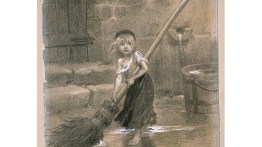
Somewhere between his first and second drafts, Victor Hugo decided to change the title of his great novel from Les Misères to Les Misérables, shifting the focus from society’s problems to the people suffering them. And what problems they were. Hugo had never been brutally poor himself, but he’d borne witness to enough brutal poverty around him to know it was real, and to understand what it did to people. He knew, too, how ill-equipped his society was to help the poor, or to fix the causes of their predicament. Not least because in the 1840s, when he started writing Les Misères, only land-owning citizens voted, so as long as the poor didn’t create trouble they weren’t a constituency in whom politicians were especially interested.

What the secretary saw

From our UK edition

What the secretary sawSarah Churchwell Big Bosses: A Working Girl’s Memoir of the Jazz Age by Althea McDowell AltemusUniversity of Chicago Press, £10.50, pp. 220 In 1922, writing a facetious review of her husband’s second novel, The Beautiful and Damned, Zelda Fitzgerald made an ironic reference to the fact that Scott Fitzgerald had used sections from her diary in his novel: ‘It seems to me that on one page I recognised a portion of an old diary of mine which mysteriously disappeared shortly after my marriage…’. 1922 was the same year in which Fitzgerald would later set The Great Gatsby, in part as a tribute to the other great modernist works of that literary annus mirabilis.

Tricks of the trades

From our UK edition

Oddly enough, one of the most historically influential pieces of British writing has turned out to be an essay that appeared in the June 1800 issue of the Commercial, Agricultural and Manufacturers Magazine. Over the preceding decades, there’d been much anguished debate about the size of the country’s population. Many commentators were convinced that, thanks to the gin craze, it was in potentially disastrous decline. Others, led by Thomas Malthus, were convinced that it was on the potentially disastrous rise. The biggest question of all, though, was what the population actually was, with most estimates — or, as it transpired, wild guesses — ranging from four million to six million.

The nature of genius

From our UK edition

On 21 December 1945, Ezra Pound was confined to St Elizabeths hospital in Washington DC. He had broadcast for Rome Radio from 29 January 1942 to July 1943. To avoid his almost certain conviction for treason (and the death penalty visited on William Joyce, Lord Haw-Haw), the superintendent Winfred Overholser testified that Pound was insane and unfit to stand trial. Overholser connived with Julien Cornell, Pound’s lawyer. He elided the testimony of six psychiatrists, whose verdict was more equivocal. He concentrated instead on Pound’s brief, understandable breakdown after being kept in a cage at the Disciplinary Training Centre’s stockade in Pisa. A.

A whirlwind life

From our UK edition

The dust cover features one of the best-known caricatures of Richard Wagner, his enormous head in this version opened like a boiled egg, with a photograph of Simon Callow either emerging from his skull or sinking into it. The idea is that rather than just writing another book on this over-biographised figure, Callow will let us know what it was like actually to have been him, something he also tried in his one-man show at the Linbury Theatre, Inside Wagner’s Head. Callow tells us that he has been a lifelong Wagnerian, but that only in the last four years has he investigated him as a man, reading the most important biographical and, especially, autobiographical works, together with a fair number of critical studies.

The game of life

From our UK edition

In the introduction to his new book Steven Johnson starts out by describing the ninth-century Book of Ingenious Devices and its successor, the 13th-century Book of the Knowledge of Ingenious Mechanisms by the Arab engineer al-Jazari. Here were books of extraordinarily advanced technology. The latter contained sketches of float valves that prefigure the design of modern toilets, flow regulators that would eventually be used in hydroelectric dams and internal combustion engines, water clocks more accurate than anything Europe would see for 400 years… But in both books, Johnson says, ‘the overwhelming majority of the mechanisms […] are objects of amusement and mimicry’: they are toys. A point to conjure with.

Righter of wrongs

From our UK edition

I used to work for Ludo, as we all knew him on BBC2’s Did You See?, and was once thought to be his illegitimate son. In 1963, on a visit to Phnom Penh, he danced with my mother in a nightclub under the stars, but I was already six years old and, according to her, nothing happened, except that he made her laugh. ‘That’s always dangerous.’ A pioneer of the interviewing art, without whom there would have been no Jeremy Paxman, Ludo once told me: ‘There are two types of people who work for the BBC. Those who use it, and those who are used by it. Make sure you’re the former.’ Ludo made sure, even to the extent of bringing his dry cleaning to the office.

Thirtysomething blues

From our UK edition

If ever there was a book for our uncaring, unsharing times, it is Gwendoline Riley’s First Love, in which Neve, a woman in her mid-thirties, struggles with a truly awful family and with the men in her life, while trying to make a career as a writer. That latter point might suggest some kind of bildungsroman approach, but in fact the meat of First Love is in its rich character depictions, from which Riley teases out a series of painful but exquisitely comedic episodes. Neve’s father is a crude, self-styled ‘socialist’, full of class resentment and personal bitterness, while her pretentious mother, now remarried to a condescending Sunday painter, is so utterly self-absorbed that she is blind to Neve’s difficulties, forever complaining about her own lot instead.

Cheating death

From our UK edition

2016 was probably the year even the most optimistic of us — those who can genuinely square the new populist politics with a bright future for truth-seekers, scientists and rational thinkers — gave up on the possibility of time travel. Surely, on every rally stage there should have been at least one white man from the future (it’s generally a white man for the simple statistical reason that if you’re a woman or a non-white man and go travelling in time, there’s only about 0.

Old, unhappy, far off things

From our UK edition

August Geiger led an unremarkable life. Born in 1926, the third of ten children of a Catholic farming family in western Austria, the most unusual thing about him was his unwillingness ever to leave Wolfurt, the village where he had grown up. He built a house there, for his schoolteacher wife and their children, and refused ever to go on holiday. His wife had suggested that they go on a walk and call it their honeymoon, but August rejected even this slight change in his routine. It was, therefore, particularly poignant that when he developed Alzheimer’s disease, August’s dominant obsession became his desire to go home. Nothing could convince him that he was already there.