Book review

Great expectations | 12 April 2018

From our UK edition

In a 1974 interview celebrating the quarter century since the publication of her classic The Second Sex (1949), Simone de Beauvoir recalled a eureka moment in which she saw that ‘to change the value system of society was to destroy the concept of motherhood’. That ‘value system of society’ rested on what she saw as enforced maternity, whereby women — whether through physical, psychological or social pressure — were pressed into humiliating servitude, a world of narrowed horizons and debasing physical shame.

Voyeur or visionary?

From our UK edition

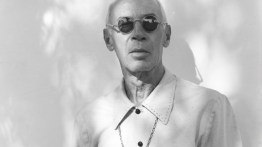
Few writers seem less deserving of resuscitation than Henry Miller. When the Scottish poet and novelist John Burnside was asked to contribute the latest volume of Princeton’s ‘Writers on Writers’ series, he planned to choose Marianne Moore, a clearer influence on his poetry. Miller was too messy. A non-conformist and autodidact, his most famous novel, Tropic of Cancer, opened the door to literary obscenity, and also gave him the reputation of a pornographer. Burnside admits that he wrote the book less from a conscious decision than ‘out of need’. To his credit, he does not skirt Miller’s notoriety, nor does he deny that much of his subject’s erotic writing is ‘embarrassing’.

A play on the Scottish play

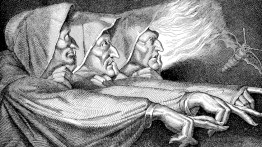
It must have seemed a good idea to someone: commissioning a range of well-known novelists to ‘reimagine Shakespeare’s plays for a 21st-century audience’. The first six novels have come from irreproachably literary authors of the calibre of Jeanette Winterson (The Winter’s Tale) and Margaret Atwood (The Tempest). Now, however, we have something a little different: Jo Nesbo, the Norwegian crime writer, has recast Macbeth as a thriller, allegedly set in 1970, though this timeframe should not be taken too literally. The plot is very loosely connected with Shakespeare’s. The location is a crumbling city in a dystopian country where many of the names have a Scottish ring.

Prince of punters

From our UK edition

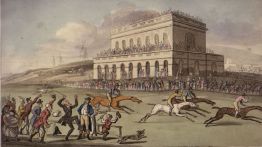
About a third of the way through this book I worked out that I had an unbeatable system for winning at the horses. All I would need was a degree in mathematics, or access to someone who has one, a lot of research on horses, jockeys and racecourses under my belt, including inside knowledge, and a little seed money. Say, £100,000. Two thirds of the way through I realised I would also need some links to organised crime, and if I didn’t have any, they would be furnished for me, whether I wanted them or not. By the end of the book I reverted to my original opinion: that it is not for the likes of me.

Goodbye to all that | 12 April 2018

From our UK edition

Alberto Manguel is a kind of global Reader Laureate: he is reading’s champion, its keenest student and most zealous proselytiser, an ideal exemplar of the Reader embodied. And reading is not only his committed, devoted practice, but also the very subject of some of his best writing. His latest book to wander through this familiar domain was prompted by the traumatic experience of packing away his huge personal library, when he and his partner found themselves needing to downsize from a cavernous French barn (containing 35,000 volumes ‘in its prime’) to a small apartment in New York City.

Trouble in paradise | 12 April 2018

From our UK edition

1991, the Harbourfront Literary Festival in Toronto. The novelist Rose Tremain and the South African writer Carolyn Slaughter are enjoying a lobster thermidor and Chablis lunch. Hearing about Slaughter’s abuse at the hands of her father, Tremain finds herself telling her lunch companion about ‘something I never normally discussed with anyone: the lack of love I’d had from my mother and father, and my emotional dependency on Nan’ (a beloved nanny). Slaughter — who is training to be a psychiatrist — responds that ‘any human life, if the childhood is devoid of adult love, will almost certainly be a troubled one’, but reassures Tremain that Nan almost certainly saved her from such a fate. ‘She was your angel,’ Slaughter says.

Snowy days in Saratoga Springs

From our UK edition

Alan Querry, the central figure in James Wood’s second novel, is someone who, in his own words, doesn’t ‘think about life too much’. His peculiar surname may recall the brooding, godforsaken Querry of Graham Greene’s A Burnt-Out Case, but this Querry — who lives in ‘the poshest part of Northumberland’ — isn’t much troubled by God’s presence or absence: ‘he had a notion that “the question of God” might all have been more or less sorted out in his lifetime, like Cyprus or polio.’ Called upon to visit his daughter Vanessa in upstate New York, Alan stops along the way to meet his younger daughter, Helen, and they make the journey together to snowy Saratoga Springs.

The changing face of battle

On War and Writing by Samuel Hynes is hardly about war at all. There is little about combat here, or the actual business of fighting and killing — what Shakespeare wryly called ‘the fire-eyed maid of smoky war/ All hot and bleeding’. Hynes is an august scholar of English literature and particularly the literature of 20th-century warfare. But he also served as a bomber pilot in the Pacific during the second world war, and has written an engaging, plain-spoken memoir of his service called Flights of Passage, published in 1988. His two vocations, he explains in the introduction to his new book, are ‘professor’ and ‘pilot’, and here the professor not the pilot is at the controls.

Man of mystery | 12 April 2018

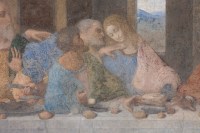
‘If you look at walls soiled with a variety of stains or at stones with variegated patterns,’ Leonardo da Vinci advised fellow painters, ‘you will therein be able to see a resemblance to various landscapes graced with mountains, rivers, rocks, trees, plains, great valleys and hills in many combinations.’ By an irony of history, Leonardo (1452–1519) has come to resemble that stained wall: a Rorschach blot in which viewers discern phantoms of their own imagination. This is, of course, to some extent the fate of all celebrities, and Leonardo was the first true artist celeb — the forerunner of a long line descending through his younger contemporaries Michelangelo and Raphael down to Picasso, Andy Warhol and Damien Hirst.

A beautiful enigma

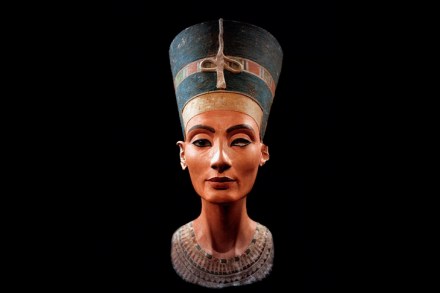
Often dubbed the Mona Lisa of the ancient world, the bust of the Egyptian queen Nefertiti is as immediately recognisable as the pyramids and the Rosetta Stone. Yet almost everything about this sculpture is mysterious at best, or bitterly controversial at worst, from the context of its creation to questions surrounding its acquisition by the Berlin Museum. The cultural and political capital of ancient culture is sharply in our awareness — think of the Elgin marbles or Palmyra — so writing a biography of Nefertiti’s bust requires the author to navigate hotly competing opinions.

The great seducer

From our UK edition

Peyrot, the chef at Le Vivarois in Paris, had a fascinating theory of how one of his regulars, the otherwise taciturn psychoanalyst Jacques Lacan, communicated. ‘He was convinced that the farts and burps which Lacan, as a free man, did not restrain in public, were meant to signal to Peyrot the two syllables of his name,’ recalls Catherine Millot. A translator’s footnote helpfully explains that in French pet means fart and rot burp. I love this story as told in this beguiling memoir by Lacan’s last lover — and not just because it evokes a time when deference to Gallic intellectuals was such that even their airy nothings were submitted to bravura semiotic analysis.

The incredible journey

From our UK edition

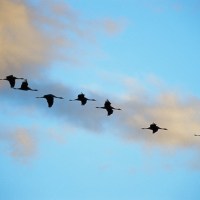
Sweet lovers, Shakespeare reminds us, love the spring. How can they not? All that wonderfully wanton colour, all that sensual fragrancy, all those budding promises of new life. And, lest we forget, all those yummy insects. For birds adore spring as well. Every year, regular as clockwork, hundreds of millions of our feathered friends take flight and head north. To hear their happy birdsong is to know that winter’s lugubrious cloak has lifted and that longer, livelier days lie ahead. No species is more symbolic of the season than the swallow. Before the age of smartphones and calendar apps, we relied on these fork-tailed speedsters to inform us of spring’s arrival. People would stare from their kitchen windows in anticipation.

Hooked for life

From our UK edition

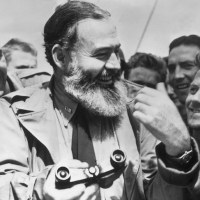
In Havana, one week before President Obama unthawed half a century of cold relations with Cuba, I talked to the last fisherman to have known Ernest Hemingway. Oswald Carnero came from Cojimar — where the writer kept his boat, the Pilar — and was one of the villagers to whom Hemingway dedicated his Nobel Prize after publishing The Old Man and the Sea. Carnero had met him in 1950, aged 13. ‘He was bringing in a big marlin on his boat. He asked me if I could skin the fish.’ Thereafter Carnero sold Hemingway turtle flesh for soup and ran errands, scurrying back to the Pilar with bottles of White Horse, and going up to his house, the Finca Vigía.

Babes in the wood

From our UK edition

Mona — single, childless, pushing 60 — sells wooden dolls made by a carpenter friend, which she delicately costumes from odds and ends of fabric sourced in charity shops. But her business has an odd spin-off: mothers who’ve suffered past stillbirths can come and ‘order’ a lump of carved wood made to the specified birthweight of their dead child. By cradling this weight and imagining the future the baby never had, they work towards a kind of closure. Meanwhile, Mona herself — who grew up in Ireland but lived in Birmingham through the IRA bombings — has a tragedy of her own on which she has little or no closure.

An act of piety

From our UK edition

Census is a curious, clever novel. It depicts a dystopia with a father and his Down’s syndrome son journeying from town A to town Z taking a census. The father, the narrator, knows he is dying. As a retired doctor he can interpret the fatal signs of his disease. His is a bizarre family; his wife, who has pre-deceased him, trained as a clown. Condemned to death and left with his disadvantaged son — ‘Our lives, my wife’s and mine, bent round him like a shield’ — he decides to register as a census-taker in an Orwell-ian state office. He asks questions of those interviewed, to which he sometimes but not always gets an answer The novel becomes a parable, or rather a series of parables, complete with riddles.

Scooby Doo, where are you?

There are two sorts of people: those who can’t wait to grow up, and those who wish they never had to. It’s fair to say that women figure predominantly in the first group and men in the second, hence the preponderance of male fans of science fiction and fantasy — and dewy-eyed reminiscence about children’s television. I’ve been in many female friendship groups and can’t remember a single occasion on which we’ve sat around thinking about past puppets. On the contrary, the childish things we typically recall are our awful choices of make-up and clothes, and our adoration of the pretty-boy pin-ups in our teenage bedrooms: that is, the things we used to hasten the arrival of longed-for adult life.

The executor’s song

From our UK edition

In 1999, Patrick Hemingway published True at First Light, a new novel by his father Ernest. In his role as literary executor of the late writer’s estate, Patrick edited an unfinished manuscript of some 200,000 words down to a more marketable ‘fictional memoir’ of less than half that length. The book hit the bestseller lists but received largely negative reviews, most notably from Joan Didion in the New Yorker. ‘This was a man to whom words mattered,’ she wrote. ‘His wish to be survived by only the words he determined fit for publication would have seemed clear enough.’ To which the man charged with safeguarding Papa’s posthumous reputation responded, somewhat plaintively: I think it’s a very valid argument.

A heartwarming spectacle of desolation

From our UK edition

In 2008, the Scottish poet Kathleen Jamie characterised the typical exponent of modern nature writing as ‘the lone enraptured male’. This was a more solemn, grown-up Basil Fotherington-Thomas, the effete schoolboy of the Molesworth books who prances about in puerile pantheistic ecstasy, saying, ‘hullo clouds, hullo sky’. Ten years on, there is barely a British landscape that has not been visited by the species. He sits in a car until he reaches the chosen spot. Then, winding down the window, stunned by emptiness and silence, he savours the momentary disconnection from global networks. The void is soon filled with childhood memories, poems learnt at school and Wikipedia articles.