Book review

The road to Damascus

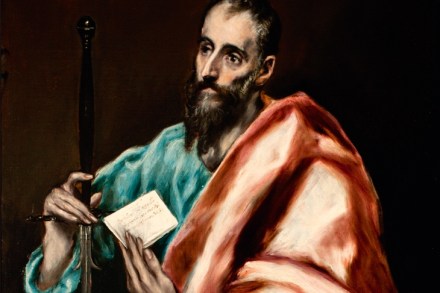
Saint Paul is unique among those who have changed the course of history — responsible not just for one but two critical historical developments 15 centuries apart. First, he persuaded the early followers of Jesus of Nazareth that gentiles as well as Jews could belong to their nascent church. This enabled its spread throughout the Roman empire, until Christianity become the state religion under the Emperor Constantine, and remained the official creed of all European nations until the French revolution. Second, there was his teaching on justification by faith alone —a ticking time bomb detonated by Martin Luther in the 16th century.
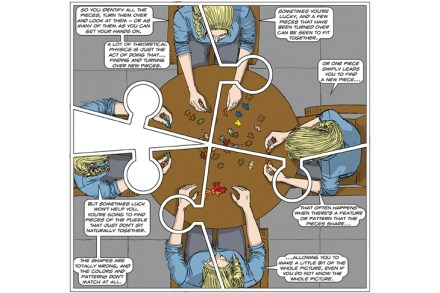
The cosmic made comic

We all know that physics and maths can be pretty weird, but these three books tackle their mind-bending subjects in markedly contrasting ways. Clifford V. Johnson’s The Dialogues is a graphic novel, seeking to visualise cosmic ideas in comic-book style. Darling and Banerjee’s Weird Maths is a miscellany of fun oddities, ranging from chess-playing computers to prime-counting insects. Philip Ball’s Beyond Weird argues that we’ve got quantum mechanics all wrong: it’s not so weird actually, but quite sensible. All three books do a fine job for their respective audiences. Just make sure you know which target group you’re in.

Pandora’s Box

On 25 April 2005, Jawed Karim sent an email to his friends announcing the launch of a new video site — intended for dating — called youtube.com. Within 18 months, the site was being used to view 100 million videos a day. Last year it had more than a billion users, watching five billion videos every day, with creators uploading 300 hours of video to YouTube every minute. Given this almost incomprehensible scale, it’s fitting that the word Videocracy — the title of YouTube Head of Trends Kevin Allocca’s history of the site — evokes the idea of an authoritarian dystopia. Like any approved account from such a regime, its analysis never strays far from the realms of the vapid or tepid.

Princesses of Parallelograms

From our UK edition

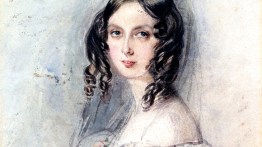
It’s more than 160 years since the death of the computer pioneer Ada Lovelace, Charles Babbage’s ‘enchantress of numbers’ and self-proclaimed ‘bride of science’. Not the least of Lovelace’s fascination is the way in which her reputation and the claims for her significance have fluctuated so wildly during that time. She’s been hailed for her understanding of the potential of Babbage’s unbuilt Analytical Engine and for her far-reaching vision of the role of the technology of the future. This has unfortunately led to her being credited with everything from the invention of the CD to the foundation of Silicon Valley.

Unusual motives for murder

From our UK edition

Donald E. Westlake wrote crime books that were funny, light and intricate. Help I Am Being Held Prisoner (Hard Case Crime, £7.99) was first published in 1974. The protagonist is Harold Künt. (That umlaut, as you can imagine, is very, very important.) In reaction against his name, he’s become a serial prankster. After one of his jokes goes badly wrong, he ends up in prison. Here he falls in with the Tunnel Gang, a group of inmates who use a secret tunnel to escape into the nearby town. But they only go there for a few hours at a time before returning to prison to serve out their sentences. Künt strolls around town, chats to locals, even falls in love, and then heads back to his cell. It’s a perfect life.

Yet more ponies for Jean

From our UK edition

After three hot-water-bottle-warmed evenings of highly satisfying bedtime reading, I can confirm that, even in a world where Francis Spufford’s superb The Child that Books Built exists, we need this new memoir by Lucy Mangan, about her childhood of being a bookworm. It’s enchanting.

In vino veritas

Taste has a well-noted ability to evoke memory, so it is curious how infrequently most wine writers mine their pasts for inspiration. You wouldn’t think that some had ever fallen in love, read a novel or even got drunk. Instead they obsess over scores, sulphur and diurnal temperature variation. Thank heavens for Nina Caplan, who brings a bit of hinterland to this often dry subject in her weekly New Statesman column. Characteristically, The Wandering Vine, her first book, is about much more than wine. It’s a heady blend of travel, literature, memoir, history and what I can only describe as psychogeography, though don’t let that put you off. The publishers have given the book a whimsical cover, which is misleading, because this is not a lightweight read.

A thing of shreds and patches

From our UK edition

On the wall of her tumbledown house in central Baghdad, an elderly Christian widow named Elishva has a beloved icon of St George with his lance raised. She chats with the saint like an old friend, but wonders why, in the picture, he stays frozen mid-thrust and why ‘he hadn’t killed the dragon years ago’. As her ravaged city suffers an interminable ‘binge of death and devastation’, Elishva frets that ‘everything remained half-completed’, three years after the Anglo-American invasion of Iraq in 2003. During the blood-soaked interregnum, which continues to this day, monsters breed.

An unprincipled Principal

From our UK edition

‘Dreaming spires’? Yes, but sometimes there are nightmares. Brian Martin, awarded the MBE for services to English literature, is at home in Oxford, where he spent most of his career teaching, and seems to know all about the professional and psychological complexities of the university. Holt College, his fourth novel, written with dedicated probity and Baedeker thoroughness, is a suspenseful tragedy without a hero — just a few men and women who mean well. Concerned with the administrative deliberations and manoeuvrings of the fellows of a respected, ancient college, the story serves analogically to show how an unscrupulous individual of obsessive ambition and manipulative cunning can turn even the most idealistically conceived democracy into a dictatorial hierarchy.

Ankle-deep in LSD

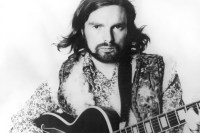
‘And this is good old Boston/, The home of the bean and the cod,’ John Collins Bossidy quipped in 1910, ‘Where the Lowells talk to the Cabots/, And the Cabots talk only to God.’ Also home, in 1968, to Mel Lyman, a folk musician turned LSD guru who believed he was God, and to Van Morrison. The music business abounds with stories about Morrison being grumpy. In my experience, he’s perfectly reasonable. You’d be grumpy if your job obliged you to consort with thieves, liars and drummers who can’t keep time. You’d be especially irritated by people asking how you wrote Astral Weeks. Sensibly, Morrison explains that Astral Weeks was written by a different person living, as its title song says, ‘In another time/ In another place.

Pirates of the Southern Ocean

From our UK edition

Sea Shepherd is a radical protest group made famous — or notorious — by the American cable TV series Whale Wars and by the support of numerous Hollywood celebrities and rock stars. Having previously concentrated on obstructing whale-hunting from Japan to the Faroe Islands, it now focuses on other devastating acts of marine plunder. In Catching Thunder, written with Sea Shepherd’s active co-operation, the Norwegian journalists Eskil Engdal and Kjetil Sæter tell the story of a 10,000-mile sea chase, lasting 110 days, in which the organisation sought to bring to justice a Spanish vessel illegally trawling for highly endangered toothfish in the Southern Ocean.

Thomas Paine: spendthrift, scrounger and polemicist of genius

‘We have it in our power to begin the world over again.’ Ronald Reagan made this most unconservative of lines a leitmotif of his 1980 presidential campaign, knowing its radicalism would highlight his energy, personal optimism and desire for change. As it duly did.The astonishing power over words of its author, Thomas Paine, persists to this day. In a letter of 1805, the former president John Adams said of Paine thatthere can be no severer satyr on the age. For such a mongrel between pig and puppy, begotten by a wild boar on a bitch wolf, never before in any age of the world was suffered by the poltroonery of mankind, to run through such a career of mischief.

Shadows of the past

From our UK edition

The Shangri-Las’ song ‘Past, Present and Future’ divides a life into three, Beethoven-underpinned phases: before, during and after. Each section turns in on the next, binding them together with devastating effect. It is one of the oddest and most radically structured moments in pop, and one that came to mind when reading these three very different debut novels. With similar temporal concerns to the Lieber-Butler-Morton lyric, each traces the implications of past action on the present —and how these in turn could shape the coming years. The future is most notably explored in Danny Denton’s brilliantly conceived The Earlie King & the Kid in Yellow, a polyphonic trawl through the murky waters of a permanently raining Irish dystopia.

A time for reflection | 8 March 2018

From our UK edition

The precarious stasis of late pregnancy offers the narrator of Jessie Greengrass’s exceptional first novel a space — albeit an uncomfortable one — for reflection. She sifts through her own immediate and past experience: caring for her dying mother in her early twenties; her relationship with her partner Johannes; her childhood; the birth of her first child. This fragmented narrative is intercut with the stories of Wilhelm Conrad Röntgen, the inventor of the X-ray; Sigmund and Anna Freud; and the 18th-century anatomist, surgeon and empiricist John Hunter — along with other brief cameos from the history of science, from the Lumière brothers to the engraver Jan van Rymsdyk.

Flitting from flower to flower

From our UK edition

‘I am interested only in stretching myself, in living as fully as I can.’ Lara Feigel begins her thoughtful book with this assertion by Anna Wulf, the protagonist of Doris Lessing’s The Golden Notebook, and it rather sums up the whole endeavour of the volume. Feigel weaves close readings of Lessing’s prose, both fiction and non-fiction, with accounts of her own self-stretching. Feigel, an academic, had read Lessing as an undergraduate, but, returning to her in her thirties, she discovered in the books a stimulating discussion about ‘how as a woman to reconcile your need to be desired by men with your wish for sexual equality’. She is particularly interested in the way Lessing ‘placed sexual fulfilment at the centre of women’s lives’.

Listing or sinking?

From our UK edition

The arrival at a new foreign posting for a junior diplomat’s wife in the first half of the last century was no glamorous picnic, as she grappled with a ceremonial sword in a golf bag, three months supply of toothpaste, a crate of hot water bottles and enough safety pins for every emergency. Born in 1915, and having lived in Brussels, Paris, Latvia, Persia and China as a diplomat’s daughter, Elisabeth Knatchbull-Hugessen, aged 24, married Gerry Young, a man from her father’s profession. With marriage she continued the familiar routine of packing and unpacking, and arriving at, and departing from, different countries.

Going down in glory

From our UK edition

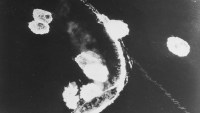
In April 1945, the Japanese battleship Yamato — the largest and heaviest in history — embarked upon a suicide mission. The ship sailed to Okinawa, where a huge American assault was taking place. Under extensive enemy fire, it sank, as was expected, to the bottom of the Pacific. With it, it took 2,280 of its crew. Survivors’ accounts exist and continued to be taken until very recently. They describe seamen lost even on board, unable to find their living quarters because of the sheer size of the vessel; arrows painted on decks to indicate the direction of the bow or stern; and the testing days before what the crew knew would be the battleship’s last mission. Jan Morris, however, does not include the human stories of the Yamato.

Getting so much better all the time

Steven Pinker’s new book is a characteristically fluent, decisive and data-rich demonstration of why, given the chance to live at any point in human history, only a stone-cold idiot would choose any time other than the present. On average, humans are by orders of magnitude healthier, wealthier, nicer, happier, longer lived, more free and better educated than ever before. Moreover, as Bill and Ted’s Excellent Adventure noted: ‘Bowling averages are way up, minigolf scores are way down, and we have more excellent waterslides than any other planet we communicate with.’ Some of the many graphs in this book slant from the bottom left towards the top right, showing the rise of Good Things, and some of them (charting the decline of Bad Things) go the other way.