Hugh Pearman

Nucleus

From our UK edition

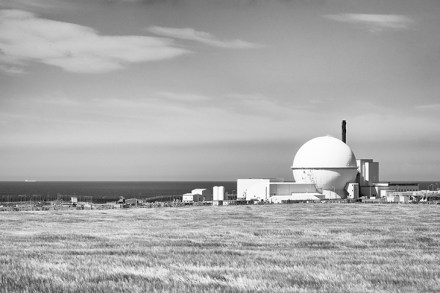
Doubtless Spectator readers based in Caithness will scoff when I say that the old fishing port of Wick (top right corner of the country, close to John O’ Groats) is a bit remote. But for the rest of us, it is. Indeed, its relative isolation is one of the reasons it was chosen to house the archive of the UK nuclear industry, in a brand-new public building called Nucleus. Another is the presence of the Dounreay nuclear plant near Thurso, a big employer in the area, now being slowly dismantled. I went to see Nucleus, relishing the beautiful 110-mile drive up the east coast from Inverness. Nucleus stands in the flat fieldscape north of the town next to another airport, Wick John O’Groats (only two scheduled services, to Edinburgh and Aberdeen).
Paved with good intentions

From our UK edition

As a schoolboy, I used to go round to my best mate Mike’s home. It was a good place: a cosy first-floor flat beneath the big, tiled, pitched roof, an anthracite stove in the kitchen. It faced onto a green and had a long garden at the back. It had a parade of shops nearby and a primary school. I didn’t know then that it was on a council estate or that the more tightly packed newer housing developments nearby were private. These were just places where people I knew lived. Mike’s estate was (and is, for it still exists) a version of the ‘municipal dreams’ that John Boughton describes in his detailed history of social housing in the UK.

The old ways

From our UK edition

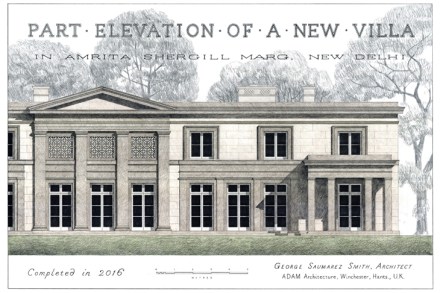
I’m sitting across a café table from a young man with a sheaf of drawings that have an archive look to them but are in fact brand new. His Jacob Rees-Mogg attire — well-cut chalk-stripe suit and immaculate tie — sets him apart from the others in the room, who are mostly architects and architectural fellow travellers like me. We don’t dress like that. But George Saumarez Smith is indeed an architect, a very good one. He just happens to be a trad. A traditionalist, mostly a classicist. And now is very much the time of the architectural trads. They have crept up on us. There’s a revival going on, and I’m very happy about that.

Lost in the metropolis

From our UK edition

Richard Rogers is to architecture what Jamie Oliver is to cookery. It is not enough for either of them just to be very good at what they do and to bank the proceeds: they want so much more. They want to use their skills and money to improve society more broadly. They are old-school campaigning idealists (and Oliver trained in the kitchen at the River Café, run by Rogers’s equally committed wife, Ruthie). The downside of being a do-gooder in the UK, of course, is that people can find you irritating.

Greater Oxbridge

From our UK edition

Oxbridge is an ivory-tower state of mind, perhaps, or at least two ancient rival universities, but how about this: in the future the word could describe a fully connected English economic region, a rival both to London and to the great midlands and northern cities. This is the aim of the National Infrastructure Commission, headed by Lord Adonis. This advisory body, a legacy of the Osborne chancellorship, wants to create a 130-mile economic corridor linking the two varsity towns and their hinterlands just beyond the Chilterns. It is running a competition to glean ideas as how to best make the new places in it. A fast cross-country road is planned, while the long-abandoned ‘varsity line’ railway from Oxford to Cambridge is being re-established bit-by-bit.

Towering extravagance

From our UK edition

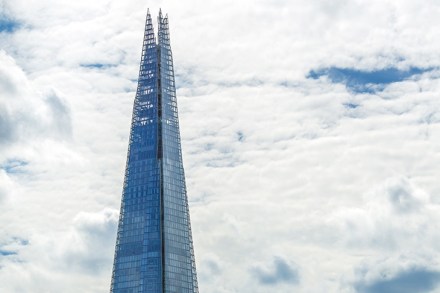
The Shard is an unnecessary building. Nobody apart from its developer asked for it to be built. Nobody was crying out for a big spike of concrete, steel and glass filled with a mix of superluxury hotel, ultraprime apartments and loads of speculative offices right above London Bridge station, with an expensive viewing gallery as a sop to public accessibility. Had it never happened, we would not regard the air it did not fill as a waste of atmosphere. The Shard is merely a gigantic financial speculation, majority-funded by Qatari money. And yet it is a very good piece of architecture. Its veteran Italian architect, Renzo Piano, succeeded in designing a (by London standards) startlingly tall tower that is not like other very tall towers.

Building block | 23 February 2017

From our UK edition

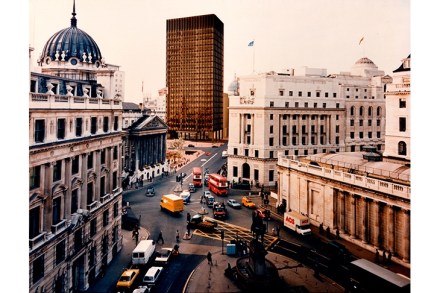
What a strange affair it now seems, the Mansion House Square brouhaha. How very revealing of the battle for the soul of architecture that reached maximum ferocity in the late 1980s and which still echoes today. Where developers now jostle to build ever taller, fatter and odder-shaped City skyscrapers, this was a time when it took 34 years to get just one building built. An ambitious bronze tower and plaza by the German-American modernist pioneer Mies van der Rohe was finally rejected in favour of an utterly different post-modern corner block (with no plaza, but a roof garden) by Sir James Stirling. Both were shepherded by a man in search of his personal monument: the property developer Peter, now Lord, Palumbo.

Highly undesirable

From our UK edition

Most of us just live in cities, or travel to see them and take them pretty much as they come, for good or bad, save for moaning about how much better they used to be. Does anyone ever say of their home city how greatly it has improved? But aside from all the travel writers, there is a cadre of critics and academics which is endlessly fascinated by cities as physical organisms. This field of study is very distinct from, and considers itself rather grander than, mere architecture, from Stalinist housing estates to the wreckage of post-industrial Detroit. Its status has increased since the moment was reached, some time in the early 21st century, when finally more of the human race lived in cities than in agricultural communities.

Giving Tate Modern a lift

From our UK edition

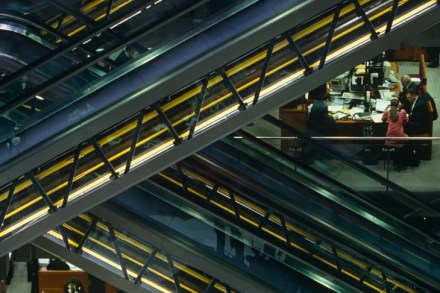
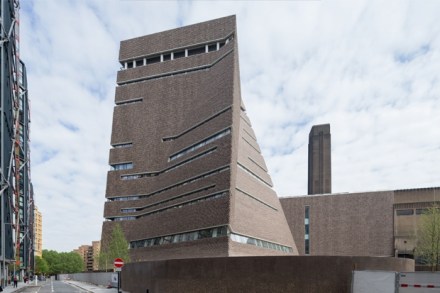
Tate Modern, badly overcrowded, has built itself a £260 million extension to spread everyone about the place more. This means that there are more galleries and other big rooms for various modish activities — 60 per cent more space, they say. It opens on 17 June with a total rehang throughout. But having been shown round the place, I’ve become transfixed by the lifts. When it opened in 2000 they never expected nearly five million visitors a year — which is well down on its 2014 Matisse-driven peak of nearly six million, but still twice as many as it was designed for. So when they called back Swiss architects Herzog and de Meuron to extend the gallery that brought them fame, moving people around better was high on their to-do list.

Too high, too fast

From our UK edition

You have to get nearly halfway through this book before it starts to show some life. Until that point, as Rowan Moore ambles in his wry manner through pages of familiar description of the capital’s built and social history, you find yourself wondering what it is all for. After all, if you choose to write a book about the architecture of London you are putting yourself in some pretty distinguished company. Ian Nairn, say, whose magnificently off-kilter, beer-goggled 1966 hymn to the city, Nairn’s London, has been reissued as a Penguin Modern Classic to universal acclaim. Or Peter Ackroyd, whose colossal 2001 London: The Biography is drizzled with lazy assumptions but is an eloquent advocate of the city as living organism.