Camilla Swift

Camilla Swift

Camilla Swift is the supplements editor of The Spectator.

Why don’t all farmers love Clarkson’s Farm?

From our UK edition

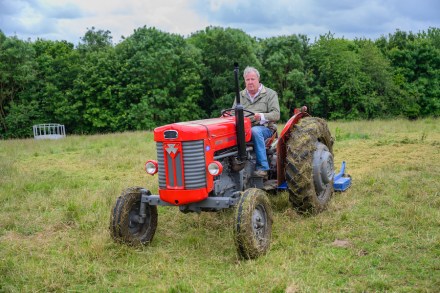
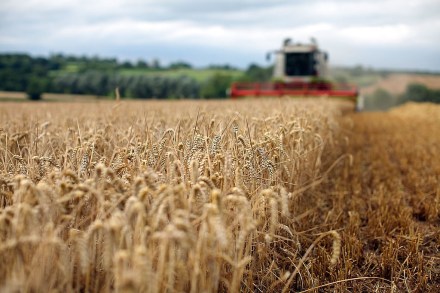
Clarkson’s Farm is back – with the finale of season four out on Prime Video today – but not everyone is happy about it. It’s not the anti-farming brigade I’m talking about – or even the specific anti-Clarkson brigade, who’ve disliked him since his Top Gear days. No, it’s the people within the rural and farming communities that I’m talking about. When the programme launched, it was heralded by many as something of a miracle for British agriculture. Clarkson’s programme showed the people at home all the ups and downs of farming life in its brutal reality: the sheaves of inane paperwork; the incentives to actually not farm at all; the masochism of the British weather and the brutal acceptance that with life, comes death.

Hats

From our UK edition

‘Thank goodness for racing,’ says Rachel Trevor-Morgan. She is a milliner — a hat maker — so it’s no surprise she’s grateful. Without weddings and race days, many milliners would be out of business. If you want to gain entry into the Royal Enclosure during Ascot week, a hat is non-negotiable. And it’s not just any old hat: the rules dictate that your headpiece must have a base of at least 10cm in diameter. The Ascot ruling was brought in in 2012 to put a stop to the trend for tiny fascinators, essentially just twiddles of feathers and fluff that perch above the hairline. For the very latest in fascinators, look at Ivanka Trump during the Trump family visit to Westminster Abbey.

The Charlotte Dujardin whipping video is a disaster for equestrian sports

From our UK edition

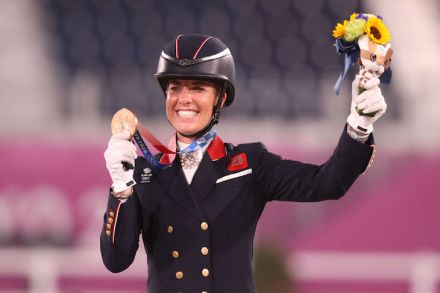
With just three days to go until the opening ceremony of the 2024 Olympic Games in Paris, the equestrian world went into meltdown last night. The first sign of any upset was a statement issued by Team GB equestrian star Charlotte Dujardin: 'A video has emerged from four years ago which shows me making an error of judgement during a coaching session', she wrote. As a result, Dujardin – who has won six Olympic medals – has withdrawn from all competitions, including the Paris games, until the FEI (International Federation for Equestrian Sports) complete their investigation. The video shows Dujardin during a coaching session for a horse and rider, in which she repeatedly hits the animal on the back of the legs with a lunging whip.

Was the London horse rampage avoidable?

From our UK edition

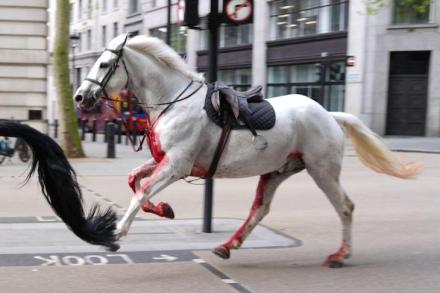
The sight of runaway military horses – one covered in blood – wasn't what any Londoner expected to encounter on their commute this morning. Seven horses from the Household Cavalry bolted during their daily exercise, having been frightened by falling concrete on a building site near Buckingham Palace. At least four people were hurt and several vehicles smashed. Two of the animals travelled five miles to Limehouse, in east London, before they were rounded up. It’s no wonder people were surprised. If you live in London, you’re unlikely to see horses regularly – and, if you do see them, they’d usually be behaving themselves and on duty, not galloping blind and riderless through the roads.

Scotland’s deer are proving deeply divisive

From our UK edition

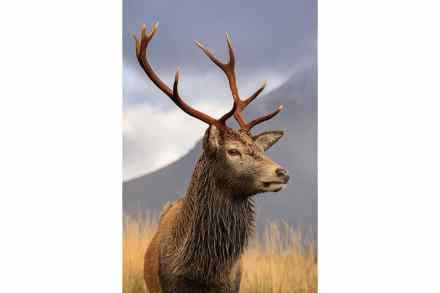
On the face of it, a book about a woman stalking one red deer might not sound that exciting. Just one? It’s estimated that there are nearly a million in the Scottish hills and around 60,000 are culled every year. So why write about a single kill? But in Hindsight Jenna Watt goes far deeper into Scotland’s relationship with red deer. It may be a book about deer, but it’s also about people, habitats, history, landownership, grief and belonging. Watt’s interest in the animals stems from reading George Monbiot’s book Feral. From there she falls down the rabbit hole of rewilding, regeneration, conservation and environmentalism.

The joy of hedgerow foraging

From our UK edition

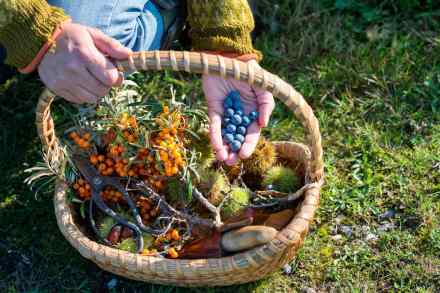
Hedgerows are one of those things that most of us simply take for granted. Drive, walk, cycle or ride through the English countryside and you’re likely to see fields bounded by hedges, which change with the seasons. Blossoming in the spring, full of colour and berries in the autumn, and sprouting wildly thorugh the summer months. They are certainly having their moment in the sun. In the 1980s, farmers were encouraged under the EU’s Common Agricultural Policy to grub them up (dig them up, in laymen’s speak) in a bid to create larger fields, and grow more food. 23 per cent of the nation’s hedgerows were lost in that decade.

Four difficult women who fought to preserve the English countryside

From our UK edition

One thing that Covid lockdown made us appreciate was the importance of being outdoors. When we were finally allowed into them, national and local parks became chockfull and many people rediscovered that being in the open had health benefits. How timely, then, that Matthew Kelly has written an account of four redoubtable rural activists: Octavia Hill, Beatrix Potter, Sylvia Sayer and Pauline Dower. He describes them as ‘the women who saved the English countryside’ – which is perhaps a bit of a stretch, though it’s true that individually they fought tooth and nail to preserve vast tracts of it.

The joy of Britain’s country shows

From our UK edition

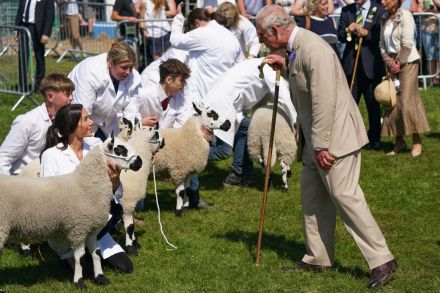
Wandering through the sheep pens at the Great Yorkshire Show, it’s clear that a sheep is not ‘just’ a sheep. The sheer array of livestock on display is a lesson in itself. Sheep with fluffy legs; sheep with four enormous horns. Pink sheep, white sheep, brown, black and piebald sheep. Dreadlocked sheep; sheep with huge donkey ears, and rams with huge, curled horns. Above their pens they proudly display their prizes: Breed Champion; Winning Lamb; Best Swaledale; Best Homebred. It’s remarkable calm in here; the odd bleat here and there, or a scuffle as someone objects to being puffed and preened before their next class. But for the most part the sheep are content to loll around, munching on their hay.

The UK is finally clamping down on hare coursing gangs

From our UK edition

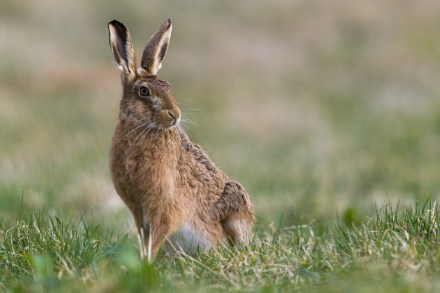
Once upon a time, hare coursing was a respectable sport, practised by Royals and other members of the gentry. The Forest Laws, imposed after the Norman Conquest, were introduced to ensure that only the nobility could own greyhounds which is why lurchers – crossbreeds between a sighthound and another working dog – became both popular, and known as ‘poachers’ dogs’. But in 2005 the Hunting Act arrived ­­– changing everything. In 2019, I wrote in these pages about the current illegal hare coursing occurring across the country: ‘It was the Hunting Act that drove coursing underground, and at that point the rules of the game changed.

How to take up shooting

From our UK edition

With summer on its way and Covid restrictions (hopefully) easing, what better time than now to take up a new hobby? Clay shooting is a hugely popular sport in the UK – and we Brits are quite good at it too, with a team of five set to head to the Tokyo Olympics, and a tally of two bronzes from the 2016 Olympics. At the Commonwealth Games, Wales, England and Scotland are often at the top of the medals tables, too. It’s no surprise then that there are plenty of people all across the UK willing to teach you to shoot. Whether you’re looking to refine your skills ahead of a shoot day, or simply want to learn the sport of clay shooting in its own right, there’s a huge range of places to choose from.

How to back the right horse: top tips for the Grand National

From our UK edition

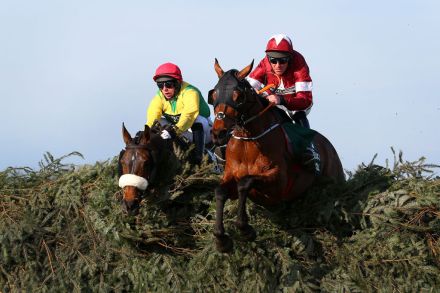
Around £250 million was placed in bets on the 2019 Grand National, and this Saturday’s Grand National, which will be shown live on ITV at 5.15pm, looks set to be equally popular. Cloth Cap, they say, ‘should win it’. Trained by Jonjo O’Neill, he has a stone in hand carrying 10st 5 – which is one of the reasons why he’ll be ridden by Tom Scudamore, who picked up the ride in the Ladbrokes Trophy at Newbury due to being able to make the 10 stone weight. He won easily. The pair went on to romp up at Kelso as well; but what would make this a nice tale is that both the jockey and the horse have Grand National heritage behind them. Scudamore’s grandfather Michael rode in the race 16 times, winning in 1959 on Oxo.

A programme for Prosperity Britain

From our UK edition

Productivity is something of a buzzword these days. Everyone’s talking about it — or rather, the lack of it. We’ve all heard how the UK lags behind the other G7 nations, and even that the French could match our productivity levels working only four days a week. But for all the talk, is anything being done? On 30 November, The Spectator hosted a discussion, sponsored by BAE Systems, which analysed Britain’s stagnating productivity (for full details visit spectator.co.uk/ProsperityBritain). Many of the event’s topics are reflected in this supplement.

In defence of the grouse shooting exemption

From our UK edition

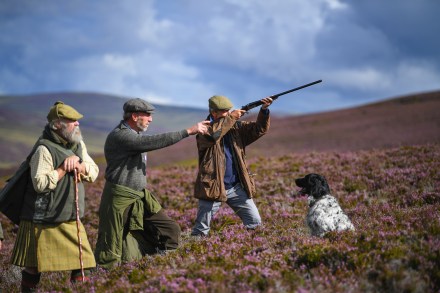
At the tail end of last week, news emerged that no groups of more than six people were to be allowed to gather together. Certain activities were to be excluded from the so-called 'rule of six' — and as soon as it was announced on Monday that various rural pastimes were exempt, the press had a field day. ‘No birthday parties but you can shoot grouse’, the Times announced. The Mirror declared that ‘Toffs can go on a Boxing Day hunt — but you can’t have a Christmas Day meal’. Of course, I understand the problem: it simply isn't a good look. The two sports picked out by the papers — ‘hunting and grouse shooting’ — have always had a class-related image problem.

Are the Tories really on the side of Britain’s farmers?

From our UK edition

It might seem hard to believe it was just a matter of months ago that senior Treasury advisor Tim Leunig made headlines when he suggested in leaked emails that Britain doesn’t need farmers. The ‘food sector isn't critically important to the UK’, he wrote. Then Covid-19 descended, and the British farming industry was deemed vital again. With supermarket shelves empty due to panic buyers, we were reminded how important it is that we are able produce at least a proportion of the food we need at home. The Prime Minister took to pointing out the strength of our ‘farm to fork’ supply chain that kept supermarkets stocked.

Hare coursing gangs are terrorising the countryside

From our UK edition

If you’re driving at dawn or at dusk in the countryside at this time of year, you might well see shady-looking men standing around in a stubble field, their 4x4s parked close by and ‘long’ dogs — greyhound types — straining on the lead beside them. Watch and you’ll see them walk up the field, or along the edges, until a hare makes a bolt for it. The men are ready. This is what they’re there for. A dog is let off the lead, and someone with a phone videos the scene. The footage is being live-streamed to others who have placed bets on the outcome —guessing which dog will kill the most hares per ‘slip’, or chase. When the hare has been caught (or when it’s scarpered), another dog has a go.

Eds-letter

From our UK edition

For some, having to put together an article for the school magazine is a chore; another piece of homework to do. For others, it’s an opportunity to write about things that matter to them, and a source of real enjoyment. School magazines certainly carry their own air of nostalgia, as you flick through the pages remembering names and faces and that school trip to the trenches. But, asks Katherine Whitbourn, is there still a place for the traditional school magazine in the social media age? For The Spectator’s editor Fraser Nelson having a child take the Eleven Plus exam — used as a device to select pupils for grammar and private schools — is a crash-course in the secret rules of English life.

Canine connoisseurs

From our UK edition

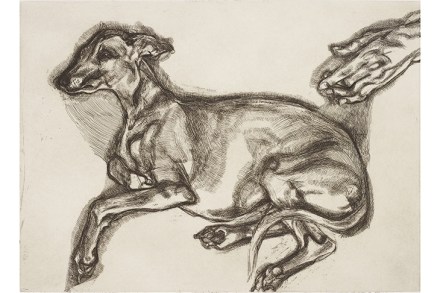
Stepping into any art gallery, the last thing you expect to be greeted by is a cacophony of barking and wet noses on your knee. This, however, was the welcome I received at the current exhibition at Southwark Park Galleries. Dog Show is, as the name suggests, about dogs. Not just about dogs, though; each of the works has been chosen by a dog — or, as they put it, a canine curator. ‘We’ve never asked dogs about their opinions on art, even though some dogs see an awful lot of it,’ explains Judith Carlton, director of Southwark Park Galleries. Well yes; it’s most likely true that no one has ever asked dogs for their thoughts on art, but there’s probably a reason for that.

Jeremy Hunt has shot himself in the foot with his fox-hunting pledge

From our UK edition

I moaned here last week about the lack of attention the two Tory leadership contenders were paying to rural communities in their pitches to the party membership. Funnily enough, as Jeremy Hunt and Boris Johnson have travelled around the country to various party hustings, their tone has now changed. Finally, they are speaking up for people outside towns and cities. Both of them have promised to speed up the delivery of full-fibre broadband to the countryside. They have also vowed to get the UK out of the Common Agricultural Policy, giving us control over our own agriculture policies.

Why aren’t the Tory leadership contenders courting rural voters?

From our UK edition

Around nine million people – over 17 per cent of the population – live in an area classed as ‘rural’. That number is set to grow; by 2025, it has been estimated that the population of the English countryside will have increased by half a million. So surely, when a politician is bidding to become the next prime minister, it would make sense to consider what the rural population’s priorities might be. A national survey of rural opinion on the leadership contest, organised by the Countryside Alliance, would indicate that this isn’t happening. It’s far from new to say that farming communities are worried about Brexit, and concerned that their needs aren’t being considered in the debate. But that’s not the only cause for concern.

The future of healthcare

From our UK edition

Last year, the NHS celebrated its 70th birthday. Healthcare has changed enormously in those seven decades, and no one knows what the next 70 years will hold. But all the signs are that it will have undergone another huge change, as technologies are invented that enable doctors to treat patients in completely different ways. This supplement, sponsored by Philips, explores how technology could transform the future of medicine. As Neil Armstrong finds, a person’s genome could be read to allow doctors to predict the likelihood of their developing heart disease — and so allow earlier diagnoses that would, in turn, increase survival rates. As Ross Clark writes, artificial intelligence could speed up the time it takes for new drugs to go from inception to being marketed.