Book review

Making feathers fly

They don’t look like a natural pair. First there’s the author, Kirk Wallace Johnson, a hero of America’s war in Iraq and a modern-day Schindler who, as USAID’s only Arabic-speaking American employee, arranged for hundreds of Iraqis to find safe haven in the US. In the process, he developed PTSD, sleepwalked through a hotel window, flung himself from a ledge and plunged, nearly, to his death. Then there’s the stranger-than-fiction Edwin Rist, a brilliant young flautist who, on a pitch-black night nine years ago, in pursuit of an obsession with rare bird feathers, risked years in jail in one of the most brazen and bizarre museum heists ever accomplished. Yet Johnson and Rist are made for one another. Within pages I was hooked. This is a weird and wonderful book.

A deep malaise

From our UK edition

Here is a detail that says a lot. In the French translation of this latest book by the Israeli historian Shlomo Sand, the title was followed by a question mark. In the English translation there isn’t one. The author is making a statement, not asking a question. The French intellectual is dead, finished, a thing of the past. If this is supposed to be polemical, it is an epic failure. Even if Paris still retains its unique aura, everyone knows that it no longer rules the intellectual and artistic world: the likes of Zola and Sartre seem to have produced no weighty legitimate heirs. So what will The End of the French Intellectual tell us that we haven’t already heard?

Plucky young rebel

From our UK edition

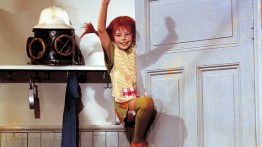
Pippi Longstocking is a nine-year-old girl who lives alone with a monkey and horse in a cottage called Villa Villekulla at the edge of a village close to the sea in an unnamed part of Sweden. She is a tender-hearted braggart, brilliant but unlettered, with a punning, pulling-the-rug wit. She lives as she likes — sleeping with her shoes on the pillow is something children always remember about Pippi, along with the carrot-coloured plaits at right ankles to her freckled face and her superhuman strength. Pippi burst upon the world in 1945 and her main adventures were over by 1950 — a few later books elaborated on scenes already laid down.

When worlds collide

From our UK edition

In her keynote lecture for a conference on ‘The Muse and the Market’ in 2015 Aminatta Forna mounted a powerful advocacy for the political novel, challenging the assumption that politics or ‘subject’ undermines literary aesthetic. ‘A political novel can fail as a work of art as much as any other novel,’ she argued, ‘but the fact that it is political does not sentence it to failure.’ Her own approach to fiction is something like Paul Klee’s approach to his art: where Klee talked of taking a line for a walk, she says: ‘When I write a novel it is like taking a thought for a walk.

Alternatives to God

From our UK edition

K. Chesterton, in one of his wise and gracious apothegms, once wrote that ‘When Man ceases to worship God he does not worship nothing but worships everything.’ John Gray, one of the most pernickety and carnaptious of contemporary philosophers, presents here a kind of taxonomy of not atheism, per se, but of the vacuums and nothings into which the loss of belief has rushed. It is, as one would expect, an exhilarating read. The title winks to Empson’s Seven Types of Ambiguity, and he appears as one of the figures in these essays. One might think that atheism is a fairly simply proposition. There is no God.

Debs, dances and big-game hunting

From our UK edition

Anglea Huth, the broadcaster and author of some 18 books, has now written her memoirs, Not the Whole Story. And though it may not be the whole story, what a story it is. Huth is the daughter of the actor Harold Huth and the flighty Bridget Nickols, who had an amitié amoureuse with the King of Portugal and several affairs. Huth’s enjoyably monstrous grandmother, with a penchant for couture, a private account at the Bank of England and the world’s most valuable pearl, is vividly described. Once, in the V&A, she found a magnificent collection of... dozens of pieces in all, hand-cut glass that slightly pricks your fingers. Each piece was engraved with a VR; it had been made to celebrate Queen Victoria’s Silver Jubilee.

The billionaire’s toy box

From our UK edition

Today’s VHNWI wants a PRSHLS. That’s Very High Net-Worth Individual and Partially Reuseable Super Heavy Lift System. Or, in the demotic, the rich want space rockets. ‘It’s not rocket science’, people say when describing the technique of making, say, an omelette — even if making an omelette requires a certain deftness of hand and nice judgment. So what is it? Rocket science is a mixture of ballistics, aeronautics, chemistry and computation, now cocktailed with extreme wealth, galactic obsessions and a faraway look in the eye. Once, the prerogative of the rich was to assault the environment with fast cars, burning oil and cruelly crushing molecules of air as they progressed.

Paved with good intentions

From our UK edition

As a schoolboy, I used to go round to my best mate Mike’s home. It was a good place: a cosy first-floor flat beneath the big, tiled, pitched roof, an anthracite stove in the kitchen. It faced onto a green and had a long garden at the back. It had a parade of shops nearby and a primary school. I didn’t know then that it was on a council estate or that the more tightly packed newer housing developments nearby were private. These were just places where people I knew lived. Mike’s estate was (and is, for it still exists) a version of the ‘municipal dreams’ that John Boughton describes in his detailed history of social housing in the UK.

Lone Star individuality

The subtitle of Lawrence Wright’s splendid God Save Texas (‘A Journey into the Future of America’) would be alarming if I found it entirely convincing. It’s hard to imagine a future where the Catholic Texan spirit of individualism would seriously overwhelm Yankee Puritanism, however mutated. In New England it’s about hard-earned old money shrewdly invested. In Texas it’s about striking it rich on a hunch, and new money rashly spent. There are contradictions in Texas which allow you to select almost any argument you like from her. She is beautiful and she is barren; corrupt and honourable. Whatever you want to say about her, she will supply abundant evidence.

Great expectations | 12 April 2018

From our UK edition

In a 1974 interview celebrating the quarter century since the publication of her classic The Second Sex (1949), Simone de Beauvoir recalled a eureka moment in which she saw that ‘to change the value system of society was to destroy the concept of motherhood’. That ‘value system of society’ rested on what she saw as enforced maternity, whereby women — whether through physical, psychological or social pressure — were pressed into humiliating servitude, a world of narrowed horizons and debasing physical shame.

Voyeur or visionary?

From our UK edition

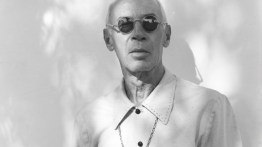
Few writers seem less deserving of resuscitation than Henry Miller. When the Scottish poet and novelist John Burnside was asked to contribute the latest volume of Princeton’s ‘Writers on Writers’ series, he planned to choose Marianne Moore, a clearer influence on his poetry. Miller was too messy. A non-conformist and autodidact, his most famous novel, Tropic of Cancer, opened the door to literary obscenity, and also gave him the reputation of a pornographer. Burnside admits that he wrote the book less from a conscious decision than ‘out of need’. To his credit, he does not skirt Miller’s notoriety, nor does he deny that much of his subject’s erotic writing is ‘embarrassing’.

A play on the Scottish play

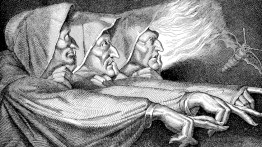
It must have seemed a good idea to someone: commissioning a range of well-known novelists to ‘reimagine Shakespeare’s plays for a 21st-century audience’. The first six novels have come from irreproachably literary authors of the calibre of Jeanette Winterson (The Winter’s Tale) and Margaret Atwood (The Tempest). Now, however, we have something a little different: Jo Nesbo, the Norwegian crime writer, has recast Macbeth as a thriller, allegedly set in 1970, though this timeframe should not be taken too literally. The plot is very loosely connected with Shakespeare’s. The location is a crumbling city in a dystopian country where many of the names have a Scottish ring.

Prince of punters

From our UK edition

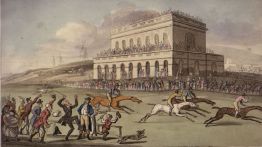
About a third of the way through this book I worked out that I had an unbeatable system for winning at the horses. All I would need was a degree in mathematics, or access to someone who has one, a lot of research on horses, jockeys and racecourses under my belt, including inside knowledge, and a little seed money. Say, £100,000. Two thirds of the way through I realised I would also need some links to organised crime, and if I didn’t have any, they would be furnished for me, whether I wanted them or not. By the end of the book I reverted to my original opinion: that it is not for the likes of me.

Goodbye to all that | 12 April 2018

From our UK edition

Alberto Manguel is a kind of global Reader Laureate: he is reading’s champion, its keenest student and most zealous proselytiser, an ideal exemplar of the Reader embodied. And reading is not only his committed, devoted practice, but also the very subject of some of his best writing. His latest book to wander through this familiar domain was prompted by the traumatic experience of packing away his huge personal library, when he and his partner found themselves needing to downsize from a cavernous French barn (containing 35,000 volumes ‘in its prime’) to a small apartment in New York City.

Trouble in paradise | 12 April 2018

From our UK edition

1991, the Harbourfront Literary Festival in Toronto. The novelist Rose Tremain and the South African writer Carolyn Slaughter are enjoying a lobster thermidor and Chablis lunch. Hearing about Slaughter’s abuse at the hands of her father, Tremain finds herself telling her lunch companion about ‘something I never normally discussed with anyone: the lack of love I’d had from my mother and father, and my emotional dependency on Nan’ (a beloved nanny). Slaughter — who is training to be a psychiatrist — responds that ‘any human life, if the childhood is devoid of adult love, will almost certainly be a troubled one’, but reassures Tremain that Nan almost certainly saved her from such a fate. ‘She was your angel,’ Slaughter says.

Snowy days in Saratoga Springs

From our UK edition

Alan Querry, the central figure in James Wood’s second novel, is someone who, in his own words, doesn’t ‘think about life too much’. His peculiar surname may recall the brooding, godforsaken Querry of Graham Greene’s A Burnt-Out Case, but this Querry — who lives in ‘the poshest part of Northumberland’ — isn’t much troubled by God’s presence or absence: ‘he had a notion that “the question of God” might all have been more or less sorted out in his lifetime, like Cyprus or polio.’ Called upon to visit his daughter Vanessa in upstate New York, Alan stops along the way to meet his younger daughter, Helen, and they make the journey together to snowy Saratoga Springs.

The changing face of battle

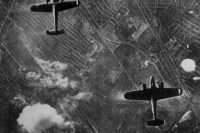
On War and Writing by Samuel Hynes is hardly about war at all. There is little about combat here, or the actual business of fighting and killing — what Shakespeare wryly called ‘the fire-eyed maid of smoky war/ All hot and bleeding’. Hynes is an august scholar of English literature and particularly the literature of 20th-century warfare. But he also served as a bomber pilot in the Pacific during the second world war, and has written an engaging, plain-spoken memoir of his service called Flights of Passage, published in 1988. His two vocations, he explains in the introduction to his new book, are ‘professor’ and ‘pilot’, and here the professor not the pilot is at the controls.

Man of mystery | 12 April 2018

‘If you look at walls soiled with a variety of stains or at stones with variegated patterns,’ Leonardo da Vinci advised fellow painters, ‘you will therein be able to see a resemblance to various landscapes graced with mountains, rivers, rocks, trees, plains, great valleys and hills in many combinations.’ By an irony of history, Leonardo (1452–1519) has come to resemble that stained wall: a Rorschach blot in which viewers discern phantoms of their own imagination. This is, of course, to some extent the fate of all celebrities, and Leonardo was the first true artist celeb — the forerunner of a long line descending through his younger contemporaries Michelangelo and Raphael down to Picasso, Andy Warhol and Damien Hirst.