Book review

The lure of a well-tailored uniform

From our UK edition

Anita Leslie knew how to tell a story. Arranging to sit for a portrait six months before she died, she planned to borrow a khaki shirt on which to pin her second world war decorations, the Africa Star and the Croix de Guerre. The portrait was never commissioned, but it is clear that Leslie — the only woman to have been awarded both these honours — wanted to be remembered as a war heroine, as well as a biographer, memoirist, witty and well-connected socialite, and cousin of Winston Churchill. Leslie’s war work certainly merits greater attention, so it is a shame that Penny Perrick’s Telling Tales: The Fabulous Lives of Anita Leslie focuses so much more on the ‘low-down on the high-ups’ than her subject’s actions on the front line.
Fraud and forgery

From our UK edition

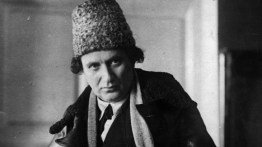
This is a well-written, scrupulously researched and argued account of an enduring mystery that neatly illustrates the haphazard interactions of politics, bureaucracy and history. In 1924 Grigori Zinoviev was head of the Communist International, the propaganda arm of the Soviet regime. A letter in his name, dated 15 September and addressed to the Communist Party of Great Britain (CPGB), urged comrades to foment insurrection in the armed forces and among munitions workers while publicly supporting the ratification of an Anglo-Soviet trade treaty and a large loan to Russia. Both were controversial issues for Ramsay MacDonald’s first-ever Labour government, elected in January of that year.

Obscure object of desire | 16 August 2018

It is always interesting to see what art historians get up to when none of the rest of us is looking. It is hard to know what the inspiration for The Mummy’s Foot and the Big Toe can possibly have been, but if this very short book offers the kind of approach that will go down well in the enclosed world of the academic conference, Alan Krell might find the common reader a tougher nut to crack. Having said that, however, those with a taste for such things will probably find plenty to enjoy in a book that ranges from the bare foot as symbol of freedom to the foot as ‘fetish and fancy, object of desire and of abjection, and vehicle for the comic, the absurd and the empowering’ in the context of literature, art, sport and film.

In two minds | 16 August 2018

‘I have a very poor opinion of other people’s opinion of me — though I am fairly happy in my own conceit — and always surprised to find that anyone likes my work or character.’ This admission by Robert Graves — made to his then friend Siegfried Sassoon in the mid-1920s — goes to the heart of his character as a man and a poet. It projects a powerful mixture of defiance and neediness, which in his personal life produced a series of highly disruptive assertions and reversals, and in his writing life an equally striking set of commitments and walkings-back. Jean Moorcroft Wilson, who has previously published fluent biographies of Sassoon and Edward Thomas, is a reliable guide to all these contortions.

The way things were…

From our UK edition

Across the fields from the medieval manor house of Toad Hall, and the accompanying 16th-century timber-frame apothecary’s house which Alan Garner dismantled and moved 17 miles to join it in Blackden in rural Cheshire, sits Jodrell Bank Observatory. Here huge telescopes scour the cosmos, seeking radio waves from distant planets and stars. This juxtaposition between past, present and future, all existing in harmonious symbiosis on land that Garner’s family have lived on for 400 years, seems the perfect metaphor for the creative output of this most singular of English writers.

Impish secrets

From our UK edition

Long ago, I interviewed Edmund White and found that the photographer assigned to the job was the incomparable Jane Bown — a bit like having Matisse turn up to decorate your kitchen. After we talked, Jane shot. She managed to convert a tiny hotel courtyard into a sort of antique Grecian glade. In her pictures, White peeped through the foliage with the smile of some demonic faun come to spread ribald chaos in the service of the great god Pan. I remembered that look when, in this patchwork of pieces about his life as a reader, he discloses that a heart attack followed by surgery in 2014 had one weird outcome. Temporarily, he felt ‘no desire to read’.

A tale of two addictions

From our UK edition

China, wrote Adam Smith, is ‘one of the richest, that is, one of the most fertile, best cultivated, most industrious and most populous countries in the world’. It was an obvious exemplar for a man who was trying to write An Inquiry into the Nature and Causes of the Wealth of Nations. In the late 18th century, when Smith published his seminal work, Britain had not only already begun to build an empire; it was about to learn from the experience of losing parts of it too, as the colonies in North America detached and went their own way. Despite the shock of the US Declaration of Independence — in the very same year that The Wealth of Nations was published — it was Asia that was much more important, lucrative and interesting than the Americas to the British.

Hitchcock without a murder

A girl at a window, hidden behind curtains, watches three women in a dimly lit drawing room in the house across the road as they sit silently smoking, hands and faces pale against their dark clothes. She invents identities for the trio: they are criminals or abandoned spinsters. Sinister or pathetic. Curiosity grows into obsession: she imagines them as painted saintly icons, golden against a dark wall, ‘flies crawling across their faces... the first threads of a spider’s web spun from their eyes’. People in the Room is set in the early 20th century in the affluent Buenos Aires neighbourhood of Belgrano, where the author lived as a child.

… and soon will be

From our UK edition

Edmundsbury, the fictional, sketchily rendered town in which the action of this novel takes place, is part of a social experiment — its inhabitants lab rats for a digital overhaul that goes beyond surveillance. Everything they do is measured, tracked and recorded in exchange for treats, such as heightened security and increased download speeds. Sam Byers focuses on a handful of characters who are aware, to varying degrees, that something is badly wrong. Displaced Londoner Robert is a journalist with fading ethics, striving for ‘clickbait gold’, but needled to distraction by a persistently critical below-the-line commenter calling herself Julia. Quickly we discover that Julia is a persona adopted by Robert’s girlfriend, Jess.

At constant risk of violent death

Russia has always attracted a certain breed of foreigner: adventurers, drawn to the country’s vastness and emptiness; chancers, seeking fortunes and new beginnings in the Russian rough and tumble. Romantics, all of them, men and women in search of soulfulness and authenticity — the experience of life lived on and beyond the edge of the civilised world’s conventions. Thomas Atkinson was all those things — in addition to being a self-taught architect and stonecutter of middling skills, a decent watercolourist, a stoic traveller of apparently inexhaustible curiosity, and a bigamist.

Alone in the world

From our UK edition

Orphans are everywhere in literature — Jane Eyre, Heathcliff, Oliver Twist, Daniel Deronda, and onwards to the present day. They are obviously useful to storytellers, and particularly to the writers of children’s books, who naturally want their heroes to undertake adventures without the controlling eye of ordinarily caring parents. The parents of Roald Dahl’s James have to be killed by a rhinoceros for his satisfyingly swashbuckling adventure in a flying giant peach to take place. L. Frank Baum’s Dorothy, living with an aunt and uncle, is, we know, an orphan, but no trouble at all is taken over her loss — we just like to know that there’s no one keeping an eye on her.

Dusting off the past

From our UK edition

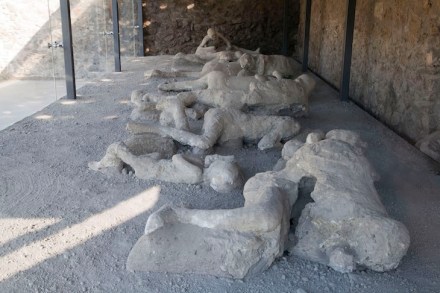
Visiting Pompeii, it is hard to miss the garden of the fugitives. It is on every other postcard in the gift shop: an excavated garden with 13 bodies twisting in an agonising tableau of pain, caught at the instant of their death. They are frozen in history and separated from the onlooker by a glass wall and museum labels — a human moment presented with the cold distance of an archaeological exhibit. Ceridwen Dovey’s third novel is anchored in Pompeii and chooses the garden as its focal point. She tells the story of two characters, Royce and Vita, their rejections by their individual loves and attempts to find meaning after death. It touches on weighty themes: guilt, depression, repressed sexuality.

Too close to the sun

From our UK edition

If you go to the Campo dei Fiori in Rome on 17 February every year, you’ll find yourself surrounded by an eclectic crowd of atheists, free-thinkers, Catholic reformers, anarchists, mystics, students, scientists and poets all jostling to lay tributes before the statue of the hooded Dominican friar whose shadowed face stares inscrutably towards the Vatican. His name is Giordano Bruno and his statue, erected by public subscription in the 19th century, commemorates the site where he was burned for heresy in 1600 at the hands of the Roman Inquisition.

Consumed by guilt

From our UK edition

At the beginning of After the Party, Phyllis Forrester tells us she was in prison. While inside, her hair turned yellowy-white, ‘like the mane of an old wooden rocking-horse’, not out of shock, she reassures us, but because ‘one couldn’t get one’s hair dyed’. She thinks she deserved to be there: ‘What I did was terrible. Terrible. The shame of it will never leave me until my dying day.’ For a long time in Cressida Connolly’s chilling new novel, though, it’s not clear what she has done. The year is 1979, and middle-class Phyllis, who is bitter and alone (her family don’t talk to her any more), recounts her story to a voiceless interviewer in mannered, first-person chapters that interject throughout.

Writing behind bars

From our UK edition

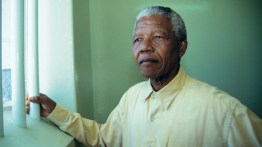
So much rubbish has been written over the years by those who feared, revered or pretended to know Nelson Mandela that it is useful, finally, to be able to read about him and the privations of his prison years in his own contemporaneous, understated prose. At more than 600 pages including annotations, The Prison Letters of Nelson Mandela might be regarded as a volume strictly for the liberation struggle obsessive. But this collection tells us more about the man — in his fearlessness, grace and occasional pomposity — than almost all of the good and bad books that have been written about him. The key point about Mandela, often overlooked, is that he was high born, the son of a chief of the Thembus.

Dreams of oblivion

The new novel by the author of the 2016 Booker shortlisted Eileen is at once a jumble of influences — Oblomov by way of Tama Janowitz and Elizabeth Wurtzl, Bartleby with a touch of Bright Lights, Big City, a lunatic psychiatrist who melds Ayn Rand and William Burroughs — and unnervingly original. It takes guts, after all, to spin a yarn out of a rich Upper East Side orphan who decides to put herself to sleep for a year in an attempt at rebirth. Beyond the evident — the death of her parents, an obnoxious man in her life — precisely why our narrator wishes to shed her skin remains unclear to us; but her tenacity in pursuing oblivion is unshakeable.

Every man in his humour

Since the 17th century, a ‘humourist’ has been a witty person, and especially someone skilled in literary comedy. In 1871, the Athenaeum said that Swift had been ‘an inimitable humourist’. But in modern usage the term seems to describe a specifically American job title: someone who specialises in writing short prose pieces whose only purpose is to be funny. The current king of humourists is David Sedaris, and his books are essentially scripts for his sell-out reading tours. But is he funny? On a line-by-line basis, he sure can be. He helps push someone’s broken-down car, ‘and remembered after the first few yards what a complete pain in the ass it is to help someone in need’.

No country for old women

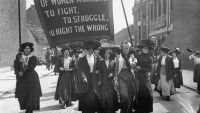
From our UK edition

Lissa Evans has had a good idea for her new novel. It’s ‘suffragettes: the sequel’. She sets her story not in 1918 but in 1928. Two washed-up spinster suffragettes in their sixties, Florrie (known as ‘the Flea’) and Mattie, live together platonically in a house in Hampstead known as the Mousehole, because it used to be a convalescent home for hunger-striking suffragettes during the Cat and Mouse Act. It’s freezing, and they cut up old Christmas cards for splints, conversing like two dotty old dons. ‘What utter spinach!’ ‘Small sherry? Or a toddy? Buck you up a bit.’ Their WSPU glory days are behind them. Florrie is now a sanitary inspector, and Mattie gives lectures with slides about her window-smashing past.