Book review

In a forest dark and deep

From our UK edition

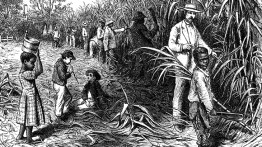
Brian Catling’s great trilogy takes its title from The Vorrh, his first volume. This final book fulfills all the promises of the first two. It has a place beside such modern masters of the imagination as E.R. Eddison, Tolkien or Peake, and it is as completely unlike them as those three-deckers are of each other. Again we visit the Vorrh, the endless forest based on Raymond Roussel’s in Impressions of Africa. Built on its outskirts, Essenwald, a crumbling colonial city, exists because of the timber it cuts with the labour of ‘the Erstwhile’, the forest’s enslaved, semi-human inhabitants.

An age of paradox

From our UK edition

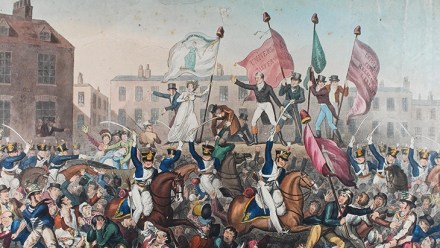
‘It was the best of times, it was the worst of times... it was the epoch of belief, it was the epoch of incredulity, it was the spring of hope, it was the winter of despair, we had everything before us, we had nothing before us ... in short,’ as Charles Dickens famously told the first readers of A Tale of Two Cities, it was a period very much like their own. Dickens was right. John Stuart Mill once claimed that the two great ‘seminal minds’ of the period were Coleridge and Bentham, and in that brilliant yoking of opposites — the warm, creative current of Coleridgean thought and the chillier stream of Benthamite utilitarianism — is summed up all the contradictions and paradoxes that the Victorian age was heir to. This is the fascination of the period.

We were all unwell then

From our UK edition

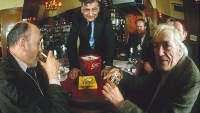
On the one hand, I am supremely qualified to review this book. In 1984, bored beyond endurance after graduating with one of those degrees that leaves you both over- and under-qualified for employment, I decided to take my dole money down to the Coach and Horses pub in Soho, where this magazine’s Jeffrey Bernard held court, and pay my respects to him, for I liked his prose style and his stories. I stayed there for three years or more, a postgraduate course in itself, only packing my bags at the end of 1987 when I met the woman who was to become my wife.

No longer the tough guy

From our UK edition

Only to Sleep is the third Philip Marlowe novel written by someone other than Raymond Chandler and while the authors of Perchance to Dream and The Black-Eyed Blonde both found freedom to play with Marlowe and explore his potential, it is Lawrence Osborne who has run the furthest with the source material. The novel opens in 1988, with Marlowe living in retirement in Baja, Mexico. He is 72, and enjoying a leisurely life in the sun, when he is asked to take on one last investigation into insurance fraud. A Reagan-era Marlowe unlocks an aspect that Chandler never considered.

Ever the trail-blazer

From our UK edition

This is the story of the ‘other’ Harvey Milk. We all know about Harvey the San Francisco politician who was tragically assassinated less than a year after he became one of the first openly gay candidates elected to public office in the US. But now, thanks to Lillian Faderman, we also know about Harvey the secular Jew, who renounced his faith but remained influenced and inspired by liberal Jewish values. The grandson of Lithuanian immigrants to the US, Harvey was, for many years, more out as a Jew than as a gay man. We also discover the restless, wandering Harvey, who moved from state to state, man to man and job to job.

Guns and roses

From our UK edition

During the civil war in Afghanistan in the late 1980s, Mr and Mrs Roami, a science professor and a nurse, sent their children away from Kabul to Europe for safety. Tragically, they lost the phone number of where the children had moved to and had no way of contacting them. The couple found solace in gardening. Despite the constant explosions of rockets and shells, they were unwilling to leave their home. They named flowers after their children, and tended and spoke to them. It gave them the hope that one day the family would be reunited. At one point, battle raged on all four sides and it was too dangerous to cross the road to fetch water from the stream. The garden was starting to die.

A class act

From our UK edition

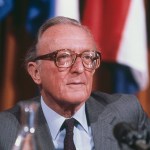
‘I’m sorry to bother you, Peter, but you were a famously successful Leader of Their Lordships and I wondered whether you had any tips before I took it on.’ ‘All you’ve got to remember is that you are the headmaster of a second-rate public school.’ Lord Carrington’s answer to my enquiry was entirely characteristic: funny, and flattering, as though he knew you would instinctively understand the joke. You and he, he implied, belonged in the same place. It was a technique which he lavished with great success on those who worked for him. He was much loved in Their Lordships, at the Foreign Office and at the Ministry of Defence — and with reason. He was fun to work for and loyal to those who worked for him.

A recitation of wrongs

From our UK edition

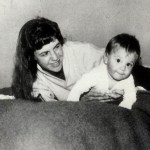
In 1923, a Frenchman, Emile Coué, persuaded millions of Americans to finger a piece of string with exactly 20 knots. It was an exercise in auto-suggestion. At each knot of this secular rosary, the user intoned: ‘Every day, in every way, I am getting better and better.’ Sylvia Plath’s letters — until they implode on p.790 when she discovers the affair between Ted Hughes and Assia Wevill — are a similar numbing iteration of optimism and self-improvement. Thereafter, the story changes, darkens. Up until then, her story is cropped for improvement: she takes her finals at Cambridge but the letters are silent on her degree result (II: i). She explains to her brother Warren that she doesn’t write when her moods are black.

Man’s true best friend

From our UK edition

This unusual book begins with an account of the author’s ten-year love affair with dairy farming and an attempt ‘to give a flavour of what our cattle do for us’. It then turns into a survey of the various British breeds of cattle. After poor A-levels, Philip Walling took odd jobs in his native Cumbria, such as building dry-stone walls, until he managed to acquire a small farm of his own. With great determination, he ran this single-handed, keeping both beef and dairy animals and raising poultry and a couple of pigs. They were, in retrospect at least, ‘ten years of almost undimmed joy’. But aged 30, discouraged by the daily grind, which included a milk round, and feeling he had missed out on a proper education, he gave it all up.

Lines in the sand

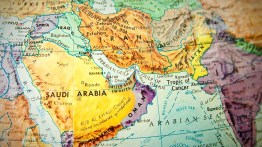
One of the many pleasures offered by Lords of the Desert, which narrates the rivalry between Britain and the United States in the Middle East from the end of the second world war through to 1967, is the quotations that are liberally strewn across its pages. They have been culled from memoirs or official documents unearthed in British or US archives and testify to the research that has gone into this dense but consistently fascinating account. Some reveal the deep complacency of influential individuals. Ralph Brewster, an American senator who undertook a round- the-world tour in August 1943 to investigate the progress of the war and report to President Franklin D.

There be dragons

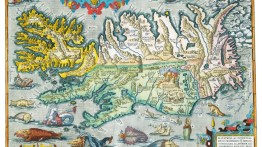
Reflecting on the genesis of Treasure Island, the adventure yarn that grew from a map of an exotic isle he had drawn to amuse a bored schoolboy on a rainy day, Robert Louis Stevenson observed: ‘I am told there are people who do not care for maps, and I find that hard to believe.’ It’s fair to say that Thomas Reinertsen Berg cares very deeply about them, and his book, sumptuously produced with lots of full-colour images, is a kind of potted treasury of cartographical history that gleams with pieces-of-eight-like snippets of information.

All shook up

From our UK edition

The polymath writer A.N.Wilson returns to the novel in Aftershocks, working on the template of the 2011 earthquake which devastated Christchurch, New Zealand. He protests that the setting is not New Zealand but, as he admits, there are many recognisable similarities. This is a novel about true love, its agonies, ecstasies, and eventual fulfillment, told in the voice of a young woman, Ingrid Ashe. She is the daughter of the female local radio broadcaster, Cavan Cliffe; and the mother/daughter relationship is almost unhealthily close. Ingrid’s is a lesbian love story in which her passion cannot develop until the earthquake upsets the structure of the city, destroys the cathedral and causes an all-round upheaval in personal relationships.

Something nasty in the coal cellar

From our UK edition

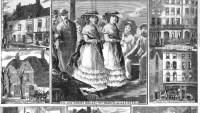
Literary non-fiction demands that a respectable household is not really a respectable household — and the Bastendorffs of 4 Euston Square fully oblige. The family take in lodgers at their elegant townhouse in Bloomsbury and, just as they are sprucing it up to welcome their latest in May 1879, a mystery corpse is uncovered in their coal cellar. It would not spoil anything to say that the Bastendorffs turn out to be a pretty kooky bunch, headed up by Severin, the paterfamilias who started life in rural Luxembourg. Thanks to Severin’s heritage, we skip past the well-worn Disney Victoriana of gas lamps and sooty urchins and into the more unusual territory of London’s burgeoning Germanic subculture.

A whiff of paranoia

In the immediate aftermath of 9/11 many writers spoke of feeling immobilised. The scale of the attacks and the world’s shared experience of the media event seemed to demand a response; but simultaneously writers such as Ian McEwan, Martin Amis and Jay McInerney described a sense that the tools at their disposal were inadequate — that the reality of what had taken place exceeded fictional representation. These three all recovered from their shock reasonably quickly, contributing to the flood of 9/11 fiction that poured into bookshops during the 2000s. In recent years this torrent of novels and stories has slowed, but as Christopher Priest’s eerily powerful An American Story demonstrates, it most certainly has not stopped.

A meditation on history

It is a truth universally acknowledged that a serious novel must be in want of a theme. Paris Echo soon makes it clear that it has several. It’s about the shifting nature of history and the mysterious footprints of the past in the present. It’s also concerned with the myriad and biased interpretations that we place on past events. Another preoccupation is the ambiguities of spoken and written French. Modern Paris, the novel’s main setting, allows Sebastian Faulks to explore his themes through two main viewpoints. There’s Tariq, a precociously self-aware 18-year-old Moroccan from a middle-class family in Tangier, who comes to Paris in search of himself, his mother’s French family and an obliging woman who will help him lose his virginity.

The translator as spy

Translators are like bumblebees. In 1934, the French entomologist August Magnan pronounced the flight of the bumblebee to be aerodynamically impossible, and though long since scientifically disproved, this factoid is still routinely trotted out. Similar pronouncements about the impossibility of translation have dogged practitioners since Leonardo Bruni’s De interpretatione recta, published in 1424. Meanwhile, bees, unaware of these deliberations, have continued to flit from flower to flower, and translators continue to translate.

A pint of contention

For tens of thousands of years, humans have been domesticating other mammals — cows, buffaloes, sheep, goats, camels, llamas, donkeys, yaks, horses — and keeping them for their milk. This has generated myriad products, from yoghurt and buttermilk through butter and cheese to toffee and ice cream, in many varied, culturally specific and resourceful forms. A sign of the elemental importance of this foodstuff is that our galaxy is called the Milky Way — and indeed the word ‘galaxy’ is derived from the Greek word for milk, gala. In Ancient Greek mythology, the Milky Way was formed when Hera, the goddess of womanhood, spilled milk while breastfeeding. Each drop became a speck of light, known to us as a star.

The fault was in his stars

In 1957, aged 13, Jimmy Page appeared with his skiffle group on a children’s TV programme dedicated to ‘unusual hobbies’ — skiffle apparently qualifying as one. During the show, he was interviewed by Huw Wheldon who, following an old-fashioned BBC lunch, arrived in the studio with a hearty cry of ‘Where are these fucking kids then?’ Asked what he planned to do when he grew up, Page gave a perhaps unexpected reply: find a cure for cancer. As we now know, this plan failed — but already, it seems, the young Jimmy wasn’t lacking in the swaggering self-confidence that true rock stars are required to possess (or at least to fake convincingly).